Pakistan-India Conflict 2025: News Updates and Discussion

Tension between Saudia and UAE is on the rise....SA has just warned UAE for activities in Yamen and asked to stop or face consequences .... now what...if war breaks out between Saudia and UAE ....India would supply brahmos missiles to UAE to hit Saudia?
 
Tension between Saudia and UAE is on the rise....SA has just warned UAE for activities in Yamen and asked to stop or face consequences .... now what...if war breaks out between Saudia and UAE ....India would supply brahmos missiles to UAE to hit Saudia?

India will do absolutely jack shit. UAE has very advanced weapons, and involving Indians in a conflict will spend the end of the Emirates. They will bow down to the Saudis, they have no choice.
 
My understanding on their present situation with their Israeli Indian partners

1. The United Arab Emirates is in deep trouble politically and diplomatically. Its regional influence has weakened significantly over the past few years.


2. Pakistan’s strategic agreement with Saudi Arabia has fundamentally changed Pakistan’s regional position, strengthening Islamabad’s standing while marginalising rivals.


3. Saudi Arabia recently sidelined the UAE in the Yemen conflict, exposing how weak and isolated the UAE has become in key regional theatres.


4. Reports emerging from the European Union indicate that the UAE has been lobbying against Muslim interests inside European institutions, further damaging its credibility.


5. The UAE’s formal acceptance of Israel and its support during an ongoing genocide have made it deeply unpopular across the Arab and Muslim world.


6. Somalia pushed back against the UAE, exposing wrongdoing and rejecting Abu Dhabi’s interference and alignment with Israel.


7. Egyptian intelligence reportedly leaked details of UAE misconduct in Sudan and Somalia to Saudi authorities, severely undermining trust between Riyadh and Abu Dhabi.


8. Taken together, these actions have turned the UAE into a discredited and widely disliked actor in the Arab and Muslim world.


9. In many ways, the UAE’s current situation is no different from that of India today both face growing diplomatic isolation, declining moral credibility, and increasing pushback due to policies perceived as hostile to Muslim populations and regional stability.
Just because point by point rebuttal was not given doesn’t make your argument valid or unrefutable. Infact for all the points that you have raised you have chosen to ignore facts and relied on hearsay to buttress you unfounded beliefs.

Let me tell you why. Point by point.

1. This claim overstates decline and ignores structural indicators of influence. The UAE remains one of the most diplomatically connected states in the Middle East, with sustained relevance in energy markets, global finance, logistics, and mediation. Its ability to host major international forums, maintain strong ties with the US, EU, China, Russia, India, and Africa, and act as a commercial hub contradicts the notion of “deep trouble.” Influence has diversified rather than collapsed.

2. Pakistan–Saudi ties are longstanding and cyclical, not transformative in the strategic sense suggested. Pakistan’s economic vulnerability and IMF dependence constrain any dramatic regional realignment. Moreover, Saudi Arabia maintains parallel relations with India, the UAE, and others. It has not chosen Pakistan at the expense of rivals. No zero-sum marginalisation is evident. In fact, Saudi Arabia and the UAE often coordinate their financial bailouts for Islamabad. Pakistan remains economically fragile, and its standing is more characterised by dependency on Gulf states rather than a fundamental shift that "marginalises" others.

3. Saudi-UAE divergence in Yemen reflects tactical and strategic differences, not isolation. The UAE deliberately recalibrated its military posture after achieving core objectives (counter-terrorism and maritime security). Disagreements among coalition partners are common and do not equate to diplomatic sidelining or weakness. By withdrawing most ground troops, the UAE avoided the "quagmire" reputation while maintaining influence through the Southern Transitional Council (STC). You want to ignore these and just give all the advantage to one side based on your convenience.

4. Reports of lobbying are common for all middle powers. While some NGOs have criticised UAE influence in Brussels, the UAE remains a top tier partner for European energy security (especially post-Ukraine) and counter-terrorism. "Credibility" in international relations is often measured by utility, and the EU continues to view the UAE as a stable, secular partner in a volatile region.

5. Public opinion in the Muslim world is not monolithic. While normalisation with Israel is controversial, several Arab states have either normalised or quietly engaged Israel without becoming diplomatically isolated. The UAE continues to maintain relations with major Muslim countries and has simultaneously provided humanitarian assistance to Palestinians. Disapproval in some quarters has not translated into systemic isolation. You know about Israel-Egypt energy deal? Do you have any idea about Turkey-Israel trade? If you had, you wouldn’t have raised this point at all. You conveniently ignored these facts. Very cute.

6. The friction with Somalia is real, but it is less about "wrongdoing" and more about geopolitical competition. The UAE’s deal with Somaliland for the Port of Berbera challenged the federal government in Mogadishu. However, the UAE remains a major donor and security partner in the Horn of Africa. The pushback is a standard friction point of maritime strategy rather than an "exposure" of weakness. Somalia is on ongoing conflict and everyday something new springs up.

7. The "rivalry" between Saudi Arabia and the UAE is frequently exaggerated. While Crown Prince and President Sheikh Zayed have different economic agendas (competing for HQ offices and tourism), they remain closely aligned on the existential threat of political Islam and Iranian expansion. Friction is a sign of two rising powers competing, not a collapse of the alliance. Just because UAE has ignored Pakistan you have decided to extend all advantage to one side.

8. This conclusion selectively combine contested claims while ignoring countervailing evidence. The UAE continues to attract investment, host expatriate populations from across the Muslim world, broker regional talks, and maintain strong bilateral ties. Its "brand" as a modern, prosperous, and stable state remains a powerful magnet in the region. To call it "widely disliked" overlooks the millions of Muslims and Arabs who migrate there for a better life. That includes from Pakistan. Not only Arab world even Europeans are migrating to UAE in hordes. Just Google this fact and you would know who is discredited and who is not.

9. Comparing the UAE to India regarding isolation, is not factual. Both nations are currently members of BRICS+ and the I2U2 group. Far from being isolated, they are key architects of the IMEC (India-Middle East-Europe Economic Corridor). Both countries are maintaining ties with the US, Russia, and Israel simultaneously, which suggests a high degree of diplomatic agility rather than decline.

Both India and UAE have made some tough choices in a contested and rapidly changing world order. Some people like you are cut up for being left out of those choices.

Learn to accept them and move on.
 
This analysis seems myopic and suffering from confirmation bias. Anyone not working to your interests can’t be always termed as going down and wrong. Thats wishful expectations.
Myopia and amnesia if anything seems to be on the Indian side given the UAE's role in shoring up the Kandahar faction of the Taliban. The very same faction involved in supporting the hijacking of the Indian Airlines After being hijacked, the aircraft made stops in Amritsar (India), Lahore (Pakistan), and Dubai (UAE), before finally landing in Taliban-controlled Kandahar, Afghanistan. Indian commandos were unable to free the passengers and India ended up releasing three Kashmiri terrorists. If the UAE had assisted India in securing the aircraft the hijacking might not have achieved its objectives.
I see a large number of Pak posters unable to digest any entity that is not doing their bidding. That nation is immediately discredited as going down in the international fora. This is more visible when that nation is from GCC.
A much larger section of the Indian media and the Indian media are unable to digest the fact that the smaller countries in India's neighborhood ( which includes Nepal) are not doing India's bidding. That is more visible when the country involved is Bangladesh
I also see lack of clarity and objectivity while analysing own actions. Own actions are always termed as strategic masterstrokes. This is true for internal as well as external decisions by Pakistan.
We see a lack of clarity and objectivity amongst Indians in analyzing their own actions such as the foreign policy stance on Bangladesh. This is true for both domestic and foreign policy decisions by India, where foreign policy towards both Pakistan and Bangladesh is tied to domestic Right Wing religious fundamentalist politics particularly during provincial and national elections.

Looking at history since independence and where both India and Pakistan have reached, this itself should make everyone a little cautious in this regard and more pragmatic. Same goes for UAE, Qatar and Saudis.

Your assessment that UAE is losing relevance suffers from the same bias and is factually incorrect. You seem to have picked up only one side of coin to buttress your argument while turning a blind eye to the facts that indicate that UAE is a rising nation.
Looking at history since independence and where China and India have reached this itself should make everyone a little cautious in the regard and more pragmatic. Same goes for Bangladesh, Myanmar, Sri Lanka, and Nepal. Your assessment that only India matters and Indian interests are paramount to the detriment of the of every neighboring country of India is turning a blind eye to the reality of the limits of India's military and economic power.
Let’s analyse it objectively.

Contrary to the claim of "weakened influence," the UAE has transitioned from a traditional military focused foreign policy to a soft power and economic powerhouse model. The UAE remains the primary hub for global trade (DP World) and aviation (Emirates/Etihad).
Contrary to claims of neutrality and economic focused development and foreign policy the UAE unlike its South Asian role model Singapore has started dabbling in military adventurism and flirting with terrorist fundamentalist groups. It's stature as a primary hub of trade and aviation is now challenged by Saudi Arabia and Qatar as well as Turkey and Egypt. There are other emerging spheres of oil and petroleum backed emerging economies in Central Asia such as Azarbaijan and Kazakhstan. The UAE is fast losing the status of being the only show in town.
It has successfully positioned itself as a mediator, recently facilitating high stakes prisoner swaps between Russia and Ukraine and hosting COP28, showcasing its ability to convene the global community despite regional tensions.
The odd part is that the UAE can't mediate its own tensions with Saudi Arabia and Qatar,
While Saudi Arabia and Pakistan share a historic bond, the relationship is increasingly transactional. The UAE remains one of Pakistan’s largest creditors and sources of remittances. Any attempts to sideline UAE by Pakistan can be undone in one arm twist by the UAE.
The statistics don't add up,
The Saudi Arabia's economy is significantly larger than the UAE's, with a nominal GDP around
$1.24-$1.3 trillion compared to the UAE's roughly $550-$600 billion.
Saudi Arabia consistently employs significantly more Pakistani workers than the UAE, often by a factor of 5 to 10 times or more in recent years
with Saudi Arabia absorbing hundreds of thousands annually (e.g., over 530,000 in 2025) compared to tens of thousands in the UAE (e.g., around 64,000 in 2024, and much lower in early 2025). The total Pakistani population in Saudi Arabia is also much larger (over 2.7 million) than in the UAE (around 1.7 million), according to older estimates. So the arm twisting if any would be ineffective,
The UAE’s shift in Yemen was a strategic realignment, not a sidelining. Abu Dhabi pivoted from direct kinetic involvement to supporting local proxies (like the Southern Transitional Council) to secure its maritime interests (the Bab el-Mandeb Strait). This allowed the UAE to reduce its "boots on the ground" costs while maintaining long term influence over strategic ports. This move resulted in a little anxiety, that’s all.
The UAE boots on the ground got clobbered by Saudi Air Force air strikes. The UAE armed forces despite their shiny toys have no capability to project any military power.
While the normalisation with Israel is unpopular with the "Arab street," it has provided the UAE with Strategic Depth, Access to advanced Israeli defense and water-security technology.
Strategic depth? Why didn't the strategic depth help the UAE in shoring up its proxy operations in Yemen, from where both the UAE military personnel and their proxies beat a hasty retreat?
It has also given diplomatic leverage to the UAE. The UAE is one of the few Arab nations with a direct line to the Israeli government, which it argues is necessary for deliver aid to Gaza. It also gives them approval from the US, the current hegemony that has its own benefits.
The diplomatic leverage of Egypt, Jordan, and Turkey far outweigh anything the UAE has l The UAE so far is not even on the Gaza Peace Board.
Both UAE and India have realised that long term survival is not dependent on regional popularity contests but trade, security, and technology.
So a 4 trillion economy like India needs this tiny nation that was a fishing and pearl diving village as recently as 1950 for long term survival?
Both have been playing their cards and the exact outcome can’t be discerned so soon. It would take a little while for dust to settle down and clearer visibility.
What cards does the UAE have to play against Pakistan on behalf of India and how does the UAE benefit from siding with India against Pakistan? The UAE airlines would certainly like access over Pakistan air space to fly to India.
Till then, I would be a little cautious in delivering any verdict.
What's your verdict?
 
Just because point by point rebuttal was not given doesn’t make your argument valid or unrefutable. Infact for all the points that you have raised you have chosen to ignore facts and relied on hearsay to buttress you unfounded beliefs.

Let me tell you why. Point by point.

1. This claim overstates decline and ignores structural indicators of influence. The UAE remains one of the most diplomatically connected states in the Middle East, with sustained relevance in energy markets, global finance, logistics, and mediation. Its ability to host major international forums, maintain strong ties with the US, EU, China, Russia, India, and Africa, and act as a commercial hub contradicts the notion of “deep trouble.” Influence has diversified rather than collapsed.

2. Pakistan–Saudi ties are longstanding and cyclical, not transformative in the strategic sense suggested. Pakistan’s economic vulnerability and IMF dependence constrain any dramatic regional realignment. Moreover, Saudi Arabia maintains parallel relations with India, the UAE, and others. It has not chosen Pakistan at the expense of rivals. No zero-sum marginalisation is evident. In fact, Saudi Arabia and the UAE often coordinate their financial bailouts for Islamabad. Pakistan remains economically fragile, and its standing is more characterised by dependency on Gulf states rather than a fundamental shift that "marginalises" others.

3. Saudi-UAE divergence in Yemen reflects tactical and strategic differences, not isolation. The UAE deliberately recalibrated its military posture after achieving core objectives (counter-terrorism and maritime security). Disagreements among coalition partners are common and do not equate to diplomatic sidelining or weakness. By withdrawing most ground troops, the UAE avoided the "quagmire" reputation while maintaining influence through the Southern Transitional Council (STC). You want to ignore these and just give all the advantage to one side based on your convenience.

4. Reports of lobbying are common for all middle powers. While some NGOs have criticised UAE influence in Brussels, the UAE remains a top tier partner for European energy security (especially post-Ukraine) and counter-terrorism. "Credibility" in international relations is often measured by utility, and the EU continues to view the UAE as a stable, secular partner in a volatile region.

5. Public opinion in the Muslim world is not monolithic. While normalisation with Israel is controversial, several Arab states have either normalised or quietly engaged Israel without becoming diplomatically isolated. The UAE continues to maintain relations with major Muslim countries and has simultaneously provided humanitarian assistance to Palestinians. Disapproval in some quarters has not translated into systemic isolation. You know about Israel-Egypt energy deal? Do you have any idea about Turkey-Israel trade? If you had, you wouldn’t have raised this point at all. You conveniently ignored these facts. Very cute.

6. The friction with Somalia is real, but it is less about "wrongdoing" and more about geopolitical competition. The UAE’s deal with Somaliland for the Port of Berbera challenged the federal government in Mogadishu. However, the UAE remains a major donor and security partner in the Horn of Africa. The pushback is a standard friction point of maritime strategy rather than an "exposure" of weakness. Somalia is on ongoing conflict and everyday something new springs up.

7. The "rivalry" between Saudi Arabia and the UAE is frequently exaggerated. While Crown Prince and President Sheikh Zayed have different economic agendas (competing for HQ offices and tourism), they remain closely aligned on the existential threat of political Islam and Iranian expansion. Friction is a sign of two rising powers competing, not a collapse of the alliance. Just because UAE has ignored Pakistan you have decided to extend all advantage to one side.

8. This conclusion selectively combine contested claims while ignoring countervailing evidence. The UAE continues to attract investment, host expatriate populations from across the Muslim world, broker regional talks, and maintain strong bilateral ties. Its "brand" as a modern, prosperous, and stable state remains a powerful magnet in the region. To call it "widely disliked" overlooks the millions of Muslims and Arabs who migrate there for a better life. That includes from Pakistan. Not only Arab world even Europeans are migrating to UAE in hordes. Just Google this fact and you would know who is discredited and who is not.

9. Comparing the UAE to India regarding isolation, is not factual. Both nations are currently members of BRICS+ and the I2U2 group. Far from being isolated, they are key architects of the IMEC (India-Middle East-Europe Economic Corridor). Both countries are maintaining ties with the US, Russia, and Israel simultaneously, which suggests a high degree of diplomatic agility rather than decline.

Both India and UAE have made some tough choices in a contested and rapidly changing world order. Some people like you are cut up for being left out of those choices.

Learn to accept them and move on.
You’re starting from the wrong framework, and that’s why your conclusions don’t hold.
You analyse the Muslim and Arab world purely through a market-driven, transactional lens. That approach may work in Western policy or corporate analysis, but it fails completely inside Muslim societies. This is not just about trade routes, logistics hubs, or financial flows.
Mecca and Medina are the centre of gravity of the Muslim world. This reality reshapes power, legitimacy, and security in ways that cannot be measured by GDP or investment figures.
If anyone were to seriously threaten Saudi Arabia, they would not even know where the defence would come from. Saudi Arabia does not depend solely on contracts, treaties, or transactional alliances. The protection of the Two Holy Mosques is a religious obligation, not a commercial arrangement.
This is where your analysis breaks down. You treat Muslim countries as markets, whereas in reality religion, shared identity, and brotherhood come first. Money is not the primary constraint in most Gulf states; legitimacy and moral positioning are.
That is why Saudi Arabia’s influence cannot be replicated by airlines, ports, or mediation branding. Its power is civilisational and spiritual, not merely economic. No amount of trade volume or diplomatic hosting can substitute for that.
Until religion, collective identity, and legitimacy are factored into the analysis, conclusions about hierarchy, influence, and stability in the Muslim world will remain incomplete and misleading.
 
Just because point by point rebuttal was not given doesn’t make your argument valid or unrefutable. Infact for all the points that you have raised you have chosen to ignore facts and relied on hearsay to buttress you unfounded beliefs.
Would appreciate your response to my point by point rebuttal of your post

Regards
 
update:

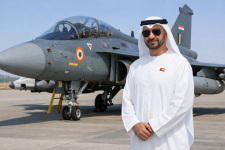
UAE and India sign defense pact along with oil trade pack.

Now situation is India + UAE + Israel vs Pakistan + KSA + Turkey......

UAE lols " Zaat di kord kerli tey shehteeraan nou japhay ".

@RescueRanger @Panzerkiel @Irfan Baloch @AeronautIR
Those alliances can change at a drop of a hat. Not too long ago Turkey and Israel were best of friends, with Turkish Phantoms upgraded by IAI. There are no friends or allies, just aligned "interests" that exist at any given time.
 
You’re starting from the wrong framework, and that’s why your conclusions don’t hold.
You analyse the Muslim and Arab world purely through a market-driven, transactional lens. That approach may work in Western policy or corporate analysis, but it fails completely inside Muslim societies. This is not just about trade routes, logistics hubs, or financial flows.
Mecca and Medina are the centre of gravity of the Muslim world. This reality reshapes power, legitimacy, and security in ways that cannot be measured by GDP or investment figures.
If anyone were to seriously threaten Saudi Arabia, they would not even know where the defence would come from. Saudi Arabia does not depend solely on contracts, treaties, or transactional alliances. The protection of the Two Holy Mosques is a religious obligation, not a commercial arrangement.
This is where your analysis breaks down. You treat Muslim countries as markets, whereas in reality religion, shared identity, and brotherhood come first. Money is not the primary constraint in most Gulf states; legitimacy and moral positioning are.
That is why Saudi Arabia’s influence cannot be replicated by airlines, ports, or mediation branding. Its power is civilisational and spiritual, not merely economic. No amount of trade volume or diplomatic hosting can substitute for that.
Until religion, collective identity, and legitimacy are factored into the analysis, conclusions about hierarchy, influence, and stability in the Muslim world will remain incomplete and misleading.
I have fundamental differences with your premise of Muslim Brotherhood and primacy of soft power over hard power.

Your argument that religious zeal would result in an uprising is utopia driven and not factual. While Mecca and Medina provide the moral center of gravity, it is Saudi Arabia’s material wealth that allows it to project that influence globally. Saudi Arabia’s religious influence expanded globally in the 1970s precisely because of the oil boom (transactional wealth). Before the oil, they had the Holy Sites but lacked the global influence. This proves the money plays important roles in this world.

Religious legitimacy provides a sense of prestige, but it does not pay for regional stability, it does not intercept ballistic missiles, and it does not feed the fastest growing demographics in the Middle East. To claim that 'brotherhood' is the primary driver of statecraft ignores a centuries of Muslim conflict where national interest, defined by borders and budgets, consistently overrode religious sentiment.

Let me explain with examples to drive home that real word is different from an imaginary and ideal one.

Without the infrastructure, the massive subsidies for Hajj, the funding of mosques worldwide, and the stability of the Saudi state, all funded by "transactional" oil wealth the spiritual influence would come to zilch. Implementing these policies is driven by money and not idealism or faith.

In 1990, when Kuwait was invaded and the Holy Sites were potentially threatened by Saddam Hussein, Saudi Arabia did not rely on a spontaneous "brotherhood" of Muslim nations. It relied on a transactional security umbrella provided by the United States. I hope you remember operation desert shield.
I don’t remember any Pak forces spontaneously leaving for Saudi soil for the so called brotherhood. Religious solidarity didn't stop the Houthi drone strikes. Patriot Missile batteries (purchased through market-driven contracts) did.

The idea that "brotherhood comes first" is historically inconsistent. Muslim majority nations, like all nations, consistently prioritise their own sovereign interests over collective identity. Look at the rivalry between Iran and Saudi Arabia, or the blockade of Qatar by its neighbors. These are conflicts between Muslim "brothers" driven by geopolitical competition, not shared identity. If brotherhood were the primary driver, the Muslim world would be a monolith. The fact that it is deeply divided proves that political and economic survival (the "transactional lens") is the true governing principle.

You claim that money doesn’t matter. It may not matter to you but it defiantly matters to Saudi’s. Please read Saudi Vision 2030. If spiritual legitimacy were enough to sustain power, Crown Prince would not be aggressively pivoting the country toward tourism, tech, and logistics.

The Saudi leadership recognises that religious legitimacy is a dwindling asset in a post oil world unless it is backed by a diversified, modern economy. They are consciously moving toward the "market-driven" model because they know spiritual gravity cannot feed a growing population or maintain a modern military.

The assertion that “money is not the primary constraint” in Gulf states is only partially true. Wealth reduces constraints, but it does not eliminate them. Gulf states aggressively compete over investment inflows, Transport hubs, Financial centres, Tourism and Soft-power branding.
 
I have fundamental differences with your premise of Muslim Brotherhood and primacy of soft power over hard power.

Your argument that religious zeal would result in an uprising is utopia driven and not factual. While Mecca and Medina provide the moral center of gravity, it is Saudi Arabia’s material wealth that allows it to project that influence globally. Saudi Arabia’s religious influence expanded globally in the 1970s precisely because of the oil boom (transactional wealth). Before the oil, they had the Holy Sites but lacked the global influence. This proves the money plays important roles in this world.

Religious legitimacy provides a sense of prestige, but it does not pay for regional stability, it does not intercept ballistic missiles, and it does not feed the fastest growing demographics in the Middle East. To claim that 'brotherhood' is the primary driver of statecraft ignores a centuries of Muslim conflict where national interest, defined by borders and budgets, consistently overrode religious sentiment.

Let me explain with examples to drive home that real word is different from an imaginary and ideal one.

Without the infrastructure, the massive subsidies for Hajj, the funding of mosques worldwide, and the stability of the Saudi state, all funded by "transactional" oil wealth the spiritual influence would come to zilch. Implementing these policies is driven by money and not idealism or faith.

In 1990, when Kuwait was invaded and the Holy Sites were potentially threatened by Saddam Hussein, Saudi Arabia did not rely on a spontaneous "brotherhood" of Muslim nations. It relied on a transactional security umbrella provided by the United States. I hope you remember operation desert shield.
I don’t remember any Pak forces spontaneously leaving for Saudi soil for the so called brotherhood. Religious solidarity didn't stop the Houthi drone strikes. Patriot Missile batteries (purchased through market-driven contracts) did.

The idea that "brotherhood comes first" is historically inconsistent. Muslim majority nations, like all nations, consistently prioritise their own sovereign interests over collective identity. Look at the rivalry between Iran and Saudi Arabia, or the blockade of Qatar by its neighbors. These are conflicts between Muslim "brothers" driven by geopolitical competition, not shared identity. If brotherhood were the primary driver, the Muslim world would be a monolith. The fact that it is deeply divided proves that political and economic survival (the "transactional lens") is the true governing principle.

You claim that money doesn’t matter. It may not matter to you but it defiantly matters to Saudi’s. Please read Saudi Vision 2030. If spiritual legitimacy were enough to sustain power, Crown Prince would not be aggressively pivoting the country toward tourism, tech, and logistics.

The Saudi leadership recognises that religious legitimacy is a dwindling asset in a post oil world unless it is backed by a diversified, modern economy. They are consciously moving toward the "market-driven" model because they know spiritual gravity cannot feed a growing population or maintain a modern military.

The assertion that “money is not the primary constraint” in Gulf states is only partially true. Wealth reduces constraints, but it does not eliminate them. Gulf states aggressively compete over investment inflows, Transport hubs, Financial centres, Tourism and Soft-power branding.
You have no idea what you're talking about
 
update:

UAE and India sign defense pact along with oil trade pack.

Now situation is India + UAE + Israel vs Pakistan + KSA + Turkey......

UAE lols " Zaat di kord kerli tey shehteeraan nou japhay ".

@RescueRanger @Panzerkiel @Irfan Baloch @AeronautIR
See what P..... drinker start thinking.....by just hugging clowns in robs of UAE.

To view this content we will need your consent to set third party cookies.
For more detailed information, see our cookies page.
 

Users who are viewing this thread

Country Watch Latest

Back
Top