Navigation
Install the app
How to install the app on iOS
Follow along with the video below to see how to install our site as a web app on your home screen.
Note: This feature may not be available in some browsers.
More options
Style variation
You are using an out of date browser. It may not display this or other websites correctly.
You should upgrade or use an alternative browser.
You should upgrade or use an alternative browser.
China’s AI Chip Deficit: Why Huawei Can’t Catch Nvidia and US Export Controls Should Remain
- Thread starter F-22Raptor
- Start date
More options
Who Replied?


Hamartia Antidote
Elite Member

Isn't this quite obvious? In 2024, these MAGAs are still cheering for Trump's chip ban on China. Now they are cheering for a symbolic order of only 50k.
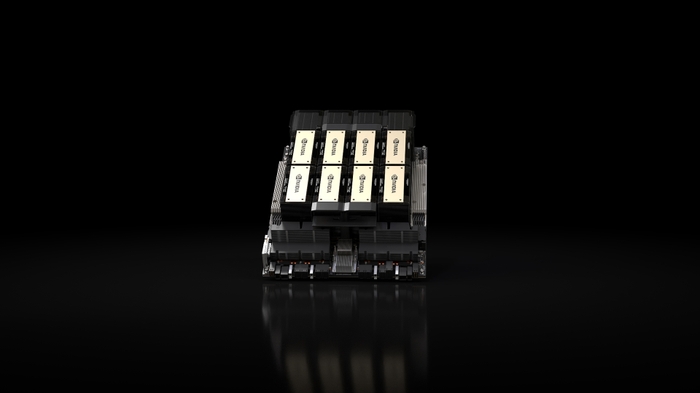
NVIDIA H200 Price Guide | TRG Datacenters
The NVIDIA H200 is the latest NVIDIA GPU made using Hopper architecture. It is a memory-upgraded version of the H100 and offers significant performance optimization with reduced power consumption and running costs. Despite offering 50% more performance improvement, the NVIDIA H200 is only...
 www.trgdatacenters.com
The NVIDIA H200 chip’s estimated cost is around $32,000 per unit, depending on configurations and bulk purchasing terms.
um... 50,000*$32,000 = $1,600,000,000 for just those 3 companies.
That's a lot of money that could have gone into Chinese chip research instead.
Last edited:

MH.Yang
Trusted Member
The news from China is that this order is worth 1.35 billion US dollars, which means the purchase unit price of H200 is approximately 27000 US dollars.NVIDIA H200 Price Guide | TRG Datacenters
The NVIDIA H200 is the latest NVIDIA GPU made using Hopper architecture. It is a memory-upgraded version of the H100 and offers significant performance optimization with reduced power consumption and running costs. Despite offering 50% more performance improvement, the NVIDIA H200 is only...
um... 50,000*$32,000 = $1,600,000,000 for just those 3 companies.
That's a lot of money that could have gone into Chinese chip research instead.
Trump is about to visit China, so let's treat the profits obtained by the United States from this order as Trump's travel expenses. You should know that we prefer this orange cat over Biden.
Hamartia Antidote
Elite Member
The news from China is that this order is worth 1.35 billion US dollars, which means the purchase unit price of H200 is approximately 27000 US dollars.
So much for your indigenous supa dupa AI chips.
$1.35B probably pays off the H200 R&D project budget.
As predicted Alibaba, Tencent, and Bytedance put business first and needed Nvidia chips to stay relevant.
BTW that 50,000 H200 chips you quoted is going up fast...
Jan 24, 2026
China Poised to Approve Nvidia's H200 Chips for Import. Here's What It Means for Investors
This could be a major catalyst for the AI chipmaker.
 finance.yahoo.com
CEO Jensen Huang recently said there was "very high" demand for H200 chips in China.
A Reuters report suggests Nvidia has already received orders for 2 million H200 chips from Chinese customers, at a cost of $27,000 each. If accurate, it would result in incremental revenue of $54 billion, which seems to support Huang's assertion.
Nvidia hasn't included any sales to China in its forecast, which would materially increase the company's outlook. Huang previously said Nvidia had an AI chip sales backlog of $500 billion for the six quarters ending in early 2027. CFO Colette Kress has since upped the ante. At an investor event in early January, she said, "The $500 billion has definitely gotten larger."
Last edited:
MH.Yang
Trusted Member
So much for your indigenous supa dupa AI chips.
$1.35B probably pays off the H200 R&D project budget.
As predicted Alibaba, Tencent, and Bytedance put business first and needed Nvidia chips to stay relevant.
BTW that 50,000 H200 chips you quoted is going up fast...
Jan 24, 2026

China Poised to Approve Nvidia's H200 Chips for Import. Here's What It Means for Investors
This could be a major catalyst for the AI chipmaker.
Are you saying that the Chinese government's approval to purchase 50kH200 can destroy the localization process of Chinese chips?
Have you considered that Chinese high-end chip companies are just new players in this field, and they also have production capacity issues. This chip order can not only help Trump's midterm elections, but also make up for the production capacity problem of Chinese chip companies.
Perhaps you think $1.35 billion is a big number, but China imported 538.1 billion chips worth $415.6 billion in 2022.
When you cheer for the $1.35 billion order now, do you realize how much market the US government has destroyed for its own chip companies and how terrifying competitors it has cultivated with a three-year ban.
Do you know Cthulhu? We are Cthulhu in the industrial field. You are always foolishly awakening this industrial Cthulhu step by step, but you are not aware of what you have brought to your future.
Hamartia Antidote
Elite Member
Are you saying that the Chinese government's approval to purchase 50kH200 can destroy the localization process of Chinese chips?
Hey not long ago you said Chinese Government closed the door on the H200...now local companies have demanded they open it because the local AI chip market isn't good enough.
That's all I'm saying.
17 Aug 2025
China mandates more domestic AI chips for data centres to cut reliance on US
In 2023 and 2024, more than 500 new data centre projects were announced across the country, in places such as Inner Mongolia and Guangdong.
 www.scmp.com
China mandates more domestic AI chips for data centres to cut reliance on Nvidia
Sep 17 2025

China bans tech companies from buying Nvidia’s AI chips
Beijing steps up efforts to boost semiconductor independence and compete with US
 www.ft.com
China bans tech companies from buying Nvidia’s AI chips
Last edited:

retaxis
Trusted Member
U got Chinese rising syndrome aka CRS. It completely has melted ur brain buddy and u can't even utilise facts or logical thinking any more. Don't worry tho, usa will keep collapsing its irreversible demographically, socially and economically while u keep deluding urself further.Hey not long ago you said China Government closed the door on the H200...now local companies have demanded they open it because the local AI chip market isn't good enough.
That's all I'm saying.
17 Aug 2025
China mandates more domestic AI chips for data centres to cut reliance on US
In 2023 and 2024, more than 500 new data centre projects were announced across the country, in places such as Inner Mongolia and Guangdong.China mandates more domestic AI chips for data centres to cut reliance on Nvidia
Sep 17 2025
China bans tech companies from buying Nvidia’s AI chips
Beijing steps up efforts to boost semiconductor independence and compete with USChina bans tech companies from buying Nvidia’s AI chips
this whole thing is literally omg china bought a few su-35s they can't make modern fighters!?!?!? Now China is making 6th gen fighters and advanced 5th gen. Soon China will dominate the semiconductor industry just like Evs, electronics etc.
Last edited:
nahtanbob
Elite Member

Yes, Nvidia's technology is better. But so what?
This year, China exported 6 million automobiles, twice as much as Japan, the second exporter. And countless mobile phones and tablets. Even if Nvidia's chips are better, we won't use its products.
Economic principles tell us that the market determines technological development, not the other way around. Let's see if Nvidia and the US government can disrupt this rule.
The world runs on Intel x86 processors. There is nothing China can do to avoid it. Nvidia is not there yet. It is heading in that direction.
冖_冖
Registered Member

Nvidia CEO Jensen Huang says China hasn't approved H200 imports yet — also confirms no new orders placed while Beijing decides
"I’m hoping that the Chinese government would allow Nvidia to sell the H200"
After days of back and forth and lots of unofficial information swirling, Nvidia CEO Jensen Huang has finally issued an "official" update on the H200 saga in China. Speaking to the press during a visit to Taiwan on Thursday, he confirmed that Beijing hasn't yet decided whether or not to allow imports of the chip into the country, Bloomberg reports. Understandably, the company has also not received any orders while China's stance on the matter remains unclear.
"I’m hoping that the Chinese government would allow Nvidia to sell the H200," Huang reportedly said. "It’s up to the Chinese government now but they are still deciding, and we are waiting patiently.”
MH.Yang
Trusted Member
Hey not long ago you said Chinese Government closed the door on the H200...now local companies have demanded they open it because the local AI chip market isn't good enough.
That's all I'm saying.
17 Aug 2025
China mandates more domestic AI chips for data centres to cut reliance on US
In 2023 and 2024, more than 500 new data centre projects were announced across the country, in places such as Inner Mongolia and Guangdong.China mandates more domestic AI chips for data centres to cut reliance on Nvidia
Sep 17 2025
China bans tech companies from buying Nvidia’s AI chips
Beijing steps up efforts to boost semiconductor independence and compete with USChina bans tech companies from buying Nvidia’s AI chips
Latest news.
Nvidia's 1.35 billion orders have been cancelled.
It is said that no senior officials from companies such as Alibaba are willing to sign a guarantee letter to assume legal responsibility for H200 as a guarantee.

F-22Raptor
Elite Member
- Thread starter
- #41
China conditionally approves DeepSeek to buy Nvidia's H200 chips
SINGAPORE, Jan 30 (Reuters) - China has given its top AI startup DeepSeek approval to buy Nvidia's (NVDA.O), opens new tabH200 artificial intelligence chips with regulatory conditions that are still being finalised, two people familiar with the matter told Reuters.
Reuters reported on Wednesday, citing sources, that ByteDance, Alibaba (9988.HK), opens new tab and Tencent (0700.HK), opens new tab had been given permission to purchase more than 400,000 H200 chips in total.
Hamartia Antidote
Elite Member
Latest news.
Nvidia's 1.35 billion orders have been cancelled.
It is said that no senior officials from companies such as Alibaba are willing to sign a guarantee letter to assume legal responsibility for H200 as a guarantee.
The Chinese Government was just trying to save face from the pressure of Chinese companies wanting those chips..so they just delayed their official green light.
Now that things quieted down here it is
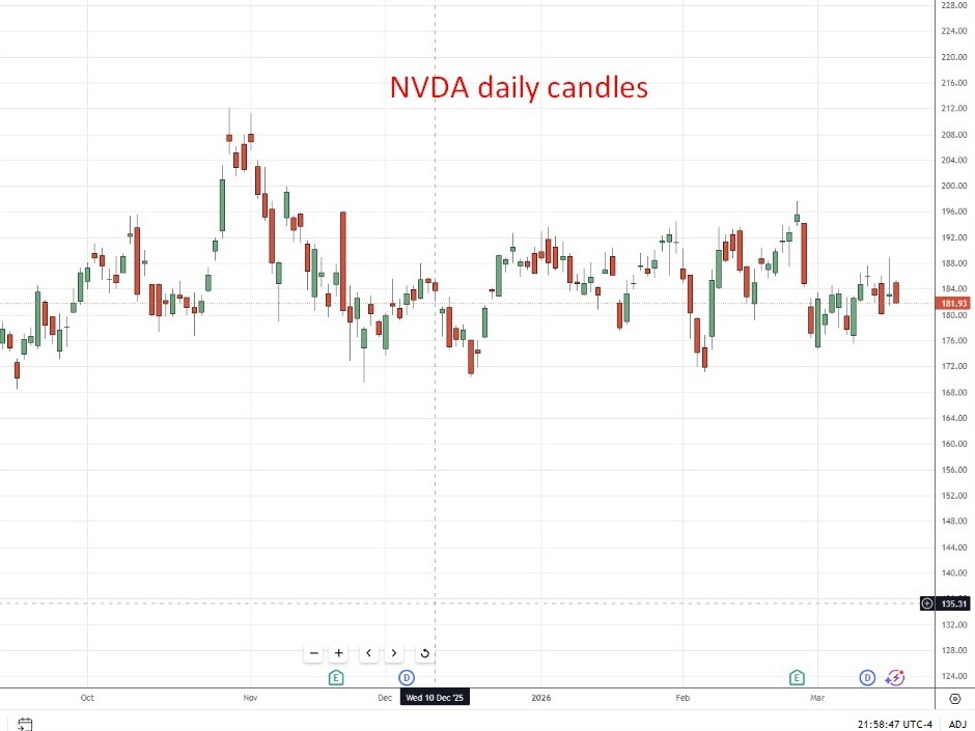
China approves Nvidia H200 AI chip sales as licences granted to multiple firms | investingLive
Positive for Nvidia and AI chip demand outlook; signals partial easing in US-China tech flows, though broader restrictions remain a structural overhang for the semiconductor sector.
China approves Nvidia H200 AI chip sales as licences granted to multiple firms
Chinese authorities have approved the purchase of advanced H200 artificial intelligence chips from Nvidia by multiple domestic companies, according to a source cited by Reuters, marking a notable development in the complex regulatory landscape governing high-end semiconductor trade between the United States and China.

Beijingwalker
VIP Member
Nvidia to ‘restart’ H200 production for China; analyst says its chips have shifted from ‘essential’ to ‘optional’
Published: Mar 18, 2026 09:00 PM
Nvidia announced on Tuesday (local time) that it is resuming production of artificial intelligence (AI) chips for the Chinese market after its pause earlier this year due to uncertainty around regulatory approval, CEO Jensen Huang said at the GTC 2026 conference this week, multiple foreign media outlets including the Financial Times reported.
Ma Jihua, a veteran industry analyst, told the Global Times on Wednesday that although Nvidia chips remain in demand, their role has shifted from being "essential" to merely "optional." As domestic production ramps up, China's goal of AI chip self-sufficiency has become increasingly attainable, and the country's dependence on a single foreign supplier is steadily diminishing.
Published: Mar 18, 2026 09:00 PM
Nvidia announced on Tuesday (local time) that it is resuming production of artificial intelligence (AI) chips for the Chinese market after its pause earlier this year due to uncertainty around regulatory approval, CEO Jensen Huang said at the GTC 2026 conference this week, multiple foreign media outlets including the Financial Times reported.
Ma Jihua, a veteran industry analyst, told the Global Times on Wednesday that although Nvidia chips remain in demand, their role has shifted from being "essential" to merely "optional." As domestic production ramps up, China's goal of AI chip self-sufficiency has become increasingly attainable, and the country's dependence on a single foreign supplier is steadily diminishing.
Beijingwalker
VIP Member
Volkswagen pushes into driver-assist EVs without Nvidia, exec says
PUBLISHED MON, MAR 16 20267:00 PM EDT
Volkswagen announced Friday, March 13, 2026, that it started production of its first all-electric SUV, the ID. UNYX 08, that uses Xpeng’s automotive chip.
Volkswagen is preparing for a future driven by chips. And, at least in China, Nvidia isn’t part of the picture.
With advanced tech from local Chinese players, “for us, there is no reason to stick [to] Nvidia,” Thomas Ulbrich, chief technology officer of Volkswagen Group China, told me last week. We chatted in his office, during one of his rare days at the German automaker’s Beijing headquarters.
Ulbrich spends most of the time in Hefei, an automotive hub just hours from Shanghai.
That’s where Volkswagen’s factories are located, as well as its biggest research and development center outside of Germany. For semiconductors, the company has a joint venture with Chinese automotive chip company Horizon Robotics, and a partnership with electric car company Xpeng, which has developed its own “Turing” car chip.
The Xpeng Turing chip is part of Volkswagen’s first all-electric SUV, the ID. UNYX 08. Production began Friday in Hefei, with deliveries in China set to begin by the end of June. The vehicle comes with L2 advanced driver-assist, which means it can help drivers navigate highways and urban streets.
That’s a driver-assist feature Xpeng has already rolled out in China, while Tesla has yet to get Beijing’s approval for its version.
Having that specific expertise in driver-assist software is also why Ulbrich said Volkswagen is working with Xpeng chips, as well as Horizon.
“Why does a customer buy a car?” Ulbrich said.
“Ten years ago, it was brand, brand, brand,” he said. “But nowadays it is intelligence of the car, mainly driven by smart EVs.”
In about two years, he expects Volkswagen cars in China to reach L3 capabilities, which will allow drivers to take their hands off the steering wheel under specific conditions. When regulators allow L3 to be used, liability for accidents is set to shift from driver to manufacturer.
Meanwhile, Volkswagen’s joint venture with Horizon, called Carizon, is developing its first advanced automotive chip, with expected delivery in three to five years.
Nvidia has also bet that automotive chips will be a billion-dollar business. But segment growth has slowed in recent quarters, while the Chinese EV partners that once partnered with Nvidia have begun developing their own chips in-house.
As for applications of artificial intelligence, Ulbrich said AI integration would happen faster in factories than in cars. He said Volkswagen is already incorporating some AI-powered functions in manufacturing.
Ulbrich is also CEO of the Hefei R&D center, called the Volkswagen Group China Technology Company, a role he has held in China since April 2024. This is his third assignment to China, following earlier postings in the late 1990s and the 2010s.
Volkswagen has become one of the most aggressive Western automakers trying to recoup China sales lost to domestic EV rivals.
But pre-pandemic attempts were slow. At a spring auto show in 2019, Europe’s biggest carmaker announced a new line of electric vehicles for China, beginning two years later.
Chinese rivals were moving much faster. Xpeng revealed an electric coupe that customers could drive in about 12 months. BYD launched its Han electric sedan in July 2020 and was ramping up deliveries less than a month later.
Now, after an overhaul of the China business that began in 2023, Volkswagen has slashed its production time and costs.
“This is the year of delivery,” said Ulbrich. He said in 2026 alone, Volkswagen plans to launch 20 new models powered by battery or hybrid solutions on the roads in China.
The roadmap stretches to 2030, where Volkswagen aims to have 50 new models, including 30 fully electric ones. The cars will also be exported to other countries.
In fact, this year marks Volkswagen’s largest product campaign in China to date. The group management signaled their ambitions during an earnings report last week, despite a 53% drop in profit and an 8% drop in China passenger car sales.
Ultimately, survival comes down to what attracts buyers.
In China, consumers are highly digitally connected, Ulbrich said, citing the range of smartphone services. “The car has to fit into this world,” he said, noting that’s why automotive tech in China is ramping up so quickly.
That means that, for companies, China is not just a training center but also a market for proving a product, Ulbrich said, hinting at global strategic advantages.

CNBC's The China Connection newsletter: Volkswagen pushes into driver-assist EVs without Nvidia, exec says
Volkswagen Group China's Chief Technology Officer Thomas Ulbrich spoke exclusively about the company's chip plans.
 www.cnbc.com
Hamartia Antidote
Elite Member
03/17/2026
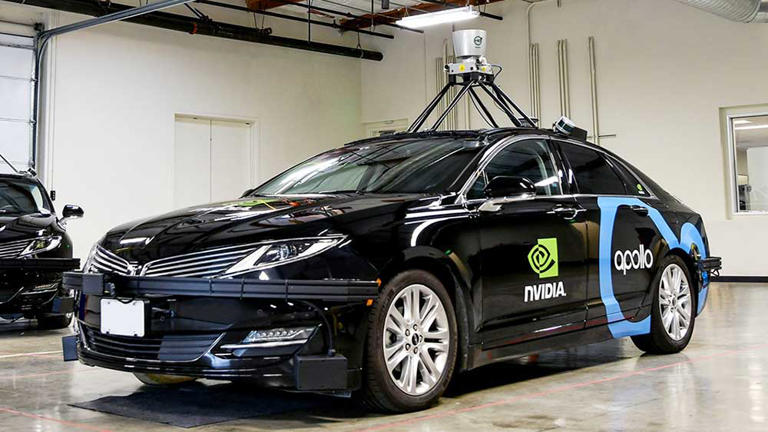
Two of China's most prominent electric vehicle companies — BYD BYDDF and Geely — are set to use the latest Nvidia NVDA autonomous vehicle systems to develop their self-driving cars and robotaxis. On Tuesday, Nvidia stock slipped slightly.
BYD and Geely will use Nvidia's Drive Hyperion platform, which includes a suite of tools for training self-driving cars, as part of their efforts to develop Level 4 autonomy. Level 4 autonomy refers to a self-driving car's ability to drive anywhere within a geofenced area without human supervision. The two companies will use Nvidia's tech to accelerate their push into the robotaxi market in order to compete with rival services from Tesla TSLA and Waymo.
Nissan NSANY, Hyundai, and Isuzu also signed up to use Nvidia's self-driving car systems, according to the company. On Monday, Nvidia also announced plans with UberUBER to launch a fleet of autonomous vehicles for use as a robotaxis in 28 cities by 2028.
"We're going to be deploying and connecting these robotaxi-ready vehicles into their network," CEO Jensen Huang said during his keynote speech at Nvidia's GTC conference on Monday.
Many of these announcements reflect expanded partnerships. BYD and Geely already use Nvidia chips for driver assistance systems, while Nvidia and Uber already were teaming up on self-driving. Just as Nvidia is making a slew of self-driving deals, Uber has a bevy of robotaxi alliances, while BYD has multiple suppliers for its self-driving ambitions, including in-house systems.
The self-driving announcements came during Nvidia CEO Jensen Huang's keynote address at the company's GTC event.
"The autonomous vehicle revolution is here — the first multitrillion-dollar robotics industry," Huang said in a statement. "Everything that moves will eventually be autonomous."
BYD and Geely moving to US AI chip tech to solve autonomous vehicle issues
Chinese EV giants to use Nvidia self-driving car systems
Two of China's most prominent electric vehicle companies — BYD BYDDF and Geely — are set to use the latest Nvidia NVDA autonomous vehicle systems to develop their self-driving cars and robotaxis. On Tuesday, Nvidia stock slipped slightly.
BYD and Geely will use Nvidia's Drive Hyperion platform, which includes a suite of tools for training self-driving cars, as part of their efforts to develop Level 4 autonomy. Level 4 autonomy refers to a self-driving car's ability to drive anywhere within a geofenced area without human supervision. The two companies will use Nvidia's tech to accelerate their push into the robotaxi market in order to compete with rival services from Tesla TSLA and Waymo.
Nissan NSANY, Hyundai, and Isuzu also signed up to use Nvidia's self-driving car systems, according to the company. On Monday, Nvidia also announced plans with UberUBER to launch a fleet of autonomous vehicles for use as a robotaxis in 28 cities by 2028.
"We're going to be deploying and connecting these robotaxi-ready vehicles into their network," CEO Jensen Huang said during his keynote speech at Nvidia's GTC conference on Monday.
Many of these announcements reflect expanded partnerships. BYD and Geely already use Nvidia chips for driver assistance systems, while Nvidia and Uber already were teaming up on self-driving. Just as Nvidia is making a slew of self-driving deals, Uber has a bevy of robotaxi alliances, while BYD has multiple suppliers for its self-driving ambitions, including in-house systems.
The self-driving announcements came during Nvidia CEO Jensen Huang's keynote address at the company's GTC event.
Nvidia Autonomous Vehicle Systems
In recent months, Nvidia has stepped up its efforts to provide systems for self-driving cars, which it sees as a market worth "hundreds of billions of dollars." The Drive Hyperion system provides the tech and AI infrastructure needed to operate an autonomous vehicle to automakers, who can then use them in their cars. Nvidia's system currently includes computing power, car sensors like lidar, radar and cameras, and a dedicated software stack known as Drive OS and Drive AV."The autonomous vehicle revolution is here — the first multitrillion-dollar robotics industry," Huang said in a statement. "Everything that moves will eventually be autonomous."
BYD and Geely moving to US AI chip tech to solve autonomous vehicle issues
Last edited:
Users who are viewing this thread
Total: 5 (members: 0, guests: 5)
Pakistan Defence Latest


Country Watch Latest

Latest Posts
-

-
 Afghans yet to receive ‘genuine justice’ for Western coalition abuses: HRW (15 Viewers)
- Latest: Feroze
-

-
 FBI arrests alleged Chinese agent at LAX after she allegedly surveilled son of Taiwanese president (12 Viewers)
- Latest: Hamartia Antidote
-