Navigation
Install the app
How to install the app on iOS
Follow along with the video below to see how to install our site as a web app on your home screen.
Note: This feature may not be available in some browsers.
More options
Style variation
You are using an out of date browser. It may not display this or other websites correctly.
You should upgrade or use an alternative browser.
You should upgrade or use an alternative browser.
NASA Space Program
- Thread starter Hamartia Antidote
- Start date
More options
Who Replied?


Hamartia Antidote
Elite Member
- Thread starter
- #77
How dare the US let China takes lead in returning Mars samples. US is always number one, MAGA, lol.
Um..we are flying astronauts around the moon next month and the Chinese are still flying around in a souped up Russian Soyuz with no rockets even as powerful as the 8 year old Falcon Heavy.

Artemis II rocket reaches its launch pad. The stage is set for the next crewed mission to the Moon | BBC Sky at Night Magazine
Date and timings for the rollout of the Artemis II rocket and Orion capsule at NASA's Kennedy Space Center, Florida.
 www.skyatnightmagazine.com
The Artemis II rocket is rolling out this weekend. Watch live as NASA preps the next crewed Moon mission
Artemis II gets closer to launch dayNASA has released Artemis II launch dates that show lift-off could happen as early as Friday 6 February 2026, and as late as April 2026.
NASA Artemis II Mission Timeline to the Moon Revealed! The Countdown Begins…
Last edited:

FarhanSiddiqui
Registered Member


The millionaire Congress wants to finance their exorbitant tax cuts by cutting scientific and medical research.
ety
Trusted Member
Um..we are flying astronauts around the moon next month and the Chinese are still flying around in a souped up Russian Soyuz with no rockets even as powerful as the 8 year old Falcon Heavy.
Artemis II rocket reaches its launch pad. The stage is set for the next crewed mission to the Moon | BBC Sky at Night Magazine
Date and timings for the rollout of the Artemis II rocket and Orion capsule at NASA's Kennedy Space Center, Florida.The Artemis II rocket is rolling out this weekend. Watch live as NASA preps the next crewed Moon mission
Artemis II gets closer to launch day
NASA Artemis II Mission Timeline to the Moon Revealed! The Countdown Begins…
Lol, what the US is going back to land men on the moon again for, US is so great, by now US should be sending men to the red planet to conquer it.
Hamartia Antidote
Elite Member
- Thread starter
- #80
Lol, what the US is going back to land men on the moon again for, US is so great, by now US should be sending men to the red planet to conquer it.
NASA -> Moon
SpaceX -> Mars
this shouldn't be too difficult for you to grasp.


‘Making Star Trek real’: Elon Musk reveals futuristic vision for SpaceX
Elon Musk has revealed the purpose and futuristic vision of SpaceX in his introductory remarks during Pete Hegseth’s, US Secretary of War, visit to Starbase on January 12 as part of his...
 www.thenews.com.pk
Last edited:

F-22Raptor
Elite Member
The millionaire Congress wants to finance their exorbitant tax cuts by cutting scientific and medical research.
The vast majority of science and medical research has been saved from cuts.
F-22Raptor
Elite Member
SLS on its way to the pad!!
There’ll be 3 weeks worth of testing with first launch opportunity on February 6 to send astronauts around the Moon. This is the most important human space mission since Apollo 17!
F-22Raptor
Elite Member
Hamartia Antidote
Elite Member
- Thread starter
- #84
Hamartia Antidote
Elite Member
- Thread starter
- #85

Hamartia Antidote
Elite Member
- Thread starter
- #87
Hamartia Antidote
Elite Member
- Thread starter
- #88

Artemis 2 astronauts enter quarantine ahead of historic NASA moon launch
The quartet went into quarantine in Houston on Friday (Jan. 23).
Artemis 2 astronauts enter quarantine ahead of historic NASA moon launch

The Artemis 2 crew poses in front of an Orion simulator Jan. 23, 2026 at NASA's Johnson Space Center in Houston. From left: Reid Wiseman, Christina Koch, Jeremy Hansen and Victor Glover. (Image credit: NASA/Robert Markowitz)
hmm..I hope the life support systems were tested. This seems rushed.
Hamartia Antidote
Elite Member
- Thread starter
- #89
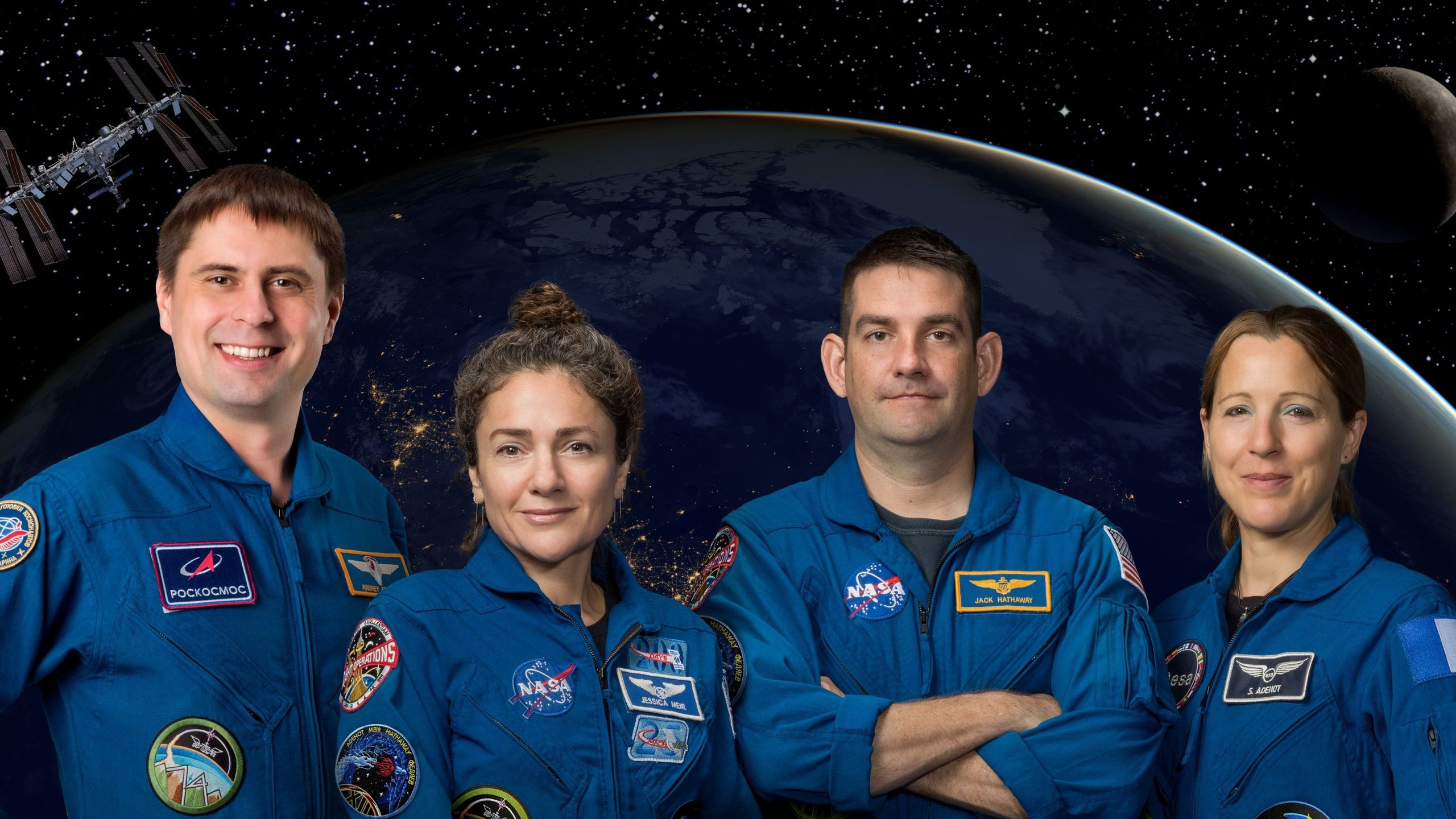
ISS Crew 12
 www.space.com
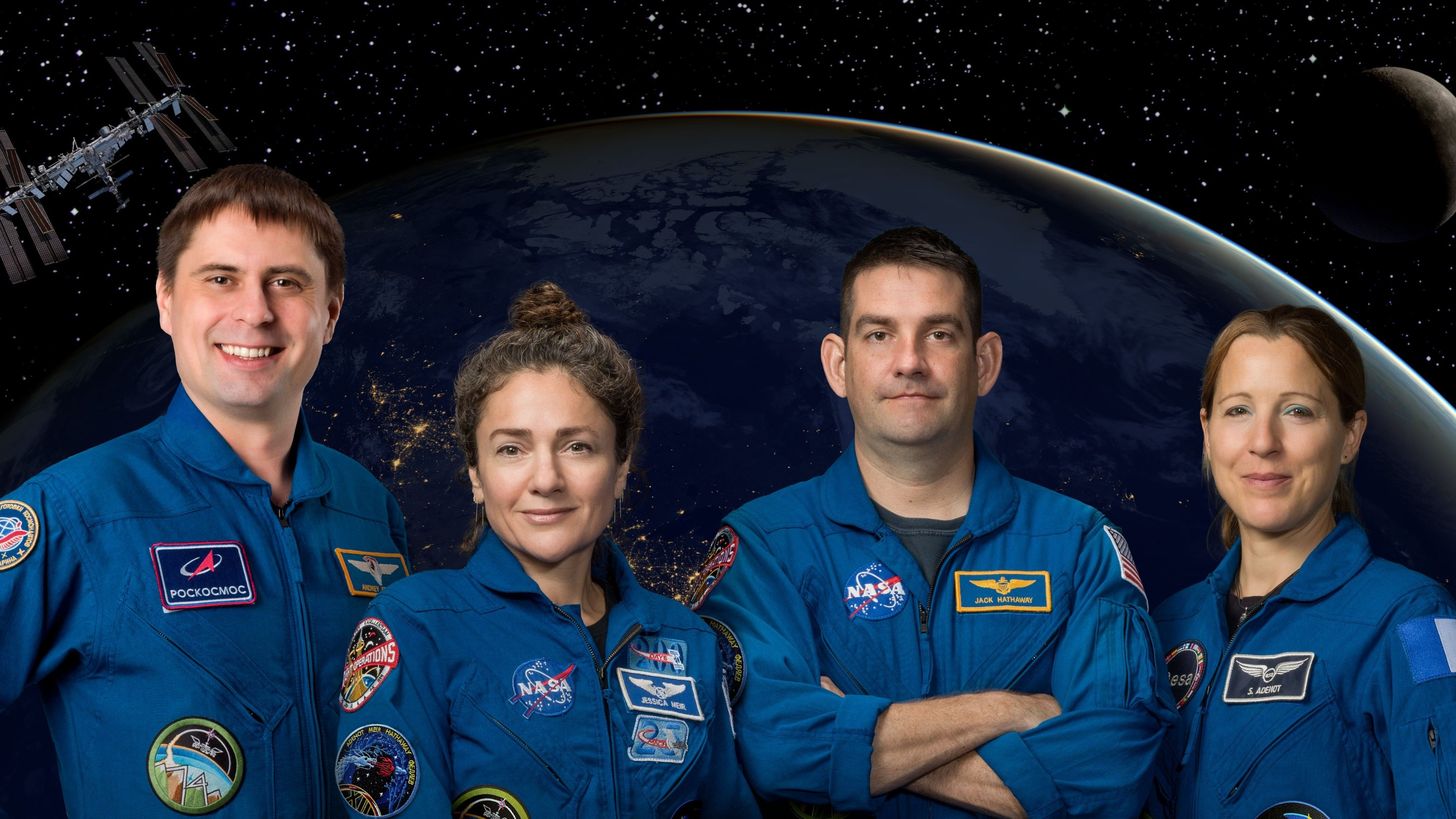
The astronauts of SpaceX's Crew-12 mission to the International Space Station. From left: cosmonaut Andrey Fedyaev, NASA's Jessica Meir and Jack Hathaway, and Sophie Adenot of the European Space Agency . (Image credit: NASA)
NASA and SpaceX move up launch of Crew-12 astronauts to Feb. 11 as relief crew after ISS medical evacuation
That's four days earlier than originally planned.
NASA and SpaceX move up launch of Crew-12 astronauts to Feb. 11
The astronauts of SpaceX's Crew-12 mission to the International Space Station. From left: cosmonaut Andrey Fedyaev, NASA's Jessica Meir and Jack Hathaway, and Sophie Adenot of the European Space Agency . (Image credit: NASA)
Hamartia Antidote
Elite Member
- Thread starter
- #90
NASA has multiple resources watching 3I/ATLAS

 en.wikipedia.org
 www.space.com
The interstellar visitor may still have a few things to tell us before it leaves our solar system.
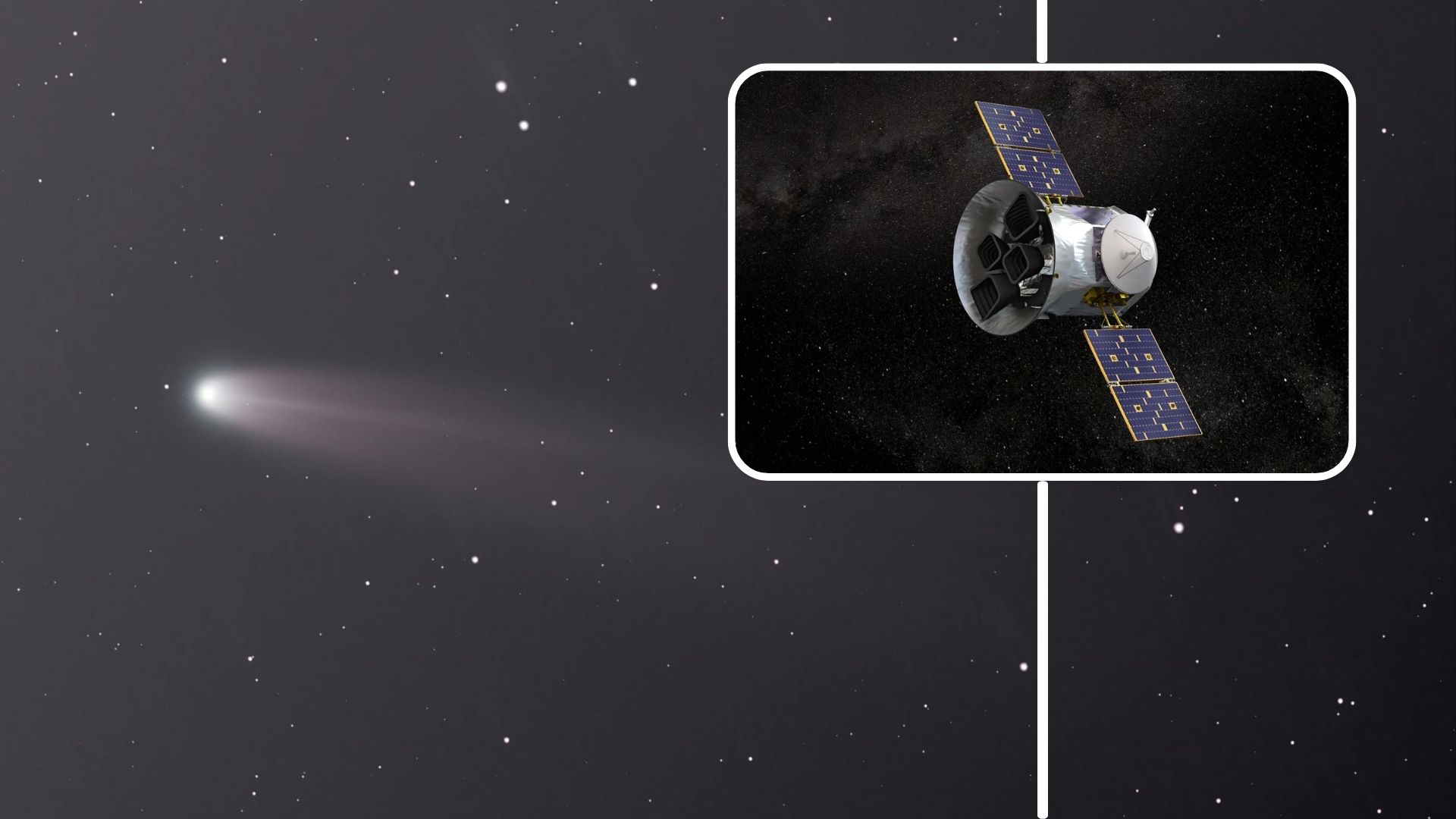
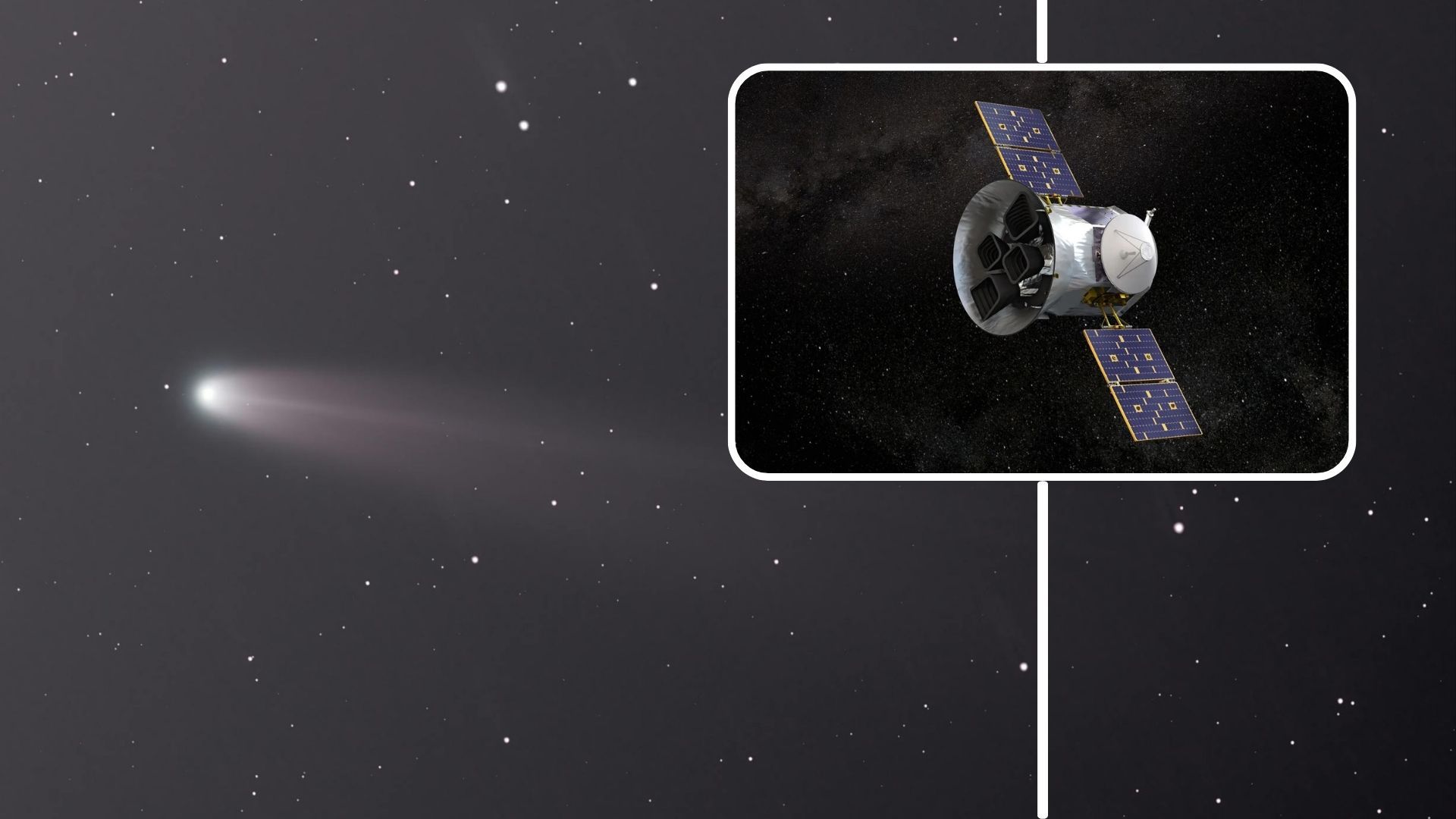
NASA's planet-hunting TESS (Transiting Exoplanet Survey Satellite) spacecraft recently caught a glimpse of interstellar comet 3I/ATLAS. (Image credit: TESS insert by NASA/comet background by Enrico Bellodi from Pexels/assembled by Kenna Hughes-Castleberry via Canva pro)
NASA's planet-hunting TESS spacecraft recently caught a view of a very different kind of cosmic object: interstellar comet 3I/ATLAS.
During a special observation run from Jan. 15 to Jan. 22, the Transiting Exoplanet Survey Satellite (TESS) repeatedly observed comet 3I/ATLAS as it headed out of our solar system. With its wide field of view, TESS recorded the comet as a bright, fast-moving dot dragging a faint tail across a crowded starfield.
Using data from some of earlier January observations, Daniel Muthukrishna of the Massachusetts Institute of Technology (MIT) compiled the images into a 28-hour video that shows comet 3I/ATLAS's trajectory. Unfortunately, TESS' observations were interrupted when the spacecraft entered "safe mode" after experiencing an issue with its solar panels, so the video includes a time jump from Jan. 15 to Jan. 18.
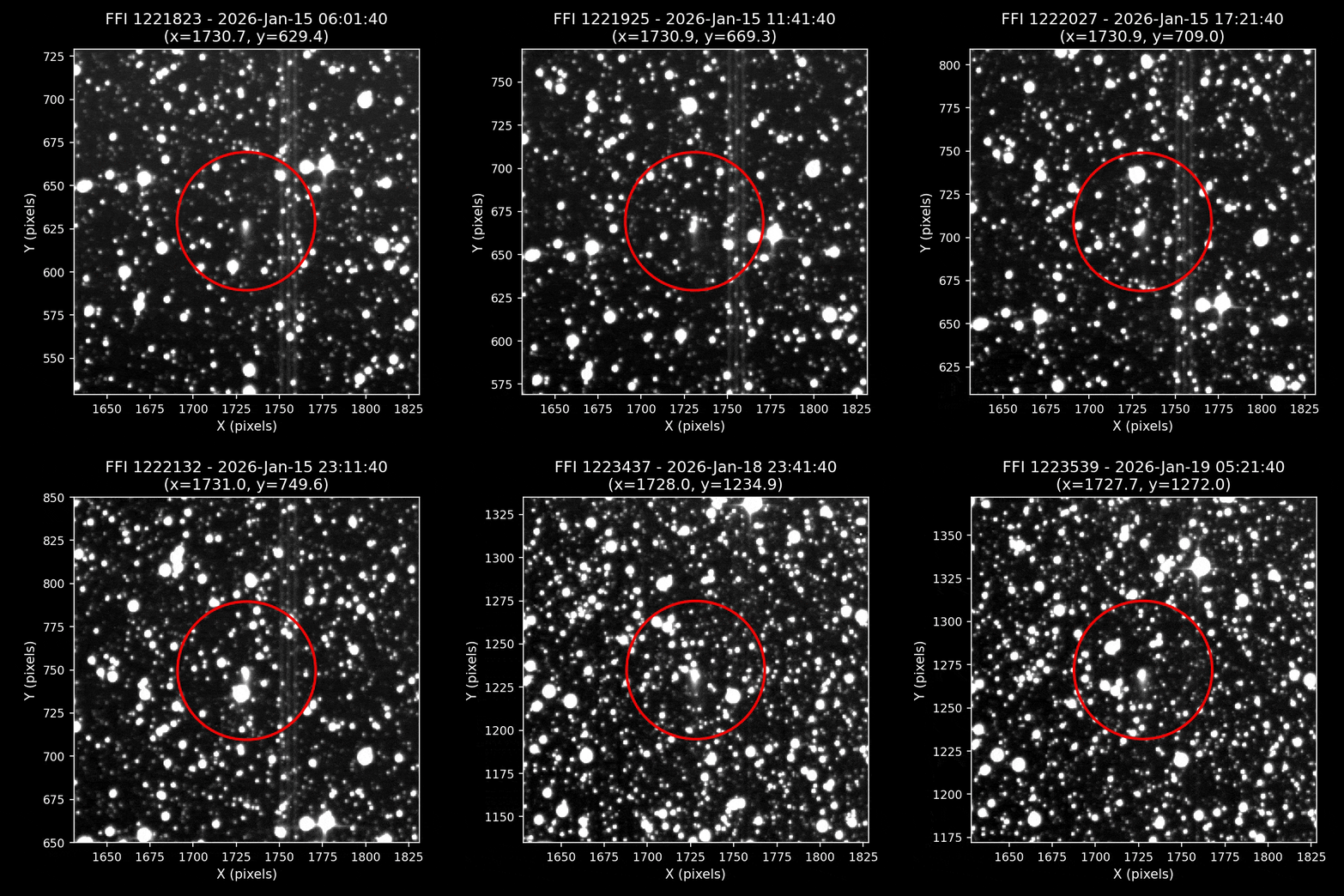
Interstellar comet 3I/ATLAS (circled) is a bright dot with a tail passing through a field of stars in this video from NASA’s TESS (Transiting Exoplanet Survey Satellite). The sequence uses 28 hours of TESS full frame images collected over Jan. 15 and Jan. 18 to 19. The time jump from Jan. 15 to Jan. 18 occurs 11 seconds into the video. (Image credit: NASA/Daniel Muthukrishna, MIT)
Scientists like Muthukrishna hope to use the dataset to study the comet's activity and rotation, clues that reveal how vigorously it's shedding dust and gas and how quickly the comet's core spins.
TESS measurements put comet 3I/ATLAS's brightness at about 11.5 in apparent magnitude, roughly 100 times fainter than what we can see with the naked eye, but accessible using telescopes.
NASA's TESS mission was designed to find exoplanets via the transit method, in which a faraway star dims slightly when a planet in its system passes in front of it. But TESS' wide field of view and consistent monitoring also make it useful for detecting and tracking closer objects, including comets and asteroids, for longer stretches of time.
This capability helped astronomers spot comet 3I/ATLAS before they even knew it was there. TESS happened to observe a comet in May 2025, two months before 3I/ATLAS was discovered. By looking back through all the data and compiling multiple observations, astronomers could filter out the interstellar visitor through the noise and track its movements. While unfortunately this doesn't tell us where the comet originated, it does give us other key details.
 www.sci.news
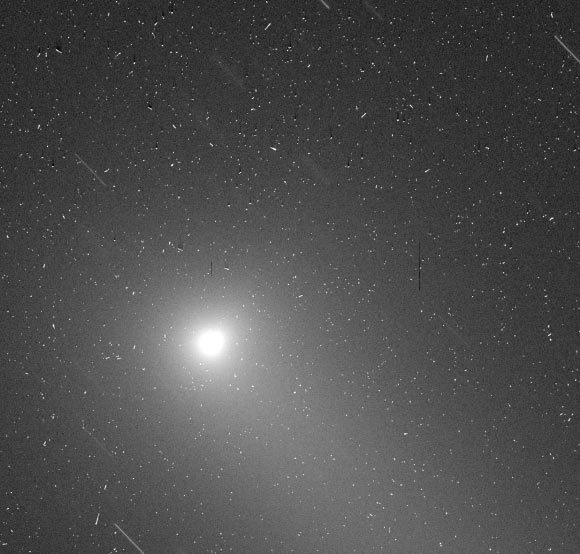
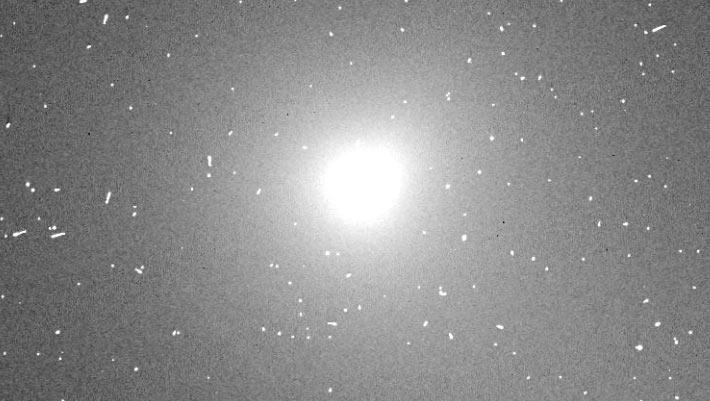
This image of the interstellar comet 3I/ATLAS was captured by Hubble’s WFC3 instrument on January 22, 2026, at 13:10 UTC.
“Interstellar objects provide unique opportunities for studying materials from other stellar systems,” Harvard University’s Professor Abraham Loeb and Dr. Mauro Barbieri of the INAF-Padova Observatory wrote in a recent paper in the Research Notes of the American Astronomical Society.
“Unfortunately for that purpose, 1I/Oumuamua did not display traces of gas or dust around it and 2I/Borisov was only observed at phase angles relative to the Sun-Earth axis of over 16 degrees and never near opposition.”
On January 22, 2026, the interstellar object 3I/ATLAS aligned to within an exceptionally small angle of 0.69 degrees with the Earth-Sun axis.
During that moment, our planet passed almost directly between the Sun and the comet.
“This rare alignment resulted in a brightness surge whose magnitude and growth rate are dictated by the composition and structure of the particles shed by jets of 3I/ATLAS,” Professor Loeb explained in a statement.
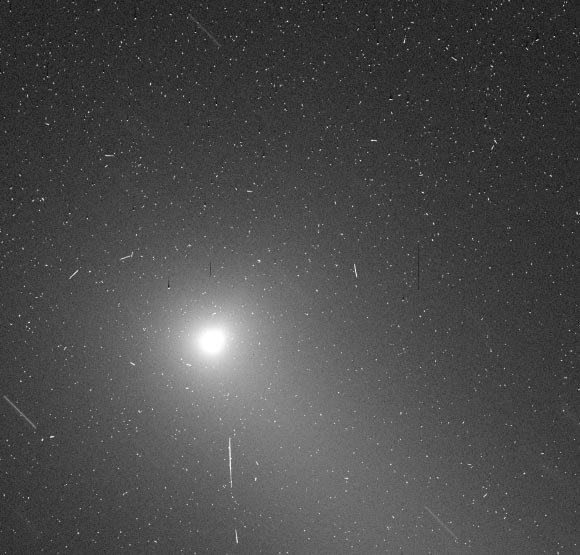
This image of the interstellar comet 3I/ATLAS was captured by Hubble’s WFC3 instrument on January 22, 2026, at 13:40 UTC.
Shanghai Astronomical Observatory astronomer Man-To Hui used Hubble to observe 3I/ATLAS under the ‘conditions that may not repeat for decades.’
The images of the interstellar object were obtained with Hubble’s Wide Field Camera 3 (WFC3) instrument.
“When the Hubble images from the January 22, 2026 alignment were processed by my collaborator Toni Scarmato, the residuals showed the system of 4 jets, including a prominent anti-tail directed nearly towards the Sun and Earth, supplemented by three mini-jets,” Professor Loeb wrote.
“The mini-jets are equally separated from each other by an angle of 120 degrees, and one of them is faint, possibly because it is hidden in an unfavorable orientation relative to Earth.”
3I/ATLAS - Wikipedia
is an interstellar comet[18][19] discovered on 1 July 2025 by the Asteroid Terrestrial-impact Last Alert System (ATLAS) station. The comet follows an unbound, hyperbolic trajectory past the Sun,[5][d] and passed by Earth at 1.8 AU, posing no threat.
NASA exoplanet probe tracks interstellar comet 3I/ATLAS to gauge its spin
The interstellar visitor may still have a few things to tell us before it leaves our solar system.
NASA exoplanet probe tracks interstellar comet 3I/ATLAS to gauge its spin
The interstellar visitor may still have a few things to tell us before it leaves our solar system.
NASA's planet-hunting TESS (Transiting Exoplanet Survey Satellite) spacecraft recently caught a glimpse of interstellar comet 3I/ATLAS. (Image credit: TESS insert by NASA/comet background by Enrico Bellodi from Pexels/assembled by Kenna Hughes-Castleberry via Canva pro)
NASA's planet-hunting TESS spacecraft recently caught a view of a very different kind of cosmic object: interstellar comet 3I/ATLAS.
During a special observation run from Jan. 15 to Jan. 22, the Transiting Exoplanet Survey Satellite (TESS) repeatedly observed comet 3I/ATLAS as it headed out of our solar system. With its wide field of view, TESS recorded the comet as a bright, fast-moving dot dragging a faint tail across a crowded starfield.
Using data from some of earlier January observations, Daniel Muthukrishna of the Massachusetts Institute of Technology (MIT) compiled the images into a 28-hour video that shows comet 3I/ATLAS's trajectory. Unfortunately, TESS' observations were interrupted when the spacecraft entered "safe mode" after experiencing an issue with its solar panels, so the video includes a time jump from Jan. 15 to Jan. 18.
Interstellar comet 3I/ATLAS (circled) is a bright dot with a tail passing through a field of stars in this video from NASA’s TESS (Transiting Exoplanet Survey Satellite). The sequence uses 28 hours of TESS full frame images collected over Jan. 15 and Jan. 18 to 19. The time jump from Jan. 15 to Jan. 18 occurs 11 seconds into the video. (Image credit: NASA/Daniel Muthukrishna, MIT)
Scientists like Muthukrishna hope to use the dataset to study the comet's activity and rotation, clues that reveal how vigorously it's shedding dust and gas and how quickly the comet's core spins.
TESS measurements put comet 3I/ATLAS's brightness at about 11.5 in apparent magnitude, roughly 100 times fainter than what we can see with the naked eye, but accessible using telescopes.
NASA's TESS mission was designed to find exoplanets via the transit method, in which a faraway star dims slightly when a planet in its system passes in front of it. But TESS' wide field of view and consistent monitoring also make it useful for detecting and tracking closer objects, including comets and asteroids, for longer stretches of time.
This capability helped astronomers spot comet 3I/ATLAS before they even knew it was there. TESS happened to observe a comet in May 2025, two months before 3I/ATLAS was discovered. By looking back through all the data and compiling multiple observations, astronomers could filter out the interstellar visitor through the noise and track its movements. While unfortunately this doesn't tell us where the comet originated, it does give us other key details.
Rare Cosmic Lineup Gives Hubble Close Look at 3I/ATLAS | Sci.News
On January 22, 2026, the NASA/ESA Hubble Space Telescope observed the interstellar comet 3I/ATLAS nearly perfectly aligned with the Sun-Earth axis, revealing unprecedented jet structures and an extended anti-tail.
www.sci.news
Rare Cosmic Lineup Gives Hubble Close Look at 3I/ATLAS
On January 22, 2026, the NASA/ESA Hubble Space Telescope observed the interstellar comet 3I/ATLAS nearly perfectly aligned with the Sun-Earth axis, revealing unprecedented jet structures and an extended anti-tail.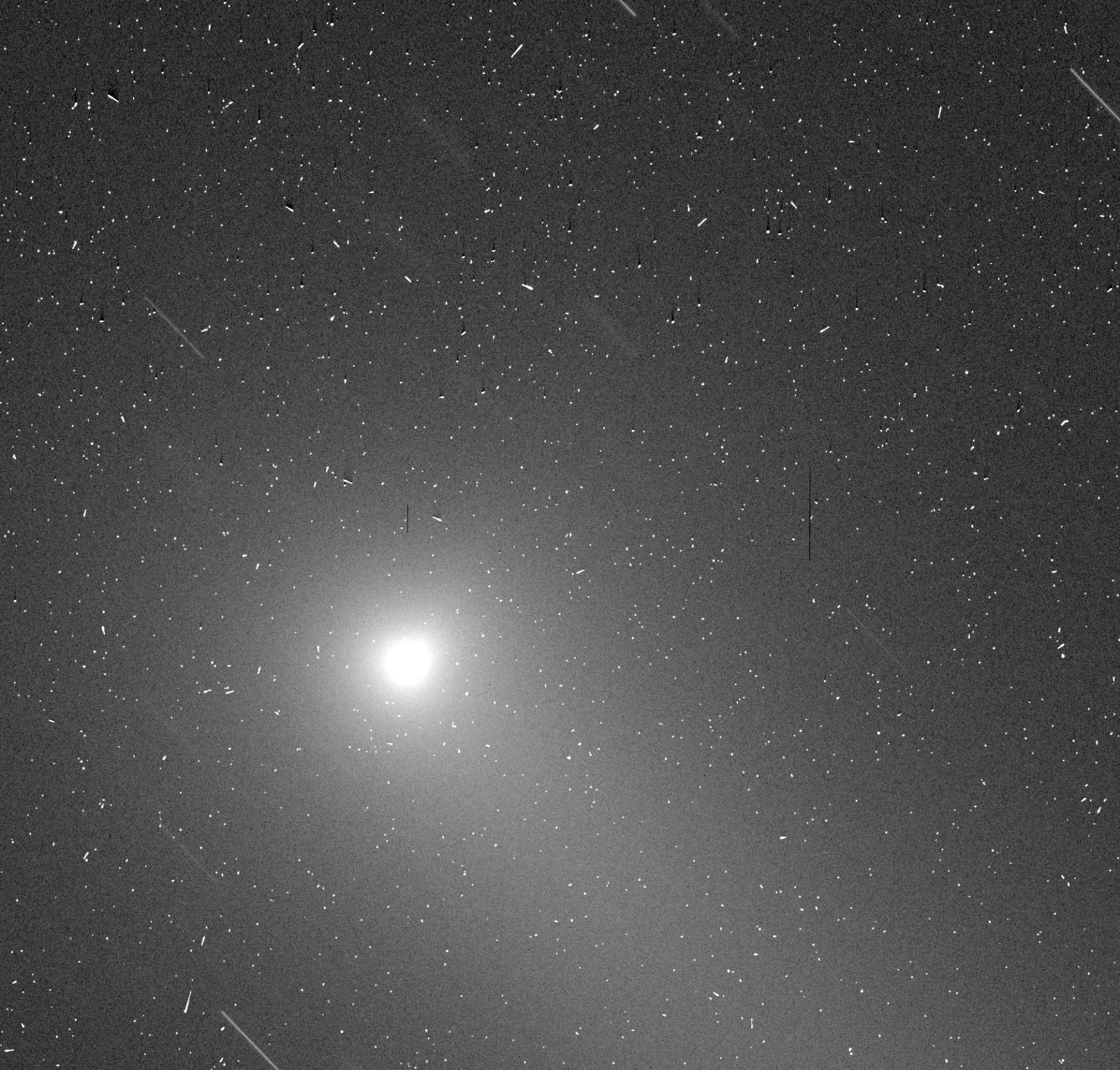
This image of the interstellar comet 3I/ATLAS was captured by Hubble’s WFC3 instrument on January 22, 2026, at 13:10 UTC.
“Interstellar objects provide unique opportunities for studying materials from other stellar systems,” Harvard University’s Professor Abraham Loeb and Dr. Mauro Barbieri of the INAF-Padova Observatory wrote in a recent paper in the Research Notes of the American Astronomical Society.
“Unfortunately for that purpose, 1I/Oumuamua did not display traces of gas or dust around it and 2I/Borisov was only observed at phase angles relative to the Sun-Earth axis of over 16 degrees and never near opposition.”
On January 22, 2026, the interstellar object 3I/ATLAS aligned to within an exceptionally small angle of 0.69 degrees with the Earth-Sun axis.
During that moment, our planet passed almost directly between the Sun and the comet.
“This rare alignment resulted in a brightness surge whose magnitude and growth rate are dictated by the composition and structure of the particles shed by jets of 3I/ATLAS,” Professor Loeb explained in a statement.
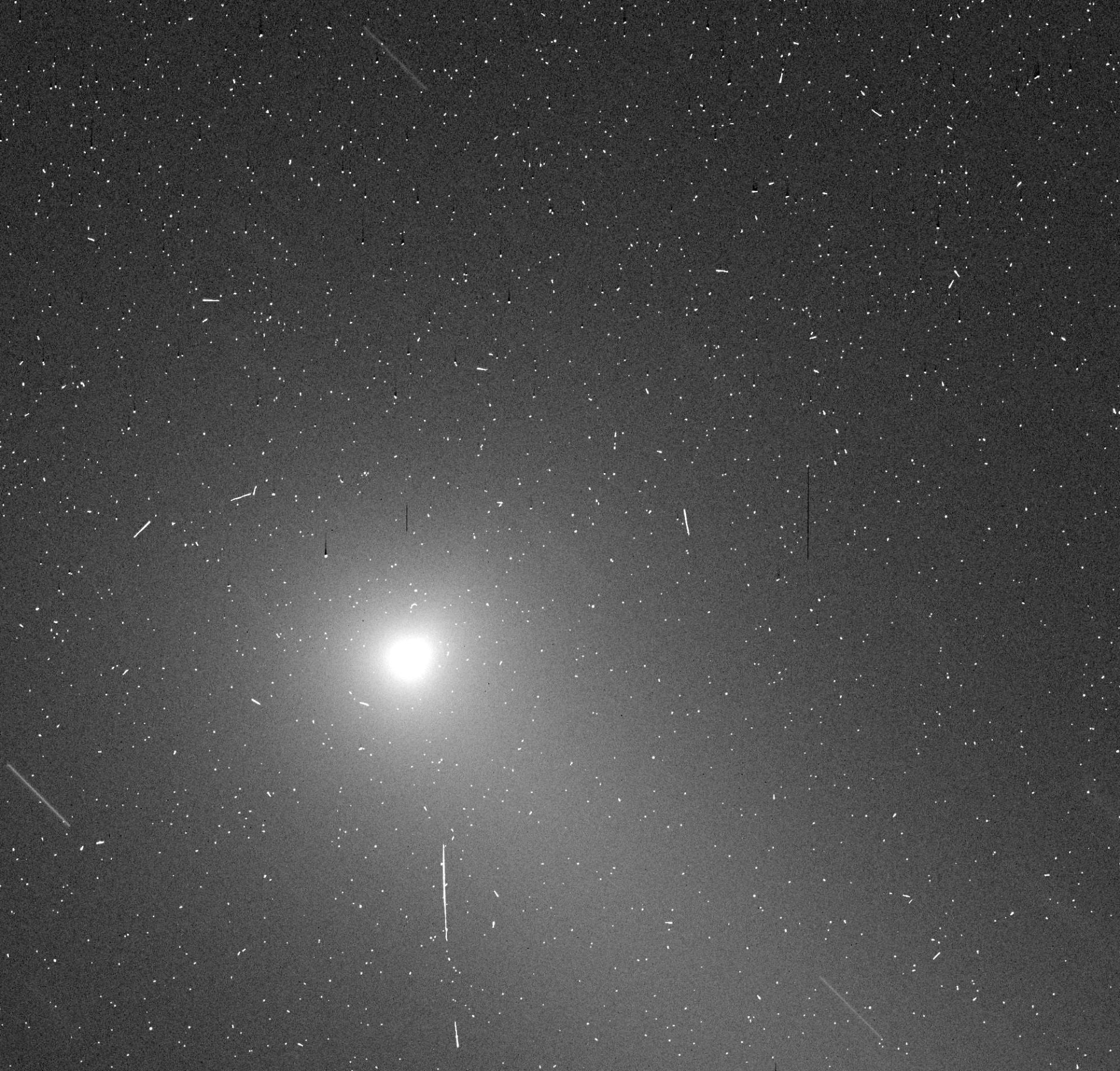
This image of the interstellar comet 3I/ATLAS was captured by Hubble’s WFC3 instrument on January 22, 2026, at 13:40 UTC.
Shanghai Astronomical Observatory astronomer Man-To Hui used Hubble to observe 3I/ATLAS under the ‘conditions that may not repeat for decades.’
The images of the interstellar object were obtained with Hubble’s Wide Field Camera 3 (WFC3) instrument.
“When the Hubble images from the January 22, 2026 alignment were processed by my collaborator Toni Scarmato, the residuals showed the system of 4 jets, including a prominent anti-tail directed nearly towards the Sun and Earth, supplemented by three mini-jets,” Professor Loeb wrote.
“The mini-jets are equally separated from each other by an angle of 120 degrees, and one of them is faint, possibly because it is hidden in an unfavorable orientation relative to Earth.”
Users who are viewing this thread
Total: 2 (members: 0, guests: 2)
Pakistan Defence Latest
-
 Federal cabinet gives nod to imposition of emergency in KP; summary sent to president (23 Viewers)
- Latest: Forsvaret
-

-

-
-

Country Watch Latest
-

-
 Iran - Israel/US War: Israel-US declare war on Iran, Iran responds (297 Viewers)
- Latest: GatlingGunZ
-
 Indian General Admits: We Cannot Defend India Against Pakistan & China (28 Viewers)
- Latest: Master Chief
-


Latest Posts
-
-
-
Federal cabinet gives nod to imposition of emergency in KP; summary sent to president (23 Viewers)
- Latest: Forsvaret
-

-
Iran - Israel/US War: Israel-US declare war on Iran, Iran responds (297 Viewers)
- Latest: GatlingGunZ