Electric vehicle ( EV ) Industries

1753472675576.png

Electric cars were discontinued a hundred years ago;

"A travel revolution that the mafia stopped: The buried story of the electric car"

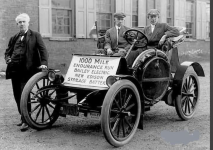
This photo is from 1910. Thomas Edison, the world's greatest inventor, stands next to a beautiful Bailey electric car. The car was equipped with a nickel-iron battery developed by Edison, which could travel up to 100 miles (about 160 kilometers) on a single charge.

This was not a dream, but the real beginning of a revolution that was stopped by conspiracies—at a time when the world had not fully adopted the gasoline engine, electric cars were running on the roads in all their glory.

In the same year — September 1910 — this same Bailey car participated in a 1,000-mile endurance test with gasoline cars and demonstrated its capabilities to the fullest. But this is only the middle part of the story of this journey. The real beginning had happened much earlier.

The Beginning of Electric Vehicles — Long Before Oil

The concept of electric technology emerged in the early 19th century.
In 1828, Hungarian inventor Ányos Jedlik first developed a small electric motor.
In 1835, Scottish Robert Anderson built the world’s first electric-powered vehicle — a rudimentary form, but the first attempt at battery-powered human propulsion on the road.

Various European and American inventors improved these vehicles in the 1870s and 1880s.
In 1890, William Morrison built the first successful electric vehicle in the United States — capable of seating six people and traveling at speeds of up to 20 kilometers per hour.

By 1900, electric vehicles were the most popular type of vehicle on American roads. Their use had become common in cities, especially among women and doctors, because:

They were quiet

They did not emit smoke

They were easy to start

They were free from the hassle of changing gears

Then what always happens - the conspiracy of powerful capitalists

The question is, why did electric cars disappear when they were so popular?

The answer is not simple, but a deep and bitter truth.

In 1908, Ford introduced his cheap petrol car, the Model T, to the market, which began to be produced at a low cost through the assembly line.

On the other hand, companies like Rockefeller's Standard Oil had completely taken over the production and distribution of petrol.

Together, they manipulated the market, the media and policy in such a way that electric cars gradually disappeared from the market.

Later, between the 1930s and 1950s, companies such as General Motors, Standard Oil, and Firestone became part of the campaign against electric vehicles. With their cooperation, electric train systems were also dismantled in many cities in the United States so that the public would be forced to buy gasoline vehicles.

Today's "new" electric vehicles — actually the return of a century-old technology

Now that the world is struggling with the toxic effects of fossil fuels, environmental destruction, fuel shortages, and global warming crises —
electric vehicles are once again being presented as a ray of hope.

But we must remember that this is not a new invention, but the reemergence of a buried fact of history.
The same battery, the same passion, the same future — what was a dream in 1830, became a reality in 1900.

He was a victim of expediency in 1930, buried alive, and today — in the 21st century — stands before us again with a new determination.
 

EV subsidy: 116,000 electric bikes, 3,170 electric rickshaws/loaders to be introduced


Rs9 billion already made for FY2025-26 to finance initiative, says Finance Division

BR Web Desk
August 5, 2025

1754428770965.png

The Economic Coordination Committee (ECC) of the Cabinet approved on Tuesday a summary regarding the implementation of a subsidy scheme to promote the adoption of electric bikes and rickshaws/loaders to citizens of Pakistan, the Finance Division said.

The ECC met under the chairmanship of Finance Minister Muhammad Aurangzeb, who joined the proceedings virtually. The meeting deliberated on several key economic matters, including the rollout of a new energy vehicle policy, extension of grants-in-aid for Quaid-i-Azam University, and approval of a technical supplementary grant related to the Telegraphic Transfer Charges Incentive Scheme.

“The committee considered and approved a summary submitted by the Ministry of Industries and Production regarding the implementation of a subsidy scheme to promote the adoption of electric bikes and rickshaws/loaders to citizens of Pakistan.

“A budgetary provision of Rs9 billion has already been made for FY2025-26 to finance this initiative. The scheme also includes the provision of free electric bikes to top-performing students of government colleges,” the Finance Division said.

“As per the approved plan, 116,000 electric bikes and 3,170 electric rickshaws/loaders will be introduced in two phases. In the initial phase, expected to be launched by the prime minister shortly, 40,000 electric bikes and 1,000 electric rickshaws/loaders will be rolled out.”

Meanwhile, the ECC also reviewed and approved a technical supplementary grant of Rs30 billion, requested by the Finance Division, to settle outstanding claims from the previous fiscal year amounting to Rs58.26 billion under the Telegraphic Transfer Charges Incentive Scheme.

The committee directed the Finance Division to coordinate with the State Bank of Pakistan (SBP) to work out the payment modalities for the grant. It also instructed the Finance Division to complete a detailed assessment, including analysis of pros and cons, financial modalities, and opportunity cost of the Pakistan Remittance Initiative, in collaboration with the SBP, and present its final recommendations incorporating stakeholder feedback by mid-September, following a thorough analysis due by the end of August.

Additionally, the ECC approved in principle a bailout grant of Rs2 billion for Quaid-i-Azam University, contingent upon the preparation and presentation of a comprehensive financial self-sustainability plan.

The university, in collaboration with the Higher Education Commission, is required to submit a clear roadmap outlining the strategy to achieve long-term financial stability and reduce dependency on future bailout packages.

The session was attended by Federal Minister for Power Sardar Awais Ahmed Khan Leghari, Minister for Petroleum Ali Pervaiz Malik, Minister for National Food Security and Research Rana Tanveer Hussain, along with senior officials from relevant ministries, divisions, and departments.
 

New car levy to power EV revolution


Khaleeq Kiani
August 6, 2025

ISLAMABAD: After imposing up to three per cent tax on gross sale value of conventional local and imported vehicles, the government approved a five-year subsidy scheme on Tuesday for the rollout of 116,000 electric bikes and 3,170 electric rickshaws/loaders, with an estimated cost of around Rs100bn.

The scheme is part of efforts to encourage the adoption of electric vehicles (EVs) in Pakistan, reduce oil imports, and foster environmental sustainability. Prime Minister Shehbaz Sharif is expected to launch the initiative on Aug 14 formally.

The decision was made at a meeting of the Economic Coordination Committee (ECC) of the Cabinet, which also discussed the New Electric Vehicle Adoption Levy (NEVAL). The levy is expected to generate Rs122bn, which will not only fund the subsidy scheme but also meet a key condition of the $1.4bn Resilience and Sustainability Facility (RSF) from the International Monetary Fund (IMF).

Finance Minister Muhammad Aurangzeb, who presided over the meeting remotely, was informed that a Rs9bn subsidy had already been earmarked for electric vehicles in the current year’s budget. To fund the scheme, the government imposed a 1pc NEVAL on local and imported vehicles up to 1300cc, 2pc on vehicles between 1,300cc and 1,800cc, and 3pc on vehicles above 1,800cc.


ECC approves Rs100bn subsidy scheme for electric bikes, rickshaws

The first phase of the subsidy will involve the distribution of 40,000 e-bikes and 1,000 e-rickshaws/loaders. The scheme will be implemented across the country, including Azad Kashmir and Gilgit-Baltistan, with 219 e-bikes reserved for outstanding students. The second phase will roll out the remaining 76,000 e-bikes and 2,170 e-rickshaws/loaders.

The ECC highlighted that the adoption of electric vehicles was crucial not only for environmental reasons but also for reducing the country’s oil import bill and utilising excess power for productive purposes. The government’s New Electric Vehicle Policy aims to raise the number of electric vehicles to 30pc of all new vehicle sales by 2030, aligning with Pakistan’s commitments under the Paris Agreement.

One of the main barriers to the adoption of electric vehicles is the higher upfront cost compared to traditional internal combustion engine vehicles. To address this, the subsidy scheme will focus primarily on electric two and three-wheelers, to be implemented over the next five years.

The financing options will include both conventional and Islamic loans, with a maximum loan size of Rs200,000 for e-bikes and Rs880,000 for e-rickshaws/loaders. The markup rate will be set at six months KIBOR plus 2.75pc, with loan tenures of two years for e-bikes and three years for e-rickshaws/loaders.

The government will provide a 20pc portfolio guarantee on a first-loss basis, while the debt-to-equity ratio will be 80:20. The government will contribute a maximum of Rs50,000 for an e-bike and Rs200,000 for an e-rickshaw/loader. Additionally, the government will cover the full cost of the markup, effectively making the loans interest-free for borrowers.

To be eligible for the subsidy, applicants must be between 18 and 65 years old for e-bikes and 21 to 65 years old for e-rickshaws/loaders. The quota for rickshaws/loaders will be allocated based on provincial population, with 10pc reserved for Balochistan.

A minimum of 25pc of e-bike quotas will be reserved for women, and 10pc will be set aside for individuals using e-bikes for commercial purposes, such as delivery services. For e-rickshaws/loaders, priority will be given to individuals, with any remaining quota allocated to fleet operators, capped at 30pc.

Applications for the scheme will be processed through a digital platform, allowing for transparent tracking and selection. If demand exceeds the provincial or segment quota, applicants will be selected through an electronic balloting system. Only shortlisted manufacturers and assemblers, approved by the Engineering Development Board (EDB) based on technical capacity and financial strength, will be eligible to participate.

In addition to the electric vehicle scheme, the ECC approved a supplementary grant of Rs30bn, requested by the Finance Division, to settle outstanding claims from the previous fiscal year under the Telegraphic Transfer Charges Incentive Scheme. The Finance Division was also instructed to conduct a detailed assessment of the Pakistan Remittance Initiative, with recommendations due by mid-September.

Published in Dawn, August 6th, 2025
 

EV bike sales surge to record high despite infrastructure challenges


100,000 EVs are expected to be sold in 2025, up from just 2,000 in 2022

Gohar Ali Khan
August 15, 2025

1755378748779.png


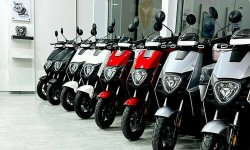
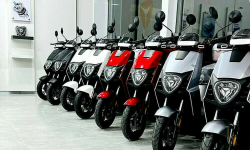
Despite a challenging road infrastructure, sales of Electric Vehicle (EV) motorbikes have been gaining momentum among people from all social strata in the country.

According to well-placed local market sources, approximately 15,000 units were sold in a single month of July 2025 by some 45 two- wheeler companies amid initiatives being taken by both provincial and federal governments to promote EVs and reduce environmental pollution.

Breaking it down annually, 2,000 EV units were sold in 2022. This figure went up to 6,000 in 2023 and jumped to 33,000 a year later. Between January to July 2025, 57,800 units have been sold. The figure is expected to touch 100,000 by the end of this year.

Reportedly, companies have scaled up EV production to 7,000 units per month from January this year as more and more people choose EV bikes over fuel-driven ones.

Some of the more popular brands are Evee, Metro and Vlektraare, offering various variants with advanced features, including anti-theft alarms, safety breakers, tubeless tires and above all motor and battery warranty to attract customers.

EV prices vary from Rs180,000 to Rs300,000 and from Rs350,000 to Rs600,000 depending on the category.

Their popularity has risen despite the higher prices compared to traditional bikes, reportedly causing concern among gasoline market leaders of motorbikes.

Talking to Business Recorder, Hamza Asad, director of Sales & Marketing Evee Co, said the government must continue the Auto Industry Development and Export Policy (AIDEP) 2021-2026 till 2030 with a view to supporting the newly-established EV industry in the country. On top of that, the government must focus on user-cum-industry friendly policy, he said.

He said competition between EV and gasoline bikes can be healthy, and gave the example of EV bike consumption in China, which hit 40 million annually. The sector efficiently uses 90% graphene battery and 10% lithium battery.

“The local road infrastructure is really a challenge in both EV and gasoline bikes while customers are usually price sensitive. EV bikes are a bit expensive but there is no maintenance charges including oil changing, tuning and the like each month,” he said.
 

China’s Letin auto to set up small EV plant in Punjab as competition heats up​


Punjab offers tax incentives and duty-free imports to attract investors amid growing interest of Chinese EV makers in Pakistan

Punjab is poised to see a fresh wave of industrial investment as China’s Letin Auto Group plans to establish a small electric vehicle (EV) manufacturing facility in the province.

A 15-member delegation led by General Manager Xu Zhen met with Punjab’s Minister for Industries and Commerce, Chaudhry Shafay Hussain, in Lahore to discuss the project and available incentives. The minister assured full support from the provincial government, highlighting benefits including a 10-year income tax holiday and duty-free import of machinery for plants in Special Economic Zones.

“New investment in the province is not only strengthening the economy but also creating employment opportunities for thousands of people,” Hussain said, adding that Punjab was fast becoming a preferred destination for foreign industrialists. He emphasised the government’s focus on promoting EVs, aiming for Punjab to play a leading role in the country’s clean mobility transition.


In 2023, Letin Auto—trading as Levdeo Automobile Group—filed for bankruptcy in China and completed its reorganisation in 2024. Auto sector experts suggest the company may be relocating to Pakistan as a base for local sales and exports, taking advantage of competitive incentives and the country’s low US tariff of 19%.

Letin Auto joins a growing list of Chinese EV makers entering Pakistan, including BYD, Changan, and British brand MG, with others exploring local assembly and production. Industry analysts say this reflects rising confidence in Pakistan’s EV sector, which remains nascent but offers significant potential due to high fuel costs and government incentives.

Existing auto players are watching closely. A Japanese-origin car assembler admitted, “This means we cannot sit idle anymore. We have to accelerate our EV plans and bring affordable models to the market.” Another executive noted that competitively priced Chinese EVs could quickly gain market share, benefiting customers in the long run.


Local companies are also preparing. A senior Hyundai Pakistan official said, “Globally, Hyundai is moving aggressively towards electric mobility and Pakistan will not be left behind. The arrival of new Chinese players will push us to bring our EV technology here sooner.”

Analysts believe this surge of competition will reshape the local auto industry, forcing firms to move beyond conventional combustion vehicles. EV enthusiasts see a positive impact: Salman Ali from Lahore said, “Affordable small EVs could be a game changer. With fuel prices rising every month, competitive Chinese EVs could give the middle class a real chance to switch to cleaner mobility.”

Experts add that Pakistan’s EV policy, with reduced customs duties and favourable tariffs, has already boosted imports, while local assembly and manufacturing could strengthen the domestic supply chain, including battery and component industries. For Punjab, the benefits include jobs, technology transfer, and a stronger industrial base, while consumers gain more choices and local assemblers face intensified competition.


“Chinese companies don’t just bring cars, they bring disruption. Those who adapt will survive, those who don’t will be left behind,” said the Japanese auto company official. Analysts note that decades of limited choices are giving way to an increasingly competitive market, redefining how Pakistanis buy and use cars.
 
Chinese electric vehicle giant BYD plans to roll out its first car assembled in Pakistan by July or August 2026 to capture growing demand for electric and plug-in hybrid vehicles in the region, a company executive said on Wednesday.

BYD, the world’s top EV maker, has been expanding rapidly outside its home market, where it is in a strong price war. The Pakistan plant addresses rising demand from emerging markets and allows the company to take advantage of incentives offered by the government.

The plant has been under construction since April near Karachi in a partnership between BYD and Mega Motor Company, a subsidiary of Hub Power, Danish Khaliq, vice president of sales and strategy at BYD Pakistan, told Reuters.

It would initially have the capacity to produce 25,000 units a year on a double shift, he said. He did not elaborate on when the plant would achieve full capacity or say when mass production would begin there.

The plant will start by assembling imported parts, with some local production of non-electric components, Khaliq said, adding it would initially produce vehicles for the domestic market, with potential to export to right-hand drive countries in the region depending on freight costs and business economics.

“We do not foresee excess capacity in our system as demand in Pakistan will catch up,” he said.

BYD started delivering imported EVs in Pakistan in March. Khaliq did not give an exact sales number but said the sales of a few hundred cars had exceeded internal targets by 30 per cent.
 

JW Group partners with China’s Jinpeng to help drive electric mobility in Pakistan


BR Web Desk
September 11, 2025

JW Group Pakistan, an industrial conglomerate, has officially announced a partnership with Jinpeng Group, China’s largest electric tricycle manufacturer and a global leader in light electric vehicles.

The partnership is aimed to help revolutionise Pakistan’s 2/3-wheeler market with new electric vehicle (EV) and gasoline production lines.

The collaboration marks a significant milestone in Pakistan’s automotive industry with the successful launch of production for both electric and gasoline-powered two- and three-wheelers at JW Group’s facilities in Lahore.


It may be noted that JW SEZ Group operates a joint venture with China’s SAIC Motor International, called MG JW Automobile Pakistan that manufactures MG vehicles in Pakistan.

Muhammad Javed Afridi, CEO of JW Corporation, said, “Our collaboration with Jinpeng Group represents a transformative moment for Pakistan’s manufacturing ecosystem. By combining our established nationwide distribution network and manufacturing facilities with Jinpeng’s technological expertise in electric vehicle production, we are not only addressing immediate market needs but also positioning Pakistan as a future export base for new energy vehicles throughout South Asia and beyond. This partnership directly supports our national industrial development goals while creating meaningful employment opportunities for Pakistanis”.

Meanwhile, Zakir Ali, CEO of Jinpeng Group, said, “Pakistan represents a key growth market in Asia’s evolving electric mobility landscape. Through our partnership with JW Group, we see the opportunity to develop not just vehicle distribution, but a complete ecosystem for clean, electric mobility tailored to Pakistan’s unique requirements. Our initial production launch encompasses both EV and gasoline models to ensure we meet current market needs while building toward an increasingly electric future. Jinpeng’s commitment to technological innovation, evidenced by our more than 400 patents, will help bring world-class mobility solutions to Pakistani consumers”.
 

Graphene vs lithium-ion phosphate:

what battery is best for EV bikes?


Graphene batteries are an emerging technology that enhances lithium-ion cells by incorporating graphene into the electrodes

Gohar Ali Khan
September 24, 2025

1758806947429.png


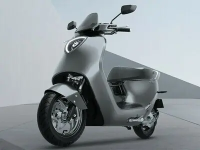
KARACHI: Auto sector experts have urged the government to give EV motorbike assemblers the options to install either graphene or lithium-ion phosphate batteries in EV scooters, and let the consumer decide what they want. This will allow the EV industry grow and evolve, they said.

Currently, the Punjab government is asking EV bike assemblers to install lithium-ion phosphate batteries, believing them to be safer and more durable.

Graphene vs lithium-iron phosphate

There are generally four kinds of batteries being installed in EV bikes these days globally: lead acid, graphene, lithium-ion phosphate and lithium.

Graphene batteries are an emerging technology that enhances lithium-ion cells by incorporating graphene into the electrodes.

This improves conductivity, charging speed, and heat dissipation, allowing for much faster charging and potentially higher energy density than conventional chemistries.

For electric scooters, this means lighter batteries, shorter charging times, and longer riding ranges. However, graphene batteries are still relatively new, expensive to manufacture, and not widely available at a commercial scale.

Lithium iron phosphate batteries, on the other hand, are already widely used in electric scooters due to their safety, stability, and long cycle life. They are less prone to overheating or catching fire compared to other lithium-ion chemistries.

Although they have lower energy density than graphene-enhanced or some other lithium-ion batteries, their durability and cost-effectiveness make them a practical choice for manufacturers today.

EV motorbikes have two costly parts: the battery and the motor. Depending on quality and capacity, graphene battery prices range from Rs45,000 to Rs90,000, while lithium-ion phosphate batteries are sold for Rs90,000 to Rs140,000.

Talking to Business Recorder, auto sector analyst Muhammad Sabir Shaikh said giving assemblers both options will help the emerging EV motorbike industry gain proper momentum and work more efficiently.

He believes it will also play a salient role in reducing ballooning air pollution on roads and, above all, the country’s swelling import oil bill.
 
China chooses graphene/ lead-acid batteries
Most Asian countries have major sales of lead acid/graphene batteries as seen below.
1758807318747.png


China holds the world’s biggest lithium reserves and dominates global refining, yet many of its electric scooters still run on graphene/lead-acid batteries instead of lithium. The reason is strategy, not shortage, experts say.
Cost is the biggest factor, as graphene lead-acid packs are up to 40% cheaper, making scooters affordable for price-sensitive buyers. They are also safer and more stable, with lower risk of overheating compared to lithium. China already has a well-established recycling system for lead-acid batteries, while lithium recycling is costly and complex.
Manufacturers use a dual approach where graphene batteries are used for entry-level scooters and lithium-ion for premium models. Meanwhile, the government reserves lithium for cars, storage systems, and high-tech industries.
In short, China chooses graphene lead-acid batteries to balance affordability, safety, and resource management, ensuring mass adoption of electric mobility while strategically using lithium where it matters most.
 
Last edited:
The popularity of electric vehicles

When a customer buys an electric bike, the money saved on fuel and maintenance after about 18 to 24 months is enough to recover the full purchase cost of the bike. After that, the bike’s running expense is so low that it feels almost free to operate

When it comes to fuel-driven bikes, customers have to spend money on gas plus on maintaining the chain and engine, and getting the oil changed.

The EV adoption rate in the country increased in 2025 because of multiple reasons such as introduction of affordable electric scooters by various original equipment manufacturers (OEMs).

As people see more EV bikes on the road, it gives them the confidence to buy one for themselves.

OEMs are spending a large amount of money on marketing. Also, the Punjab government has introduced an initiative of giving electric bikes with subsidy.

As more OEMs enter the space, there is more variety on offer.

In Pakistan, due to increased pollution in Lahore and other cities, the EV policy 2021-2025 was introduced by the Engineering Development Board (EDB) according to which the government wants 30% of vehicles on the road to be electric by 2030.

Experts are clear that consumers should have the right to decide whether they want to buy a lithium battery scooter or a graphene battery scooter. The job of policy makers should be to ensure both are safe options.
 

Chinese EV unit expands footprint in Pakistan amid surging overseas sales​


By Mia Shah | Gwadar Pro
Sep 23, 2025

BEIJING, Sept. 23 (Gwadar Pro) - Jiangling Group Electric Vehicle (JMEV) is strengthening its collaboration with its Pakistani partner, Capital Smart Motors (CSM), by advancing localized production and upgrading its retail network. This move reflects the Chinese automaker's accelerated expansion into right-hand-drive markets.

The two companies recently held talks in Pakistan to discuss KD (knock-down) assembly plans and market-specific product adaptations, according to a statement from JMEV's overseas division. Both parties engaged in practical discussions on market expansion, product localization, technical cooperation, and production capacity collaboration, marking a new phase of industrial synergy and mutual benefit in the new energy vehicle sector.
 
To view this content we will need your consent to set third party cookies.
For more detailed information, see our cookies page.
 
To view this content we will need your consent to set third party cookies.
For more detailed information, see our cookies page.
 

Attock Petroleum, Huawei sign MoU to develop EV charging network in Pakistan​

By Fatima Javed | Gwadar ProOct 17, 2025

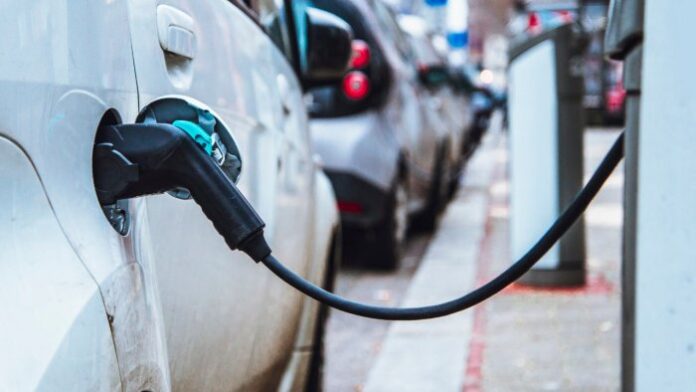
ISLAMABAD- Attock Petroleum Limited signed a Memorandum of Understanding (MoU) with Huawei Technologies Pakistan Pvt. Ltd. and its partner, AE Power, last week to collaborate on developing electric vehicle (EV) charging infrastructure across Pakistan. The signing ceremony was held at Huawei’s Islamabad office.

Under the agreement, the three organizations will jointly work to establish EV charging stations and promote the use of electric mobility in the country. The partnership aims to contribute to the creation of a sustainable, energy-efficient transportation ecosystem while supporting national efforts to reduce carbon emissions and strengthen clean energy initiatives.

The development of EV infrastructure in Pakistan has gained momentum in recent years, with both public and private sectors showing growing interest in clean transportation.

According to official reports, over 3,800 investors and companies have expressed interest in setting up EV charging stations nationwide, with more than 70 licenses already issued and several stations operational. The government’s National Electric Vehicle Policy (2025–2030) targets the establishment of 10,000 EV charging stations by 2030, supported by tariff reductions of up to 44 percent to encourage investment.

Several provinces have also launched initiatives to expand EV networks. Punjab has proposed installing 2,000 charging stations and introducing 600 electric buses, while Sindh aims to place charging facilities every 50 kilometers along major routes to facilitate intercity travel. Additionally, Pakistan’s fastest 120 kW EV charging station has recently been inaugurated in Islamabad, capable of charging vehicles within an hour.

Public interest in electric vehicles is steadily growing, particularly among users of two- and three-wheelers such as e-bikes and rickshaws, while private car adoption continues to increase gradually as infrastructure improves.

The collaboration between these organizations is expected to further accelerate these developments and support Pakistan’s transition toward a cleaner, greener, and more connected energy future.
 
Creating a thread to discuss all things EV. Users are welcome to share about their experience of owning an EV in Pakistan. Also news about new launches specially budget EVs.

@Mods can we make this thread sticky please?
 

Users who are viewing this thread

Pakistan Defence Latest

Back
Top