India is incomplete without Pakistan: Indian Prime Minister Atal Bihari Vajapayee

Ram ram ji,

This poem was written by At an ji on August 15, 1947, when he was just a callow youth and was most likely swept up in a wave of emotions, much like most people in the newly independent countries of India and Pakistan were. At that time, many were still coming to terms with the shock of Partition and hoped for it to be reversed. It can hardly be considered repesentative of his views on Pakistan when he became Prime Minister, just like one would not consider the views of Mr Jinnah or the poems of Allama Iqbal from their early years to be representative of their views on Pakistan once they had matured as leaders.
1769593254571.jpeg


Yes.

Here is "maturity as leaders", in all its aesthetic glory.

Why do you people delude yourselves so much into thinking we do not know what chanakiya is?

I will remind you that the man himself was of Pakistani descent, a Taxila native no less.

Please try your subterfuge on white skinned folk who still harbour pathetically misplaced "guilt" for daring to try and civilise you. They are far more malleable than we.
 
View attachment 175294


Yes.

Here is "maturity as leaders", in all its aesthetic glory.

Why do you people delude yourselves so much into thinking we do not know what chanakiya is?

I will remind you that the man himself was of Pakistani descent, a Taxila native no less.

Please try your subterfuge on white skinned folk who still harbour pathetically misplaced "guilt" for daring to try and civilise you. They are far more malleable than we.
Ram ram ji,

Your brilliant arguments are far too sophisticated and beyond the comprehension ability of my simple mind. They have gone totally over my head. While I have been unable to understand what you meant, I am sure it was deeply insightful for people much smarter than me.
 
Question:
@Master Chief
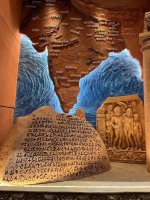
Should Pakistan hang a mural of the Delhi Sultanate in the National Assembly building?

View attachment 175286
Delhi Sultanate or Mughal Empire?

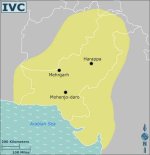
I would prefer to see us fully claim the Indus Valley Civilisation first and foremost, as this brings great pain to the vedic derived hindutva nation, who nowadays pretend to hold the "mleccha" Harappans in great reverence. Imagine how high they would jump in Lok Sabha at the sight of such a map in Islamabad:

1769593914076.jpeg


Indeed, several trans-border representatives on this very forum may start jumping imminently!

Pakistan is a unique qom, proud of all its various civilisational contributors, and discriminatory against none.
 
Ram ram ji,

This poem was written by At an ji on August 15, 1947, when he was just a callow youth and was most likely swept up in a wave of emotions, much like most people in the newly independent countries of India and Pakistan were. At that time, many were still coming to terms with the shock of Partition and hoped for it to be reversed. It can hardly be considered repesentative of his views on Pakistan when he became Prime Minister, just like one would not consider the views of Mr Jinnah or the poems of Allama Iqbal from their early years to be representative of their views on Pakistan once they had matured as leaders.
जय सिया राम, 🙏🏻 Ram Bharoseji,

The earler shorter poem written by Shri Atal Bihariji was expanded and embellished in the 1990s by adding verses. mentioning Islam, Lahore, Karachi. Dhaka, Jihad and recited repeatedly in Parliament and at public rallies. Shri Atal Bihariji had already matured as a leader by then having served as both india's foreign minister, Leader of Opposition , and Prime Minister


The shorter poem:

दिन दूर नहीं खंडित भारत को. : Din door nahin khandit Bharat Ko
पुन: अखंड बनाएँगे। pun akhand banayegen
गिलगित से गारो पर्वत तक. Gilgit se Garo parbat tak
आज़ादी पर्व मनाएँगे॥. Azaadi Parv manayenge
उस स्वर्ण दिवस के लिए आज से. Us swarn diwas ke liye aaj se
कमर कसें बलिदान करें। Kamar kasen, balidaan karen
जो पाया उसमें खो न जाएँ, Jo paaya usme kho na jayem
जो खोया उसका ध्यान करें. Jo khoya uska dhyan karein
____________________________________

Trans: The day is not far when fractured India will be reconstituted into the the Greater India,
From Gilgit to the Garo Mountain, we will celebrate the Freedom festival,
For that day of glory, from today, let us prepare, and sacrifice, Lets not be lost in what we have gained but focus our attention on what we lost


The longer expanded poem :
हिंदू के नाते उनका दु:ख. Hindu ke naate unka Dukh
सुनते यदि तुम्हें लाज आती। Sunnte tumhe yadi laaj aati
तो सीमा के उस पार चलो. To Seema ke us paar chalo
सभ्यता जहाँ कुचली जाती॥. Sabhyata jahan kuchli jaati
इंसान जहाँ बेचा जाता, Insaan jahan becha jaata
ईमान ख़रीदा जाता है। Eeman khareeda jaata hai
इस्लाम सिसकियाँ भरता है, Islam Siskiyan bharta hai,
डालर मन में मुस्काता है॥. Dollar man mein muskata hai
भूखों को गोली नंगों को. Bhookhon ko goli nangon ko
हथियार पिन्हाए जाते हैं। Hathiyar pinhaye jaate hain
सूखे कंठों से जेहादी. Sukhe Kanthon se jehadi
नारे लगवाए जाते हैं॥. Nare lagvaye jaate hain
लाहौर, कराची, ढाका पर. Lahore Karachi Dhaka par
मातम की है काली छाया। Maatam ki hai kaali chaya
पख्तूनों पर, गिलगित पर है. Pakhtoono par Gilgit par hai
ग़मगीन गुलामी का साया॥. Ghamgeen gulabi ka Chaaya
बस इसीलिए तो कहता हूँ. Bas Is liye to kahta hun
आज़ादी अभी अधूरी है। Azaadi Abhi Adhoori hai
कैसे उल्लास मनाऊँ मैं? Kaise Ullhas Manau main?
थोड़े दिन की मजबूरी है॥. Thodi din ki majboori hai

_________________________
Trans:
🏳
If you are ashamed to hear about the grief of the Hindus
Then come and go across the border where civilization is crushed,
Where humans are sold and honor is purchased
Where Islam sobs and the Dollar chuckles in mental glee
The starving get ammunition and the naked wear weapons,
Where from dry throats the jihadi slogans are forced
The dark shadow of lamentation is on Lahore. Karachi and Dhaka,
On the Pakhtuns and the Gilgitis there is the pink shadow of grief.
Which is why I say , Our Independence is Incomplete
How can I celebrate.., But this ( constraint) is temporary
 
Ram ram ji,

Your brilliant arguments are far too sophisticated and beyond the comprehension ability of my simple mind. They have gone totally over my head. While I have been unable to understand what you meant, I am sure it was deeply insightful for people much smarter than me.
नमस्कार ।
हमारे इस निमनलिखित लेख पर कृपया टिप्पण्णी करें । धन्यवाद । 🙏🏻
Trans: Please comment on my post below , Thank you ,

Post in thread 'India is incomplete without Pakistan: Indian Prime Minister Atal Bihari Vajapayee'
https://defencepk.com/forums/thread...ster-atal-bihari-vajapayee.30031/post-1119085
 
जय सिया राम, 🙏🏻 Ram Bharoseji,

The earler shorter poem written by Shri Atal Bihariji was expanded and embellished in the 1990s by adding verses. mentioning Islam, Lahore, Karachi. Dhaka, Jihad and recited repeatedly in Parliament and at public rallies. Shri Atal Bihariji had already matured as a leader by then having served as both india's foreign minister, Leader of Opposition , and Prime Minister


The shorter poem:

दिन दूर नहीं खंडित भारत को. : Din door nahin khandit Bharat Ko
पुन: अखंड बनाएँगे। pun akhand banayegen
गिलगित से गारो पर्वत तक. Gilgit se Garo parbat tak
आज़ादी पर्व मनाएँगे॥. Azaadi Parv manayenge
उस स्वर्ण दिवस के लिए आज से. Us swarn diwas ke liye aaj se
कमर कसें बलिदान करें। Kamar kasen, balidaan karen
जो पाया उसमें खो न जाएँ, Jo paaya usme kho na jayem
जो खोया उसका ध्यान करें. Jo khoya uska dhyan karein
____________________________________

Trans: The day is not far when fractured India will be reconstituted into the the Greater India,
From Gilgit to the Garo Mountain, we will celebrate the Freedom festival,
For that day of glory, from today, let us prepare, and sacrifice, Lets not be lost in what we have gained but focus our attention on what we lost


The longer expanded poem :
हिंदू के नाते उनका दु:ख. Hindu ke naate unka Dukh
सुनते यदि तुम्हें लाज आती। Sunnte tumhe yadi laaj aati
तो सीमा के उस पार चलो. To Seema ke us paar chalo
सभ्यता जहाँ कुचली जाती॥. Sabhyata jahan kuchli jaati
इंसान जहाँ बेचा जाता, Insaan jahan becha jaata
ईमान ख़रीदा जाता है। Eeman khareeda jaata hai
इस्लाम सिसकियाँ भरता है, Islam Siskiyan bharta hai,
डालर मन में मुस्काता है॥. Dollar man mein muskata hai
भूखों को गोली नंगों को. Bhookhon ko goli nangon ko
हथियार पिन्हाए जाते हैं। Hathiyar pinhaye jaate hain
सूखे कंठों से जेहादी. Sukhe Kanthon se jehadi
नारे लगवाए जाते हैं॥. Nare lagvaye jaate hain
लाहौर, कराची, ढाका पर. Lahore Karachi Dhaka par
मातम की है काली छाया। Maatam ki hai kaali chaya
पख्तूनों पर, गिलगित पर है. Pakhtoono par Gilgit par hai
ग़मगीन गुलामी का साया॥. Ghamgeen gulabi ka Chaaya
बस इसीलिए तो कहता हूँ. Bas Is liye to kahta hun
आज़ादी अभी अधूरी है। Azaadi Abhi Adhoori hai
कैसे उल्लास मनाऊँ मैं? Kaise Ullhas Manau main?
थोड़े दिन की मजबूरी है॥. Thodi din ki majboori hai

_________________________
Trans:
🏳
If you are ashamed to hear about the grief of the Hindus
Then come and go across the border where civilization is crushed,
Where humans are sold and honor is purchased
Where Islam sobs and the Dollar chuckles in mental glee
The starving get ammunition and the naked wear weapons,
Where from dry throats the jihadi slogans are forced
The dark shadow of lamentation is on Lahore. Karachi and Dhaka,
On the Pakhtuns and the Gilgitis there is the pink shadow of grief.
Which is why I say , Our Independence is Incomplete
How can I celebrate.., But this ( constraint) is temporary
Thank you for posting this, Baibers_1260 ji.

The references to the places in Pakistan and Bangladesh is a lament for the sadness and lack of freedoms there, and not about their reunification with India. Many voices from civil society in these two countries have voiced similar concerns and laments.

Atal ji, while a great statesman of India, was a middling poet. As a scholar yourself, you should allow him some poetic license. Through his words and actions as Prime Minister and earlier Foreign Minister in the Moraji Cabinet, he acknowledged Pakistan's right of existence and was more committed to peace between the two countries than any Indian Prime Minister, with the possible exception of Moraji bhai. Unfortunately, his desire for peace became another casualty of Gen Musharraf's Kargil plan along with Mian Sahab's popularly elected government.
 
Thank you for posting this, Baibers_1260 ji.

The references to the places in Pakistan and Bangladesh is a lament for the sadness and lack of freedoms there, and not about their reunification with India. Many voices from civil society in these two countries have voiced similar concerns and laments.
So why this lament for freedom only in Pakistan and Bangladesh, and not in India's other two neighbors Myanmar ruled by military junta and Nepal then ruled by an unelected monarchy?
Should Pakistani poets likewise have written poems about India in its "State of Emergency " under Indira Gandhi from 1975-1977 when Shri Atal Bihariji along with Key political figures which included Jayaprakash Narayan, Morarji Desai, Atal Bihari Vajpayee, L.K. Advani, and George Fernandes. were themselves imprisoned under the Maintenance of Internal Security Act. ?

Or would that have been interpreted as "interference " in India's internal affairs?
Does Shri Atal Bihariji reserve the right to criticize the internal affairs of other sovereign nations?
The following verses are stark !
मातम की है काली छाया। Maatam ki hai kaali chaya
पख्तूनों पर, गिलगित पर है. Pakhtoono par Gilgit par hai
ग़मगीन गुलामी का साया॥. Ghamgeen gulabi ka Chaaya
बस इसीलिए तो कहता हूँ. Bas Is liye to kahta hun
आज़ादी अभी अधूरी है। Azaadi Abhi Adhoori hai
कैसे उल्लास मनाऊँ मैं? Kaise Ullhas Manau main?
थोड़े दिन की मजबूरी है॥. Thodi din ki majboori hai


Atal ji, while a great statesman of India, was a middling poet. As a scholar yourself, you should allow him some poetic license. Through his words and actions as Prime Minister and earlier Foreign Minister in the Moraji Cabinet, he acknowledged Pakistan's right of existence and was more committed to peace between the two countries than any Indian Prime Minister, with the possible exception of Moraji bhai.
Disagree.. Ironically the most sincere commitment to peace between India and Pakistan was Indira Gandhi ( post the 1971 "victory " ) who foresaw the rise of Hindutva, and the matching rise in Islamic radicalism in Pakistan. She realized that a secular India comfortable with its composite identity, comfortable with its Muslim minority and de-linking communal Hindu-Muslim politics from India's foreign policy towards Pakistan , recognizing that history cannot be reversed, and recognizing the sovereignty of both Pakistan and Bangladesh was the best guarantee of India's future safety and stability. Which is why just 7 months after the famous "1000 year victory " in 1972 Indira Gandhi held the Simla Summit and signed away Azad Kashmir recognizing the ceasefire line as a line of control as a defacto international border. By this gesture Indira Gandhi had hoped that India would not have to live alongside a Versailles treaty type humiliated and vengeful Pakistan that would inevitably rearm and seek nuclear weapons.

In the few weeks after the end of the 1971 war there was much discussion in India amongst Indian intellectuals and politicians as to why Pakistan should be allowed to exist at all since "Jinnah's two nation theory had been drowned in the Bay of Bengal ". Shri Atal Bihari Vajpayee was the most vocal about "reunification " and the status of Indian Muslims. He repeatedly declared an "answer " from Pakistan.
Shrimati Indira Gandhi's response to Shri Atal Bihari Vajpayee in Parliament on how she would "answer " Pakistan after the 1971 ceasefire is a telling example of how she viewed Pakistan.
" A prosperous, educated , patriotic Indian Muslim living safely in India today is the BEST answer to Pakistan "

Unfortunately, his desire for peace became another casualty of Gen Musharraf's Kargil plan along with Mian Sahab's popularly elected government.
Unfortunately, Indira Gandhi underestimated the latent Hindutva mindset that not only targeted Pakistan and Indian Muslims but also alienated Sikhs and other minorities, She was unable to fight the internal battle for India's soul and paid the ultimate price for her dream of a secular united India at peace with its neighbors.
Across the "havoc" of war I salute a great enemy!
 
Last edited:
So why this lament for freedom only in Pakistan and Bangladesh, and not in India's other two neighbors Myanmar ruled by military junta and Nepal then ruled by an unelected monarchy?
Should Pakistani poets likewise have written poems about India in its "State of Emergency " under Indira Gandhi from 1975-1977 when Shri Atal Bihariji along with Key political figures which included Jayaprakash Narayan, Morarji Desai, Atal Bihari Vajpayee, L.K. Advani, and George Fernandes. were themselves imprisoned under the Maintenance of Internal Security Act. ?

Or would that have been interpreted as "interference " in India's internal affairs?
Does Shri Atal Bihariji reserve the right to criticize the internal affairs of other sovereign nations?
The following verses are stark !
मातम की है काली छाया। Maatam ki hai kaali chaya
पख्तूनों पर, गिलगित पर है. Pakhtoono par Gilgit par hai
ग़मगीन गुलामी का साया॥. Ghamgeen gulabi ka Chaaya
बस इसीलिए तो कहता हूँ. Bas Is liye to kahta hun
आज़ादी अभी अधूरी है। Azaadi Abhi Adhoori hai
कैसे उल्लास मनाऊँ मैं? Kaise Ullhas Manau main?
थोड़े दिन की मजबूरी है॥. Thodi din ki majboori hai


Disagree.. Ironically the most sincere commitment to peace between India and Pakistan was Indira Gandhi ( post the 1971 "victory " ) who foresaw the rise of Hindutva, and the matching rise in Islamic radicalism in Pakistan. She realized that a secular India comfortable with its composite identity, comfortable with its Muslim minority and de-linking communal Hindu-Muslim politics from India's foreign policy towards Pakistan , recognizing that history cannot be reversed, and recognizing the sovereignty of both Pakistan and Bangladesh was the best guarantee of India's future safety and stability. Which is why just 7 months after the famous "1000 year victory " in 1972 Indira Gandhi held the Simla Summit and signed away Azad Kashmir recognizing the ceasefire line as a line of control as a defacto international border. By this gesture Indira Gandhi had hoped that India would not have to live alongside a Versailles treaty type humiliated and vengeful Pakistan that would inevitably rearm and seek nuclear weapons.
Shrimati Indira Gandhi's response to Shri Atal Bihari Vajpayee in Parliament on how she would "answer " Pakistan after the 1971 ceasefire is a telling example of how she viewed Pakistan.
" A prosperous, educated , patriotic Indian Muslim living safely in India today is the BEST answer to Pakistan "


Unfortunately, Indira Gandhi underestimated the latent Hindutva mindset that not only targeted Pakistan and Indian Muslims but also alienated Sikhs and other minorities, She was unable to fight the internal battle for India's soul and paid the ultimate price for her dream of a secular united India at peace with its neighbors.
Across the "havoc" of war I salute a great enemy!
Baibers_1260 ji,

It is beyond my ken to know what exactly Atal ji was thinking when he wrote those lines, but Myanmar and Nepal were not part of the British India that was partitioned in 1947 and, in my opinion, a reference to them would have been out of place in a poem that is specifically about the events of August 14/15, even though, as you point out, the people there were being denied their democratic rights.

I certainly would have welcomed Pakistani poets writing about the , which was a dark chapter in India's democracy. Pakistani poets like Faiz Saab and Habib Jalib Saab were as popular as Ramdhari Singh Dinkar ji with those who fought against state oppression during Emergency in India, and they continue to be quoted inside our Parliament, even by BJP leaders.

Mrs Gandhi was, of course, a great Indian leader, but you may be overestimating her charity towards Pakistan and her secular credentials. Liberating East Pakistan, which was militarily indefensible by Gen Niazi Saab and on which public opinion even in America was deeply sympathetic towards the Bengali was a very different kettle of fish than taking parts of West Pakistan/Kashmir , where the people were with the Pakistani defence forces and where Pakistan's allies would have drawn the line. Her secularism was also a part of her BHAM ( Brahmin, Harijan, Adivasi, Muslim) vote bank politics, where the Brahmins ruled and the marginalised groups got token representation and protection in return, with little actual development that would allow them to break free of their vote banks. Unlike her father, who was truly secular and kept religion out of politics , she actively courted and used religious leaders of all faiths, including entering into an election support agreement with the Shahi Imam of the Jama Masjid, publicly flaunting her association with the Kanchi Shankaracharya to appeal to Hindus, and propping up Bhindrawale to weaken her Akali opponents in Punjab.

Moraji, on the other hand, was a true friend of Pakistan, who disclosed many national secrets to Pakistan, and was rightfully awarded the Nishan-e-Pakistan. Atal ji, while being a Hindu nationalist and Sanghi, wanted to emulate Nehru's rajdharma of keeping religion out of politics and was a genuine votary of peace with Pakistan. He and Mian Sahab had a historic opportunity that unfortunately could not be realised and is unlikely to ever present itself again.
 
Classic false flag and then invasion.

Pakistan is on the chopping block based on the Sundarji Plan.
Note: There was NO Pahalgam, Phulwama, or Uri to trigger Operation Brasstacks and Pakistan was nearly overrun in the winter of 1986-87 . Pakistan claimed to have functioning nuclear weapons when in fact it didn't.
This was the largest known deployment of troops after World War 2 , much larger than any NATO exercise.
The rationale for the war was the "reunification " of Pakistan with India; a Rajeev Gandhi-Arun Nehru secular dream.
It very nearly went through but for the withdrawal of support from the Gorbachov era Soviet Union which withheld aerospace reconnaissance and intelligence on the Pakistan Air Force.
@Panzerkiel @arjunk .


View attachment 175138

"Nobody can undo Pakistan or take us for granted. We are here to stay and let it be clear that we [Pakistan] shall use the [nuclear] bomb if our existence is threatened," a rattled Abdul Qadeer Khan, then Pakistan's chief nuclear scientist, told Indian journalist Kuldip Nayar. It was late January 1987, and the height of Operation Brasstacks of 1986-87, which was India's largest military exercise and saw half a million Army personnel, armoured and tank divisions, positioned within 180 km of the Pakistan border, nearly triggering a full-scale war...."

This nation of "India that is Bharat" has adopted various masters since it was created in 1947. In Virtually every field and in every war, It has been nurtured since it was created in 1947.
I find it amusing when they take the line no one helped us we stood alone and all that malarkey.

I did not know that the Soviet Union was also involved in the Brasstracks drama. So, thanks. Although overrun Pakistan is strong wording, it is a forgone conclusion no one in the neighbourhood is capable of doing that and we should be mindful in our word choice.
 
A pack of lies you have written.

UN resolution 80 says BOTH INDIA AND PAKISTAN need to withdraw military troops.

It is just not Pakistan.

You think only India is allowed to keep military troops in Kashmir to hold a Plebiscite.

I mean how unrealistic can you get.
If I were you, I'd stop calling others idiots while spitting out incorrect facts. I'm not defending the Indian Pygmies. You lose your arguments when you refer to people as stupid and or idiot while giving out incorrect point. Its not UN Resolution 80.


UN Security Council Resolution 47 (1948) – Kashmir


  • Adopted: 21 April 1948
  • Context: First Indo-Pakistani War over Jammu & Kashmir
  • Body: UN Security Council

What it called for


  1. Ceasefire between India and Pakistan
  2. Withdrawal of forces:
    • Pakistan to withdraw tribesmen and nationals first
    • India to then reduce forces to the minimum needed for law and order
  3. Plebiscite:
    • A UN-supervised plebiscite to allow the people of Jammu & Kashmir to decide whether to join India or Pakistan

Why it’s important


  • It’s the core UN resolution cited in Kashmir debates
  • Established the principle of self-determination for Kashmiris
  • The plebiscite was never carried out, largely due to disputes over demilitarization sequencing
  • Forms the legal backbone of Pakistan’s UN position; India later argued circumstances changed (especially after the 1972 Simla Agreement)

Related Kashmir UN resolutions


  • Resolution 38 (1948) – called for ceasefire and restraint
  • Resolution 39 (1948) – created the UN Commission for India and Pakistan (UNCIP)
  • Resolution 47 (1948) – detailed framework (the key one)
  • Later GA resolutions reaffirmed UN involvement but had non-binding force
 
What on earth have they done to your history syllabus??

We always blame ourselves.
But we continuously forget to look across the border, they've been fed fantasies and lies as truths, it's really quite pitiful.

Ancient this and ancient that.
This country of "India that is Bharat" that was created in 1947 and still in the process of nation building, the only reason it exists is because America and Europe are afraid of China. If there was no China they would have left it as they found it, in dozens of pieces.

Secular this and Secular that.
There is nothing secular about this country or the people. Not the constitution, not the laws, nor the legal system. and certainly none of their nata sahibs,
Not the Original Gandhi, Not Nehru, Not Indra. All of them were radical Hindus, the only difference being whether they were the soft version of the bare face naked version such as the present lot.

Then you have their glorious wars. It's a frigging joke.
In every single war they have fought with Pakistan, they received continuous supplies, from the Soviets and the Europeans especially the French, plus Israelis.
And, Pakistan was heavily sanctioned by everyone in every single war.
In the very first war soon after independence of Pakistan, Pakistan army did not actually join the war till around 6 months later, lol, its hilarious and surprisingly little known fact. Pakistan had to fight with other means because Pakistan was threatened by the joint command based in Delhi to stay out of the war and still they could not achieve an outright victory.

They're told lies to boost confidence, whilst our lot hide facts, even tell lies because we have to do the national obsession with self loathing Randi Rona.

The only war India fought with a peer adversary was the one with China in 1962, when it was beaten to a pulp, Nehru sending begging letters to everyone asking for help, even to President Ayub, you can find them at the Kennedy library/centre.
America came running, forced Europe to help as well, delivering nearly one billion dollars worth of weapons right to the front lines. Plus America delivered a warning to China via its embassy in Poland (I think) to back off, and it readied its forces in the Philippines to show the seriousness of that warning, which is why China vacated all the captured territory.

So, they haven't done anything particularly new to their syllabus, it's has always been like that, full of lies and fantasies. We're only just finding out because its not easy to control information anymore.
 
I certainly would have welcomed Pakistani poets writing about the , which was a dark chapter in India's democracy. Pakistani poets like Faiz Saab and Habib Jalib Saab were as popular as Ramdhari Singh Dinkar ji with those who fought against state oppression during Emergency in India, and they continue to be quoted inside our Parliament, even by BJP leaders.
Ram Bharoseji
जय सियाराम । 🙏🏻
Thanks for your response.
Will reply to your other points on Indira Gandhi and comparison with other Prime Ministers separately.
This response to you is solely focused on the poetry angle and actually belongs to the thread on Urdu/Hindi Poetry.

You mentioned Allama Iqbal :
Before giving up in utter disappointment, Allama Iqbal, wrote many poems attempting to bridge the communal divide, writing poems in praise of Lord Ram and Lord Shiva ( his favorite ). His most famous poem was "Naya Shivalaya " ( नया शिवालय ) in Hindi. We can discuss this in more detail later.

You mentioned Ramdhari Dinkar:
I am no Hindi literature expert and correct me if I am wrong, but I can't recall Dinkar lambasting and mocking Pakistanis, and Bangladeshis and nor can I find examples where he has mocked Islam. Also absent is his desire for an Akhand Bharat.
The only instance where Dinkar alludes to a depressing state of affairs is his famous poem रह जाता कोई अर्थ नहीं । ( "There isn't any Meaning left.." .)

On Habib Jalib, Ibn Insha, Mustafa Zaidi, and Faiz Ahmed Faiz.:
These were solid secular left wing poets who scrupulously focused only on Pakistan and never said a word about what was going on in India, Faiz's poem हम देखें गे । "Hum Dekhen Gein" ( we shall see ) was appropriated by the protesters against the Citizen's Amendment Act in 2019-2920. Faiz was long dead and gone by then.

To the best of my knowledge, no Pakistani poet has ever said anything about the internal affairs of India. I wait to be corrected if the opposite is true.
 
Ram Bharoseji
जय सियाराम । 🙏🏻
Thanks for your response.
Will reply to your other points on Indira Gandhi and comparison with other Prime Ministers separately.
This response to you is solely focused on the poetry angle and actually belongs to the thread on Urdu/Hindi Poetry.

You mentioned Allama Iqbal :
Before giving up in utter disappointment, Allama Iqbal, wrote many poems attempting to bridge the communal divide, writing poems in praise of Lord Ram and Lord Shiva ( his favorite ). His most famous poem was "Naya Shivalaya " ( नया शिवालय ) in Hindi. We can discuss this in more detail later.

You mentioned Ramdhari Dinkar:
I am no Hindi literature expert and correct me if I am wrong, but I can't recall Dinkar lambasting and mocking Pakistanis, and Bangladeshis and nor can I find examples where he has mocked Islam. Also absent is his desire for an Akhand Bharat.
The only instance where Dinkar alludes to a depressing state of affairs is his famous poem रह जाता कोई अर्थ नहीं । ( "There isn't any Meaning left.." .)

On Habib Jalib, Ibn Insha, Mustafa Zaidi, and Faiz Ahmed Faiz.:
These were solid secular left wing poets who scrupulously focused only on Pakistan and never said a word about what was going on in India, Faiz's poem हम देखें गे । "Hum Dekhen Gein" ( we shall see ) was appropriated by the protesters against the Citizen's Amendment Act in 2019-2920. Faiz was long dead and gone by then.

To the best of my knowledge, no Pakistani poet has ever said anything about the internal affairs of India. I wait to be corrected if the opposite is true.
Baibers_1260 ji,

I think you might have misunderstood me.

When I referred to Allama Iqbal , I was talking about his attempts to bridge the communal divide before he became an advocate for Pakistan. My point was simply that just like Allama Iqbal's earlier poetry promoting Hindu Muslim unity doesn't detract from the contribution he made to the Pakistan movement, similarly Atal Ji's early poem that you quoted does not detract from his later attempts to have a peace agreement with Pakistan.

When I talked of Dinkar ji, I was referring to his famous poem , "Sinhasan khali karo, ki junta aati hai", that became a rallying cry against the Emergency. Similarly, the poetry of Faiz Saab and Jalib Saab , while written in the Pakistani context, was also popular with and adopted as inspiration by those fighting the Emergency and continues to be popular in India, especially among those opposing state excesses.
 
I did not know that the Soviet Union was also involved in the Brasstracks drama. So, thanks.
1986-1987 ( Operation Brasstacks):
India did not have adequate satellite coverage of Pakistan at the time to locate Pakistan Air Force assets.
The Soviet Union provided satellite surveillance but because of mountainous terrain and cloud cover this was not always useful. , In the pre-drone era, India heavily relied on its high altitude Mig 25 reconnaissance flights over Pakistan. The Mig 25s flew too high and too fast for Pakistani F-16s to intercept and the Pakistani surface to air missile coverage was spotty, with large gaps. The Mig 25s required a special aviation fuel for these flights that India imported from the Soviet Union and had limited stocks.
The Soviet Union withdrew the supply of this fuel effectively grounding the Indian Mig 25s The Soviet Union also stopped sharing intelligence and electronics warfare jamming ( via Tu 22 Moss aircraft) from Pakistan's western border in Afghanistan.
Reason: USSR President Gorbachav in an agreement with US President Ronald Reagan had decided to pull out of Afghanistan and was least interested in an India Pakistan War.

With the once assured air superiority now threatened India's "Sundarji Plan" unraveled. The huge mobilization was called off.
 
If I were you, I'd stop calling others idiots while spitting out incorrect facts. I'm not defending the Indian Pygmies. You lose your arguments when you refer to people as stupid and or idiot while giving out incorrect point. Its not UN Resolution 80.


UN Security Council Resolution 47 (1948) – Kashmir


  • Adopted: 21 April 1948
  • Context: First Indo-Pakistani War over Jammu & Kashmir
  • Body: UN Security Council

What it called for


  1. Ceasefire between India and Pakistan
  2. Withdrawal of forces:
    • Pakistan to withdraw tribesmen and nationals first
    • India to then reduce forces to the minimum needed for law and order
  3. Plebiscite:
    • A UN-supervised plebiscite to allow the people of Jammu & Kashmir to decide whether to join India or Pakistan

Why it’s important


  • It’s the core UN resolution cited in Kashmir debates
  • Established the principle of self-determination for Kashmiris
  • The plebiscite was never carried out, largely due to disputes over demilitarization sequencing
  • Forms the legal backbone of Pakistan’s UN position; India later argued circumstances changed (especially after the 1972 Simla Agreement)

Related Kashmir UN resolutions


  • Resolution 38 (1948) – called for ceasefire and restraint
  • Resolution 39 (1948) – created the UN Commission for India and Pakistan (UNCIP)
  • Resolution 47 (1948) – detailed framework (the key one)
  • Later GA resolutions reaffirmed UN involvement but had non-binding force
No! You are wrong, it is United Nations Resolution 80. Go check Chatgpt for yourself as well.
 

Users who are viewing this thread

Pakistan Defence Latest

Latest Posts

Back
Top