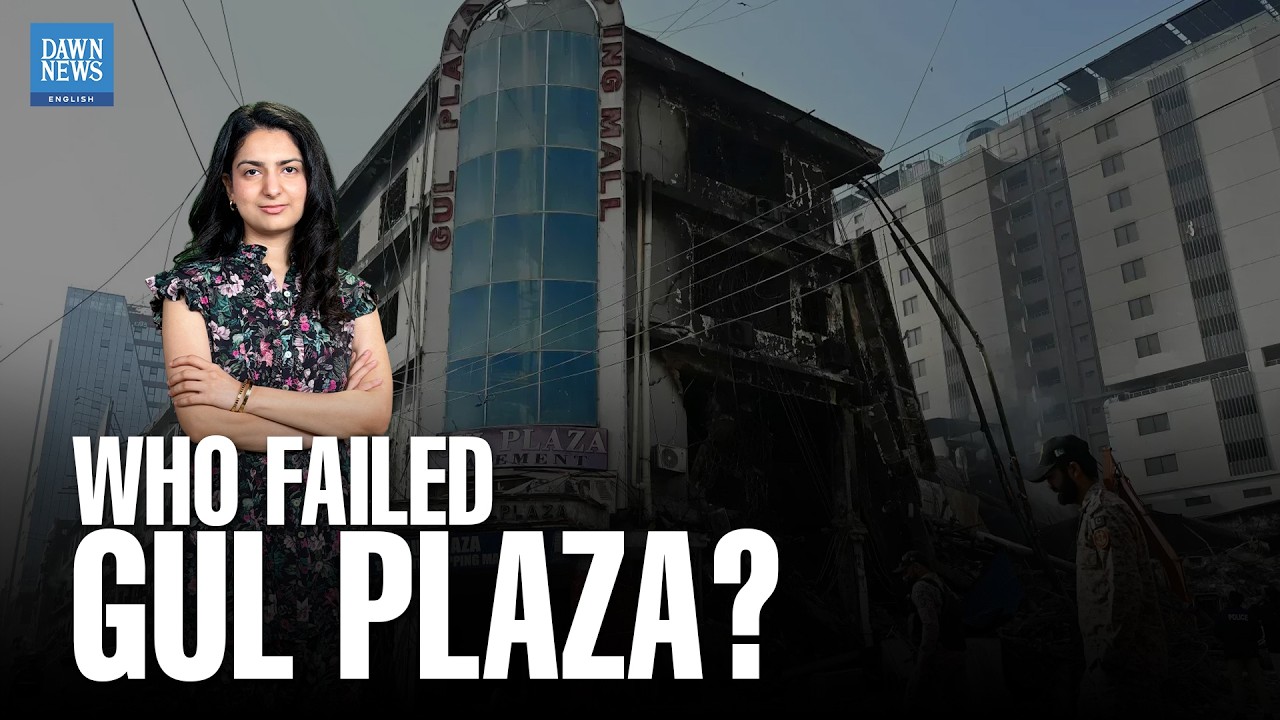
Analysis: January 2026 Gul Plaza Fire (No Politics Please)

RescueRanger

Meme Lord
Joined
Sep 20, 2008
Messages
34,820
Reaction score
80,471
Reputation
38,160.8
Country of Origin
Country of Residence
The January 2026 Gul Plaza fire in Karachi was one of the deadliest urban disasters in Pakistan’s recent history, killing over 70 people and exposing severe lapses in fire safety and emergency response. The blaze allegedly began in a flower shop and spread rapidly due to structural and regulatory failures, while first responders struggled with inadequate equipment, delayed action, and poor coordination.

Before I begin dissecting this incident and discussing the myriad of failures leading up to this tragic event, I think it is only fair to explain that I have personally been involved in capacity development of emergency services and reforms inside Pakistan for well over 21 years now. Needless to say, such events only highlight that aside from lip service and photo opportunities - any meaningful action in this area remains an elusive quest.

1769664698643.pngTimeline of events:
  • Initial ignition (Jan 17, approx 10:00 p.m. PST)The fire allegedly started at a flower shop on the ground floor, reportedly triggered by a child’s actions. Flammable materials and faulty air-conditioning units accelerated the spread.
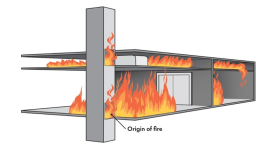
Simulation for visual clarity:
1769664803021.png
  • Rapid escalation
    The flames quickly engulfed multiple shops in the three-storey plaza, which housed over 1,200 shops. Lack of fire exits and congested pathways trapped hundreds inside.
  • Structural collapse
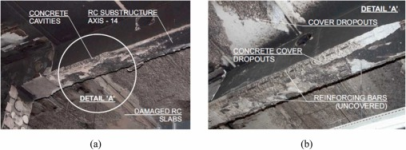
    Within hours, about 40% of the building collapsed, making rescue operations extremely hazardous. Concrete is prone to structural failure at around 600*C/1112*F. At such temperatures concrete experiences explosive spalling - where water turns to steam creating internal pressure which explodes of the surface, the fire also dehydrates the concrete and the RC basket leading to structural failure and eventually collapse (refer to image below):
1769665282746.png
1769665411538.png
  • Extended blaze duration
    The fire burned for more than 34 hours, with parts of the building still smouldering after 40 hours.
  • Casualties
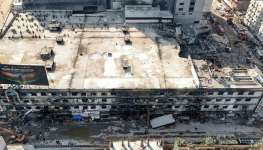
    Due to a lack of fire safety/life safety regulatory compliance, fire suppression and poor fire evacuation awareness among building tenants/customers - Death toll estimates varied between 67–73, with dozens missing. Many victims were found in locked shops, including 30 bodies recovered from a single shop.

1769665812267.png
The tragedy highlighted systemic weaknesses in Karachi’s emergency response:

1. Delayed Response
  • Firefighters arrived late and struggled to access the building due to blocked entry routes and congested surroundings

2. Inadequate Equipment
  • Karachi’s fire department lacked high-capacity water tenders, breathing apparatus, and aerial ladders.
  • Firefighters were forced to rely on outdated equipment, slowing containment efforts.
  • The one fire engine equipped with suppressive foam suitable for Class A fires ran out of Diesel and created a road block for approaching fire trucks, it had to be manually pushed by rescue personnel and civilians so approaching trucks could access the attack site.
  • Despite the reassurances of Chief Fire Officer Humayun Khan that "Karachi Fire & Rescue" are fully equipped and ready for emergencies, the truth is far more worrying. Sindh emergency services have always been overburdened and under funded, a mixture of apathy, corruption and neglect has reared its ugly head time and time again when the city of lights has been gripped by the scorching embraced of urban fires. A lack of comms, CAD, PPE, fire engines and bowsers, rescue vehicles - all point to overt and shameless mismanagement that should not be ignored. Don't take my word for it, please feel free to watch this short video at the state of the Fire Service in Karachi:


3. Poor Coordination
  • Rescue teams, police, and municipal authorities operated without a unified command structure. (to understand unified command please see my separate thread on the subject here: https://defencepk.com/forums/threads/leadership-in-emergencies.294/ )
  • Heavy machinery was halted multiple times due to miscommunication, delaying rescue operations.
  • Lack of UHF radios/PMRs, hailing frequencies and talk groups meant that fire officers had to rely on WHATSAPP to communicate with officials and provide updates.
4. Failure in Evacuation
  • No evacuation plan was in place. Victims were trapped in shops with locked shutters and no emergency exits.
  • First responders could not force entry into many shops quickly enough to save lives. Rescue personnel had to resort to using K12's[Rotary Saw's] and manual tools to breach concrete walls to access certain areas of the building - further endangering the lives of the crews on scene.
5. Insufficient Safety Enforcement
  • Authorities had allowed Gul Plaza to operate without adequate fire alarms, sprinklers, or emergency staircases. This indicates a larger issue facing life-safety/fire safety in Pakistan. The Fire Safety code of 2016 exists merely on paper with no apparent compliance, oversight or enforcement.
  • Rescue workers noted that the building was a “death trap” due to non-compliance with safety codes.
6. Extended Containment Time
  • The fire took over 34 hours to control, far longer than international benchmarks for similar-scale incidents. See: NFPA 1710
  • This delay worsened structural damage and reduced chances of survival for those trapped.
7. Key Take-aways from Gul Plaza incident:
  • Urban governance failure: Karachi’s lack of enforcement of building safety codes directly contributed to the scale of the disaster.
  • Emergency preparedness gap: First responders were under-equipped and poorly coordinated, amplifying casualties.
  • Systemic risk: The incident underscores the vulnerability of Pakistan’s commercial hubs, where thousands of people work in unsafe, overcrowded buildings daily.
8. Comparative Analysis:
IncidentYearLocationDeathsCausesFindings
Gul Plaza Shopping Mall Fire2026KarachiEst.79 deaths, 20+ injured, 49 missingFire started in flower shop, spread via AC ductsNo fire exits, locked shops, delayed firefighting, poor coordination, lack of equipment
Regent Plaza Hotel Fire2016Karachi11–12 deaths, 70+ injuredFire in kitchen spread rapidlyNo fire alarms, inadequate evacuation routes, guests trapped on upper floors, late response.
Baldia Factory Fire (Ali Enterprises)2012KarachiEst. 260–289 deathsFactory exits locked, barred windows, poor safety complianceNo emergency exits, workers trapped, lack of inspections, later revealed as arson/terrorism

9. Recurring systemic failures:

1. Weak Enforcement of Safety Codes
  • Buildings often lack fire exits, sprinklers, alarms, and emergency staircases.
  • Regulatory bodies like the Sindh Building Control Authority (SBCA) fail to enforce compliance.
  • Illegal construction and overcrowding worsen risks.

2. Locked or Blocked Escape Routes
  • In Baldia factory, workers were locked inside; in Gul Plaza, shops had shutters locked.
  • Regent Plaza guests had no accessible fire exits, forcing some to jump from windows.
3. Delayed and Under-equipped Firefighting
  • Karachi’s fire department repeatedly cited for lack of water, outdated engines, and missing breathing apparatus.
  • Gul Plaza fire took 36 hours to extinguish, far beyond international standards.
4. Poor Coordination Among Agencies
  • Rescue, police, and municipal authorities often operate without a unified command.
  • Miscommunication halts machinery and delays rescue operations.
5. Governance and Accountability Gaps
  • After every fire, political blame games dominate instead of reforms.
  • Victims’ families often receive delayed compensation, while no systemic overhaul follows.

10. Comparative Analysis:
  • Scale of tragedy: Baldia factory remains Pakistan’s deadliest fire, but Gul Plaza shows similar patterns of neglect in commercial hubs.
  • Nature of victims: Baldia victims were factory workers; Gul Plaza victims were shopkeepers/customers; Regent Plaza victims were hotel guests—showing all sectors are vulnerable.
  • Response time: All incidents highlight slow, under-resourced firefighting, with water shortages and lack of protective gear.
  • Accountability: Despite inquiries, few prosecutions or reforms have addressed root causes.
The Gul Plaza fire is not an isolated tragedy but part of a cycle of preventable disasters in Pakistan’s urban centers. The recurring failures—locked exits, poor enforcement, inadequate firefighting, and governance paralysis—demonstrate that unless systemic reforms are enforced, Pakistan’s cities remain “concrete tinderboxes” where mass-casualty fires are inevitable.

11. Policy Recommendations:
1. Strict Enforcement of Fire Codes
  • Mandatory fire exits, sprinklers, alarms, and smoke detectors in all commercial and residential buildings.
  • Regular third-party inspections with penalties for non-compliance.
  • Immediate closure of unsafe buildings until compliance is achieved.

2. Professional Firefighting Capacity
  • Invest in modern firefighting equipment: high-capacity water tenders, aerial ladders, breathing apparatus.
  • Establish specialized urban rescue units trained for high-rise and congested environments.
  • Continuous training and drills for firefighters, shopkeepers, and building staff
  • Expand scope and practice of CERT(Community training) beyond mere photo-ops
3. Integrated Emergency Response System
  • Create a unified command structure linking fire services, police, hospitals, and municipal authorities.
  • Introduce real-time communication systems for coordination during disasters.
  • Develop city-wide evacuation plans with public awareness campaigns.
4. Public Awareness & Community Preparedness
  • Mandatory fire drills in schools, offices, and malls.
  • Public campaigns on basic fire safety (extinguishers, evacuation routes).
  • Incentives for businesses that adopt voluntary safety measures beyond minimum codes.
5. Accountability & Governance
  • Establish an independent fire safety authority separate from municipal politics.
  • Transparent post-disaster inquiries with enforceable recommendations.
  • Compensation funds tied to compliance records — unsafe operators receive reduced support.
  • PPC 315? Manslaughter? Why no law on corporate manslaughter?

12. International best practices Pakistan could adopt:

Singapore

  • Fire Safety Act requires all buildings to meet strict fire code standards.
  • Civil Defence Force (SCDF) conducts surprise inspections and can shut down non-compliant premises.
  • Community Emergency Preparedness Programme (CEPP) trains citizens in fire response, CPR, and evacuation.
  • Smart monitoring systems: sensors detect smoke/heat and alert authorities instantly.

Japan
  • Compulsory fire drills in schools, offices, and residential complexes.
  • Earthquake + fire integrated safety codes — buildings must withstand both hazards.
  • Neighborhood volunteer brigades (Shōbō-dan) supplement professional firefighters, ensuring rapid local response.
  • Advanced evacuation planning: clear signage, multilingual instructions, and designated safe zones.
13. How Pakistan can adopt these models:
  • Singapore-style enforcement: empower fire authorities to close unsafe malls/factories immediately.
  • Japan-style community brigades: train shopkeepers and residents as auxiliary responders. [ CERT and Civil Defence already exists - upgrade these]
  • Technology adoption: install IoT-based smoke detectors linked to municipal fire control rooms.
  • Cultural integration: make fire drills part of school and workplace culture, just as earthquake drills are in Japan.
14. Proposed reform timeline for Karachi specifically:
Short-term (0-12 Months)


1. Emergency Audit & Enforcement
  • Conduct city-wide fire safety audits of malls, factories, hotels, and high-rise buildings.
  • Immediately seal or restrict access to non-compliant structures until minimum safety measures are installed.
  • Mandate installation of basic fire equipment: extinguishers, alarms, emergency lighting, and signage.

2. Fire Department Strengthening
  • Procure modern firefighting equipment (aerial ladders, breathing apparatus, water tenders).
  • Train firefighters in high-rise rescue operations and hazardous material handling.
  • Establish rapid response units in congested commercial zones.
3. Public Awareness & Drills
  • Launch city-wide fire safety campaigns through TV, radio, and social media.
  • Mandate monthly fire drills in schools, offices, and shopping centers.
  • Distribute basic fire safety kits to shopkeepers and households
Medium-Term (1-3 years)
4. Regulatory & Governance Reform
  • Establish an Independent Fire Safety Authority with enforcement powers separate from municipal politics.
  • Digitize building approvals with fire safety compliance checks integrated into the process.
  • Introduce heavy penalties (fines, license revocations) for violations
5. Infrastructure & Technology
  • Install IoT-based smoke and heat sensors in major commercial hubs, linked to a central control room.
  • Develop GIS-based fire risk maps to identify high-risk zones.
  • Build dedicated fire stations near dense commercial areas like Saddar, Gul Plaza, and SITE industrial zone.
6. Community Preparedness
  • Create neighborhood volunteer brigades (US FEMA CERT/Japan’s Shōbō-dan model) trained in basic firefighting and evacuation.
  • Incentivize businesses to adopt voluntary safety certifications beyond minimum codes.
  • Integrate fire safety into school curricula
Long-Term (3-10 years)

7. Urban Planning & Structural Reform
  • Redesign congested commercial hubs with mandatory evacuation routes and open spaces for emergency access.
  • Enforce zoning laws to prevent overcrowding of high-risk industries in residential areas.
  • Retrofit old buildings with sprinkler systems, fire-resistant materials, and multiple staircases.
8. Integrated Emergency Response System
  • Establish a unified command center linking fire services, police, hospitals, and disaster management authorities.
  • Introduce real-time communication systems and drone surveillance for fire monitoring.
  • Build specialized hospitals with burn units and trauma care near industrial/commercial clusters.
9. Cultural Shift
  • Normalize fire safety as part of daily life — just as earthquake drills are in Japan.
  • Encourage corporate social responsibility (CSR) investments in fire safety infrastructure.
  • Foster a culture of accountability, where negligence is socially and legally unacceptable.
Conclusion:
Karachi’s fire tragedies are not isolated accidents but symptoms of systemic neglect. A reform roadmap must combine strict enforcement (Singapore model), community resilience (Japan model), and urban redesign to transform Karachi from a tinderbox into a safer, more resilient metropolis.
 
Source:
Self
Excellent analysis. Every failure in the book was their. Hoping soMeone for once in authority implements this is to stop this happening ever again.
 
Excellent analysis. Every failure in the book was their. Hoping soMeone for once in authority implements this is to stop this happening ever again.
Bro, the problem is our babu's at the top don't care. Just look at the recent interview of Karachi's chief fire officer on Samma News - a lot of people should be facing manslaughter charges - including Sindh Building Control Authority, Fire Chief, local government functionaries and building owners.

You will note that no enforcement work was taken on the building despite being multi-occupancy and high-risk.
 
The January 2026 Gul Plaza fire in Karachi was one of the deadliest urban disasters in Pakistan’s recent history, killing over 70 people and exposing severe lapses in fire safety and emergency response. The blaze allegedly began in a flower shop and spread rapidly due to structural and regulatory failures, while first responders struggled with inadequate equipment, delayed action, and poor coordination.

Before I begin dissecting this incident and discussing the myriad of failures leading up to this tragic event, I think it is only fair to explain that I have personally been involved in capacity development of emergency services and reforms inside Pakistan for well over 21 years now. Needless to say, such events only highlight that aside from lip service and photo opportunities - any meaningful action in this area remains an elusive quest.

View attachment 175458Timeline of events:
  • Initial ignition (Jan 17, approx 10:00 p.m. PST)The fire allegedly started at a flower shop on the ground floor, reportedly triggered by a child’s actions. Flammable materials and faulty air-conditioning units accelerated the spread.
Simulation for visual clarity:
View attachment 175459
  • Rapid escalation
    The flames quickly engulfed multiple shops in the three-storey plaza, which housed over 1,200 shops. Lack of fire exits and congested pathways trapped hundreds inside.
  • Structural collapse
    Within hours, about 40% of the building collapsed, making rescue operations extremely hazardous. Concrete is prone to structural failure at around 600*C/1112*F. At such temperatures concrete experiences explosive spalling - where water turns to steam creating internal pressure which explodes of the surface, the fire also dehydrates the concrete and the RC basket leading to structural failure and eventually collapse (refer to image below):
View attachment 175461
View attachment 175462
  • Extended blaze duration
    The fire burned for more than 34 hours, with parts of the building still smouldering after 40 hours.
  • Casualties
    Due to a lack of fire safety/life safety regulatory compliance, fire suppression and poor fire evacuation awareness among building tenants/customers - Death toll estimates varied between 67–73, with dozens missing. Many victims were found in locked shops, including 30 bodies recovered from a single shop.

View attachment 175463
The tragedy highlighted systemic weaknesses in Karachi’s emergency response:

1. Delayed Response
  • Firefighters arrived late and struggled to access the building due to blocked entry routes and congested surroundings

2. Inadequate Equipment
  • Karachi’s fire department lacked high-capacity water tenders, breathing apparatus, and aerial ladders.
  • Firefighters were forced to rely on outdated equipment, slowing containment efforts.
  • The one fire engine equipped with suppressive foam suitable for Class A fires ran out of Diesel and created a road block for approaching fire trucks, it had to be manually pushed by rescue personnel and civilians so approaching trucks could access the attack site.
  • Despite the reassurances of Chief Fire Officer Humayun Khan that "Karachi Fire & Rescue" are fully equipped and ready for emergencies, the truth is far more worrying. Sindh emergency services have always been overburdened and under funded, a mixture of apathy, corruption and neglect has reared its ugly head time and time again when the city of lights has been gripped by the scorching embraced of urban fires. A lack of comms, CAD, PPE, fire engines and bowsers, rescue vehicles - all point to overt and shameless mismanagement that should not be ignored. Don't take my word for it, please feel free to watch this short video at the state of the Fire Service in Karachi:


3. Poor Coordination
  • Rescue teams, police, and municipal authorities operated without a unified command structure. (to understand unified command please see my separate thread on the subject here: https://defencepk.com/forums/threads/leadership-in-emergencies.294/ )
  • Heavy machinery was halted multiple times due to miscommunication, delaying rescue operations.
  • Lack of UHF radios/PMRs, hailing frequencies and talk groups meant that fire officers had to rely on WHATSAPP to communicate with officials and provide updates.
4. Failure in Evacuation
  • No evacuation plan was in place. Victims were trapped in shops with locked shutters and no emergency exits.
  • First responders could not force entry into many shops quickly enough to save lives. Rescue personnel had to resort to using K12's[Rotary Saw's] and manual tools to breach concrete walls to access certain areas of the building - further endangering the lives of the crews on scene.
5. Insufficient Safety Enforcement
  • Authorities had allowed Gul Plaza to operate without adequate fire alarms, sprinklers, or emergency staircases. This indicates a larger issue facing life-safety/fire safety in Pakistan. The Fire Safety code of 2016 exists merely on paper with no apparent compliance, oversight or enforcement.
  • Rescue workers noted that the building was a “death trap” due to non-compliance with safety codes.
6. Extended Containment Time
  • The fire took over 34 hours to control, far longer than international benchmarks for similar-scale incidents. See: NFPA 1710
  • This delay worsened structural damage and reduced chances of survival for those trapped.
7. Key Take-aways from Gul Plaza incident:
  • Urban governance failure: Karachi’s lack of enforcement of building safety codes directly contributed to the scale of the disaster.
  • Emergency preparedness gap: First responders were under-equipped and poorly coordinated, amplifying casualties.
  • Systemic risk: The incident underscores the vulnerability of Pakistan’s commercial hubs, where thousands of people work in unsafe, overcrowded buildings daily.
8. Comparative Analysis:
IncidentYearLocationDeathsCausesFindings
Gul Plaza Shopping Mall Fire2026KarachiEst.79 deaths, 20+ injured, 49 missingFire started in flower shop, spread via AC ductsNo fire exits, locked shops, delayed firefighting, poor coordination, lack of equipment
Regent Plaza Hotel Fire2016Karachi11–12 deaths, 70+ injuredFire in kitchen spread rapidlyNo fire alarms, inadequate evacuation routes, guests trapped on upper floors, late response.
Baldia Factory Fire (Ali Enterprises)2012KarachiEst. 260–289 deathsFactory exits locked, barred windows, poor safety complianceNo emergency exits, workers trapped, lack of inspections, later revealed as arson/terrorism

9. Recurring systemic failures:

1. Weak Enforcement of Safety Codes
  • Buildings often lack fire exits, sprinklers, alarms, and emergency staircases.
  • Regulatory bodies like the Sindh Building Control Authority (SBCA) fail to enforce compliance.
  • Illegal construction and overcrowding worsen risks.

2. Locked or Blocked Escape Routes
  • In Baldia factory, workers were locked inside; in Gul Plaza, shops had shutters locked.
  • Regent Plaza guests had no accessible fire exits, forcing some to jump from windows.
3. Delayed and Under-equipped Firefighting
  • Karachi’s fire department repeatedly cited for lack of water, outdated engines, and missing breathing apparatus.
  • Gul Plaza fire took 36 hours to extinguish, far beyond international standards.
4. Poor Coordination Among Agencies
  • Rescue, police, and municipal authorities often operate without a unified command.
  • Miscommunication halts machinery and delays rescue operations.
5. Governance and Accountability Gaps
  • After every fire, political blame games dominate instead of reforms.
  • Victims’ families often receive delayed compensation, while no systemic overhaul follows.

10. Comparative Analysis:
  • Scale of tragedy: Baldia factory remains Pakistan’s deadliest fire, but Gul Plaza shows similar patterns of neglect in commercial hubs.
  • Nature of victims: Baldia victims were factory workers; Gul Plaza victims were shopkeepers/customers; Regent Plaza victims were hotel guests—showing all sectors are vulnerable.
  • Response time: All incidents highlight slow, under-resourced firefighting, with water shortages and lack of protective gear.
  • Accountability: Despite inquiries, few prosecutions or reforms have addressed root causes.
The Gul Plaza fire is not an isolated tragedy but part of a cycle of preventable disasters in Pakistan’s urban centers. The recurring failures—locked exits, poor enforcement, inadequate firefighting, and governance paralysis—demonstrate that unless systemic reforms are enforced, Pakistan’s cities remain “concrete tinderboxes” where mass-casualty fires are inevitable.

11. Policy Recommendations:
1. Strict Enforcement of Fire Codes
  • Mandatory fire exits, sprinklers, alarms, and smoke detectors in all commercial and residential buildings.
  • Regular third-party inspections with penalties for non-compliance.
  • Immediate closure of unsafe buildings until compliance is achieved.

2. Professional Firefighting Capacity
  • Invest in modern firefighting equipment: high-capacity water tenders, aerial ladders, breathing apparatus.
  • Establish specialized urban rescue units trained for high-rise and congested environments.
  • Continuous training and drills for firefighters, shopkeepers, and building staff
  • Expand scope and practice of CERT(Community training) beyond mere photo-ops
3. Integrated Emergency Response System
  • Create a unified command structure linking fire services, police, hospitals, and municipal authorities.
  • Introduce real-time communication systems for coordination during disasters.
  • Develop city-wide evacuation plans with public awareness campaigns.
4. Public Awareness & Community Preparedness
  • Mandatory fire drills in schools, offices, and malls.
  • Public campaigns on basic fire safety (extinguishers, evacuation routes).
  • Incentives for businesses that adopt voluntary safety measures beyond minimum codes.
5. Accountability & Governance
  • Establish an independent fire safety authority separate from municipal politics.
  • Transparent post-disaster inquiries with enforceable recommendations.
  • Compensation funds tied to compliance records — unsafe operators receive reduced support.
  • PPC 315? Manslaughter? Why no law on corporate manslaughter?

12. International best practices Pakistan could adopt:

Singapore

  • Fire Safety Act requires all buildings to meet strict fire code standards.
  • Civil Defence Force (SCDF) conducts surprise inspections and can shut down non-compliant premises.
  • Community Emergency Preparedness Programme (CEPP) trains citizens in fire response, CPR, and evacuation.
  • Smart monitoring systems: sensors detect smoke/heat and alert authorities instantly.

Japan
  • Compulsory fire drills in schools, offices, and residential complexes.
  • Earthquake + fire integrated safety codes — buildings must withstand both hazards.
  • Neighborhood volunteer brigades (Shōbō-dan) supplement professional firefighters, ensuring rapid local response.
  • Advanced evacuation planning: clear signage, multilingual instructions, and designated safe zones.
13. How Pakistan can adopt these models:
  • Singapore-style enforcement: empower fire authorities to close unsafe malls/factories immediately.
  • Japan-style community brigades: train shopkeepers and residents as auxiliary responders. [ CERT and Civil Defence already exists - upgrade these]
  • Technology adoption: install IoT-based smoke detectors linked to municipal fire control rooms.
  • Cultural integration: make fire drills part of school and workplace culture, just as earthquake drills are in Japan.
14. Proposed reform timeline for Karachi specifically:
Short-term (0-12 Months)


1. Emergency Audit & Enforcement
  • Conduct city-wide fire safety audits of malls, factories, hotels, and high-rise buildings.
  • Immediately seal or restrict access to non-compliant structures until minimum safety measures are installed.
  • Mandate installation of basic fire equipment: extinguishers, alarms, emergency lighting, and signage.

2. Fire Department Strengthening
  • Procure modern firefighting equipment (aerial ladders, breathing apparatus, water tenders).
  • Train firefighters in high-rise rescue operations and hazardous material handling.
  • Establish rapid response units in congested commercial zones.
3. Public Awareness & Drills
  • Launch city-wide fire safety campaigns through TV, radio, and social media.
  • Mandate monthly fire drills in schools, offices, and shopping centers.
  • Distribute basic fire safety kits to shopkeepers and households
Medium-Term (1-3 years)
4. Regulatory & Governance Reform
  • Establish an Independent Fire Safety Authority with enforcement powers separate from municipal politics.
  • Digitize building approvals with fire safety compliance checks integrated into the process.
  • Introduce heavy penalties (fines, license revocations) for violations
5. Infrastructure & Technology
  • Install IoT-based smoke and heat sensors in major commercial hubs, linked to a central control room.
  • Develop GIS-based fire risk maps to identify high-risk zones.
  • Build dedicated fire stations near dense commercial areas like Saddar, Gul Plaza, and SITE industrial zone.
6. Community Preparedness
  • Create neighborhood volunteer brigades (US FEMA CERT/Japan’s Shōbō-dan model) trained in basic firefighting and evacuation.
  • Incentivize businesses to adopt voluntary safety certifications beyond minimum codes.
  • Integrate fire safety into school curricula
Long-Term (3-10 years)

7. Urban Planning & Structural Reform
  • Redesign congested commercial hubs with mandatory evacuation routes and open spaces for emergency access.
  • Enforce zoning laws to prevent overcrowding of high-risk industries in residential areas.
  • Retrofit old buildings with sprinkler systems, fire-resistant materials, and multiple staircases.
8. Integrated Emergency Response System
  • Establish a unified command center linking fire services, police, hospitals, and disaster management authorities.
  • Introduce real-time communication systems and drone surveillance for fire monitoring.
  • Build specialized hospitals with burn units and trauma care near industrial/commercial clusters.
9. Cultural Shift
  • Normalize fire safety as part of daily life — just as earthquake drills are in Japan.
  • Encourage corporate social responsibility (CSR) investments in fire safety infrastructure.
  • Foster a culture of accountability, where negligence is socially and legally unacceptable.
Conclusion:
Karachi’s fire tragedies are not isolated accidents but symptoms of systemic neglect. A reform roadmap must combine strict enforcement (Singapore model), community resilience (Japan model), and urban redesign to transform Karachi from a tinderbox into a safer, more resilient metropolis.

My uncle died in regent plaza incident his name was Dr Sher Ali Khuwaja. My Father survived by hanging outside window, to avoid smoke. Uncle Sher Ali Died due to excessive inhaling of smoke. He died immediately. His son Lateef Sher Ali sued them and case was settled. Son was given govt job as its awarded to children of deceased active officer. Other health officers who were staying there died as well. I dont remember there names.

There was no fire exit, actually it was there but it was used like store room. No proper fire alarms triggered. News channels only reported that "Niji Hotel mai aag". Before Any rescue team it was Regent plaza that was culprit.

Same case is in Gul Plaza as far as my understanding goes, The management committee had fake/bribed certificates to justify all the facilities were present. Investigations indicated that fire safety and building stability certificates for such structures were often issued in exchange for bribes rather than based on actual, thorough inspections.

Truth was there were illegal stalls blocking windows and exits were narrowed down due to stores putting there showcase furniture outside there stores.

Those government officers responsible for Building safety and hazards should not play with peoples life for commissions. hence, they should be given the most possible severe punishment just like china does to corrupt officers.​
 
@RescueRanger
An important suggestion: If we are to have a meaningful discussion on this issue, we must completely separate it from political matters. I understand that this issue is inherently political, but our Pakistani friends on this forum tend to politicize such matters, leading to endless and pointless arguments.
 
@RescueRanger
An important suggestion: If we are to have a meaningful discussion on this issue, we must completely separate it from political matters. I understand that this issue is inherently political, but our Pakistani friends on this forum tend to politicize such matters, leading to endless and pointless arguments.
I fully concur.
 
Personal opinion:
Accidents like fires are unavoidable. They are an inevitable price of human life and national development. All we can do is try our best to control their consequences.

1. Does Pakistan have an urban emergency management system (for non-war situations)?
When major accidents occur in cities (fires, floods, building collapses, major traffic accidents, etc.), do the relevant agencies have the highest authority? For example: emergency response authority, material requisition authority, road access authority, etc.?

2. Do the relevant agencies have daily inspection rights, penalty rights, veto rights, etc.?

Only after satisfying the relevant legal authorizations can we begin to discuss how to strengthen their operational capabilities.

=============================

Previously, China had several specific laws governing and regulating related matters. In 2007, China enacted the "Law of the People's Republic of China on Responding to Emergencies," which clarified the legal status before and after the occurrence of emergencies. Since then, this law has been regularly revised to keep pace with social development.

Unfortunately, I could not find an English version of this law. If you are interested, please translate it yourselves.
 
Last edited:
Bro, the problem is our babu's at the top don't care. Just look at the recent interview of Karachi's chief fire officer on Samma News - a lot of people should be facing manslaughter charges - including Sindh Building Control Authority, Fire Chief, local government functionaries and building owners.

You will note that no enforcement work was taken on the building despite being multi-occupancy and high-risk.
Lessons have to be learnt to avoid a more catastrophic outcome. High population - crowded accommodation eill rrsult in a major loss if they dont pull their finger out
 
Every aspect of the Search and Rescue operations failed. Imagine the Fire Brigade didn't have water to douse the fire. Buildings like such have no safety and escape systems.
Remember the terrible apparel factory fire of a few years ago where nearly 200+ people perished.
The city planners just don't learn from these incidents.
Finally it's the Corruption amongst the city officials and owners who look the other way as their palms are greased.
Sad 😔 state of affairs.
 
Every aspect of the Search and Rescue operations failed. Imagine the Fire Brigade didn't have water to douse the fire. Buildings like such have no safety and escape systems.
Remember the terrible apparel factory fire of a few years ago where nearly 200+ people perished.
The city planners just don't learn from these incidents.
Finally it's the Corruption amongst the city officials and owners who look the other way as their palms are greased.
Sad 😔 state of affairs.
A practice from China that Pakistan can learn from:
=========================================================
In 2019, a television program called "Questioning Government in Shandong" was launched, created by the Shandong Provincial Committee of the Communist Party of China and the Shandong Provincial Government, and produced by Shandong Television.

The program invites the heads of provincial government departments to appear live each week to answer questions. Through elements such as undercover investigations, expert questioning, and multi-platform media coverage, it focuses on hot-button issues and difficult problems of public concern, and promotes corrective actions and implementation by relevant government departments.

The program host directly questions relevant department heads based on the issues raised. Many citizen representatives in the studio audience evaluate the responses of these officials, and if the majority are dissatisfied, the officials must answer again. The program is broadcast throughout China. Television viewers can also provide their opinions and suggestions through social media. (The program is broadcast live, not pre-recorded.)

Many officials with existing problems were punished by law enforcement agencies shortly after participating in this program. A large number of corrupt officials were sentenced to death, life imprisonment, or fixed-term imprisonment. Many of these officials, after being punished by the law, said in interviews: "Participating in this program was more difficult than facing trial in court."

This television program is entirely in Chinese and does not have an English version. If you are interested, you can search for "问政山东" on YouTube.
=========================================================
Pakistan could also produce a similar program on its national television. However, it's important to note that both the program and its production team would require guarantees and protection from the highest levels of government to ensure the safety of the crew and the smooth running of the program.
 

Users who are viewing this thread

  • Latest Posts

    Back
    Top