China Science And Technology News

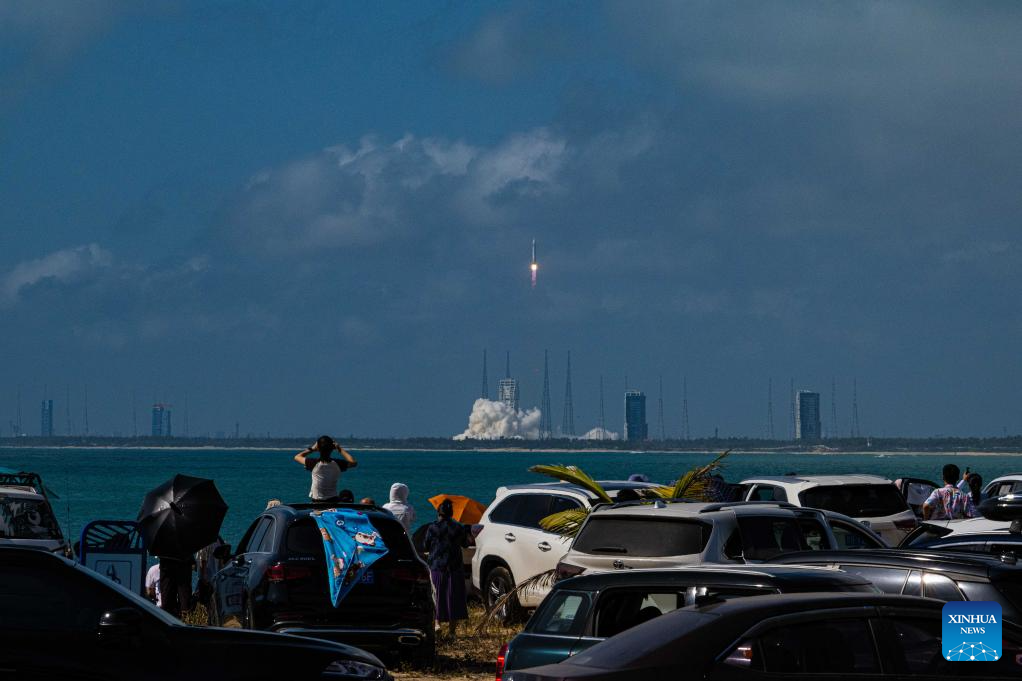
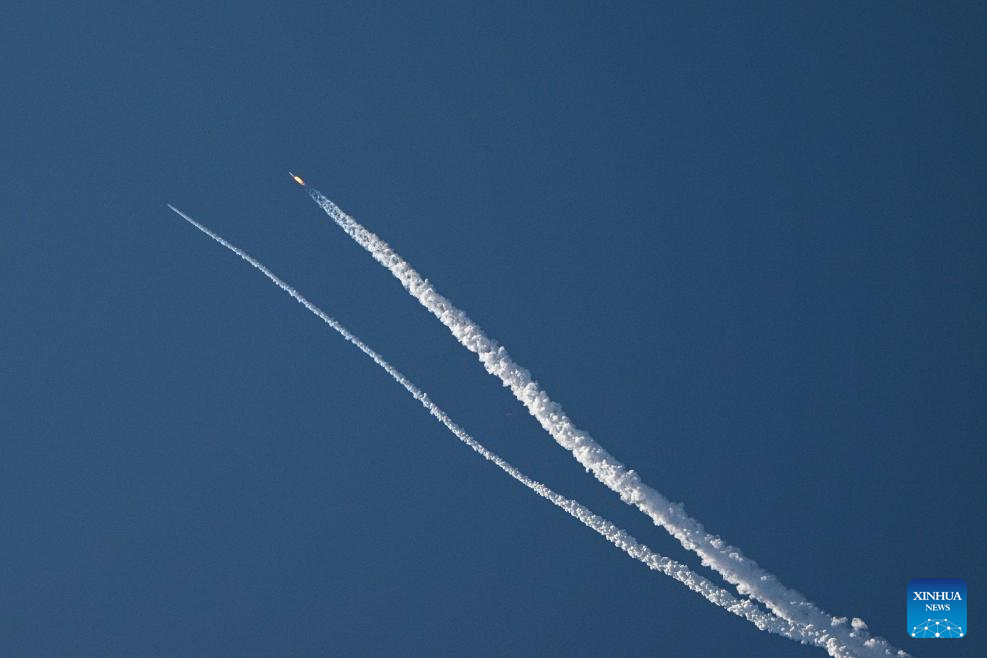
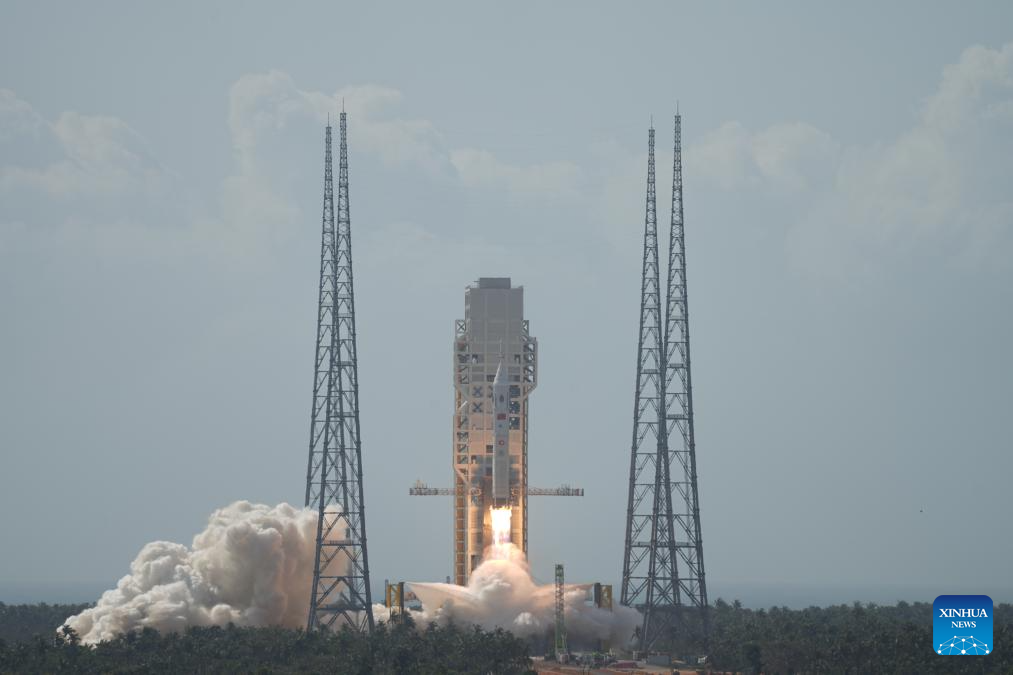
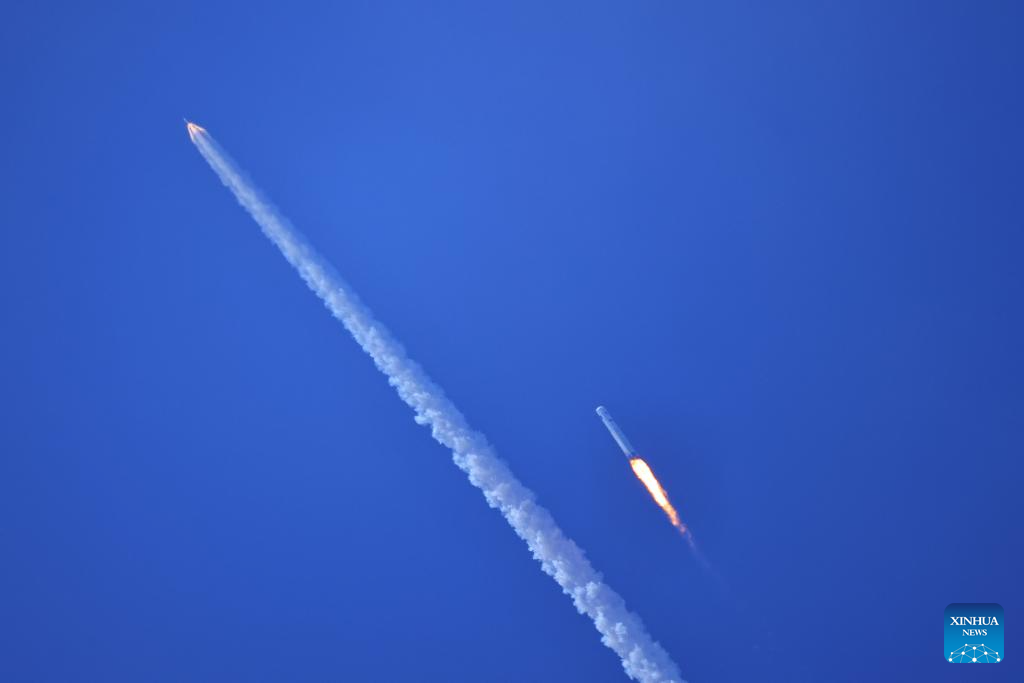
WENCHANG, Hainan, Feb. 11 (Xinhua) -- China on Wednesday successfully conducted a low-altitude demonstration and verification flight test for its Long March-10 carrier rocket in the southern island province of Hainan, the China Manned Space Agency said.
 
Success on the low altitude launch + vertical splashdown

To view this content we will need your consent to set third party cookies.
For more detailed information, see our cookies page.


To view this content we will need your consent to set third party cookies.
For more detailed information, see our cookies page.
 
Last edited:
This will be the next step for the Long March 10A.

To view this content we will need your consent to set third party cookies.
For more detailed information, see our cookies page.
 
China successfully completes low-altitude Long March-10 test, marking major breakthrough in China’s manned lunar exploration program
By Fan Wei in Wenchang and Sun Langchen in Beijing
Published: Feb 11, 2026 04:18 PM

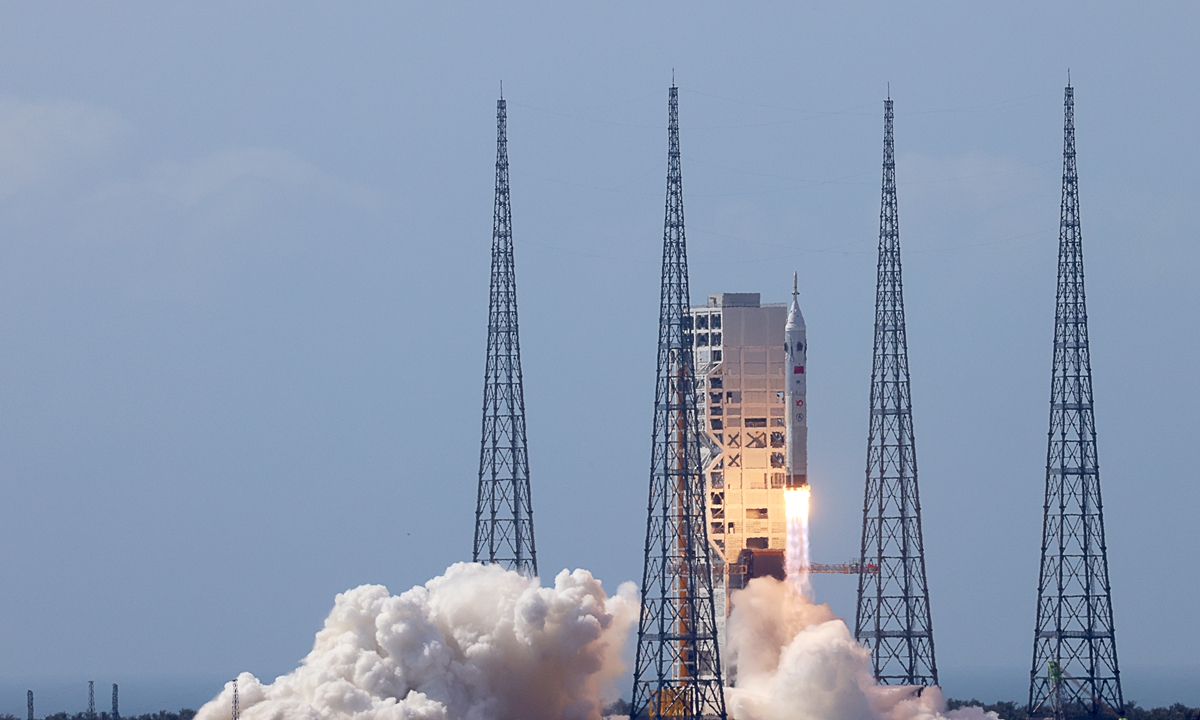
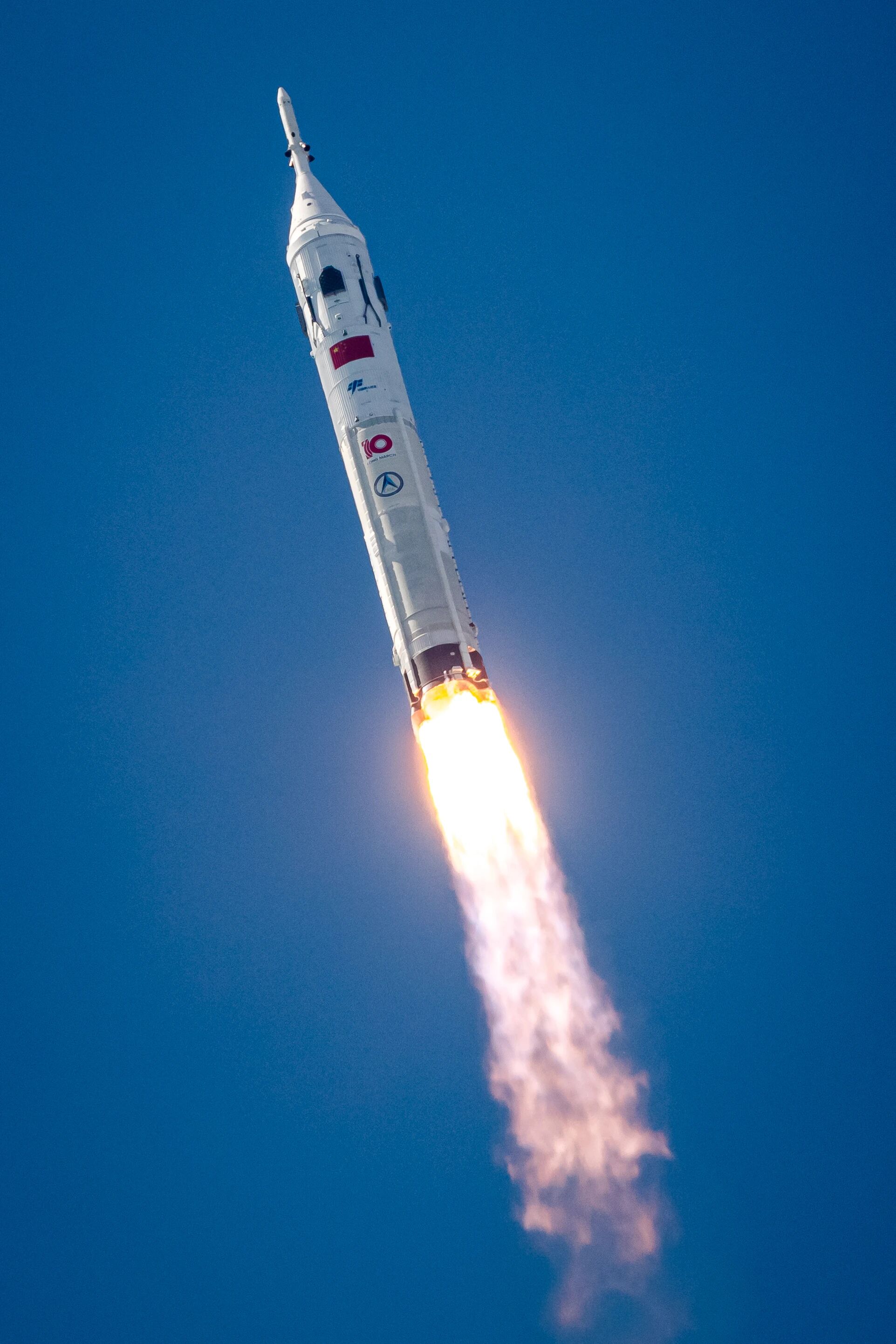
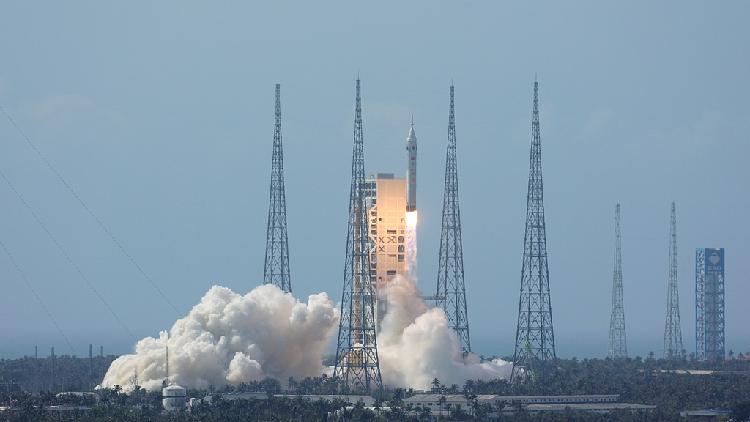
The Mengzhou spacecraft lifts off with the Long March-10 rocket at Wenchang Space Launch Site in the southern island province of Hainan on February 11, 2026. Photo: Fan Wei/GT

The Mengzhou spacecraft lifts off with the Long March-10 rocket at Wenchang Space Launch Site in the southern island province of Hainan on February 11, 2026. Photo: Fan Wei/GT

China on Wednesday successfully conducted a low-altitude demonstration and verification flight test for its Long March-10 carrier rocket in the southern island province of Hainan, the China Manned Space Agency said.

The test marked another major developmental flight in China's manned lunar exploration program following earlier trials, including the tethered ignition test of the Long March-10 carrier rocket, the zero-altitude abort flight test of the Mengzhou crewed spacecraft, and the comprehensive landing and liftoff verification of the Lanyue lunar lander.

The Global Times reporter learned from the Wenchang Space Launch Site on Wednesday that during the maximum dynamic pressure abort test, the Mengzhou crewed spacecraft lifted off with the ignition of the Long March-10 rocket's core first stage.

After about one minute of ascent, at an altitude of around 10 kilometers above sea level, the spacecraft sequentially carried out key actions including separation of the service module and return capsule, engine ignition, attitude adjustment, and separation of the escape tower from the return capsule.

When the return capsule descended to an altitude of around 8 kilometers, three parachutes with a total area exceeding 2,400 square meters deployed smoothly, decelerating the capsule from about 80 meters per second to below 10 meters per second, ultimately ensuring a safe splashdown in the designated sea area. China's first maximum dynamic pressure abort flight test was declared a complete success.

Firsts and highlights

According to People's Daily, the test featured multiple firsts and highlights, including a new rocket model, a new spacecraft model, a new launch pad, and new missions involving the maritime recovery of both the rocket and spacecraft. Both the rocket and spacecraft used in the test were in their initial prototype configurations. The rocket's core first stage had previously completed two tethered ignition tests, while the spacecraft's return capsule had undergone a zero-altitude abort flight test.

The test also marked the first low-altitude flight test of the Long March-10 carrier rocket. The Long March-10 is a new-generation launch vehicle developed to support China's manned lunar missions. Featuring a series of rockets with two models and multiple configurations, it is expected to play a key role in achieving the country's goal of a manned lunar landing by 2030.It adopts a "three-and-a-half-stage" configuration, stands about 90 meters tall, and generates a liftoff thrust of roughly 2,700 tons. It is currently China's largest launch vehicle and the only one capable of sending both a crewed spacecraft and a lunar lander into translunar orbit. The test verified the functional performance of the rocket's core first-stage ascent and recovery flight phases.

The test marked the first powered flight of the Long March-10 rocket in its initial prototype configuration, China's first maximum dynamic pressure abort test of a spacecraft, and China's first maritime splashdown of both a crewed spacecraft return capsule and a rocket first stage, per People's Daily.

Unlike the Shenzhou crewed spacecraft, in which the rocket is responsible for the escape and rescue system in the event of a launch failure, the newly developed Mengzhou crewed spacecraft features an integrated escape and rescue system borne by the spacecraft itself. The Mengzhou spacecraft's launch escape tower is part of the spacecraft.

Deng Kaiwen, a technical expert with the China Aerospace Science and Technology Corporation, told the Global Times on Wednesday that the maximum dynamic pressure abort flight test simulated an emergency occurring when the rocket reaches the point of maximum dynamic pressure at an altitude of about 11 kilometers during ascent. Under such conditions, the spacecraft must overcome extremely harsh aerodynamic environments to ensure a safe abort and astronaut rescue.

During this mission, the core first stage of the Long March-10 rocket also carried out verification of key technologies including high-altitude secondary engine restart and hover ignition.

Zhu Pingping, a technical expert at the China Aerospace Science and Technology Corporation (CASC), told the Global times that during the descent phase, the core first stage completed two engine restarts: one high-altitude restart to perform trajectory adjustment, and another hover ignition prior to landing to lay the groundwork for precise recovery. "This places extremely high demands on engine reliability, propellant management, and ignition timing control."

The mission also tested an innovative core stage recovery approach, using a simulated "net-based recovery mode" in which the rocket landed at a mock splashdown point near a recovery vessel to assess coordination between the rocket and the recovery system, providing experience for future real recoveries.

At 12:20 pm, maritime search and rescue teams also completed the recovery of the spacecraft return capsule. This marked China's first sea-based search and recovery operation for a crewed spacecraft, providing valuable experience for future space station application and development missions as well as manned lunar exploration tasks, according to China News Service.

The Mengzhou crewed spacecraft is primarily designed for China's manned lunar exploration missions, while also supporting operations in low-Earth orbit space station missions. Its return capsule is capable of multiple reuses.

The flight test also marked the first use of a newly built launch pad at the Wenchang Space Launch Site dedicated to manned lunar missions.

Zhong Wen'an, chief engineer of the Xichang Satellite Launch Center, told the Global Times on Wednesday that the mission used a Long March-10A core-stage test rocket to launch a dedicated Mengzhou spacecraft verification vehicle equipped with an escape tower from Launch Pad No. 3 at Wenchang. The payloads also included lunar spacesuits for astronauts, humanoid dummies, and mechanical test dummies.

"This test mission is a milestone in the development of the Long March-10 series rockets and the Mengzhou crewed spacecraft, as well as an innovative exploration of rocket recovery and reusability technologies. It will provide important support for China's manned lunar exploration program and the space station application and development program," Zhong said.


China takes key step toward manned lunar landing with successful Long March-10 rocket test

Space12:56, 11-Feb-2026
CGTN
Updated 15:14, 11-Feb-2026


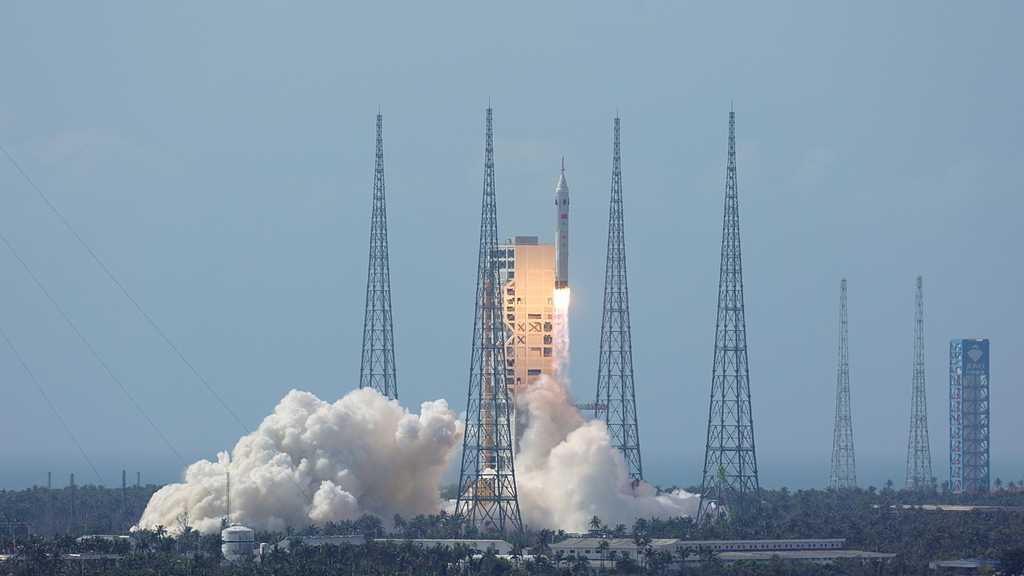
China conducts a low-altitude demonstration and validation flight test of the Long March-10 launch vehicle system at the Wenchang Space Launch Site in south China's Hainan Province, February 11, 2026. /VCG


China conducts a low-altitude demonstration and validation flight test of the Long March-10 launch vehicle system at the Wenchang Space Launch Site in south China's Hainan Province, February 11, 2026. /VCG

China on Wednesday conducted crucial flight tests for its next-generation crewed lunar exploration systems, moving a step closer to its goal of landing astronauts on the moon before 2030.

The test missions, carried out at the Wenchang Space Launch Site in south China's Hainan Province, included a low-altitude demonstration of the Long March-10 rocket and a high-speed abort test of the Mengzhou crewed spacecraft under maximum aerodynamic pressure. According to the China Manned Space Engineering Office, both systems performed as designed. These test plans were previously outlined by China Manned Space Agency earlier last October.

The test followed a series of earlier milestones, including tethered ignition tests for the Long March-10 rocket, a zero-altitude abort flight test for the Mengzhou spacecraft and integrated landing and takeoff verification for the Lanyue lunar lander. It marks another major developmental flight test and represents an important milestone in China's crewed lunar exploration program.
China conducts a low-altitude demonstration and validation flight test of the Long March-10 launch vehicle system at the Wenchang Space Launch Site in south China's Hainan Province, February 11, 2026. /China Manned Space Agency


China conducts a low-altitude demonstration and validation flight test of the Long March-10 launch vehicle system at the Wenchang Space Launch Site in south China's Hainan Province, February 11, 2026. /China Manned Space Agency
The mission featured several firsts and highlights, including a new rocket model, a new crewed spacecraft, a newly built launch pad and new at-sea recovery missions for both the rocket and the spacecraft.

The rocket and spacecraft used in the test were both in initial prototype configurations. The rocket adopted a single-stage core configuration and had previously completed two tethered ignition tests, while the spacecraft's return capsule had earlier undergone a zero-altitude abort flight test.

To support this mission, all test articles were modified in accordance with reusability requirements and procedures. The Wenchang Space Launch Site advanced construction while operating to ensure the test proceeded as scheduled, and the landing zone system conducted targeted training and drills to address technical challenges associated with the spacecraft's first at-sea splashdown recovery.

The ground test command center issued the ignition command at 11:00 a.m. (Beijing Time). The rocket lifted off and reached conditions corresponding to the spacecraft's maximum dynamic pressure abort regime. Upon receiving the abort command from the rocket, the spacecraft successfully executed separation and abort procedures. The rocket's first-stage body and the spacecraft's return capsule then splashed down safely and under control in the sea.
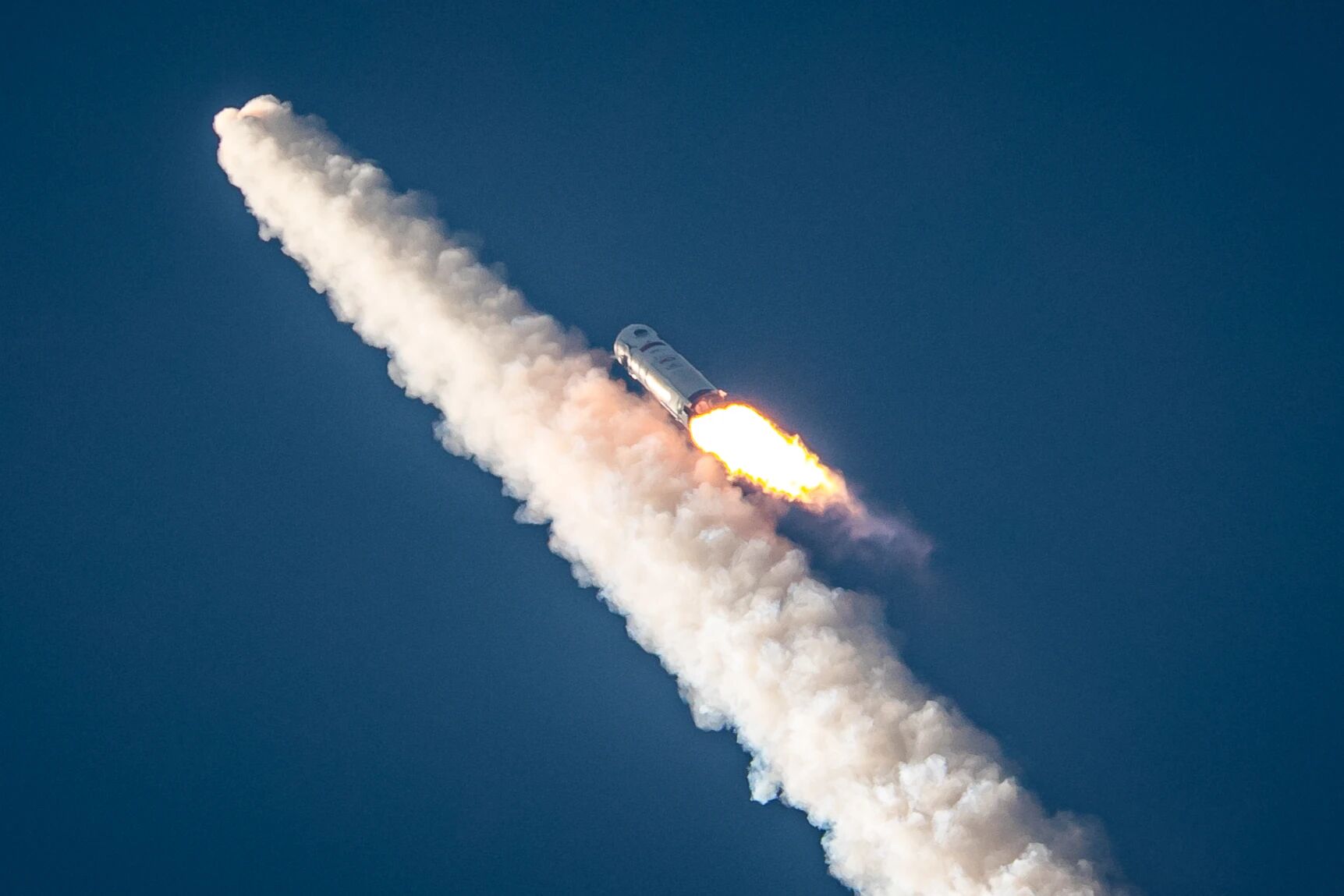
China conducts a low-altitude demonstration and validation flight test of the Long March-10 launch vehicle system at the Wenchang Space Launch Site in south China's Hainan Province, February 11, 2026. /China Manned Space Agency


China conducts a low-altitude demonstration and validation flight test of the Long March-10 launch vehicle system at the Wenchang Space Launch Site in south China's Hainan Province, February 11, 2026. /China Manned Space Agency
At 12:20 p.m. on the same day, maritime search-and-rescue teams completed the search and recovery of the spacecraft's return capsule. This marked China's first at-sea search and recovery mission involving a crewed spacecraft.

According to officials, the Mengzhou crewed spacecraft involved in the test is primarily intended for China's crewed lunar exploration program, while also supporting operations in low Earth orbit, including the space station. Its return capsule is designed for multiple reuses.

The test marked the Long March-10 rocket's first ignition flight in its initial prototype configuration, China's first maximum dynamic pressure abort test of a crewed spacecraft, the country's first at-sea splashdown recovery of both a crewed spacecraft return capsule and a rocket first stage, and the first ignition flight mission from Wenchang's newly constructed launch pad.

The successful test verified the rocket's ascent and recovery performance, as well as the spacecraft's maximum dynamic pressure abort and recovery functions. It also validated interface compatibility across multiple engineering systems, providing valuable flight data and engineering experience for future crewed lunar exploration missions.

China is holding firm to its goal of landing astronauts on the moon by 2030, and has outlined a packed schedule of development and testing for its ambitious crewed lunar program.


Return capsule of China's new Mengzhou spacecraft splashes down safely

Source: Xinhua
2026-02-11 12:13:15
W7NjymqfcLCArIN9.jpeg


The return capsule of China's new-generation Mengzhou crewed spaceship safely splashes down in the predetermined sea area during a flight test, Feb. 11, 2026. A low-altitude demonstration and verification flight test for the Long March-10 carrier rocket and a maximum dynamic pressure abort flight test for the new-generation crewed spaceship system Mengzhou are successfully conducted at the Wenchang Spacecraft Launch Site in south China's Hainan Province on Wednesday. (Photo by Wang Heng/Xinhua)

WENCHANG, Hainan, Feb. 11 (Xinhua) -- The return capsule of China's new-generation Mengzhou crewed spaceship has safely splashed down in the predetermined sea area during a flight test on Wednesday, the China Manned Space Agency said. ■

bKljIpDiExe3wCRa.jpg


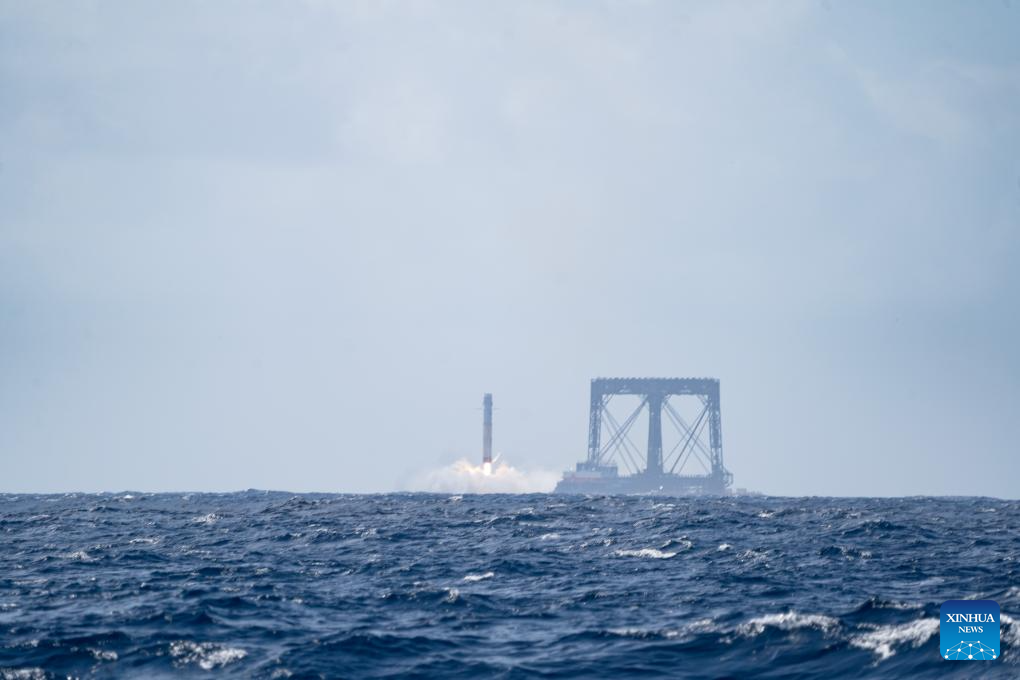
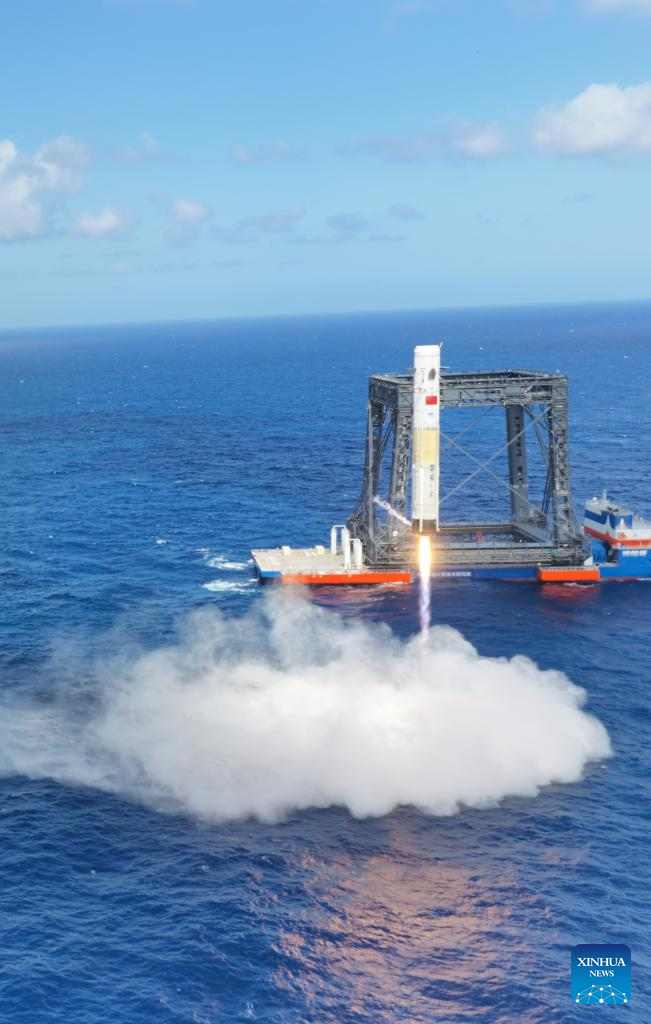
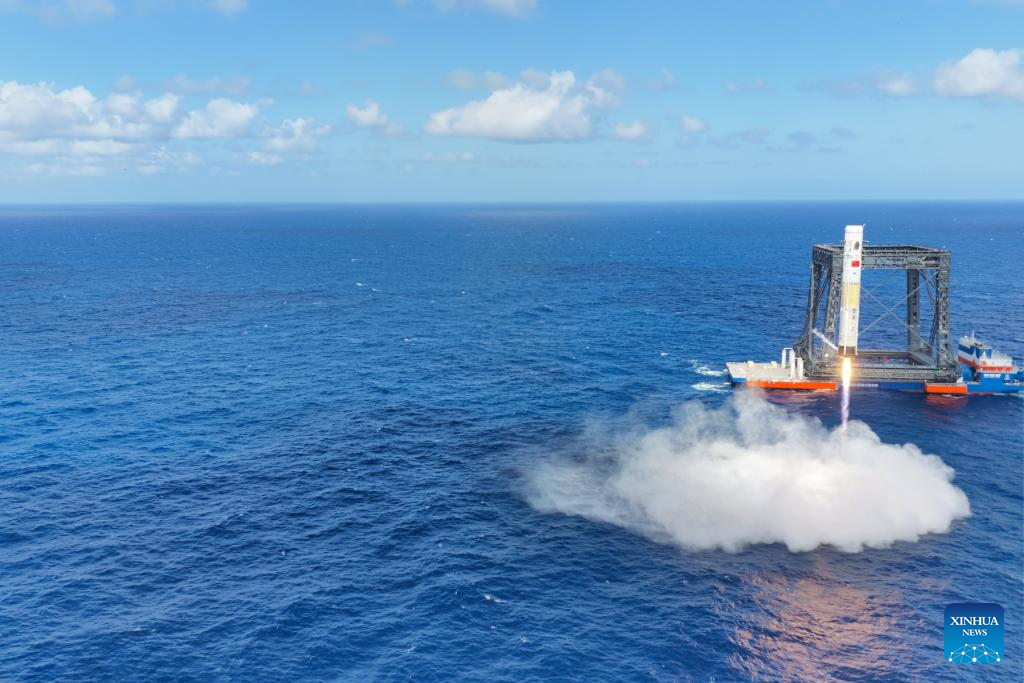
The first stage of the Long March-10 carrier rocket safely splashes down in the predetermined sea area in a controlled manner as planned, Feb. 11, 2026. A low-altitude demonstration and verification flight test for the Long March-10 carrier rocket and a maximum dynamic pressure abort flight test for the new-generation crewed spaceship system Mengzhou are successfully conducted at the Wenchang Spacecraft Launch Site in south China's Hainan Province on Wednesday. (Photo by Han Qingce/Xinhua)

W6TzB1ATNWKCKj0M.jpg


The first stage of the Long March-10 carrier rocket safely splashes down in the predetermined sea area in a controlled manner as planned, Feb. 11, 2026. A low-altitude demonstration and verification flight test for the Long March-10 carrier rocket and a maximum dynamic pressure abort flight test for the new-generation crewed spaceship system Mengzhou are successfully conducted at the Wenchang Spacecraft Launch Site in south China's Hainan Province on Wednesday. (Photo by Han Qingce/Xinhua)

km6587VIwgJYlX5v.jpg


The first stage of the Long March-10 carrier rocket safely splashes down in the predetermined sea area in a controlled manner as planned, Feb. 11, 2026. A low-altitude demonstration and verification flight test for the Long March-10 carrier rocket and a maximum dynamic pressure abort flight test for the new-generation crewed spaceship system Mengzhou are successfully conducted at the Wenchang Spacecraft Launch Site in south China's Hainan Province on Wednesday. (Photo by Han Qingce/Xinhua)
 
bqAOmtvSj6zeDDBl.jpg


A low-altitude demonstration and verification flight test for the Long March-10 carrier rocket and a maximum dynamic pressure abort flight test for the new-generation crewed spaceship system Mengzhou are successfully conducted at the Wenchang Spacecraft Launch Site in south China's Hainan Province, Feb. 11, 2026. (Xinhua/Pu Xiaoxu)

Ok6SsXp1qoj1deDE.jpg


A low-altitude demonstration and verification flight test for the Long March-10 carrier rocket and a maximum dynamic pressure abort flight test for the new-generation crewed spaceship system Mengzhou are successfully conducted at the Wenchang Spacecraft Launch Site in south China's Hainan Province, Feb. 11, 2026. (Xinhua/Pu Xiaoxu)

7to2B9mSYH1Kk991.jpg


A low-altitude demonstration and verification flight test for the Long March-10 carrier rocket and a maximum dynamic pressure abort flight test for the new-generation crewed spaceship system Mengzhou are successfully conducted at the Wenchang Spacecraft Launch Site in south China's Hainan Province, Feb. 11, 2026. (Xinhua/Pu Xiaoxu)

RqU7NR4peaGtBCe2.jpg


A low-altitude demonstration and verification flight test for the Long March-10 carrier rocket and a maximum dynamic pressure abort flight test for the new-generation crewed spaceship system Mengzhou are successfully conducted at the Wenchang Spacecraft Launch Site in south China's Hainan Province, Feb. 11, 2026. (Xinhua/Li Minggang)

gJryPzD6gQSVAbS2.jpg


A low-altitude demonstration and verification flight test for the Long March-10 carrier rocket and a maximum dynamic pressure abort flight test for the new-generation crewed spaceship system Mengzhou are successfully conducted at the Wenchang Spacecraft Launch Site in south China's Hainan Province, Feb. 11, 2026. (Photo by Wang Heng/Xinhua)


Closer to the moon! China completes first recovery of spacecraft return capsule from sea​

To view this content we will need your consent to set third party cookies.
For more detailed information, see our cookies page.
 

China demonstrates AI computing power in outer space with satellite network breakthrough​

Xinhua | Updated: 2026-02-14 11:02

HANGZHOU -- China has taken a major step toward building an, with a satellite constellation deploying 10 AI models in orbit and establishing inter-satellite networking.

The deployment demonstrates AI applications in deep space exploration, smart city development and natural resource surveys, according to Zhejiang Lab, which developed the constellation with global partners.

China placed 12 satellites, the first group of the space computing constellation called "Three-Body Computing Constellation," into orbit in May 2025.

After nearly nine months of in-orbit testing, the constellation has demonstrated core capabilities including networking, computing, model deployment and scientific payload verification.

Among the space-based models are an 8-billion-parameter remote sensing model and an 8-billion-parameter astronomical time-domain model. These rank among the largest parameter AI models operating in orbit globally.

In November 2025, the remote sensing model conducted an infrastructure census across 189 square kilometers in northwest China, automatically identifying stadiums and bridges despite heavy snow cover.

For astronomical research, two satellites equipped with cosmic X-ray polarization detectors deployed an AI model that rapidly classifies gamma-ray bursts in orbit with 99 percent accuracy while dramatically reducing data transmission and processing times.

The team also achieved inter-satellite links among six satellites, a crucial step toward space networking.

Once its planned 1,000-plus satellites are in orbit, the constellation will crunch 100 quintillion operations per second, according to the lab.

"With a computing constellation, part of the data can be processed in space and delivered straight to users," said Li Chao from Zhejiang Lab.

 
China’s tech shock threatens the U.S. AI monopoly and is ‘just getting started’
PUBLISHED: MON, 16 FEB 2026 14:46:41 GMT
Sawdah Bhaimiya
CNBC

108075021-1734011164475-gettyimages-1456167226-gitech84-820x462.jpeg
China is focusing on large language models in the artificial intelligence space.
Blackdovfx | Istock | Getty Image

KEY POINTS
China’s tech shock is threatening the U.S. monopoly on AI and is “moving up the value chain very rapidly,” one analyst told CNBC on Monday.
Rory Green, TS Lombard’s chief China economist, warned that most of the world might be running on a “Chinese tech stack” within five to 10 years.
China has rapidly caught up in the AI arms race with the Western world as it develops highly advanced models on homegrown chips.

China’s rapid advancement in AI is threatening to shake up U.S. dominance in the market, with one analyst warning of a tech shock that is just getting started.

Rory Green, TS Lombard’s chief China economist and head of Asia research, told CNBC’s “Squawk Box Europe” on Monday that America’s “perceived monopoly” on tech and AI has been broken by China.

“I think the China tech shock is just getting started. It’s not just AI, DeepSeek, and electric vehicles. China is moving up the value chain very rapidly… It’s the first time in history that an emerging market economy is at the forefront of science and technology,” Green said in a conversation with CNBC’s Steve Sedgewick and Ben Boulos.

China is pairing dominant-market level tech with emerging-market production costs, backed by its massive supply chain, Green said. He added that with Xi Jinping being like a “tech bro” that is chucking money into these sectors, it makes for a powerful mix that is really rapidly accelerating the China tech story.

Indeed, Beijing quietly launched a 60.06 billion yuan ($8.69 billion) national AI fund last year, and has an initiative called “AI+” which will see the tech integrated across its economy, industries, and society.

China is quickly catching up to the U.S. in the AI arms race, developing highly advanced models powered by homegrown chips, particularly through massive Huawei chip clusters and abundant low-cost energy.

While U.S. chip giant Nvidia is viewed as the gold standard for semiconductors used to train AI models, Huawei is narrowing the gap by deploying larger volumes of chips and leveraging cheaper power to scale compute.

TS Lombard’s Green explained that a “China tech sphere” could easily form, as the world’s second-largest economy’s low-cost tech offerings may be more attractive to developing economies.

“China is a top trade partner for most of the world, particularly in emerging and frontier economies. What happens if that repeats on tech?” Green said.

Advertisement
Developing economies that don’t have a national security issue with China have a choice between “low-cost China tech, Huawei, 5G batteries, solar panels, AI, probably some cheap RMB financing,” or “high-cost American and European alternative,” he said.

“For these economies, I think the choice is fairly simple, and you could see easily a world where maybe most of the world’s population is running on a Chinese tech stack in five to 10 years time,” he added.

Additionally, Demis Hassabis, the CEO of Google DeepMind, one of the world’s leading AI labs, told CNBC in January that China’s AI models might be just “a matter of months” behind U.S. and Western rivals and are closer to those capabilities than “maybe we thought one or two years ago.”

U.S. hyperscaler spending
U.S. hyperscalers Amazon, Microsoft, Meta, and Alphabet recently announced capital expenditure of up to $700 billion on AI this year, which raised alarms about returns and caused $1 trillion to be wiped from the market caps of tech giants. Some stocks have since pared their losses.

Karim Moussalem, Selwood Asset Management’s chief investment officer, told “Squawk Box Europe” on Monday that there’s a lot of “nervousness around U.S. exceptionalism,” especially after the sell-off in the U.S. software sector earlier this month.

“When I think of the hyperscalers’ capex, we’re seeing a race that’s on and a lot of money being spent, and more and more question marks around whether you know all that investment, all that capex, is going to result in meaningful return on investments,” Moussalem said.

Advertisement
“I think that’s really what’s driving this big question mark about the U.S. versus China, and whether the U.S. will be the winner in that race. But for the time being, there’s a lot of capital being spent, actually a lot more than even what was expected a few months ago, with more and more question marks about the ROI,” he added.


China proves ultra-fast building is possible, erecting ten-storey building in just 29 hours​

Technologies
16 February 2026

A building went up so fast that the real story may be what didn’t have time to go wrong. When construction moves at upload speed, who gets left behind and what limits fall next?

China Proves Ultra Fast Building Is Possible Erect


At a Changsha construction site, cranes lifted container-sized modules into place like stacked freight, each floor clicking together in roughly three hours. The units arrived with plumbing, wiring, and interiors already fitted after just 15 days in the factory. Behind the pace was Broad Group’s off-site system and B-Core steel, a stainless sandwich with a capillary tube core built for strength, quakes, and typhoons. By the time utilities were connected, a ten-story residence stood where there had hardly been a workday before, hinting at a new tempo for urban building.

A remarkable feat for modern construction​

Meeting the demand for housing has long strained conventional timelines. In Changsha, China, crews assembled a 10-story residential block in just 28 hours 45 minutes (from first module to final bolt), a result that felt both choreographed and bold. The build hints at a new pact between factory precision and on-site agility, where speed no longer sacrifices safety or livability. It also shows how planning can be as decisive as concrete.

The method behind the speed​

The secret is off-site manufacturing led by Broad Group. Using factory-built modules measuring 12 meters by 3 meters, the company prefabricated units in 15 days (including finishes). Each block left the line already fitted with plumbing, wiring, insulation, and interior walls, which shifted complexity upstream and turned the jobsite into a high-speed assembly zone.

On location, three cranes stacked and locked the units with near-clinical sequencing. Crews focused on alignment, bolting, and rapid utility hookups for immediate operability. According to Broad Group, a floor could rise in roughly 3 hours, compressing what usually takes weeks into a tight, repeatable rhythm—and keeping disruption to a minimum for the surrounding neighborhood.

To view this content we will need your consent to set third party cookies.
For more detailed information, see our cookies page.


The materials that make it possible​

At the project’s core is B-Core steel, Broad Group’s sandwich-structured composite of stainless steel plates around a capillary tube lattice, bonded by copper brazing. The company claims the system offers high ductility and resistance to seismic shocks and typhoons, while remaining remarkably light. In addition to structural resilience, its assembly-first logic simplifies transport and precision fitting on site.
  • Lower carbon profile by curbing cement-intensive elements, aiding a smaller footprint.
  • High strength-to-weight, enabling thinner sections and faster handling.
  • Robust, ductile behavior designed for quakes and extreme winds, according to Broad Group.

Redefining the future of construction​

This is the case of a build that reframes time as a design variable. Faster cycles mean less financing drag, fewer weather risks, and earlier occupancy, which can translate to lower costs. Quality control shifts inside the factory, where tolerances are measurable and repeatable. For cities squeezed by demand, the appeal is obvious.

There are caveats: oversight must keep pace with modular standards, and not every site suits crane-heavy logistics. Yet the Changsha prototype suggests a
template for dense, resilient housing delivered at speed. Could this become the new normal for fast-growing metros? If efficiency and resilience do coexist at this scale, China’s 10-story, sub-29-hour tower stands as a signal—not just of ambition, but of what’s now technically within reach.
 
Yes this is indeed very impressive. Assembling a building from ready made parts like in a car factory.
 

China proves ultra-fast building is possible, erecting ten-storey building in just 29 hours​

Technologies
16 February 2026

A building went up so fast that the real story may be what didn’t have time to go wrong. When construction moves at upload speed, who gets left behind and what limits fall next?

China Proves Ultra Fast Building Is Possible Erect


At a Changsha construction site, cranes lifted container-sized modules into place like stacked freight, each floor clicking together in roughly three hours. The units arrived with plumbing, wiring, and interiors already fitted after just 15 days in the factory. Behind the pace was Broad Group’s off-site system and B-Core steel, a stainless sandwich with a capillary tube core built for strength, quakes, and typhoons. By the time utilities were connected, a ten-story residence stood where there had hardly been a workday before, hinting at a new tempo for urban building.

A remarkable feat for modern construction​

Meeting the demand for housing has long strained conventional timelines. In Changsha, China, crews assembled a 10-story residential block in just 28 hours 45 minutes (from first module to final bolt), a result that felt both choreographed and bold. The build hints at a new pact between factory precision and on-site agility, where speed no longer sacrifices safety or livability. It also shows how planning can be as decisive as concrete.

The method behind the speed​

The secret is off-site manufacturing led by Broad Group. Using factory-built modules measuring 12 meters by 3 meters, the company prefabricated units in 15 days (including finishes). Each block left the line already fitted with plumbing, wiring, insulation, and interior walls, which shifted complexity upstream and turned the jobsite into a high-speed assembly zone.

On location, three cranes stacked and locked the units with near-clinical sequencing. Crews focused on alignment, bolting, and rapid utility hookups for immediate operability. According to Broad Group, a floor could rise in roughly 3 hours, compressing what usually takes weeks into a tight, repeatable rhythm—and keeping disruption to a minimum for the surrounding neighborhood.

To view this content we will need your consent to set third party cookies.
For more detailed information, see our cookies page.


The materials that make it possible​

At the project’s core is B-Core steel, Broad Group’s sandwich-structured composite of stainless steel plates around a capillary tube lattice, bonded by copper brazing. The company claims the system offers high ductility and resistance to seismic shocks and typhoons, while remaining remarkably light. In addition to structural resilience, its assembly-first logic simplifies transport and precision fitting on site.
  • Lower carbon profile by curbing cement-intensive elements, aiding a smaller footprint.
  • High strength-to-weight, enabling thinner sections and faster handling.
  • Robust, ductile behavior designed for quakes and extreme winds, according to Broad Group.

Redefining the future of construction​

This is the case of a build that reframes time as a design variable. Faster cycles mean less financing drag, fewer weather risks, and earlier occupancy, which can translate to lower costs. Quality control shifts inside the factory, where tolerances are measurable and repeatable. For cities squeezed by demand, the appeal is obvious.

There are caveats: oversight must keep pace with modular standards, and not every site suits crane-heavy logistics. Yet the Changsha prototype suggests a
template for dense, resilient housing delivered at speed. Could this become the new normal for fast-growing metros? If efficiency and resilience do coexist at this scale, China’s 10-story, sub-29-hour tower stands as a signal—not just of ambition, but of what’s now technically within reach.

Nothing new, this technique was invented by the USSR, in 1950s they were constructing ~100 apartment blocks per day at peak .
 
Nothing new, this technique was invented by the USSR, in 1950s they were constructing ~100 apartment blocks per day at peak .
It's not a new tech, but can Russia still do it and in what scale can it do it? China's strength is mass production in industrial scale, not some pilot model programs which have a long way to go to be turned into everyday reality.
 

EHang’s subsidiary EHang Egret has set a NEW WORLD RECORD​

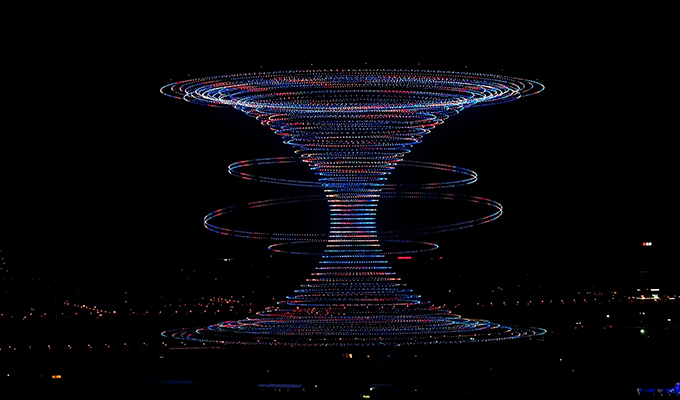
Proud to announce: EHang’s subsidiary EHang Egret has set a new world record for the most multirotor/drones airborne simultaneously from a single computer, with 22,580 units of next-gen GHOSTDRONE 4.0 (GD4.0). This record-breaking formation lit up the sky, showcasing stunning 3D animations, including iconic Hui-style horse-head walls, to a global audience at the Hefei sub-venue of the CMG 2026 Spring Festival Gala.

To view this content we will need your consent to set third party cookies.
For more detailed information, see our cookies page.


EHang is set to shine at the CMG 2026 Spring Festival Gala!​

To view this content we will need your consent to set third party cookies.
For more detailed information, see our cookies page.


EHang Lights Up China's Spring Festival Gala with 16 EH216-S and 22,580 GD4.0 Drones in Aerial Tech Spectacle​


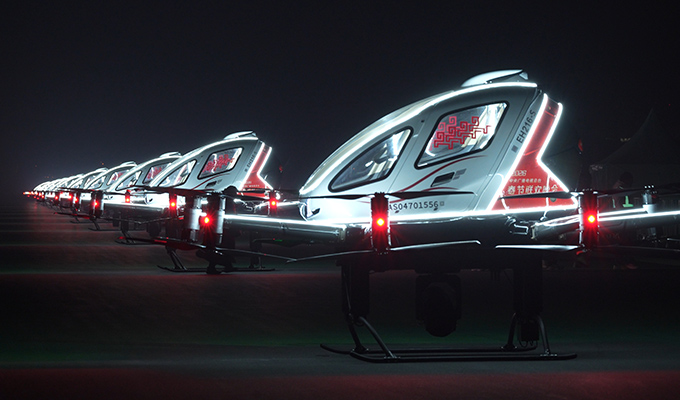
Guangzhou, China – February 16, 2026 — EHang Holdings Limited (Nasdaq: EH) (“EHang” or the “Company”), a global leader in Advanced Air Mobility (AAM) technology, announced a dual-feature aerial performance at the Hefei sub-venue of the 2026 China Media Group (CMG) Spring Festival Gala. The performance featured a formation of 16 EH216-S pilotless human-carrying eVTOL aircraft alongside a record-breaking drone light show involving 22,580 next-generation GHOSTDRONE 4.0 (“GD4.0”) unmanned aerial vehicles (“UAVs”), the performance delivered a futuristic visual spectacle supported by industry-leading flight safety and fleet orchestration technologies, offering sincere Lunar New Year wishes to a global audience.

1771258682165202.jpg


1771258682333286.jpg

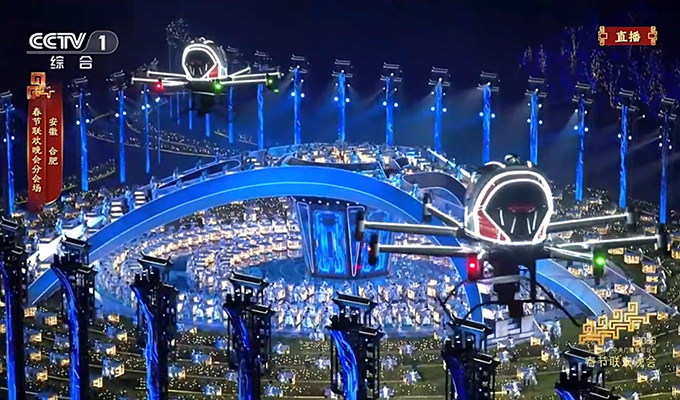
Image: 16 EH216-S aircraft from EHang illuminate the CMG Spring Festival Gala stage
Source: Live screen capture from the CMG 2026 Spring Festival Gala


dsgerg.jpg

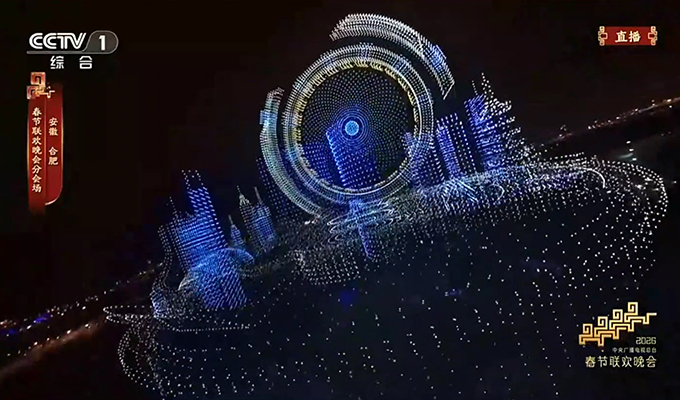
Image: 22,580 GD4.0 drones from EHang Egret at the CMG Spring Festival Gala.
Source: Live screen capture from the CMG 2026 Spring Festival Gala


Among the highlights, the 22,580 GD4.0 formation drones at the CMG 2026 Spring Festival Gala set a new world record, earning the Guinness World Records™ title for "the most multirotor/drones airborne simultaneously from a single computer ."

During the segment of“He Yun Man Jiang Huai”at the Hefei branch venue of the Spring Festival Gala, 16 EH216-Saircraft took off simultaneously and formed a perfect circular formation above the "Eye of Anhui", the main stage in Hefei Luogang Park. Equipped with customized stage lighting modules, the aircraft illuminated the stage through safe, stable, and precisely coordinated flight,seamlessly blending the technological allure of pilotless "air taxis" with the festive atmosphere of family reunion. The synchronized flight of 16 aircraft at the Spring Festival Gala showcases EHang's industry leadership and professionalism in cutting-edge technological innovation sectors, including cluster Command-and-Control System, precise algorithmic control, multi-scenario adaptive flight, and professional service support.

As the world's first pilotless human-carrying eVTOL aircraft to obtain Type Certificate (TC), Production Certificate (PC), and Standard Airworthiness Certificate (AC) from the Civil Aviation Administration of China (CAAC), and currently conducting trial operations at Luogang Park, the coordinated flight of 16 EH216-S aircraft also marked the largest simultaneous public flight of pilotless human-carrying eVTOL aircraft to date. It offered a direct showcase of China's technological prowess in new-era civil aviation and vividly illustrated the exciting potential of the low-altitude economy within the celebratory New Year setting.

greagad.jpg

Image: 16 EH216-S completed formation flight at the Hefei Venue of the CMG Spring Festival Gala

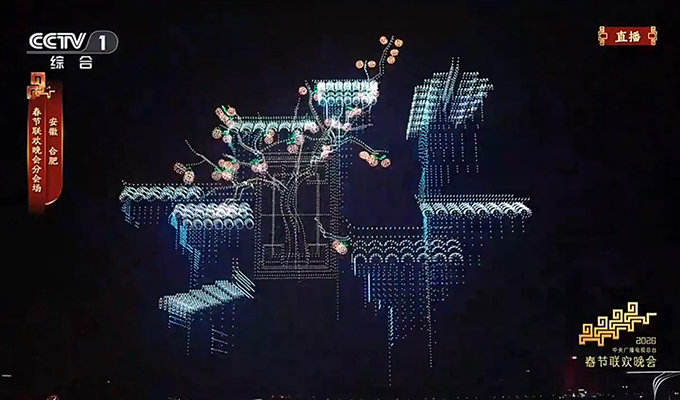
In another segment at the Hefei branch venue of the Spring Festival Gala, a drone light show of 22,580 GD4.0 formation drones from EHang's subsidiary, EHang Egret, took to the skies above the main stage. Forming intricate 3D animations of the sky city and the iconic horse-head walls of Hui-style architecture. Through synchronized light choreography integrated with the stage design, the drones created an immersive "aerial theater" fusing technology and culture. This performance amplified the joyous, auspicious, and harmonious spirit of the festival, immersing global viewers in a powerful visual experience. Prior to the official Guinness World Record™ attempt and the Gala, EHang Egret had successfully conducted multiple performances in Hefei Luogang Park involving over 20,000 drones simultaneously, fully demonstrating the GD4.0's robust performance in complex environments, dynamic performance capabilities, and technological strengths in high-precision positioning and intelligent coordination.

fefwe.jpg

Image: 22,580 GD4.0 drones from EHang Egret form the iconic horse-head walls of Hui-style architecture pattern at the CMG Spring Festival Gala.
Source: Source: Live screen capture from the CMG 2026 Spring Festival Gala


The performance venue, Hefei Luogang Park, is a multifunctional, multi-dimensional space that has become one of China's most representative testing grounds and demonstration sites for low-altitude economy development. It currently hosts two Urban Air Mobility (UAM) centers capable of eVTOL flight services. Since March 2025, following the grant of one of China's first Air Operator Certificates (OC) for pilotless human-carrying eVTOL aircraft by the CAAC to EHang's local operator, Hefei HeYi Aviation, regular trial operations of the EH216-S have been conducted there. With its comprehensive infrastructure, Luogang Park is also well suited for EHang Egret to conduct routine drone light shows, gradually fostering a citywide ecosystem integrating low-altitude technology and culture.

rgwrfg.jpg

Image: 22,580 GD4.0 drones from EHang Egret set a new world record

Mr. Wang Zhao, Chief Operating Officer of EHang, stated, "The appearance of 16 EH216-S and 22,580 GD4.0 drones in multi-aircraft formations at the CMG Spring Festival Gala showcases not only EHang's formidable technological strength and creative commercial capabilities but also comprehensively demonstrates the adaptability and maturity of our superior command-and-control technology across diverse scenarios. This lays a solid technical foundation for the large-scale commercial operation of pilotless aircraft in low-altitude economy applications. The Guinness World Record™ achieved by EHang Egret and the Gala performance further elevate and solidify the EHang brand's influence, providing a significant platform for public awareness and understanding of the low-altitude economy. Driven by our long-term commitment to continuous innovation and technological iteration, EHang's pilotless aircraft are designed not only for major events displays but for practical applications in passenger transportation, logistics, firefighting and emergency response, smart city management, and aerial media services. Through core technology R&D and the implementation of commercial services, we aim to bring scalable Chinese low-altitude solutions to global markets and enable these new technologies to serve a broader consumer base."
 

Users who are viewing this thread

Back
Top