Aftermath of the Iran-US war and its effects on proximities

Man i sure hope peace prevails, otherwise we may have large influx of refugees from another war-torn country next to ours.
These warring countries are not doing themselves any favours by destroying the planet, what goes around comes around very quickly these days.
 
you have to store nukes somewhere they cant be on the move 24/7


also does any one know how we move our nuclear materials and weapons (@safriz )
To view this content we will need your consent to set third party cookies.
For more detailed information, see our cookies page.

like for ex. US does this ,is our as visible or do we just hide it in plain sight .

During her stay in Afghanistan USA tried to locate our nukes few times without any success.
 
Man i sure hope peace prevails, otherwise we may have large influx of refugees from another war-torn country next to ours.
These warring countries are not doing themselves any favours by destroying the planet, what goes around comes around very quickly these days.
👆
 
There's is no need for protests when you see your buddy getting a face-saving and allowed to declare victory

Protests have their own economy attached to them. A very lucrative business. If they have called for a protest, rest assure there will be one.

Some posts are missing in the thread from yesterday. Interesting isn't it?
 
Protests have their own economy attached to them. A very lucrative business. If they have called for a protest, rest assure there will be one.

Some posts are missing in the thread from yesterday. Interesting isn't it?
Some mods are courteous towards Iran , it's a good and honourable thing to do in such circumstances... unfortunately , some of us including me are not that courteous
 
Some mods are courteous towards Iran , it's a good and honourable thing to do in such circumstances... unfortunately , some of us including me are not that courteous

Might is always right. Ye baat apko apne zehan me bitha leni chaiye Zaid Zaman style.
 
The United States is far from exhausted; politics constrain its industrial might, but if it were unrestrained, it has enough capacity on its own to produce arms that could rival those of the Europeans, Russians, and Chinese combined.

Do remember that most industrial companies are required to maintain a war-footing plan by the Department of Defense if a World War-like scenario arises.

Exhaustion covers political will as well.

US are not going to reorientate their entire economy like in WW2 style over this.
 
Let's face some very interesting recent war in Iran situations:

What I want to know is how Pakistan will react ..... without their airforces (F-16, JF-17, Mirages, F-6 etc)?

Do we have modern drones or any models to attack effectively ......... after India will destroy our bases and all of our airforces with their hypersonic missiles in Phase 1?

Pakistan has only a few numbers compared to big Iran's massive missiles and modern drones.

Shahed-136 ($30K only) destroyed $300 million US Early Warning Radars quickly in Middle East and Israel.

I think our cost will be much more than $40–45 million for F-16s or JF-17s per attack which could bankrupt Pakistan quickly.

Please discuss with China now or seek permission from US to allow you more modern drones (yes sir). Arabs are not going to save you at all.
 
India can launch a water bomb on Pakistan anytime and the Generals will not bat an eyelid.

They can flood 20 to 30 million people, whenever they want. It has happened
many times before, how is Pakistan preparing for this?

This years flood could be even bigger.
 
During her stay in Afghanistan USA tried to locate our nukes few times without any success.
Most people may not know or remember this but the period between 2005-2015 was a wild ride for Pakistan.

We caught so many spies: exposed so many covert ops:
Peshawar: Arrest x3

  • Curtain Wild [Dual US/German Citizen]
  • Lauren [No Photo]
  • Rhodwolf Smith [A former Colonel in the German Army who had served in Kosovo and Afghanistan]

Trio arrested and deported for posing as NGO workers arrested for taking long drives to sensitive "places" with large lenses cameras, sensors and GPS kit.
www.dawn.com/news/amp/689875

Islamabad: Arrested near sensitive location in Fateh Jang.
1773135830755.png
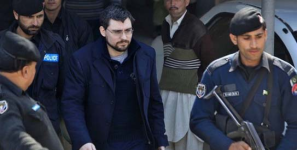
This wierdo was already under suspicion for being linked to Israel and was Binosche Khan (relative of Advocate Abdul Rahman Swati PTI) -he married a Pakistani citizen and lived in Pakistan very even having two children with Binosche named Rose and Michael. - His wife originally worked for an NGO then moved to work at the Finnish Embassy when she came under the radar of military intelligence.

He was arrested in a 4x4 with a cellphone, camera and maps in a sensitive location - after being arrested and charged under the foreigner act - he was eventually deported.

He somehow managed to re-enter the country in 2016 and was re-arrested at a guest hosue in Islamabad and deported again.

www.dawn.com/news/amp/1275973
Peshawar: arrest of Aaron Mark DeHaven
1773136698712.png
Aaron another deep cover dude - lived in Pakistan extensively - married a Pakistani woman - was associated with a contract for the US Embassy in Peshawar, a front company by the name of Catalyst Services based in Verginia was set up in his name which specialized in Life Support, Armed Security and risk management.

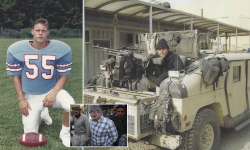
Northern Pakistan: Gary Brookes Faulkner "Temu Rambo"
1773137123736.png
Faulkner from Colarado, US was arrested near the hills of Abbottabad, at the time of his arrest he had on his possession a FLIR Camera, NVGs, a 9mm Pistol and a KBAR knife. He was eventually deported back to the US, where he was again arrested on firearms charges.
====
The sudden influx of Private Military contractors alarmed Pakistani Intelligence - and in 2012 an order was passed to curtail the operations of PMCs using Pakistan to have offices / staff here:
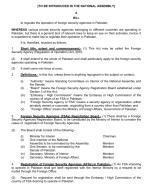
1773137790303.png

Islamabad: Paxmondial Pakistan Ban
1773137333747.png

British concern Paxmondial set up an office in Islamabad using a Pakistani national as joint director - the company original set up business operations under category "Business Services" later secured a 550,000 USD contract for armed security in Islamabad, they had an office in an unassuming house in F11 and were eventually bagged and tagged - the company was wound up and the foreign staff deported from Pakistan

The SECP banned the operations of the company under Order PAX MONDIAL PAKISTAN 2012 [ you can view this order on the internet]

==
Islamabad: Arrest of Capt(r) Syed Ali Ja Zaidi
In 2009 this retired Pakistan army Captain came to prominence when he was flagged by MI/ISI for having close links to a private "Anti-Terrorism" team in Rawat. He ran InterRisk a legitimate company providing armed security for diplomats - behind this company he was running another enterprise linked to XE/Dyncorp training a private Anti-Terrorism force in Rawat out of a large Auto spare parts workshop.
===
Control Risks Pakistan Office: "Sus" Suicide.
Another suspicious company operating inside Pakistan during these days was Control Risks - out of respect for the deceased I have not published him name as he was known to some in the community - but he blew his own brains out in his bathroom when his cover was blown. (Never betray your own country!)!
===
Blackwater Lodge (Formerly Blackwater Site)
This mysterious guest house in Khosar Market Islamabad, was known to house contractors providing security to the drone engineers working on Shamsi airbase - they had taken up residence in the guest house and encroached on the road installing illegal hesco bastions and Texas barriers - the property was vacated when local families were assaulted by two contractors at a KFC on F6 Sector following a police raid.
===
Lahore: Raymond Allen Davis
1773138952489.png

Raymond Davis is suspected to be part of the HTT (Human Terrain Team) that operated in Afghanistan and Pakistan and was instrumental in the location of several high value AQN targets in the region.

He was arrested following a shootout in Lahore where Davis shot two Pakistani citizens before ramming several cars in an attempt to escape from the scene - he was boxed in by locals and was subsequently arrested.

Davis was deported from Pakistan after the criminal trial collapsed.
============================
These are just the cases that are in the public light - many cases never get brought to public attention - so please be critical but always thank your intelligence services for what they do - unsung, faceless, nameless heroes.
 
Last edited:
Another point that needs to be acknowledged in this conflict is that, realistically speaking, Iran has performed far better than many analysts initially expected. Despite facing the United States and Israel, Iran has demonstrated that its missile and drone capabilities can penetrate and overwhelm even very expensive air-defense systems in the region. Several Gulf states rely on extremely costly air-defense architectures, yet many of them have struggled to fully intercept the volume and persistence of Iranian strikes. From what we hear, some systems in places like Qatar may still remain operational, but Israel itself is being heavily resupplied by the United States to sustain its defensive capacity.


For Pakistan, the key takeaway should again be lessons learned from the conflict. One question that often comes to mind is why Pakistan never seriously pursued cooperation with Iran in the development of missiles and kamikaze drone technologies. In the early 2000s there were many rumors and reports that Pakistan had assisted Iran in certain strategic areas, so cooperation in conventional missile and drone technology could have been mutually beneficial.


The reality is that both Iran and Pakistan operate under economic constraints, which means neither country can afford extremely expensive weapon systems on the scale of major global powers. Iran therefore focused on developing relatively low-cost but effective missiles and drones, and that model is proving highly relevant in modern warfare.


Pakistan historically cooperated with many countries for military technology — for example with Türkiye, China, and even Ukraine for tank engines in earlier years. In the same way, cooperation with Iran in drone technology could have been a logical step. Even now it is not too late. Russia itself has reportedly used Iranian-designed Shahed drones extensively, and Pakistan is already working with China in the drone domain.


However, Pakistan appears to be lagging behind in conventional missile development. A large inventory of conventional missiles — potentially several thousand — would significantly strengthen deterrence. If a country possesses a large stockpile of long-range conventional strike systems, it makes adversaries think very carefully before escalating a conflict.


At the same time, Pakistan should aim to build a mass inventory of loitering and kamikaze drones similar to the Shahed series. Thousands of such drones would provide a highly effective and relatively low-cost strike capability in modern conflicts.


Another factor to consider is the broader regional strategic environment. If, hypothetically, Iran were ever destabilized and a pro-Western or pro-Israel government emerged, the geopolitical balance in the region would shift dramatically. In such a scenario, Pakistan would need even stronger conventional deterrence capabilities.


Ultimately, Pakistan already has strong foundations: its navy is capable, and the Pakistan Air Force remains one of the strongest in the region. However, the future battlefield is increasingly defined by missiles, drones, and large-scale conventional strike capability, and Pakistan should continue strengthening these areas to maintain credible deterrence in a changing strategic environment.


Pakistan Zindabad.
 
Most people may not know or remember this but the period between 2005-2015 was a wild ride for Pakistan.

We caught so many spies: exposed so many covert ops:
Peshawar: Arrest x3

  • Curtain Wild [Dual US/German Citizen]
  • Lauren [No Photo]
  • Rhodwolf Smith [A former Colonel in the German Army who had served in Kosovo and Afghanistan]

Trio arrested and deported for posing as NGO workers arrested for taking long drives to sensitive "places" with large lenses cameras, sensors and GPS kit.
www.dawn.com/news/amp/689875

Islamabad: Arrested near sensitive location in Fateh Jang.
View attachment 184691
This wierdo was already under suspicion for being linked to Israel and was Binosche Khan (relative of Advocate Abdul Rahman Swati PTI) -he married a Pakistani citizen and lived in Pakistan very even having two children with Binosche named Rose and Michael. - His wife originally worked for an NGO then moved to work at the Finnish Embassy when she came under the radar of military intelligence.

He was arrested in a 4x4 with a cellphone, camera and maps in a sensitive location - after being arrested and charged under the foreigner act - he was eventually deported.

He somehow managed to re-enter the country in 2016 and was re-arrested at a guest hosue in Islamabad and deported again.

www.dawn.com/news/amp/1275973
Peshawar: arrest of Aaron Mark DeHaven
View attachment 184693
Aaron another deep cover dude - lived in Pakistan extensively - married a Pakistani woman - was associated with a contract for the US Embassy in Peshawar, a front company by the name of Catalyst Services based in Verginia was set up in his name which specialized in Life Support, Armed Security and risk management.

Northern Pakistan: Gary Brookes Faulkner "Temu Rambo"
View attachment 184696
Faulkner from Colarado, US was arrested near the hills of Abbottabad, at the time of his arrest he had on his possession a FLIR Camera, NVGs, a 9mm Pistol and a KBAR knife. He was eventually deported back to the US, where he was again arrested on firearms charges.
====
The sudden influx of Private Military contractors alarmed Pakistani Intelligence - and in 2012 an order was passed to curtail the operations of PMCs using Pakistan to have offices / staff here:
View attachment 184700

Islamabad: Paxmondial Pakistan Ban
View attachment 184697

British concern Paxmondial set up an office in Islamabad using a Pakistani national as joint director - the company original set up business operations under category "Business Services" later secured a 550,000 USD contract for armed security in Islamabad, they had an office in an unassuming house in F11 and were eventually bagged and tagged - the company was wound up and the foreign staff deported from Pakistan

The SECP banned the operations of the company under Order PAX MONDIAL PAKISTAN 2012 [ you can view this order on the internet]

==
Islamabad: Arrest of Capt(r) Syed Ali Ja Zaidi
In 2009 this retired Pakistan army Captain came to prominence when he was flagged by MI/ISI for having close links to a private "Anti-Terrorism" team in Rawat. He ran InterRisk a legitimate company providing armed security for diplomats - behind this company he was running another enterprise linked to XE/Dyncorp training a private Anti-Terrorism force in Rawat out of a large Auto spare parts workshop.
===
Control Risks Pakistan Office: "Sus" Suicide.
Another suspicious company operating inside Pakistan during these days was Control Risks - out of respect for the deceased I have not published him name as he was known to some in the community - but he blew his own brains out in his bathroom when his cover was blown. (Never betray your own country!)!
===
Blackwater Lodge (Formerly Blackwater Site)
This mysterious guest house in Khosar Market Islamabad, was known to house contractors providing security to the drone engineers working on Shamsi airbase - they had taken up residence in the guest house and encroached on the road installing illegal hesco bastions and Texas barriers - the property was vacated when local families were assaulted by two contractors at a KFC on F6 Sector following a police raid.
===
Lahore: Raymond Allen Davis
View attachment 184704

Raymond Davis is suspected to be part of the HTT (Human Terrain Team) that operated in Afghanistan and Pakistan and was instrumental in the location of several high value AQN targets in the region.

He was arrested following a shootout in Lahore where Davis shot two Pakistani citizens before ramming several cars in an attempt to escape from the scene - he was boxed in by locals and was subsequently arrested.

Davis was deported from Pakistan after the criminal trial collapsed.
============================
These are just the cases that are in the public light - many cases never get brought to public attention - so please be critical but always thank your intelligence services for what they do - unsung, faceless, nameless heroes.
Some bureaucrats and senior military officials who have kids in America were also interrogated , don't know what happened to them.
 
For Pakistan, the key takeaway should again be lessons learned from the conflict. One question that often comes to mind is why Pakistan never seriously pursued cooperation with Iran
Hello and welcome to the forum. I can see you have not posted much but judging by your most recent post, please take the time to post more. Before I start what, I am about to type will leave a bad taste in people's mouth, but I believe in data and objectivity when answering serious questions put in good faith.

Firstly, it is important to note that the relationship between the IRGC and Pakistan can only be described as a "Suspicious Peace". While we share a 560-mile border and common interests in stabilizing Afghanistan, our military and missile programs have remained largely separate and competitive- due to a mix of geopolitical, historical friction.

Until perhaps most recently, the IRGC traditionally views Pakistan through a lens of deep-seated mistrust for several reasons:

1. Proxy "Border" Wars: IRGC frequently accuses Pakistan of "willful negligence" or outright harboring of Sunni militant groups like Jaish al-Adl. These groups launch attacks on IRGC personnel in Iran's Sistan-Balochistan province. In January 2024, this tension boiled over into unprecedented tit-for-tat missile strikes between the two countries.

2. Conflicting Existential Alliances: The IRGC sees Pakistan as too close to its primary rivals. Pakistan maintains a "Special Defense Relationship" with Saudi Arabia and has historically relied on the U.S. for military aid. Conversely, Iran has developed a strategic partnership with India (specifically regarding the Chabahar Port), which Islamabad views as an encirclement tactic.
3. The Sectarian Factor: The IRGC is the vanguard of Iran's Shia clerical establishment. While Pakistan is a diverse state, the IRGC remains wary of Pakistan’s historical role in supporting Sunni movements (like the Taliban) and fears the influence of hardline Salafist elements within the Pakistani military and intelligence apparatus.

Similarly, whilst Pakistan presents the facade of brotherly nations - there is a serious concern inside Islamabad that the IRGC has historically cultivated and supported several proxy groups and networks within Pakistan. This support is usually driven by two goals: protecting Pakistan’s Shia minority and countering the influence of Saudi-backed Sunni groups.

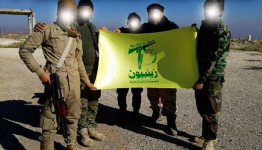
1. The Zainabiyoun Brigade (The Most Recent Proxy)
1773142222804.png
The most significant modern proxy is the Zainabiyoun Brigade.

Recruitment: Formed by the IRGC-Quds Force around 2012–2014, it consists primarily of Pakistani Shias (many from the Kurram District and Gilgit-Baltistan).

Mission: Originally recruited to fight in Syria to defend the Bashar al-Assad regime and Shia shrines.

Domestic Impact: In early 2024, Pakistan officially designated the Zainabiyoun Brigade as a terrorist organization, citing its involvement in "activities against the interest of the state." The IRGC continues to provide pensions and support to the families of "martyrs" from this group living in Pakistan, which Islamabad views as a mechanism for maintaining a "sleeper cell" network.

In March 2024, the Pakistani Ministry of Interior officially designated the Zainabiyoun Brigade (Liwa Zainebiyoun) as a terrorist organization. This was a massive diplomatic blow to the IRGC, as the group is essentially their "foreign legion" for Pakistani Shias.

Why the Ban Happened: After the Syrian Civil War de-escalated, thousands of battle-hardened Pakistani fighters began returning home. Islamabad feared these men—trained in urban warfare and missile operation by the IRGC—would form "sleeper cells" or be used by Tehran to influence Pakistani internal politics.

The Turning Point: The ban followed the January 2024 tit-for-tat missile strikes between Iran and Pakistan. Pakistan used the designation to send a clear message: "We will no longer tolerate the IRGC recruiting our citizens to fight your regional wars."
1773143293808.png
Current Status (March 2026): Following the collapse of the Assad regime in late 2024/2025, many Zainabiyoun fighters fled to Iraq. Pakistan has strictly refused to repatriate them, viewing them as a permanent security threat. Recent reports suggest the IRGC is attempting to re-infiltrate these members back into Pakistan as "pilgrims" to maintain influence during the current regional instability.
2. Sectarian Proxy War (1980s–1990s)
Following the 1979 Iranian Revolution, the IRGC sought to "export the revolution." This led to a brutal proxy war on Pakistani soil against Saudi-funded groups.

Tehreek-e-Nifaz-e-Fiqh-e-Jafaria (TNFJ): Iran provided significant ideological and financial backing to this group in the 1980s to advocate for Shia rights under the Sunni-centric Islamization of General Zia-ul-Haq.

Sipah-e-Muhammad Pakistan (SMP): Formed in the early 1990s as a militant offshoot to counter the Sunni militant group Sipah-e-Sahaba. SMP was involved in numerous assassinations and bombings targeting Sunni hardliners. The IRGC was frequently accused by Pakistani intelligence (ISI) of providing training and sanctuary to SMP militants in Iran.

3. Cultural and Intelligence "Soft Power"
The IRGC operates through less "militant" channels that Pakistan still categorizes as proxy influence:

Imamia Students Organization (ISO): While primarily a student group, the ISO is openly pro-Iranian and follows the ideology of Velayat-e Faqih (Guardianship of the Jurist). The IRGC uses these networks for "ideological recruitment."

Intelligence Recruitment: In the late 2010s and early 2020s, several "spy rings" were uncovered in Karachi and Islamabad. Pakistani officials alleged these individuals were recruited by the IRGC to monitor U.S. and Saudi interests within Pakistan.

4. The "Baloch" Complication
While the IRGC fights Baloch separatists (like Jaish al-Adl) who hide in Pakistan, it has also been accused of selective blindness.

Pakistan has historically claimed that Iran allows certain Baloch insurgent groups (fighting against Pakistan) to maintain low-level presence on Iranian soil as leverage.

This "tit-for-tat" proxy game is why the border remains one of the most militarized and distrustful zones in Asia today.


Chabahar vs. Gwadar: The Port Rivalry
Senior officials in Pakistan are of the opinion that The IRGC uses the Chabahar Port as a strategic "chokepoint" to bypass and undermine Pakistan’s economic and military leverage.

FeatureChabahar Port (Iran)Gwadar Port (Pakistan)
Primary PartnerIndiaChina
Strategic GoalBypass Pakistan to reach Central Asia.Gateway for the China-Pakistan Economic Corridor (CPEC).
IRGC InfluenceHigh; the IRGC controls the security and logistics around the port.None; seen as a rival "Sunni/Chinese" hub.


Features of Chabahar Port which are a cause for concern in Islamabad:
The Indian Connection:
By partnering with India to develop Chabahar, the IRGC provides New Delhi with a trade route to Afghanistan and Central Asia that completely skips Pakistan. This robs Islamabad of transit fees and "geography-based" diplomatic leverage.

A "Listening Post": Chabahar is located less than 200 kilometers from Gwadar. The IRGC uses its presence there to monitor Pakistani naval movements and the Chinese-funded activities in Gwadar.

The "Sanctions Shield": In early 2026, even as the U.S. ramped up tariffs and sanctions on Iran, India completed its $120 million investment in Chabahar. The IRGC views this port as an "unsinkable asset" that keeps India—a nuclear power and Pakistan's rival—tethered to Iranian interests despite Western pressure.


So why no Missile cooperation?
Pakistan and Iran do not co-develop weapons for very specific strategic reasons:

Nuclear Sensitivity:
Pakistan is a declared nuclear state that developed its program with significant Western and Chinese components. Openly cooperating with the IRGC—a sanctioned entity—on missile technology would trigger massive international sanctions against Pakistan and jeopardize its remaining ties with the West and the Gulf.

Strategic Silence (The "Ballistic" Standoff):
The two countries maintain what analysts call "ballistic silence." Because both have sophisticated missile arsenals, they prefer a "live and let live" arrangement. Joint development would require a level of trust (and sharing of sensitive telemetry/data) that does not exist.

Different Technological Parents: Pakistan’s missile and air technology is a blend of Chinese, American, and indigenous designs. Iran’s IRGC-led missile program is heavily rooted in Soviet/North Korean lineage and increasingly independent indigenous innovation. These systems are not naturally compatible.

The A.Q. Khan Legacy:
In the early 2000s, it was revealed that Pakistani scientist A.Q. Khan had leaked nuclear secrets to Iran. The fallout was a massive diplomatic disaster for Pakistan. Since then, the Pakistani military has been extremely careful to avoid any perception of "secondary proliferation" to Tehran to maintain its standing as a "responsible" nuclear power.
---
Sources:
  1. https://issi.org.pk/pakistan-iran-relations-in-the-evolving-international-environment/
  2. https://issi.org.pk/prospects-for-p...ral-cooperation-opportunities-and-challenges/
  3. https://cscr.pk/explore/themes/politics-governance/islamabad-navigating-the-convergent-crisis/
  4. https://cscr.pk/explore/themes/trad...out-a-win-for-pakistans-inevitable-geography/
  5. https://moderndiplomacy.eu/2026/03/...e that energy,approximately 80% of Iran's oil.
  6. https://peace-ipsc.org/2025/01/23/o...separatists, with,over both Pakistan and Iran.
  7. https://mecouncil.org/blog_posts/pakistans-iran-trap/
  8. https://mei.edu/ar/events/iran-and-pakistan-security-diplomacy-and-american-influence/
  9. https://www.dawn.com/news/1806806
  10. https://www.chathamhouse.org/2024/01/iran-pakistan-tensions-why-further-escalation-unlikely
  11. https://www.asiasentinel.com/p/pakistan-two-front-nightmare
  12. https://issi.org.pk/press-release-special-event-76-years-of-pakistan-iran-diplomatic-relations/
 

Users who are viewing this thread

Pakistan Defence Latest

Country Watch Latest

Back
Top