For Pakistan, the key takeaway should again be lessons learned from the conflict. One question that often comes to mind is why Pakistan never seriously pursued cooperation with Iran
Hello and welcome to the forum. I can see you have not posted much but judging by your most recent post, please take the time to post more. Before I start what, I am about to type will leave a bad taste in people's mouth, but I believe in data and objectivity when answering serious questions put in good faith.
Firstly, it is important to note that the relationship between the IRGC and Pakistan can only be described as a
"Suspicious Peace". While we share a 560-mile border and common interests in stabilizing Afghanistan, our military and missile programs have remained largely separate and competitive- due to a mix of geopolitical, historical friction.
Until perhaps most recently, the IRGC traditionally views Pakistan through a lens of deep-seated mistrust for several reasons:
1. Proxy "Border" Wars: IRGC frequently accuses Pakistan of "willful negligence" or outright harboring of Sunni militant groups like Jaish al-Adl. These groups launch attacks on IRGC personnel in Iran's Sistan-Balochistan province. In January 2024, this tension boiled over into unprecedented tit-for-tat missile strikes between the two countries.
2. Conflicting Existential Alliances: The IRGC sees Pakistan as too close to its primary rivals. Pakistan maintains a "Special Defense Relationship" with Saudi Arabia and has historically relied on the U.S. for military aid. Conversely, Iran has developed a strategic partnership with India (specifically regarding the Chabahar Port),
which Islamabad views as an encirclement tactic.
3. The Sectarian Factor: The IRGC is the vanguard of Iran's Shia clerical establishment. While Pakistan is a diverse state, the IRGC remains wary of Pakistan’s historical role in supporting Sunni movements (like the Taliban) and fears the influence of hardline Salafist elements within the Pakistani military and intelligence apparatus.
Similarly, whilst Pakistan presents the facade of brotherly nations -
there is a serious concern inside Islamabad that the IRGC has historically cultivated and supported several proxy groups and networks within Pakistan. This support is usually driven by two goals: protecting Pakistan’s Shia minority and countering the influence of Saudi-backed Sunni groups.
1.
The Zainabiyoun Brigade (The Most Recent Proxy)
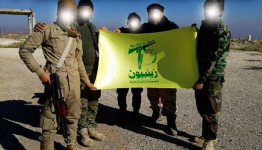
The most significant modern proxy is the Zainabiyoun Brigade.
Recruitment: Formed by the IRGC-Quds Force around 2012–2014, it consists primarily of Pakistani Shias (many from the Kurram District and Gilgit-Baltistan).
Mission: Originally recruited to fight in Syria to defend the Bashar al-Assad regime and Shia shrines.
Domestic Impact: In early 2024, Pakistan officially designated the Zainabiyoun Brigade as a terrorist organization, citing its involvement in "activities against the interest of the state." The IRGC continues to provide pensions and support to the families of "martyrs" from this group living in Pakistan,
which Islamabad views as a mechanism for maintaining a "sleeper cell" network.
In March 2024, the
Pakistani Ministry of Interior officially designated the Zainabiyoun Brigade (Liwa Zainebiyoun) as a terrorist organization. This was a massive diplomatic blow to the IRGC, as the group is essentially their "foreign legion" for Pakistani Shias.
Why the Ban Happened: After the Syrian Civil War de-escalated, thousands of battle-hardened Pakistani fighters began returning home. Islamabad feared these men—trained in urban warfare and missile operation by the IRGC—would form "sleeper cells" or be used by Tehran to influence Pakistani internal politics.
The Turning Point: The ban followed the
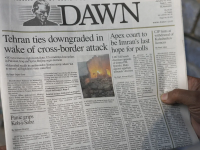
January 2024 tit-for-tat missile strikes between Iran and Pakistan. Pakistan used the designation to send a clear message: "We will no longer tolerate the IRGC recruiting our citizens to fight your regional wars."
 Current Status (March 2026):
 Following the collapse of the Assad regime in late 2024/2025, many Zainabiyoun fighters fled to Iraq. Pakistan has strictly refused to repatriate them, viewing them as a permanent security threat. Recent reports suggest the IRGC is attempting to re-infiltrate these members back into Pakistan as "pilgrims" to maintain influence during the current regional instability.
2. Sectarian Proxy War (1980s–1990s)
Following the 1979 Iranian Revolution, the IRGC sought to "export the revolution." This led to a brutal proxy war on Pakistani soil against Saudi-funded groups.
Tehreek-e-Nifaz-e-Fiqh-e-Jafaria (TNFJ): Iran provided significant ideological and financial backing to this group in the 1980s to advocate for Shia rights under the Sunni-centric Islamization of General Zia-ul-Haq.
Sipah-e-Muhammad Pakistan (SMP): Formed in the early 1990s as a militant offshoot to counter the Sunni militant group Sipah-e-Sahaba. SMP was involved in numerous assassinations and bombings targeting Sunni hardliners. The IRGC was frequently accused by Pakistani intelligence (ISI) of providing training and sanctuary to SMP militants in Iran.
3. Cultural and Intelligence "Soft Power"
The IRGC operates through less "militant" channels that Pakistan still categorizes as proxy influence:
Imamia Students Organization (ISO): While primarily a student group, the ISO is openly pro-Iranian and follows the ideology of Velayat-e Faqih (Guardianship of the Jurist). The IRGC uses these networks for "ideological recruitment."
Intelligence Recruitment: In the late 2010s and early 2020s, several "spy rings" were uncovered in Karachi and Islamabad. Pakistani officials alleged these individuals were recruited by the IRGC to monitor U.S. and Saudi interests within Pakistan.
4. The "Baloch" Complication
While the IRGC fights Baloch separatists (like Jaish al-Adl) who hide in Pakistan, it has also been accused of selective blindness.
Pakistan has historically claimed that Iran allows certain Baloch insurgent groups (fighting against Pakistan) to maintain low-level presence on Iranian soil as leverage.
This "tit-for-tat" proxy game is why the border remains one of the most militarized and distrustful zones in Asia today.
Chabahar vs. Gwadar: The Port Rivalry
Senior officials in Pakistan are of the opinion that The IRGC uses the Chabahar Port as a strategic "chokepoint" to bypass and undermine Pakistan’s economic and military leverage.
| Feature | Chabahar Port (Iran) | Gwadar Port (Pakistan) |
| Primary Partner | India | China |
| Strategic Goal | Bypass Pakistan to reach Central Asia. | Gateway for the China-Pakistan Economic Corridor (CPEC). |
| IRGC Influence | High; the IRGC controls the security and logistics around the port. | None; seen as a rival "Sunni/Chinese" hub. |
Features of Chabahar Port which are a cause for concern in Islamabad:
The Indian Connection: By partnering with India to develop Chabahar, the IRGC provides New Delhi with a trade route to Afghanistan and Central Asia that completely skips Pakistan. T
his robs Islamabad of transit fees and "geography-based" diplomatic leverage.
A "Listening Post": Chabahar is located less than 200 kilometers from Gwadar. The
IRGC uses its presence there to monitor Pakistani naval movements and the Chinese-funded activities in Gwadar.
The "Sanctions Shield": In early 2026, even as the U.S. ramped up tariffs and sanctions on Iran, India completed its $120 million investment in Chabahar. The IRGC views this port as an "unsinkable asset" that keeps India—a nuclear power and Pakistan's rival—tethered to Iranian interests despite Western pressure.
So why no Missile cooperation?
Pakistan and Iran do not co-develop weapons for very specific strategic reasons:
Nuclear Sensitivity: Pakistan is a declared nuclear state that developed its program with significant Western and Chinese components. Openly cooperating with the IRGC—a sanctioned entity—on missile technology
would trigger massive international sanctions against Pakistan and jeopardize its remaining ties with the West and the Gulf.
Strategic Silence (The "Ballistic" Standoff): The two countries maintain what analysts call
"ballistic silence." Because both have sophisticated missile arsenals, they prefer a
"live and let live" arrangement.
Joint development would require a level of trust (and sharing of sensitive telemetry/data) that does not exist.
Different Technological Parents: Pakistan’s missile and air technology is a blend of Chinese, American, and indigenous designs. Iran’s IRGC-led missile program is heavily rooted in Soviet/North Korean lineage and increasingly independent indigenous innovation.
These systems are not naturally compatible.
The A.Q. Khan Legacy: In the early 2000s, it was revealed that Pakistani scientist A.Q. Khan had leaked nuclear secrets to Iran. The fallout was a massive diplomatic disaster for Pakistan. Since then, the Pakistani military has been extremely careful to avoid any perception of "secondary proliferation" to Tehran to maintain its standing as a "responsible" nuclear power.
---
Sources:
- https://issi.org.pk/pakistan-iran-relations-in-the-evolving-international-environment/
- https://issi.org.pk/prospects-for-p...ral-cooperation-opportunities-and-challenges/
- https://cscr.pk/explore/themes/politics-governance/islamabad-navigating-the-convergent-crisis/
- https://cscr.pk/explore/themes/trad...out-a-win-for-pakistans-inevitable-geography/
- https://moderndiplomacy.eu/2026/03/...e that energy,approximately 80% of Iran's oil.
- https://peace-ipsc.org/2025/01/23/o...separatists, with,over both Pakistan and Iran.
- https://mecouncil.org/blog_posts/pakistans-iran-trap/
- https://mei.edu/ar/events/iran-and-pakistan-security-diplomacy-and-american-influence/
- https://www.dawn.com/news/1806806
- https://www.chathamhouse.org/2024/01/iran-pakistan-tensions-why-further-escalation-unlikely
- https://www.asiasentinel.com/p/pakistan-two-front-nightmare
- https://issi.org.pk/press-release-special-event-76-years-of-pakistan-iran-diplomatic-relations/