India Economy Thread

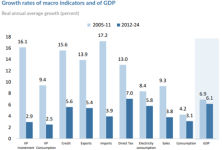
"New evidence suggests India misestimated annual economic growth rate during the past two decades.Growth in boom years 2005-2011 may have been underestimated by ~1–1.5 percentage points, & growth from 2012-2023 overestimated by ~1.5-2 percentage points."
To view this content we will need your consent to set third party cookies.
For more detailed information, see our cookies page.
 
Is this true Hydra bro?

@hydrabadi_arab


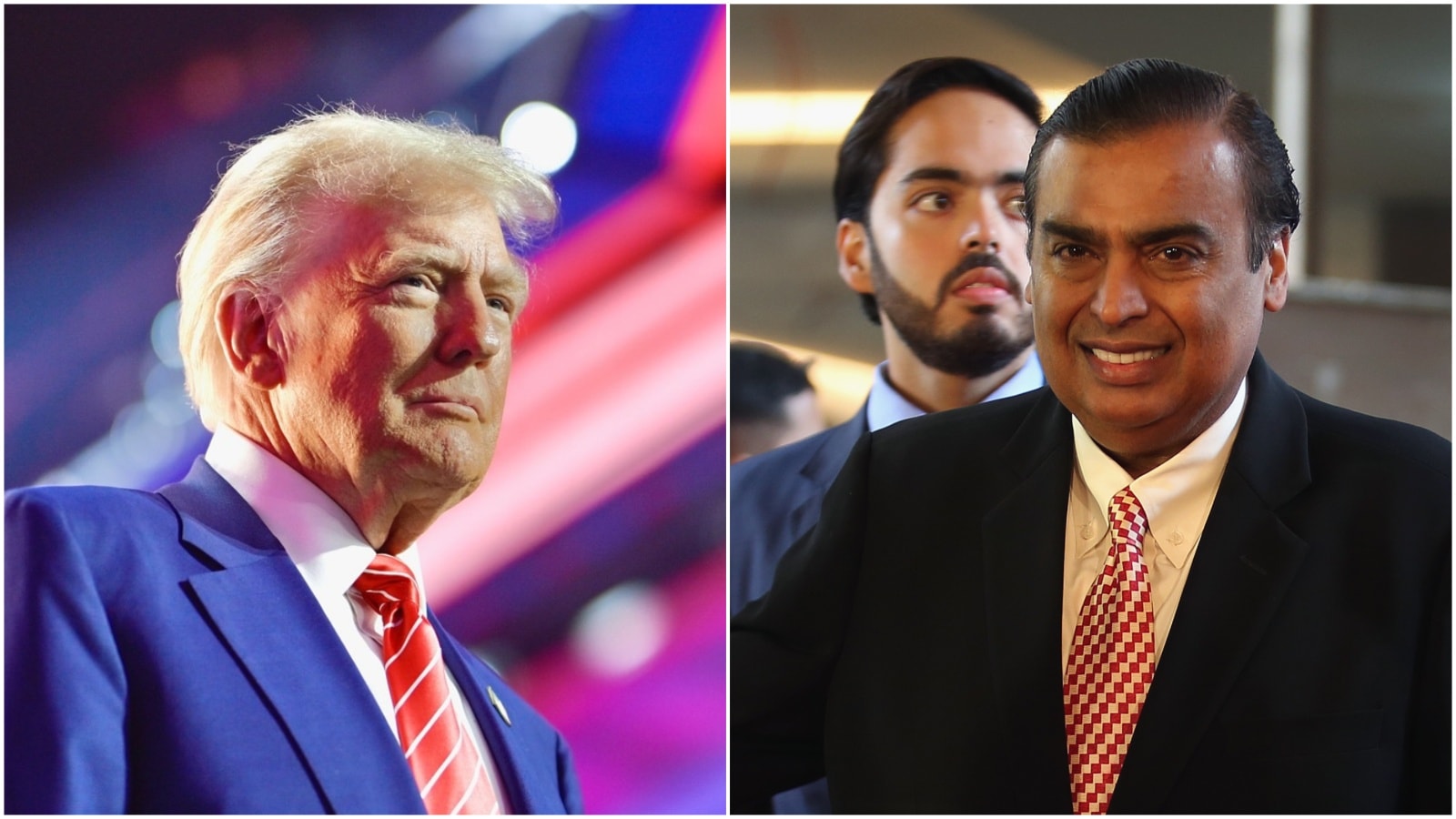
US President Donald Trump has announced a new refinery in Brownsville, Texas, thanking India’s private sector refining giant Reliance Industries Limited (RIL) for its “tremendous investment” for the project. According to Trump, the Brownsville refinery, the first new refinery in the US in five decades, entails a $300-billon deal.

The refinery will be built by America First Refining, which plans to break ground on the project in the April-June quarter this year. The RIL owns and operates the world’s largest single-location refining complex in Gujarat’s Jamnagar.

Written by: Sukalp Sharma
5 min readNew DelhiUpdated: Mar 12, 2026 04:25 AM IST
Trump, Mukesh Ambani, oil refinery
US President Donald Trump said Mukesh Ambani's Reliance Industries will invest in US' first oil refinery in Texas in 50 years.
Make us preferred source on Google


Print

US President Donald Trump has announced a new refinery in Brownsville, Texas, thanking India’s private sector refining giant Reliance Industries Limited (RIL) for its “tremendous investment” for the project. According to Trump, the Brownsville refinery, the first new refinery in the US in five decades, entails a $300-billon deal.

The refinery will be built by America First Refining, which plans to break ground on the project in the April-June quarter this year. The RIL owns and operates the world’s largest single-location refining complex in Gujarat’s Jamnagar.


“America is returning to REAL ENERGY DOMINANCE! Today I am proud to announce that America First Refining is opening the FIRST new U.S. Oil Refinery in 50 YEARS in Brownsville, Texas. THIS IS A HISTORIC $300 BILLION DOLLAR DEAL — THE BIGGEST IN U.S. HISTORY, A MASSIVE WIN for American Workers, Energy, and the GREAT People of South Texas! Thank you to our partners in India, and their largest privately held Energy Company, Reliance, for this tremendous Investment,” Trump posted on Truth Social.

“It is because of our America First Agenda, streamlining Permits, and lowering Taxes, that have attracted Billions of Dollars in Deals coming back to our Nation. A new Refinery at the Port of Brownsville, will fuel U.S. Markets, strengthen our National Security, boost American Energy production, deliver Billions of Dollars in Economic impact, and will be THE CLEANEST REFINERY IN THE WORLD. It will power Global Exports, and bring THOUSANDS of long overdue Jobs and Growth to a Region that deserves it. This is what AMERICAN ENERGY DOMINANCE looks like. AMERICA FIRST, ALWAYS!” he said.

The RIL has not yet responded to Trump’s announcement. It comes at a time when there is a sharp spike in crude oil and fuel prices; crude had crossed the $100 per barrel mark Monday amid the raging conflict in West Asia that began on February 28 with US-Israeli attacks on Iran.

Although the refinery will take years to be built, it is being seen as a signal from Trump amid increasing fuel prices in the US with mid-term elections in the country just a few months away. The last major refinery built in the United States was the Marathon Refinery, built way back in 1976, when oil cost under $5 a barrel.

For Reliance, diversifying into American shale refining hedges against the problems in the West Asian route. RIL already gets Venezuelan crude as a hedge.

The refinery project was being developed by Element Fuels, which had announced in 2024 that it received the requisite permissions to build a refinery. Element Fuels and America First Refining appear to be the same entity, or closely related to each other. Notably, Element Fuels website now redirects to that of America First Refining, and Element Fuels’s Founder and Chairman John V. Calce holds the same position at America First Refining.

“In February, America First Refining received a 9-figure investment from a global supermajor at a 10-figure valuation. AFR also signed a binding 20-year offtake term sheet with the same global supermajor that secures commitments to purchase, process, and distribute American-produced energy exclusively sourced from American shale oil. The company will officially break ground on the new refinery in Q2 2026,” America First Refining said. It didn’t name the “global supermajor”, but Trump’s comments suggest that it is RIL.

As for the $300-billion deal that Trump mentioned, it appears that it is the value of crude oil that the refinery will process and the fuels it will produce over 20 years. According to America First Refining, under the agreement, 1.2 billion barrels of US light shale oil with an estimated value of $125 billion will be purchased and processed by the 60-million-barrels-per-year refinery, and 50 billion gallons of refined products—worth $175 billion—will be produced. “The US trade imbalance will improve by $300 billion,” America First Refining said, indicating that the facility could be geared for exports. The proposed location of the refinery – Brownsville port – also suggests that the refinery could be export-oriented.

A bulk of American refineries are designed to process crudes that are much heavier than the shale oil that the US produces in large quantities. This leads to the US, despite being a top oil producer globally, importing large volumes of heavy crudes from other geographies and exporting its own shale oil.

“The refinery is specifically engineered to process American light shale oil, which is cleaner, more efficient, and less costly to process than heavier imported crude. Unlike many existing US refineries that depend on foreign oil, this facility is not dependent on – and does not need – imported crude, which strengthens US national and economic security,” America First Refining said.

“From 2014 to 2024, the United States exported nearly 10 billion barrels of crude while still importing roughly 28 billion barrels, costing American consumers and workers more than $1.8 trillion. Once operational, the AFR refinery will redirect up to 60 million barrels of U.S. crude annually back into domestic refining – strengthening American industry, energy security, and economic growth,” it said.

Regards
 
As for the $300-billion deal that Trump mentioned, it appears that it is the value of crude oil that the refinery will process and the fuels it will produce over 20 years.

Trump love to exaggerate. Even if build this isnt big deal as some are making out. Its like saying Reko Diq is $1 trillion deal.

But over 40 years period. Its worse because $300bn oil processing isnt a big deal over 20 years.

Bad news for India as FDI outflows continues at record pace. This will benefit USA and Ambani grand children who are USA citizens.
 
Old scheme brought ~$25 bn worth semiconductor projects last time, hope this takes it to $50 billion.
To view this content we will need your consent to set third party cookies.
For more detailed information, see our cookies page.
 
To view this content we will need your consent to set third party cookies.
For more detailed information, see our cookies page.
 
A big industrial complex now under construction, that can produce 10,000 loitering munitions, including Shahed class long range OWA drones. And capacity to produce 50x Archer-NG MALE armed combat drones per annum. At an investment of $1.4 billion. From one company alone.

To view this content we will need your consent to set third party cookies.
For more detailed information, see our cookies page.

To view this content we will need your consent to set third party cookies.
For more detailed information, see our cookies page.


NewSpace testing it's own Shahed class drone, they'll probably set up a separate line for their loitering munitions. India is arguably the largest manufacturer of such engines, if not China. So can be mass produced in unimaginable numbers :)
To view this content we will need your consent to set third party cookies.
For more detailed information, see our cookies page.

So another battery plant for drones/loitering munitions for $1.5 billion...
To view this content we will need your consent to set third party cookies.
For more detailed information, see our cookies page.


To view this content we will need your consent to set third party cookies.
For more detailed information, see our cookies page.

He's one of your own...
 
Bad news for India as FDI outflows continues at record pace. This will benefit USA and Ambani grand children who are USA citizens
What record pase. You're inventing new "records" to feel good. The beneficiary are Indian conglomerates like Reliance group. Their base of operations is in India. Ambani's grand children are kids of two Indian conglomerates Piramal industries and Reliance, they are all deeply entrenched in India, if at all they will drop their US citizenship at the drop of a hat and move for tax benefits. His other grandchildren are Indian who is probably going to inherit Reliance industries through his son.
 

India Asks China for Urea as War-Induced Gas Crunch Bites
March 12, 2026 at 6:52 PM GMT+8 Updated on March 13, 2026 at 10:27 AM GMT+8

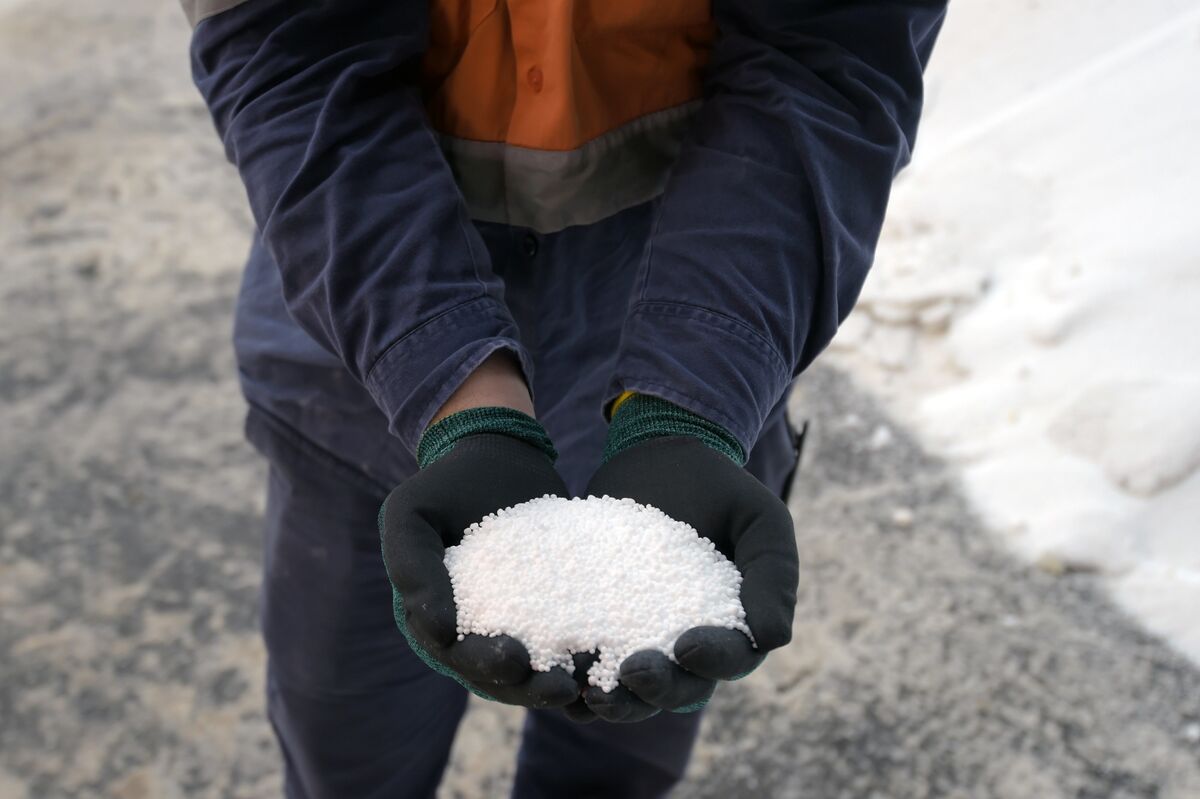
India has asked China to allow the sale of some urea cargoes as the war in the Middle East curtails the nation’s gas supplies, threatening fertilizer production in the agricultural powerhouse.

Indian officials have asked their Chinese counterparts to consider easing export restrictions as the expanding conflict upends supplies of liquefied natural gas — a key feedstock — and forces some fertilizer makers in the South Asian nation to shut plants, according to people familiar with the matter.

The move is a sign of the unusual measures countries are taking to secure key commodities as US-Israeli attacks in Iran snarl global trade and raise risks for food and energy supplies. Discussions are ongoing and a decision has yet to be made, said the people, who declined to be named as they were not authorized to talk to the media.

China controls urea exports under a quota system. While some shipments were permitted last year — including to India — it has yet to allocate allowances for outbound shipments in 2026, one of the people said. The country is the world’s top urea producer and farmers are gearing up for spring planting, the peak period for fertilizer use.

A spokesperson for India’s fertilizer ministry did not immediately reply to a request for comment. China’s commerce ministry did not immediately reply to a fax seeking comment.

India’s request comes just as it eased investment rules for bordering countries to support local manufacturing, a step largely aimed at China that signals improving economic ties with its largest neighbor and geopolitical rival.

Though India faces no immediate fertilizer shortage, the country is the world’s biggest urea importer and any prolonged gas disruption could force the nation to seek more supplies before the main planting period begins in June with the arrival of monsoon rains.

Possible sources of urea to offset the shortfall from the Middle East include China, Russia, Indonesia, Malaysia and Egypt, one of the people said.

India has imported 9.8 million tons of urea so far in the fiscal year ending March 31, with another 1.7 million tons scheduled to arrive over the next three months, according to the fertilizer ministry. The country is expected to issue a new urea import tender by the end of this month or early April, the people said.

Qatar, a major LNG supplier, cut fuel shipments to Indian buyers last week after hostilities erupted in the Middle East. Fertilizer makers, ranked second in priority for gas allocation in India, are receiving about 70% of their requirements, with some companies beginning to trim production last week, Bloomberg previously reported.
 
Last edited:
The impact of the Iran war will sooner or later spill over to India, the world's second-largest oil exporter, with petroleum shipped via the Strait of Hormuz. Surprisingly, the most direct blow has landed on India's dosa pancakes and dal makhani lentil stew. State-owned refineries are forced to absorb losses to keep trucks and tractors running, while commercial kitchens are plunged into crisis by severe shortages of liquefied petroleum gas (LPG).In the 1973 energy crisis, India's industry relied on coal, while households depended on unreliable liquid fuel supplies. LPG cylinders were a rationed luxury, and all middle-class families used kerosene stoves. The situation today is entirely different: To cut pollution, buses, taxis, and home kitchens have all switched to some form of natural gas. But unlike oil, which can be stored in caverns, natural gas requires cryogenic tanks or pressure vessels for storage. India's natural gas reserves are insufficient, and that's the root of the current crisis.
 
View attachment 185740

This paper on India GDP have exposed growth story.

To view this content we will need your consent to set third party cookies.
For more detailed information, see our cookies page.


2% extra fake GDP growth by manipulating numbers.

True coping lol... GDP numbers are fake saaar
 

The case of the missing Rs 80 lakh crore: Who shrunk India’s consumption economy?​


Vivek Kaul14 Mar 2026

On February 27, 2026, a new gross domestic product (GDP) series with 2022-23 as its base year was unveiled. This replaced the previous series with a base year of 2011-12. GDP is a measure of the size of an economy. The base year is a fixed year used to compare prices and measure how much an economy actually grows.

While much has been written in the media about this new GDP series, a very basic point has been missed. One wonders why.

The simplest definition of GDP is the sum of private consumption expenditure, government expenditure, investment and net exports (exports minus imports). Private consumption expenditure is by far the largest component of India's GDP.

In 2025–26, the current financial year, private consumption expenditure as per the new GDP series is expected to be Rs 195.8 lakh crore in nominal terms not adjusted for inflation. Private consumption expenditure is the money you and I spend on buying things. A robust growth in private consumption expenditure suggests the economy is doing reasonably well.

Now, as per the old series, the private consumption expenditure is expected to be at Rs 219.6 lakh crore. This basically means that in 2025-2026, the private consumption expenditure as per the new series is 10.9 percent lower than the old series. This is not an isolated phenomenon for 2025-2026.

The new GDP series currently covers four financial years, from 2022-23 to 2025-26. In each of these financial years, private consumption expenditure is lower by around 9.6-11.5 percent compared to the old series.

In 2024-25, private consumption expenditure under the new series was Rs 179.7 lakh crore, 11.5 percent lower than the old series estimate of Rs 203 lakh crore. The figures for 2022-23 and 2023-24 are each 9.7 percent lower.

So, what does this mean?

First, the old GDP series was overestimating the money you and I have been spending on buying things. And this overestimation was huge. The new GDP series has hopefully been corrected for that.

Second, everyone who has been pointing out that all is not well on the private consumption front in India has proven to be right: in fact, the government’s own data shows it now. Indeed, a whole host of real numbers, which are not theoretical constructs like GDP, have been pointing towards this over the last few years.

The domestic sales of two-wheelers – motorcycles, scooters and mopeds – peaked in 2018-19 and haven’t crossed that figure since. From the looks of it, the 2025-26 sales will also not cross the 2018-19 figure.

The domestic sales of small cars also peaked in 2018-19. In 2025-26, the sales are nowhere near the 2018-19 peak, despite the cut in the goods and services tax in September 2025.

The net sales of around 4,700 firms listed on the stock market have been growing at less than 10 percent for close to three years now, though the growth has improved through 2025-26.

The non-suburban traffic of Indian Railways peaked in 2012-13 at 3.94 billion. It hasn’t crossed that number since. It’s expected to be at 3.32 billion in 2025-26.

The mobile phone teledensity peaked in 2017-18. Finally, the volume growth of the Fast Moving Consumer Goods Companies (FMCG) has been nothing home to write about over the last few years. The volume is basically the number of units of products sold.

Third, many economists, corporate executives and those in the business of managing other people’s money (OPM), tried to pass off the consumption growth slowdown as the premiumisation of the Indian economy. But that was basically hogwash.

A small section of the economy was buying more expensive goods than before, but that didn’t mean the Indian economy was getting premiumised. Yes, Apple was selling more iPhones in India, with many youngsters buying it on a loan, but that did not mean that more smartphones were being sold. It’s important to be able to make this basic distinction.

But then the OPM wallahs and corporate executives are trained and incentivised to be in a perpetually optimistic mood. Given that, they can’t help themselves.

Fourth, if we were to add the total private consumption expenditure from 2022-23 to 2025-26, the figure we get under the new series is Rs 80.7 lakh crore lower or 10.5 percent less than the figure under the old series. This is the consumption that has now gone missing. How did this happen? Why was the old-GDP series overestimating the size of India’s consumption economy in such a big way?

As Abhishek Anand, Josh Fellman and Arvind Subramanian point out in a recent working papertitled India’s 20 Years of GDP Misestimation: New Evidence, the formal sector was being “used as a proxy for the vast informal sector” and “the triple shocks of demonetization, introduction of the Goods and Services Tax (GST), and the Covid‐19 pandemic caused the performance of the informal sector to diverge sharply from that of the formal sector”.

In simple terms, what Anand, Felman and Subramanian mean is this: Because India doesn’t have much reliable data on the informal sector, statisticians have been estimating its growth using data from the formal sector (large, registered firms). This works only if both sectors move similarly.

But after shocks like demonetisation, the rather botched rollout of the Goods and Services Tax and the COVID-19 pandemic, the informal sector was hit much harder.

So while the formal sector grew, the informal sector struggled, meaning GDP estimates based on the formal sector did not fully capture what was actually happening in the broader economy. This essentially led to such a huge overestimation.

Fifth, the share of private consumption expenditure in India’s economy has shrunk from earlier levels of 60-61 percent to 56-57 percent.

Sixth, despite all this, consumption growth in nominal terms between 2022-23 and 2025-26 has averaged around 9.5 percent. How does one explain that? The data for the new GDP series start in 2022-23, and hence a statistical illusion of growth has been created.

If the base level of consumption in 2022-23 is now materially lower than what we previously believed, subsequent growth rates can look respectable even if the economy is merely climbing back from a deeper hole. In other words, percentage growth may appear healthy, while the absolute size of the consumption economy is smaller than what was previously assumed.

But this statistical effect will become clearer once a back series – data extending to years before 2022–23 – is constructed and made publicly available. If earlier years are also revised downward – which they are likely to be – it would further confirm that the consumption economy has been battered much more than previously estimated. In that case, the recent growth would look less like a boom and more like a gradual climb back to earlier levels.

Seventh, while statistics might suggest what they do, the politicians have an inherent feel for how the economy is doing. And that explains why a whole host of cash distribution programmes have been launched across the country in the last few years.

The politicians clearly aren’t doing this because of the kindness of their hearts. Of course, they want to win elections. They understand that the consumption economy has been badly battered over the years, and that has affected income levels, given that one man’s spending or consumption is another man’s income.

So the mystery is solved. India’s consumption economy didn’t suddenly shrink. The statistics finally caught up with reality. For years, the formal sector was treated as a stand-in for the informal economy, even though demonetisation, GST and the pandemic had battered the latter.

The numbers looked healthy; the economy on the ground clearly wasn’t. While analysts toasted to “premiumisation” sitting in coffee shops sipping overpriced lattes and pour-overs, the actual consumption engine was quietly coughing up blood in the informal sector.

Now the revision quietly admits what two-wheeler sales, small-car demand, railway traffic and a host of other indicators had been saying for years: the consumption story was weaker than advertised. When the back series eventually arrives, it may simply confirm that a significant portion of India’s consumption boom existed only in spreadsheets and on WhatsApp University.

Vivek Kaul is an economic commentator and a writer.
 
Iran has granted limited safe passage to several Indian vessels through the Strait of Hormuz, Tehran’s ambassador to India Mohammad Fathali says, without specifying how many ships were allowed to pass.

Two Indian-flagged tankers carrying liquefied petroleum gas (LPG) bound for ports in the country’s west crossed the Strait of Hormuz, the South Asian country’s Ministry of Ports, Shipping and Waterways says
 

Users who are viewing this thread

Latest Posts

Back
Top