India Economy Thread

The PMI over the last few years should give an idea on how far we have come
 

All in all, a mixed bag. We should pivot to Russia to avoid the oil shock. And please stop importing so much gold and silver! India people are insane!


All in all, a mixed bag. We should pivot to Russia to avoid the oil shock. And please stop importing so much gold and silver! India people are insane!

Retards who bought gold and silver in huge numbers lost big lmao. Well deserved imo. The prices crashed
 
To view this content we will need your consent to set third party cookies.
For more detailed information, see our cookies page.

I expect an uptick from feb.
To view this content we will need your consent to set third party cookies.
For more detailed information, see our cookies page.

Inflation will go up.
To view this content we will need your consent to set third party cookies.
For more detailed information, see our cookies page.

One can only hope.
To view this content we will need your consent to set third party cookies.
For more detailed information, see our cookies page.
 
^^Let me teach you some facts about economics.
1) Indian "fiscal goals" are self made. If government misses them, no harm done. Few governments bother to even have them.
2) You don't convert GDP into USD by looking at rate on March 31st. You take something called "average". Google it up. So your task would be to "figure" out what would be the average rate for 2025-2026! Only a clueless idiot would change GDP everyday.
3) Even if Rs. hits 95 vs dollar by end of 2027, we will cross 4.1 trillion USD, easily. Ofcourse that means we are only adding 200 billion USD annually (ofcourse a real data instead of fakery that we see all too much).

Now run along. We take you very "seriously" here.

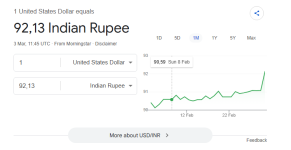
Average exchange rate will be around 89 which mean $3.85t. For India to surpass $4t next year average exchange rate will need to be lower then 94. Its already 92. So next year isn't guaranteed either.

You can cope but numbers don't lie.

1772538445466.png
 
Average exchange rate will be around 89 which mean $3.85t. For India to surpass $4t next year average exchange rate will need to be lower then 94. Its already 92. So next year isn't guaranteed either.

You can cope but numbers don't lie.

View attachment 182534
Even if the Rupee stays at 92, India only needs about 6-7% Nominal growth to hit $4 trillion next year. Since India is currently targeting 10-11% Nominal growth, there is a cushion of about 3–4% to absorb Rupee depreciation.
 
I love the word copium. We are growing at 10-11% nominal with very low inflation (meaning actual PCI growth of 6%) and I should cope against what? Growth less than inflation? Meaning people are actually getting poorer?

So the guy pretends that he was never clueless about conversion thing and pulls a number out of...anyone can guess where and still gives a figure higher than his past figure? No wonder we respect his opinion as much as PDF!
 
@hydrabadi_arab @r3alist @Dalit

Why is PAK upset at IND-CAN N deal? Why has Canada so soon forgotten and forgiven the bumping off of that Khali dude?


Pakistan on Thursday expressed concern over a long-term uranium supply agreement and nuclear cooperation arrangement concluded between India and Canada during the recent visit of Canadian Prime Minister Mark Carney to New Delhi, warning that such country-specific arrangements risk undermining the global nuclear non-proliferation framework and destabilising the strategic balance in South Asia.

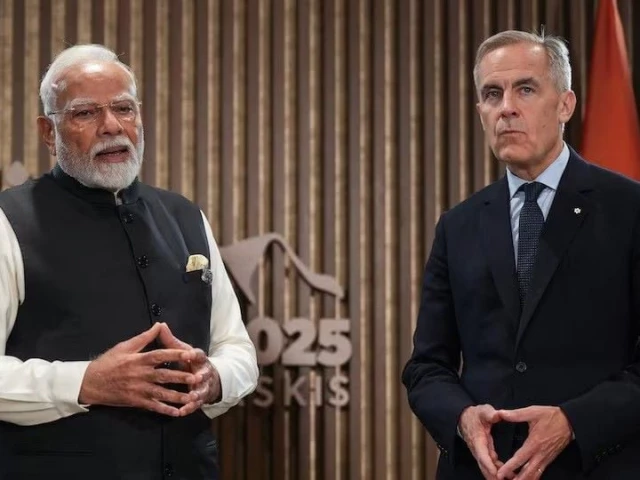
The agreement, which includes long-term uranium supply and cooperation on advanced nuclear technologies, was announced after talks between Carney and Indian Prime Minister Narendra Modi as the two sides moved to reset ties and expand economic cooperation.

The deal is part of a broader push to strengthen bilateral trade and energy cooperation, including collaboration on small modular reactors and advanced nuclear technologies.

The uranium supply arrangement, reportedly worth about $2.6 billion, will allow Canadian companies to provide nuclear fuel to support India's civilian nuclear energy programme as New Delhi expands its nuclear power capacity.

Reacting to the development, the Foreign Office said the arrangement represented another exception in the field of civil nuclear cooperation granted to India despite longstanding concerns about its nuclear programme.

"Pakistan has noted with concern the long-term uranium supply agreement concluded between Canada and India and potential cooperation on small modular reactors and advanced reactor technologies between the two sides," said Foreign Office spokesperson Tahir Andrabi in a statement.

"This arrangement represents yet another country-specific exception in the field of civil nuclear cooperation. It is particularly ironic given that India's 1974 nuclear test, conducted using plutonium produced in a reactor supplied by Canada for peaceful purposes, had led directly to the establishment of the Nuclear Suppliers Group (NSG)," he added.

The spokesperson said a state whose actions necessitated the establishment of global export controls is now being granted preferential access under selective arrangements.

"India has neither placed all its civilian nuclear facilities under International Atomic Energy Agency safeguards nor undertaken any binding commitment to do so under this arrangement. Several facilities remain outside international inspection. It is also unclear what concrete non-proliferation assurances, if any, accompany this agreement."

Andrabi further said the strategic consequences were equally troubling.

"Assured external uranium supplies effectively release India's domestic reserves for military use, enabling the expansion of its fissile material stockpiles, accelerating the growth of its nuclear arsenal, and deepening existing asymmetries in South Asia's strategic balance."

"In this context, the arrangement also undermines Canada's commitment to the international non-proliferation regime and its corresponding obligations under that framework," according to the spokesperson.

Pakistan reiterated that civil nuclear cooperation must be governed by a non-discriminatory, criteria-based approach applicable equally to states that are not parties to the Nuclear Non-Proliferation Treaty (NPT).

"Selective exceptions diminish the credibility of the global non-proliferation framework and risk further destabilizing regional and global peace & security."

Separately, Deputy Prime Minister and Foreign Minister Ishaq Dar held a telephone conversation with Canadian Foreign Minister Anita Anand, during which the two sides discussed bilateral relations and ways to further enhance economic cooperation.

Although official read out would not say, the issue of Canada-India nuclear deal did come up during the telephonic conversation.

According to the Foreign Office, the two leaders explored avenues for expanding cooperation across multiple sectors, including agriculture, clean energy and critical minerals, while also emphasising the importance of strengthening people-to-people ties between Pakistan and Canada. Anand also appreciated the contribution of the Pakistani diaspora in Canada.

"Both sides emphasized the importance of sustained high-level exchanges to maintain the positive trajectory in bilateral engagement," the statement said.

The two foreign ministers also exchanged views on evolving regional developments, with Dar stressing the importance of dialogue, diplomacy and adherence to international law to promote de-escalation and stability in the Middle East and the wider region.

Pakistan has long opposed selective nuclear cooperation arrangements with India, arguing that civil nuclear collaboration should be based on a uniform, criteria-based framework applicable to all states outside the Treaty on the Non-Proliferation of Nuclear Weapons and consistent with the principles of the Nuclear Suppliers Group and the International Atomic Energy Agency.

Regards
 
@hydrabadi_arab @r3alist @Dalit

Why is PAK upset at IND-CAN N deal? Why has Canada so soon forgotten and forgiven the bumping off of that Khali dude?


Pakistan on Thursday expressed concern over a long-term uranium supply agreement and nuclear cooperation arrangement concluded between India and Canada during the recent visit of Canadian Prime Minister Mark Carney to New Delhi, warning that such country-specific arrangements risk undermining the global nuclear non-proliferation framework and destabilising the strategic balance in South Asia.

The agreement, which includes long-term uranium supply and cooperation on advanced nuclear technologies, was announced after talks between Carney and Indian Prime Minister Narendra Modi as the two sides moved to reset ties and expand economic cooperation.

The deal is part of a broader push to strengthen bilateral trade and energy cooperation, including collaboration on small modular reactors and advanced nuclear technologies.

The uranium supply arrangement, reportedly worth about $2.6 billion, will allow Canadian companies to provide nuclear fuel to support India's civilian nuclear energy programme as New Delhi expands its nuclear power capacity.

Reacting to the development, the Foreign Office said the arrangement represented another exception in the field of civil nuclear cooperation granted to India despite longstanding concerns about its nuclear programme.

"Pakistan has noted with concern the long-term uranium supply agreement concluded between Canada and India and potential cooperation on small modular reactors and advanced reactor technologies between the two sides," said Foreign Office spokesperson Tahir Andrabi in a statement.

"This arrangement represents yet another country-specific exception in the field of civil nuclear cooperation. It is particularly ironic given that India's 1974 nuclear test, conducted using plutonium produced in a reactor supplied by Canada for peaceful purposes, had led directly to the establishment of the Nuclear Suppliers Group (NSG)," he added.

The spokesperson said a state whose actions necessitated the establishment of global export controls is now being granted preferential access under selective arrangements.

"India has neither placed all its civilian nuclear facilities under International Atomic Energy Agency safeguards nor undertaken any binding commitment to do so under this arrangement. Several facilities remain outside international inspection. It is also unclear what concrete non-proliferation assurances, if any, accompany this agreement."

Andrabi further said the strategic consequences were equally troubling.

"Assured external uranium supplies effectively release India's domestic reserves for military use, enabling the expansion of its fissile material stockpiles, accelerating the growth of its nuclear arsenal, and deepening existing asymmetries in South Asia's strategic balance."

"In this context, the arrangement also undermines Canada's commitment to the international non-proliferation regime and its corresponding obligations under that framework," according to the spokesperson.

Pakistan reiterated that civil nuclear cooperation must be governed by a non-discriminatory, criteria-based approach applicable equally to states that are not parties to the Nuclear Non-Proliferation Treaty (NPT).

"Selective exceptions diminish the credibility of the global non-proliferation framework and risk further destabilizing regional and global peace & security."

Separately, Deputy Prime Minister and Foreign Minister Ishaq Dar held a telephone conversation with Canadian Foreign Minister Anita Anand, during which the two sides discussed bilateral relations and ways to further enhance economic cooperation.

Although official read out would not say, the issue of Canada-India nuclear deal did come up during the telephonic conversation.

According to the Foreign Office, the two leaders explored avenues for expanding cooperation across multiple sectors, including agriculture, clean energy and critical minerals, while also emphasising the importance of strengthening people-to-people ties between Pakistan and Canada. Anand also appreciated the contribution of the Pakistani diaspora in Canada.

"Both sides emphasized the importance of sustained high-level exchanges to maintain the positive trajectory in bilateral engagement," the statement said.

The two foreign ministers also exchanged views on evolving regional developments, with Dar stressing the importance of dialogue, diplomacy and adherence to international law to promote de-escalation and stability in the Middle East and the wider region.

Pakistan has long opposed selective nuclear cooperation arrangements with India, arguing that civil nuclear collaboration should be based on a uniform, criteria-based framework applicable to all states outside the Treaty on the Non-Proliferation of Nuclear Weapons and consistent with the principles of the Nuclear Suppliers Group and the International Atomic Energy Agency.

Regards
It is true that the international nuclear trade regime is discriminatory, but the discrimination starts from the fact that only five countries have been designated nuclear weapons state. India getting a NSG "clean-waiver" was just a continuation of this discrimation.

And this in not "yet another" instance. This deal is completely in compliance with all international nuclear trade rules because India has a NSG waiver despite not having signed the NPT.
 
@hydrabadi_arab @r3alist @Dalit

Why is PAK upset at IND-CAN N deal? Why has Canada so soon forgotten and forgiven the bumping off of that Khali dude?


Pakistan on Thursday expressed concern over a long-term uranium supply agreement and nuclear cooperation arrangement concluded between India and Canada during the recent visit of Canadian Prime Minister Mark Carney to New Delhi, warning that such country-specific arrangements risk undermining the global nuclear non-proliferation framework and destabilising the strategic balance in South Asia.

The agreement, which includes long-term uranium supply and cooperation on advanced nuclear technologies, was announced after talks between Carney and Indian Prime Minister Narendra Modi as the two sides moved to reset ties and expand economic cooperation.

The deal is part of a broader push to strengthen bilateral trade and energy cooperation, including collaboration on small modular reactors and advanced nuclear technologies.

The uranium supply arrangement, reportedly worth about $2.6 billion, will allow Canadian companies to provide nuclear fuel to support India's civilian nuclear energy programme as New Delhi expands its nuclear power capacity.

Reacting to the development, the Foreign Office said the arrangement represented another exception in the field of civil nuclear cooperation granted to India despite longstanding concerns about its nuclear programme.

"Pakistan has noted with concern the long-term uranium supply agreement concluded between Canada and India and potential cooperation on small modular reactors and advanced reactor technologies between the two sides," said Foreign Office spokesperson Tahir Andrabi in a statement.

"This arrangement represents yet another country-specific exception in the field of civil nuclear cooperation. It is particularly ironic given that India's 1974 nuclear test, conducted using plutonium produced in a reactor supplied by Canada for peaceful purposes, had led directly to the establishment of the Nuclear Suppliers Group (NSG)," he added.

The spokesperson said a state whose actions necessitated the establishment of global export controls is now being granted preferential access under selective arrangements.

"India has neither placed all its civilian nuclear facilities under International Atomic Energy Agency safeguards nor undertaken any binding commitment to do so under this arrangement. Several facilities remain outside international inspection. It is also unclear what concrete non-proliferation assurances, if any, accompany this agreement."

Andrabi further said the strategic consequences were equally troubling.

"Assured external uranium supplies effectively release India's domestic reserves for military use, enabling the expansion of its fissile material stockpiles, accelerating the growth of its nuclear arsenal, and deepening existing asymmetries in South Asia's strategic balance."

"In this context, the arrangement also undermines Canada's commitment to the international non-proliferation regime and its corresponding obligations under that framework," according to the spokesperson.

Pakistan reiterated that civil nuclear cooperation must be governed by a non-discriminatory, criteria-based approach applicable equally to states that are not parties to the Nuclear Non-Proliferation Treaty (NPT).

"Selective exceptions diminish the credibility of the global non-proliferation framework and risk further destabilizing regional and global peace & security."

Separately, Deputy Prime Minister and Foreign Minister Ishaq Dar held a telephone conversation with Canadian Foreign Minister Anita Anand, during which the two sides discussed bilateral relations and ways to further enhance economic cooperation.

Although official read out would not say, the issue of Canada-India nuclear deal did come up during the telephonic conversation.

According to the Foreign Office, the two leaders explored avenues for expanding cooperation across multiple sectors, including agriculture, clean energy and critical minerals, while also emphasising the importance of strengthening people-to-people ties between Pakistan and Canada. Anand also appreciated the contribution of the Pakistani diaspora in Canada.

"Both sides emphasized the importance of sustained high-level exchanges to maintain the positive trajectory in bilateral engagement," the statement said.

The two foreign ministers also exchanged views on evolving regional developments, with Dar stressing the importance of dialogue, diplomacy and adherence to international law to promote de-escalation and stability in the Middle East and the wider region.

Pakistan has long opposed selective nuclear cooperation arrangements with India, arguing that civil nuclear collaboration should be based on a uniform, criteria-based framework applicable to all states outside the Treaty on the Non-Proliferation of Nuclear Weapons and consistent with the principles of the Nuclear Suppliers Group and the International Atomic Energy Agency.

Regards
Casual statement for the sake of it. Not much weight behind it.
 
I love the word copium. We are growing at 10-11% nominal with very low inflation (meaning actual PCI growth of 6%) and I should cope against what? Growth less than inflation? Meaning people are actually getting poorer?

So the guy pretends that he was never clueless about conversion thing and pulls a number out of...anyone can guess where and still gives a figure higher than his past figure? No wonder we respect his opinion as much as PDF!
Whats funny is the logic of India's GDP "declining" because INR went down. It's like saying your country produced a lot more goods and services, factories churned out more, more office space got leased yet GDP declines because... INR depreciation :rofl:

Can't really differentiate between real and nominal growth. India can become $5trn overnight if sells all its forex, but we know how counterproductive it is.
 

Despite PLI Push, India Sources Over 70% Key Pharma Inputs From China: Govt Disclosure

A broader set of essential antibiotics and drug intermediates show China dependence levels exceeding 90%.

Mar 10, 2026 16:40 pm IST

India's dependence on China for pharmaceutical raw materials remains entrenched, with official data showing that over 70% of critical drug ingredients are still imported from China.

The disclosure, shared by Minister of State for Chemicals and Fertilizers Anupriya Patel in a written reply in the Rajya Sabha on Tuesday, comes even as domestic capacity creation under the government's Production Linked Incentive (PLI) scheme gathers pace, pointing to a gap between policy intent and on‑ground supply displacement.

The data shows that imports of several Active Pharmaceutical Ingredients (APIs) continue to have China dependence levels of 70% and above, with many products seeing reliance of over 90% and, in some cases, complete dependence on China.

Several products, including intermediates used for Rifampicin, a key tuberculosis drug, and Methyldopa, used in blood pressure management, show 100% dependence on China, indicating the absence of meaningful alternative supply sources or domestic production at scale.

A broader set of essential antibiotics and drug intermediates show China dependence levels exceeding 90%. These include Erythromycin, Gentamicin, Streptomycin, Tetracycline, and Norfloxacin, inputs that are widely used in hospital care, infectious disease treatment, and critical care settings.

The value of imports further highlights the scale of exposure. For 6‑APA, a crucial raw material for penicillin antibiotics, imports from China rose to $407.64 million in FY25 from $396.51 million in FY24, with dependence increasing to nearly 96%. Penicillin and their salts saw a sharp rise in China dependence as well, climbing to about 93% in FY25 from 77% a year earlier.

Similarly, Erythromycin imports showed rising dependence, increasing to nearly 98% in FY25 from about 93% in FY24. In several such cases, higher dependence in FY25 compared with FY24 suggests that domestic manufacturing has not yet displaced imports at a scale sufficient to reduce China's dominance in the supply chain.
 
Last edited:

Users who are viewing this thread

Back
Top