Navigation
Install the app
How to install the app on iOS
Follow along with the video below to see how to install our site as a web app on your home screen.
Note: This feature may not be available in some browsers.
More options
Style variation
You are using an out of date browser. It may not display this or other websites correctly.
You should upgrade or use an alternative browser.
You should upgrade or use an alternative browser.
Balochistan Terrorism Watch
- Thread starter ghazi52
- Start date
More options
Who Replied?


LHA4210
Registered Member


hasssanali8998
Elite Member
this was always the startegy
hinder balochistans developemnt by funding terrorism
btw can we like get out if this agreement , and give contract to somebody else that will work under these conditions or no
LHA4210
Registered Member
Just to note, it says it's been delayed because of the Iran war as well, not just Balochistan.this was always the startegy
hinder balochistans developemnt by funding terrorism
btw can we like get out if this agreement , and give contract to somebody else that will work under these conditions or no

MNZGamerX
Trusted Member

Security forces in Pakistan are “preparing for a further push from terrorist outfits in Balochistan” due to the ongoing conflict.
By Kunwar Khuldune Shahid
March 26, 2026
Pakistan has emerged as a leading mediator between the United States and Iran amid the ongoing war, with possibility of talks taking place in Islamabad. The Pakistani leadership has been in contact with both Tehran and Washington, with reports of Field Marshal Asim Munir’s direct communication with U.S. President Donald Trump on March 22, before the claims of talks and a temporary ceasefire this week.
For Islamabad, which also had to navigate its Strategic Mutual Defense Pact with Saudi Arabia, this seeming diplomatic triumph is coupled with an existential question centered around its volatile province of Balochistan.
Military and intelligence sources informed The Diplomat that the security forces in Balochistan have increasingly been on high alert in part owing to the fallout from the Iran War. “There has already been a jump in cross-bolder terrorist activity [from Iran] over the past couple of years, after the Iran-Israel war last year. We are now preparing for a further push from terrorist outfits in Balochistan, because of the ongoing war,” a security official told The Diplomat.
In January 2024, Pakistan and Iran had traded strikes claiming to target sanctuaries of militant groups in each other’s region of Balochistan.
Trans-border Baloch Nationalism – and Militancy
Resource-rich Balochistan, Pakistan’s largest province, covers about 44 percent of the country’s territory and shares a 900-kilometer border with the Iranian province of Sistan and Baluchestan. The historical Balochistan region, which today encompasses the nation-states of Pakistan, Iran, and Afghanistan, in recent decades has witnessed a rising nationalist movement, accompanied by a surge in separatist militancy.
Many in the Balochistan region feel their land is occupied by these states, with the growing investments by China also dubbed neocolonial projects, and targeted accordingly by separatist militant outfits led by the Baloch Liberation Army (BLA). The resulting volatility has allowed various jihadist entities to camp in the territory, expanding their influence southwards from the Afghanistan-Pakistan border areas.
“A lot of these groups are now heading towards the Iran side of the border area because of the [Afghanistan-Pakistan] war. Both India and Israel are heavily investing in these outfits,” a senior Pakistani intelligence official told The Diplomat.
Parallel to the Iran War, Pakistan and Afghanistan have been clashing over accusations of harboring cross-border militancy against each other. India and Pakistan have regularly launched similar claims against one another, with the two countries last year witnessing their deadliest clashes this century following a jihadist raid in Kashmir. However, many of these groups are now eyeing the Iran-Pakistan border as a militant hub.
The Sectarian Dimension
Alongside Baloch nationalist groups like the BLA, jihadist militia groups have established themselves in Balochistan. These Sunni jihadist groups, from the Islamic State’s Khorasan faction to the Tehreek-e-Taliban Pakistan and its many affiliates and allies, have frequently aimed for soft targets and attacked religious minorities such as members of Christian and the Shia Hazara communities
While many Sunni jihadist outfits have attacked the local Shia populations, Shia militant groups have gradually reemerged in the region as well. “There has been a gradual uptick in Shia militant activity in Pakistan. Many of them get material and ideological support from Iran,” said the intelligence official.
With Pakistan’s Muslim population split roughly into 80 percent Sunnis and 20 percent Shias, the Islamist groups that erupted in the 1970s and 1980s had specific sectarian alignments. In recent decades, the explosion of Salafi and Deobandi jihad in Pakistan, and the state’s support for radical Sunni Islamists and anti-Shia politics, sidelined the Shia militias. In recent years, groups such as the Liwa Zainabiyoun have emerged, recruiting Shia militants from Pakistan that predominantly joined Iran-backed proxies in the Middle East.
Now those wars are expanding toward South Asia, while sectarian faultlines on Pakistan’s western front have been exploding owing to the resurgence of the Taliban. As a result, new Shia outfits such as Lashkar-e-Sarullah have emerged. Last year, the Liwa Zainabiyoun-aligned outfit killed a Pakistani journalist for advocating diplomatic relations with Israel, reaffirming the spread of the Middle Eastern wars to South Asia.
The separatist militancy in Iran’s Sistan and Baluchestan already has a sectarian bent, with Sunni jihadists such as Jundallah and Jaish-al-Adl spearheading anti-Shia militancy and the Jabheh-i Mubarizin-i Mardumi (JMM) emerging as an alliance of Sunni militia last year. These groups have worked closely with the Sunni outfits in Pakistan and Afghanistan, including various Taliban factions.
“It is natural for these groups to become allies given their common ideology, and shared goals in the region,” Lieutenant General Talat Masood, a former secretary of Pakistan’s Ministry of Defense Production, told The Diplomat. “That is also why they are now aligning with separatist militants. The Pakistani state has to be very careful in its strategies countering these insurgencies, making sure that any operations are aimed at eliminating terrorism and not perceived as targeting any sect, ethnicity, or community,” he added.
Separatists, Jihadists, and War: A Toxic Mix
The separatist BLA’s alliance with the TTP has resulted in terror attacks in Pakistan spiking to the highest in a decade, with the country sitting atop the Global Terrorism Index 2026. Pakistan has attributed much of this – in addition to the customary allegations against India – to the Taliban regime in Kabul, expelling tens of thousands of Afghans. However, more quietly, Islamabad has been fearing a shift in the militancy epicenter toward Iran.
A prolonged war in Iran could potentially mean millions of refugees eyeing the nearest border, including Balochistan. That might encourage militia based in Sistan and Baluchestan to expand their ambitions, especially if they receive external support.
“Militant groups operating in Iran currently appear reluctant to engage directly in the conflict,” said researcher Imtiaz Baloch, coauthor of “The Baloch Insurgency in Pakistan: Evolution, Tactics, and Regional Security Implications.”
“However, broader support, coupled with a more defined strategic plan that takes geographical factors into account, could potentially encourage them to expand their activities, particularly in efforts to destabilize border and coastal regions of Iran.”
Some separatist groups, such as the BLA, have expressed support for the Israeli-U.S. strikes on Iran. The Sistan and Baluchestan-based jihadist groups are naturally treading with caution given the traditional Islamist antagonism with regards to Israel, often used in recruitment literature. However, the various militia in the region have become natural allies of anyone aiming to counter Iran – or Pakistan.
“Israel knows the Pakistan Army is a real threat. [The Pakistani military] might have increased its importance by providing services to the U.S., but like in Afghanistan it is capable of playing a double game in Iran, and it might start backing Shia groups this time around,” said Mehran Marri, the former head of the United Baloch Army, a Baloch separatist militia.
“Therefore, the alliance between the Baloch freedom fighters and the Taliban in Afghanistan will become stronger, because the people of Afghanistan, like the people of Balochistan, are being hit and killed by the Pakistan Army.”
Marri, whose family has also headed the BLA, maintained that an autonomous Balochistan serves the interests of global powers, if not Pakistan. “We have seen the impact of [Iran blocking] the Strait of Hormuz. We are 2,000 kilometers along the Strait of Hormuz. The Baloch war of liberation should interest the world powers. The Baloch people are by nature secular, and independent Balochistan serves the purpose of the U.S., India, China and the Gulf nations,” he argued.
While Baloch nationalist sentiment, especially the demands for the long-deprived rights of the locals, has found some support among rights groups in Pakistan, recent militant maneuvers, from the killing of laborers and miners to attacks on buses and trains, has turned Pakistani public opinion against Baloch movements. This backlash is also being felt by political and rights groups in Balochistan that have been demonstrating for years against the Pakistani state’s arbitrary policies, including decades of forced disappearances amounting to thousands of missing persons. There are fears that the blowback of the Iran War will further aggravate the plight of the ordinary Baloch people.
“Every regional conflict, whether in Iran, Afghanistan, or elsewhere, has always resulted in one thing: increased militarization and greater repression of ordinary people,” Baloch Yakjehti Committee leader Sammi Deen Baloch told The Diplomat.
Regardless of which direction the Iran War takes, further securitization of the region is expected, which would result in more checkpoints and enhanced surveillance. “Every geopolitical conflict becomes a justification for silencing dissent. The state often labels political voices as security threats or foreign backed, which leads to further crackdowns on activists, journalists, and families of victims,” Sammi said.
The long-suppressed Baloch, the Shia relating with the war in Iran, or any shade of ideologically-motivated radical Islamist, are all likely to find an outlet for violent expressions for their conviction in Balochistan. Pakistan, already in a perpetual state of conflict on the east with India, and currently fighting a protracted war on the west with Afghanistan, is bracing for multipronged, multi-actor, warfare in a Balochistan region that is gradually garnering global attention.
And so, as Islamabad mediates between the United States and Iran this week, it should aspire to find a solution that seeks to address Pakistan’s own mounting security predicament as well.
By Kunwar Khuldune Shahid
March 26, 2026
Pakistan has emerged as a leading mediator between the United States and Iran amid the ongoing war, with possibility of talks taking place in Islamabad. The Pakistani leadership has been in contact with both Tehran and Washington, with reports of Field Marshal Asim Munir’s direct communication with U.S. President Donald Trump on March 22, before the claims of talks and a temporary ceasefire this week.
For Islamabad, which also had to navigate its Strategic Mutual Defense Pact with Saudi Arabia, this seeming diplomatic triumph is coupled with an existential question centered around its volatile province of Balochistan.
Military and intelligence sources informed The Diplomat that the security forces in Balochistan have increasingly been on high alert in part owing to the fallout from the Iran War. “There has already been a jump in cross-bolder terrorist activity [from Iran] over the past couple of years, after the Iran-Israel war last year. We are now preparing for a further push from terrorist outfits in Balochistan, because of the ongoing war,” a security official told The Diplomat.
In January 2024, Pakistan and Iran had traded strikes claiming to target sanctuaries of militant groups in each other’s region of Balochistan.
Trans-border Baloch Nationalism – and Militancy
Resource-rich Balochistan, Pakistan’s largest province, covers about 44 percent of the country’s territory and shares a 900-kilometer border with the Iranian province of Sistan and Baluchestan. The historical Balochistan region, which today encompasses the nation-states of Pakistan, Iran, and Afghanistan, in recent decades has witnessed a rising nationalist movement, accompanied by a surge in separatist militancy.
Many in the Balochistan region feel their land is occupied by these states, with the growing investments by China also dubbed neocolonial projects, and targeted accordingly by separatist militant outfits led by the Baloch Liberation Army (BLA). The resulting volatility has allowed various jihadist entities to camp in the territory, expanding their influence southwards from the Afghanistan-Pakistan border areas.
“A lot of these groups are now heading towards the Iran side of the border area because of the [Afghanistan-Pakistan] war. Both India and Israel are heavily investing in these outfits,” a senior Pakistani intelligence official told The Diplomat.
Parallel to the Iran War, Pakistan and Afghanistan have been clashing over accusations of harboring cross-border militancy against each other. India and Pakistan have regularly launched similar claims against one another, with the two countries last year witnessing their deadliest clashes this century following a jihadist raid in Kashmir. However, many of these groups are now eyeing the Iran-Pakistan border as a militant hub.
The Sectarian Dimension
Alongside Baloch nationalist groups like the BLA, jihadist militia groups have established themselves in Balochistan. These Sunni jihadist groups, from the Islamic State’s Khorasan faction to the Tehreek-e-Taliban Pakistan and its many affiliates and allies, have frequently aimed for soft targets and attacked religious minorities such as members of Christian and the Shia Hazara communities
While many Sunni jihadist outfits have attacked the local Shia populations, Shia militant groups have gradually reemerged in the region as well. “There has been a gradual uptick in Shia militant activity in Pakistan. Many of them get material and ideological support from Iran,” said the intelligence official.
With Pakistan’s Muslim population split roughly into 80 percent Sunnis and 20 percent Shias, the Islamist groups that erupted in the 1970s and 1980s had specific sectarian alignments. In recent decades, the explosion of Salafi and Deobandi jihad in Pakistan, and the state’s support for radical Sunni Islamists and anti-Shia politics, sidelined the Shia militias. In recent years, groups such as the Liwa Zainabiyoun have emerged, recruiting Shia militants from Pakistan that predominantly joined Iran-backed proxies in the Middle East.
Now those wars are expanding toward South Asia, while sectarian faultlines on Pakistan’s western front have been exploding owing to the resurgence of the Taliban. As a result, new Shia outfits such as Lashkar-e-Sarullah have emerged. Last year, the Liwa Zainabiyoun-aligned outfit killed a Pakistani journalist for advocating diplomatic relations with Israel, reaffirming the spread of the Middle Eastern wars to South Asia.
The separatist militancy in Iran’s Sistan and Baluchestan already has a sectarian bent, with Sunni jihadists such as Jundallah and Jaish-al-Adl spearheading anti-Shia militancy and the Jabheh-i Mubarizin-i Mardumi (JMM) emerging as an alliance of Sunni militia last year. These groups have worked closely with the Sunni outfits in Pakistan and Afghanistan, including various Taliban factions.
“It is natural for these groups to become allies given their common ideology, and shared goals in the region,” Lieutenant General Talat Masood, a former secretary of Pakistan’s Ministry of Defense Production, told The Diplomat. “That is also why they are now aligning with separatist militants. The Pakistani state has to be very careful in its strategies countering these insurgencies, making sure that any operations are aimed at eliminating terrorism and not perceived as targeting any sect, ethnicity, or community,” he added.
Separatists, Jihadists, and War: A Toxic Mix
The separatist BLA’s alliance with the TTP has resulted in terror attacks in Pakistan spiking to the highest in a decade, with the country sitting atop the Global Terrorism Index 2026. Pakistan has attributed much of this – in addition to the customary allegations against India – to the Taliban regime in Kabul, expelling tens of thousands of Afghans. However, more quietly, Islamabad has been fearing a shift in the militancy epicenter toward Iran.
A prolonged war in Iran could potentially mean millions of refugees eyeing the nearest border, including Balochistan. That might encourage militia based in Sistan and Baluchestan to expand their ambitions, especially if they receive external support.
“Militant groups operating in Iran currently appear reluctant to engage directly in the conflict,” said researcher Imtiaz Baloch, coauthor of “The Baloch Insurgency in Pakistan: Evolution, Tactics, and Regional Security Implications.”
“However, broader support, coupled with a more defined strategic plan that takes geographical factors into account, could potentially encourage them to expand their activities, particularly in efforts to destabilize border and coastal regions of Iran.”
Some separatist groups, such as the BLA, have expressed support for the Israeli-U.S. strikes on Iran. The Sistan and Baluchestan-based jihadist groups are naturally treading with caution given the traditional Islamist antagonism with regards to Israel, often used in recruitment literature. However, the various militia in the region have become natural allies of anyone aiming to counter Iran – or Pakistan.
“Israel knows the Pakistan Army is a real threat. [The Pakistani military] might have increased its importance by providing services to the U.S., but like in Afghanistan it is capable of playing a double game in Iran, and it might start backing Shia groups this time around,” said Mehran Marri, the former head of the United Baloch Army, a Baloch separatist militia.
“Therefore, the alliance between the Baloch freedom fighters and the Taliban in Afghanistan will become stronger, because the people of Afghanistan, like the people of Balochistan, are being hit and killed by the Pakistan Army.”
Marri, whose family has also headed the BLA, maintained that an autonomous Balochistan serves the interests of global powers, if not Pakistan. “We have seen the impact of [Iran blocking] the Strait of Hormuz. We are 2,000 kilometers along the Strait of Hormuz. The Baloch war of liberation should interest the world powers. The Baloch people are by nature secular, and independent Balochistan serves the purpose of the U.S., India, China and the Gulf nations,” he argued.
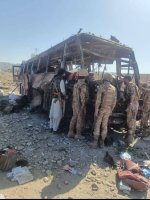
While Baloch nationalist sentiment, especially the demands for the long-deprived rights of the locals, has found some support among rights groups in Pakistan, recent militant maneuvers, from the killing of laborers and miners to attacks on buses and trains, has turned Pakistani public opinion against Baloch movements. This backlash is also being felt by political and rights groups in Balochistan that have been demonstrating for years against the Pakistani state’s arbitrary policies, including decades of forced disappearances amounting to thousands of missing persons. There are fears that the blowback of the Iran War will further aggravate the plight of the ordinary Baloch people.
“Every regional conflict, whether in Iran, Afghanistan, or elsewhere, has always resulted in one thing: increased militarization and greater repression of ordinary people,” Baloch Yakjehti Committee leader Sammi Deen Baloch told The Diplomat.
Regardless of which direction the Iran War takes, further securitization of the region is expected, which would result in more checkpoints and enhanced surveillance. “Every geopolitical conflict becomes a justification for silencing dissent. The state often labels political voices as security threats or foreign backed, which leads to further crackdowns on activists, journalists, and families of victims,” Sammi said.
The long-suppressed Baloch, the Shia relating with the war in Iran, or any shade of ideologically-motivated radical Islamist, are all likely to find an outlet for violent expressions for their conviction in Balochistan. Pakistan, already in a perpetual state of conflict on the east with India, and currently fighting a protracted war on the west with Afghanistan, is bracing for multipronged, multi-actor, warfare in a Balochistan region that is gradually garnering global attention.
And so, as Islamabad mediates between the United States and Iran this week, it should aspire to find a solution that seeks to address Pakistan’s own mounting security predicament as well.

Hakikat ve Hikmet
VIP Member
Once these folks have voluntarily become the slaves of the Ram Rajya of Hindutva Bharat and Dajjalic state of Israil to take arms against a Muslim state they have become Murtedin. Therefore, their Katl is Wajib...
For God's sake make it that "proverbial 3 million" this time....
For God's sake make it that "proverbial 3 million" this time....
LHA4210
Registered Member
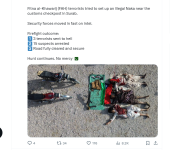
2 CTD and 1 police personnel martyred in seperate attacks. https://www.dawn.com/news/1985722/three-security-men-martyred-in-quetta

Saifullah
Trusted Member

This is good. Reko Diq should be renegotiated and Pakistan should get a much higher share. Raw ore should be refined inside Pakistan. Pakistan should find some way to get rid of Barrick and replace them with a better company.

Rational Philosopher
Trusted Member

This war in the way it's currently being fought is a losing battle. You just send men to sit at posts to be sitting ducks.
It's practically impossible to "dismantle BLA networks" in a region where essentially everyone is sympathetic to them.
Right now you are simply sending men to be slaughtered.
You cannot win this until you switch strategies and go on the offensive in regions that have committed loyalties to the separatist cause, it's the only way Turkey solved its own issue.
It's practically impossible to "dismantle BLA networks" in a region where essentially everyone is sympathetic to them.
Right now you are simply sending men to be slaughtered.
You cannot win this until you switch strategies and go on the offensive in regions that have committed loyalties to the separatist cause, it's the only way Turkey solved its own issue.

Tomcats
Registered Member
Nobody is willing to work under these conditions, not even the Chinese are willing to.this was always the startegy
hinder balochistans developemnt by funding terrorism
btw can we like get out if this agreement , and give contract to somebody else that will work under these conditions or no

Man, we need a wagner style PMC setup at home...Nobody is willing to work under these conditions, not even the Chinese are willing to.
Rational Philosopher
Trusted Member
The problem is that if your strategy is to just send men to be sitting ducks at posts in a region where it largely supports the militant side you are just throwing men into a meat grinder.Man, we need a wagner style PMC setup at home...
Entire strategy is fucked. Killing a few BLA here and there is not working when they instantly replace the men and have huge support networks by locals.
As crazy as it sounds but if you dont punish the local facilitiation networks and all sympathisers, you are a sitting duck in an endless war. You gotta confront the Baloch tribes engaged in rebellion, and give carrots to the ones that comply.
You need to adapt a mix of the Turkish and Chinese strategies against separatism, not treat this as a military battle alone. Its far more complex.

Toxic
Trusted Member
Even beyond that, relocations of population into concentrated zones which can be much easily monitored, the Moroccans recently completely ended the Western Saharan insurgency.The problem is that if your strategy is to just send men to be sitting ducks at posts in a region where it largely supports the militant side you are just throwing men into a meat grinder.
Entire strategy is fucked. Killing a few BLA here and there is not working when they instantly replace the men and have huge support networks by locals.
As crazy as it sounds but if you dont punish the local facilitiation networks and all sympathisers, you are a sitting duck in an endless war. You gotta confront the Baloch tribes engaged in rebellion, and give carrots to the ones that comply.
You need to adapt a mix of the Turkish and Chinese strategies against separatism, not treat this as a military battle alone. Its far more complex.
Rational Philosopher
Trusted Member
There are a lot of more suitable strategies to adopt here yes, but the fauji mind treats this too much like a traditional war instead of acknowledging the separatiat angle of it and then confronting it.Even beyond that, relocations of population into concentrated zones which can be much easily monitored, the Moroccans recently completely ended the Western Saharan insurgency.
In the end, you waste time, funds, and our men's lives.

kimjongun
Registered Member
Exactly , there should be development that the common people can see and it would change their minds .There are a lot of more suitable strategies to adopt here yes, but the fauji mind treats this too much like a traditional war instead of acknowledging the separatiat angle of it and then confronting it.
In the end, you waste time, funds, and our men's lives.
Build a better road network , tol plazas , petrol pumps , build or take care of more national parks , Amusment parks are needed in these cities .
Hamari awaam ko jab tak kaam hota dikhta nai woh yaqeen nai krte hain .
A huge surfing culture can be established along the coasts of pasni , Pasni in it self is so backwards , check the its satellite imagery and you will be shocked to see how underdeveloped it is.
Gwadar ko sirf cpec tak mehdood mt kro , develop it beyond that.
There can be a bazillion things that can eb done with the province both militarily and civil , but ******* ko apni mehngi cars aur jets se fursat mile toh
Pakistan Defence Latest


Country Watch Latest
-

-
-
 Trump orders military base mass shooter to be executed by firing squad (2 Viewers)
- Latest: AZ_HighCountry
-

-
Latest Posts
-
 Makkah Defence Alliance: Turkey, Saudi Arabia, and Pakistan, news & updates (34 Viewers)
- Latest: Oldenwisdom...قول بزرگ
-
 Pakistan vows to defend Saudi Arabia against Iran-backed Houthis by ‘whatever means’ (22 Viewers)
- Latest: Oscar
-

-
