Most Asian countries , including staunch American allies like the Philippines , have cut deals with Iran to allow tankers to pass through. There is no real shortage of oil. You just have to pay the embedded geopolitical premium, and, in some cases, protection money to Iran to buy it. That itself will trigger a recession and reduce demand for oil.
This war is already extremely unpopular. Sending troops on the ground will trigger a MAGA revolt.
This is not about deals or MAGA, this is about price, and how bad it can be, but more importantly, how you can fix it
It really didn't matter if Asia reached a deal with Iran, the ships are still not moving, and we have already done a very big damage in the last 33 days. Even if stuff ends tomorrow, you are looking at around half a year to go back to normal.
It all started here
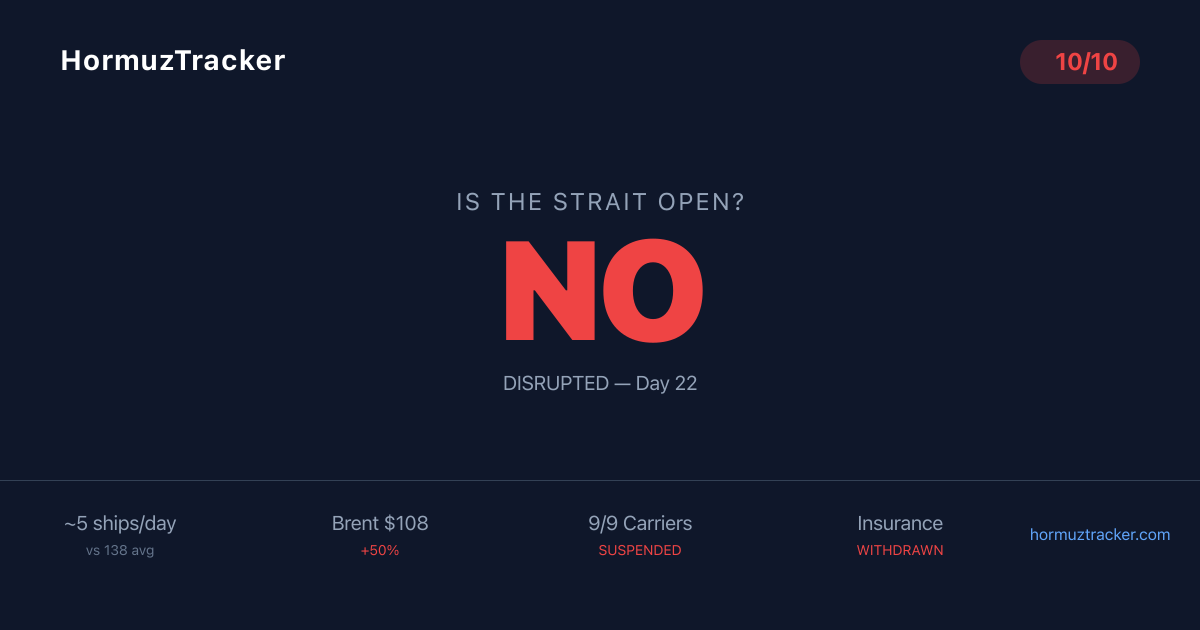
Real-time ship transit data, oil prices, carrier status, insurance, and supply chain impact.

www.hormuztracker.com

Hormuz sees about 130-140 tanker movements a day, we got 7 yesterday, usually it's either 0 or 1, and no more than 10 on a good day (I think there is a day that 13 went through, anyway) so let's say on average, we have 10 pass thru a day, which is very generous, we would had 330 ships sail thru the last month, which usually seen 4000+, which mean 93% of the shipping is currently suspended, unless they had pipeline directly from the Middle East, deal or no deal, nothing had moved. And the ship doesn't teleport from Hormuz straight to Japan, South Korea, or the Philippines........So you get the drift
If you are an American, you may ask, "What does that have to do with us? We produce more than we use, and we don't generally depend on oil in the Middle East." Well, oil prices are global. which means when Asia, which is the industrial heart of the world, is not getting enough oil, they will buy OVER the market price from somewhere else, which means even if you are not related to Hormuz and its spoil of war, you would still get a price hike because say if you are Texas Oil Exec, would you sell 30% more over the market price to Japan or South Korea or at price to local? And that also means whatever you are getting from China, Japan, South Korea, Vietnam, and Taiwan, which is basically everything in your home, you now get them more expensive. Either that or the entire supply line is just gone.
Which means at the end of the day, you are looking at 6 months + when the oil price is going to go up and up, and that's if the issue is resolved in Hormuz. And there is no guarantee that, if the escalation keeps going, and either Trump or Iran or both don't back down, the only way we can physically stop it is literally either force a regime change in Iran, or the US has to occupy part or all of the Iranian coast. Because if Iran keeps on closing the Strait even after the US says they have had enough and is going home, that's what will happen.