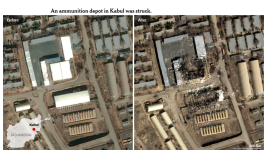
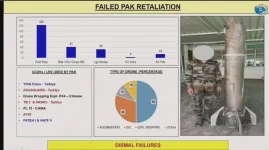
Sir What Pakistan did in Afghanistan and results were verified by 3rd party, something like that? Like a famous proverb, "KAAM KARDA PATA LAGDA AE". Nahi to we should chalk 90% as strategic, behind the scene stuff which can't be used as a tactical victory.
View attachment 189268
The 90% categorizes a lot of stuff in many domains, I don’t claim to know all of it, but even the little I have been privy to tells me that there was more unprecedented action taking place in less discussed domains than even the downing of fighter jets. Take EW & ELINT/SIGINT for example.
To those asking if lessons have been learned and things have improved post may. Of course, it would be alarming if they hadn’t, there have been some new and some old toys inducted as well, but we have a long way to go, and perhaps not the capacity to go all the way. Neither side was close to expending even a small amount of their potential arsenals, and even if a full scale conventional war seems less Likely (as opposed to skirmishes) both sides need to prepare keeping in mind that worse case scenario and have to extrapolate requirements based on the limited scale of this conflict.
The other thing is that warfare is evolving so rapidly that a lot of what was relevant in may is already not. In my analysis the fight in may happened at a period of transition for both Pakistani and Indian forces; both forces were/are in the process of inducting and catching upto what modern warfare has become (Re: Ukraine-Russia & now Iran) and hence the fight was fought with partially old and partially new tactics. I see it as a positive that while lessons were learned from the conflict, it didn’t change the armed forces mind that they needed to slow down the transition to new tactics and equipment by too much to strengthen current capabilities (they were strengthened for sure, but there was a possibility that we saw a much larger pause in transition to cover the gaps in the existing capabilities).
The thing is that under the current scenario, offense has become far cheaper and more cost effective than defense, this was rarely ever the case in the history of warfare, and as such is rather unprecedented. Offensive systems like drones and missiles have developed & evolved far quicker & become far cheaper than the defensive systems that can counter them effectively, this won’t always be the case, the defensive systems can and will catch up, but for the foreseeable future offense is the name of the game, and it’s where the mid term investment needs to be; put too many cards in defense and you’ll still only succeed 75% of the time with nothing to show for it (in a sense that’s what the outcome of the hits on Pakistani infrastructure were in may, less than 10% of Indian ordinance hit their marks, but since Pakistan didn’t have a seemingly effective retaliation, it seemed like that 10% mattered a lot, even though if you look at it like a glass half full, one could say Pakistan effectively stopped 90% of Indian attacks).
Warfare is a very unique form of science, it’s one of the fields where things evolve a lot more than they go obsolete, stuff like tanks and conventional Air defense and other hardware that seems to have fallen behind will catch up to modern warfare sooner or later, they will find their place, but it is a far sounder strategy to get with the times now than wait for your existing hardware to catch up. There is never a yes or no answer to if Pakistan or india are doing things right or wrong, it’s always a spectrum of really smart to really stupid decisions going on at once.
Some of the stuff about May and post-may developments you’ll hear as it trickle outs with time, much of it will probably never see the light of day, as Oscar said, it should stay like that.