China Plans 9 Aircraft Carriers By 2035. The U.S. Navy Has 11 — And Can’t Build Replacements Fast Enough To Keep That Number
By
Isaac Seitz
April 18 2026
According to recent reports from
U.S. officials, China intends to obtain a fleet of nine aircraft carriers by 2035. Currently, China operates three aircraft carriers which its most recent, the Type 003 Fujian, commissioned just last year in 2025. This is an ambitious goal for
China, to say the least.
One of the biggest hurdles facing the
PLAN is its limited experience with carrier operations. Whereas the U.S. Navy has almost a hundred years of experience both building and operating a large carrier fleet. Most of the PLAN’s experience, on the other hand, comes from older Soviet-era designs, with its most advanced carrier being introduced only a year ago.
China’s Aircraft Carrier Fleet is Still Young
The United States Navy has
almost a century of continuous experience operating aircraft carriers. The first U.S. carrier, USS Langley, entered service in 1922, and carrier aviation became decisive only two decades later in World War II.
From that point onward, aircraft carriers were not experimental assets but the
central instrument of American naval power.
They were used intensively in high‑intensity conflict throughout World War II, Korea, and
Vietnam, then continuously during the Cold War in deterrence and crisis-response roles, and finally in nearly nonstop expeditionary warfare after 1991.
This long arc of use created an institutional memory deeply embedded throughout the U.S. Navy’s structure.
China’s carrier history, by contrast, is exceptionally recent. The PLAN commissioned its first carrier, Liaoning, in 2012, after refurbishing the unfinished
Soviet carrier Varyag.
For much of the following decade, Liaoning served primarily as a developmental and training platform rather than a combat-ready asset. The experience China gained during this period was crucial, but it was also tightly controlled, peacetime learning without the unpredictable stressors of war.
The launch of Shandong in 2019 represented an important step forward, reflecting China’s growing indigenous industrial and design capacity.
The
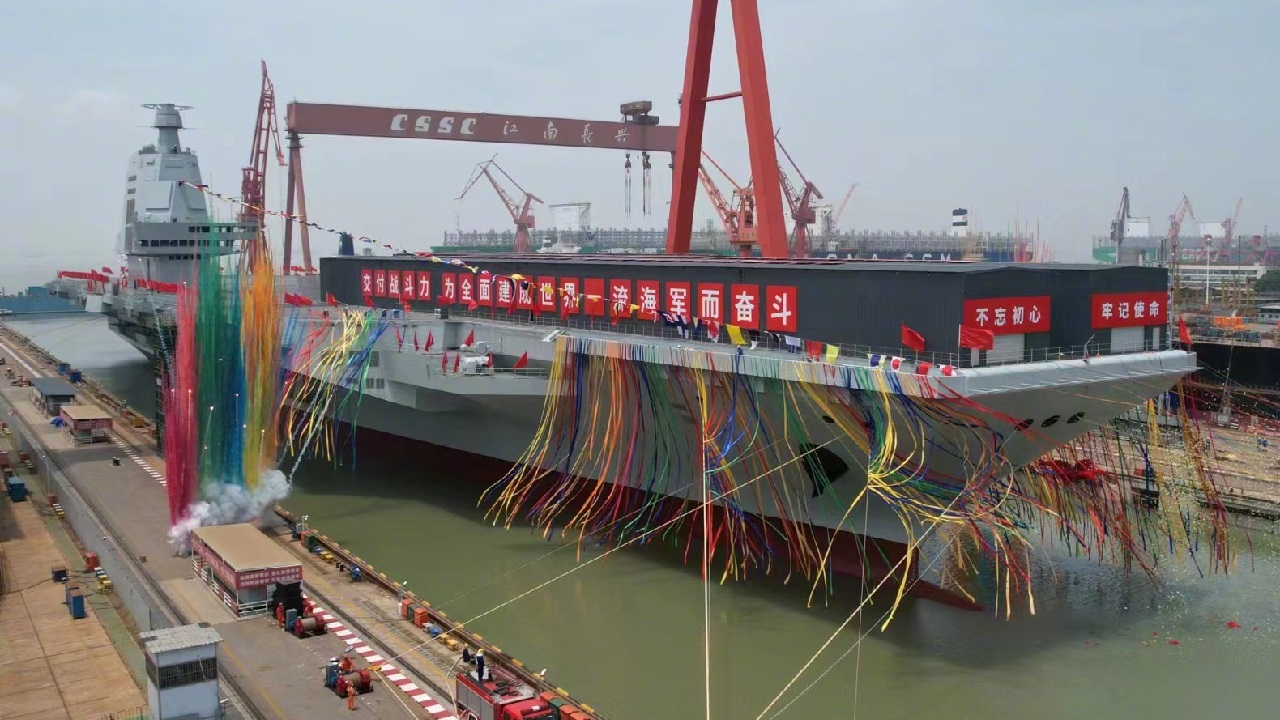
commissioning of Fujian in late 2025 marked a technological leap, as it introduced electromagnetic catapults and CATOBAR operations broadly comparable to those used by the U.S. Navy.
However, despite this impressive pace of development, the PLAN’s institutional experience still spans barely more than a decade, and all of it has occurred without combat employment.
Fujian, China’s New Aircraft Carrier. Image Credit: Chinese Internet.
Why the U.S. is Still the Dominant Carrier Force
This difference in historical depth profoundly shapes how each navy operates carriers today.
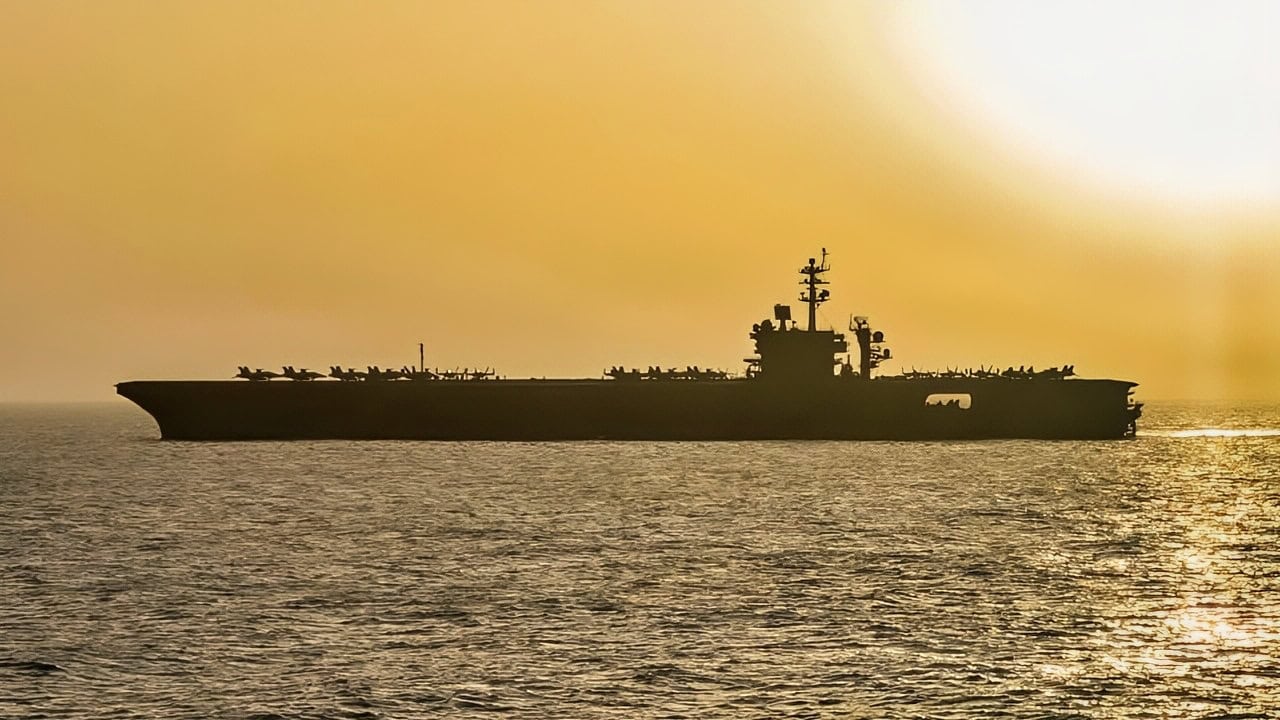
The U.S. Navy fields
eleven carrier strike groups, each built around a nuclear-powered supercarrier and supported by a standardized mix of cruisers, destroyers, submarines, logistics ships, and a carrier air wing. These strike groups are permanent operational formations, not ad hoc assemblies.
They rotate continuously through maintenance, training, deployment, and post-deployment sustainment.
Every phase of that cycle exposes sailors, aviators, and commanders to complex coordination problems, real-world political constraints, and adversary interactions. Over decades, this has produced a force
accustomed to functioning independently for long periods while remaining fully integrated into broader joint and multinational command structures.
The PLAN’s carrier force is growing rapidly but remains far smaller and less mature.
China now technically operates a three-carrier fleet, but only one ship, Fujian, approaches U.S.-style launch-and-recovery capability, and it is still in the
advanced work-up phase.
PLAN carrier task groups have become more visible and more confident, particularly in exercises
beyond the First Island Chain and in dual-carrier operations. Nevertheless, these deployments remain relatively infrequent and carefully choreographed.
The supporting logistics, command-and-control systems, and escort integration are improving, but they have not yet been subjected to the kind of continuous global demand that defines U.S. carrier operations.
Manufacturing: Where China Dominates
Despite all of the above, China retains a potentially decisive advantage over the U.S. Navy:
Manufacturing. China’s shipbuilding industry, according to some estimates, produces
232 times more materials than the U.S. does.
Headed by the China State Shipbuilding Corporation (CSSC) and the China Shipbuilding Industry Corporation (CSIC), China can mass-produce destroyers, submarines, UUVs, and other naval vessels
at an alarming pace.
Fujian, the first carrier of its time, took about 10 years to build and test before entering service. Already, another carrier is under construction at the Dalian Shipyard. China may lack the experience that the U.S. has, but if any nation can build six aircraft carriers in ten years, it’s probably China.
The U.S., meanwhile, spent years quietly
reducing its domestic shipbuilding industry and, in doing so, accidentally shot itself in the foot.
Once capable of building multiple carriers in a short time, the U.S. today can barely conduct routine maintenance on its carriers without delays.
Major shipbuilders are plagued by personnel shortages, supply chain issues, and insufficient funding, in addition to ever-changing Navy demands. Despite
recent funding increases, it will take decades before domestic shipbuilding reaches anywhere near China’s current output.
The unfortunate result is that today, American shipbuilding is a shadow of its former self, which stands in stark contrast to the otherwise prestigious United States Navy.
U.S. officials say China plans to operate nine aircraft carriers by 2035. The Type 003 Fujian just commissioned last year. Another carrier is already under construction at Dalian Shipyard. And China's shipbuilding industry produces 232 times more materials than America's — while the U.S. Navy...

www.19fortyfive.com