Chinese Economy: General News, Updates and Discussions

Hormuz chaos sparks warning: China could strangle Taiwan without firing a shot

Americans with 401(k)s 'would feel it right away' if Beijing moved to choke off the island, Eyck Freymann says

By Morgan Phillips Fox News
Published April 14, 2026 10:13am EDT

China may not need to launch a military invasion of Taiwan to trigger a global economic crisis, according to a new analysis that draws lessons from recent disruptions in the Strait of Hormuz.

As Iran showed earlier in 2026, even limited interference with a key shipping choke point can rattle global markets: spiking prices, disrupting supply chains and shaking investor confidence.

Analysts warn Beijing could apply a similar strategy to Taiwan, the world’s most critical hub for advanced semiconductors.

If China moved to choke off Taiwan tomorrow, "Americans with 401(k)s would feel it right away," Stanford Hoover Institution fellow Eyck Freymann told Fox News Digital.

A disruption to Taiwan’s semiconductor supply could trigger a sharp sell-off in global markets, hitting major U.S. technology stocks that make up a significant share of retirement portfolios.

While much of Washington’s focus has long centered on deterring a Chinese invasion of Taiwan, Freymann argues the greater risk may be a more ambiguous strategy — using economic pressure, military signaling and market panic to isolate the island without triggering a full-scale war.

He expands on that argument in his new book, "Defending Taiwan: A Strategy to Prevent War with China," published Tuesday, warning Beijing could "squeeze, isolate, and coerce Taiwan into submission without firing a shot."

China significantly has increased military activity around Taiwan in recent years, conducting large-scale exercises that simulate encirclement and blockade scenarios. Analysts say those drills reflect a growing emphasis on options short of invasion.

That analysis comes as a new Annual Threat Assessment released by the Office of the Director of National Intelligence found that Chinese leaders "do not currently plan to execute an invasion of Taiwan" and "do not have a fixed timeline for achieving unification."

The finding has fueled debate in Washington over whether the United States is too focused on deterring a traditional amphibious assault while overlooking more gradual forms of coercion.

Chinese military doctrine has long included what it calls a "joint blockade campaign," and analysts note Beijing has increasingly signaled its ability to isolate Taiwan through a combination of naval, air and coast guard operations.

China has significantly increased military activity around Taiwan in recent years, conducting large-scale exercises that simulate encirclement and blockade scenarios. Analysts say those drills reflect a growing emphasis on options short of invasion.

Analysts at the Institute for the Study of War and the American Enterprise Institute have similarly warned that China is actively rehearsing elements of a blockade, with recent exercises simulating efforts to cut off Taiwan’s major ports and restrict access to energy and trade routes.

Freymann said the intelligence assessment aligns with his view that Beijing’s preferred strategy may fall short of outright war.

"China’s Plan A is to take Taiwan without a fight," he said.
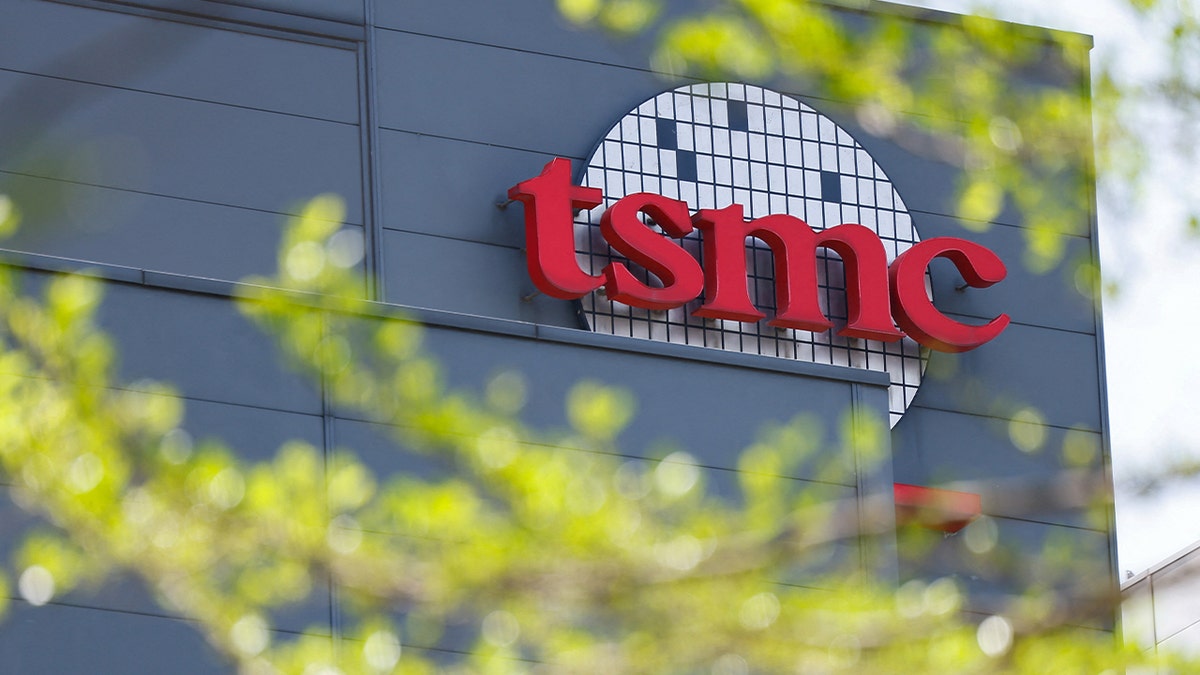
The TSMC logo displayed on a building in Hsinchu Taiwan

A Chinese blockade of Taiwan could shatter global semiconductor shipping. (Ann Wang/Reuters)

Analysts say China would not necessarily need to impose a full blockade. Instead, Beijing could rely on military drills, maritime inspections and restricted zones to raise the risk of operating in the Taiwan Strait.

That uncertainty alone could be enough to drive insurers and shipping companies out of the region, effectively cutting off Taiwan’s trade. With roughly half of the world’s container ships passing through the strait, even limited disruption could ripple across global supply chains.

A recent Center for Strategic and International Studies report, based on 26 war game simulations, examined scenarios in which Chinese forces board and interdict commercial ships bound for Taiwan, triggering widespread disruption to global trade and raising the risk of escalation.

The same analysis found that while China could inflict serious economic harm, a blockade would not be a low-risk option and could quickly spiral into a broader military conflict involving the United States and its allies.

Iran’s actions in the Strait of Hormuz temporarily disrupted roughly 20% of global oil supply, triggering immediate volatility in energy and financial markets. A similar disruption in Taiwan, he argued, would have even broader consequences.

Taiwan produces roughly 90% of the world’s most advanced semiconductors, including the cutting-edge chips that power artificial intelligence systems, consumer electronics and U.S. military technology.

The stakes extend far beyond Taiwan itself.

A disruption in semiconductor supply could ripple across the global economy, affecting everything from artificial intelligence development and U.S. defense systems to consumer electronics and automotive manufacturing. Analysts warn that even a temporary shutdown of Taiwan’s chip industry could trigger widespread economic disruption, given the lack of viable alternatives at the most advanced level.

That concentration has long been referred to as Taiwan’s "silicon shield," the idea that the island’s central role in the global economy helps deter conflict by raising the stakes for any disruption.

But that same dominance also creates a vulnerability. Unlike oil, there is no strategic reserve to offset a sudden semiconductor supply shock.

"If you take away the United States’ access to advanced compute, there goes the whole AI trade," Freymann said. "It risks the possibility of a Lehman Brothers-style cascading event."

Such a shock could ripple through financial markets, hit major U.S. technology companies and push the global economy toward recession, he said.

Freymann also warned that China may not even need to impose a full blockade to achieve its goals, instead relying on incremental "gray zone" tactics already in use.

"The danger is that they’re already doing it," he said.

Those tactics could include harassment of commercial shipping and air traffic, regulatory pressure on companies operating in the region, and other measures designed to increase risk without triggering a direct military response. Over time, he argued, such pressure could force private companies, particularly insurers, shipping firms and airlines, to scale back operations around Taiwan.

That dynamic could allow Beijing to effectively isolate the island without firing a shot, as market actors move to avoid risk.

Still, analysts caution that the Taiwan Strait presents a more complex and heavily militarized environment than the Strait of Hormuz, where U.S. naval operations and regional dynamics differ significantly.

Taiwan is also taking the threat seriously.

Officials have begun planning exercises aimed at maintaining access to critical supplies, including energy, in the event of a blockade scenario, underscoring growing concern that such a disruption is plausible.

Freymann said the United States must adapt its strategy to account for these risks, warning that traditional military deterrence alone may not be sufficient as tensions with China continue to play out at the highest levels of diplomacy.

The issue is expected to loom over a high-stakes meeting between President Donald Trump and Chinese President Xi Jinping scheduled for May in Beijing, where Taiwan, trade tensions and U.S. arms sales to the island are likely to be key points of discussion.

At the same time, he cautioned that any shift in strategy must be paired with a steady diplomatic posture to avoid signaling weakness or escalation.

Freymann urged U.S. leaders to maintain a consistent and measured approach, warning that even subtle shifts in language or policy could be interpreted as weakness.

"We have a long-standing one-China policy. It shows that we are resolved if our principal position is tested, but that we’re also restrained," he said.

"We want China and Taiwan to resolve their disputes through negotiation without force or coercion."

The Chinese embassy and Taiwan foreign ministry could not immediately be reached for comment.
 
You were never around when PDFers from one country were extolling China's strategic alliance with Iran when this happened

In terms of factual data, trade between China and India is far greater than that between China and Iran—and also far greater than that between China and Pakistan.

Going by your logic, it is actually China and India that are "allies"...........

At the same time, trade between China and the United States is also far greater than that between China and Russia.
 
Now, US as a protector of the security of the Gulf countries are smashed by the Iran war. If UAE is looking for a new security guarantor, I don't think China is interested to fill that role to be someone's bodyguard.
If the UAE is willing to give up supporting Israeli expansionism and the Somaliland separatist forces, we may mediate relations between the UAE and Iran, Saudi Arabia, and the Houthi forces.

Peace and stability in the Middle East are internal affairs of the Muslim world, and Pakistan is the most suitable country.

Our demands are very simple: normal trade is enough. Using money to buy resources is the best choice, and it is in the interests of both parties.

The United States' use of force to plunder resources will only create enemies.
 
  • Like
Reactions: ety
China is never the security guarantor or strategic ally of Iran. China has no obligations to defend Iran.
You are a rational person.

China and Iran have economic cooperation, while Russia and Iran have military cooperation.

If Iran fails, Russia's security will be threatened. China would merely be unable to obtain energy from Iran. This requires further analysis: if the United States controls all the energy in the Middle East, that energy still needs to be sold, and capitalists will not turn away from money.

China holds the initiative. On April 12, Trump ordered a blockade of the Strait of Hormuz and in an interview urged China to purchase oil from the United States and Venezuela to replace imports from Iran. The Chinese Foreign Ministry spokesperson responded at a regular press conference, stating that Venezuela is a sovereign country, with full and permanent sovereignty over its natural resources and all economic activities, and has the right to independently choose its cooperation partners; other countries have no right to interfere.

Energy pipelines from Russia and Central Asian countries are already in use. U.S. actions will only make Russia and China closer, and Russia is more willing to increase energy supplies to China in exchange for support.

We have a fleet in the Middle East and we have been monitoring the development of the war. The strength of the Epstein coalition does not require China and Russia to provide military aid to Iran together. However, if NATO countries attack Iran together, the situation might change at that time.
 
  • Like
Reactions: ety
If the UAE is willing to give up supporting Israeli expansionism and the Somaliland separatist forces, we may mediate relations between the UAE and Iran, Saudi Arabia, and the Houthi forces.

Peace and stability in the Middle East are internal affairs of the Muslim world, and Pakistan is the most suitable country.

Our demands are very simple: normal trade is enough. Using money to buy resources is the best choice, and it is in the interests of both parties.

The United States' use of force to plunder resources will only create enemies.
That is the intention of US to create conflicts among Muslims, among nations, within nations and between Shia and Sunni. Then, US can benefits from such chaos and wars. China wants to bring peace and cooperation between Muslims and also nations. China's main interests in the MIdeast and also other places should be primarily business and trade. China should not station troops in the Mideast as protector, otherwise it is asking for trouble.
 
The UAE should expel the Yankees, and handle its military base to China.

With China controlling its military base, it won't be served as a base to attack Iran.
 
As a matter of fact, as stated in your agreements, India is more of a strategic partner to Iran than China is. Why does India betray Iran ?
India dumped Iran in 2005
 
In terms of factual data, trade between China and India is far greater than that between China and Iran—and also far greater than that between China and Pakistan.

Going by your logic, it is actually China and India that are "allies"...........

At the same time, trade between China and the United States is also far greater than that between China and Russia.
Trade between China and India is one-sided

You should read the comments of PDFers when that deal was announced
 
Investments do not necessarily indicate a strategic alliance. Do not conflate the two.
Remind me every time China signs a big deal with someone and Pakistanis keep trumpeting the strategic alliance between China and that country.
 
Remind me every time China signs a big deal with someone and Pakistanis keep trumpeting the strategic alliance between China and that country.

I can't speak for other Pakistanis, as they often conflate the two. Had the investment been a strategic calculation, the Chinese would have been more hands-on, but they aren't now. During a conflict, they've been our top supplier.
 
That is the intention of US to create conflicts among Muslims, among nations, within nations and between Shia and Sunni. Then, US can benefits from such chaos and wars. China wants to bring peace and cooperation between Muslims and also nations. China's main interests in the MIdeast and also other places should be primarily business and trade. China should not station troops in the Mideast as protector, otherwise it is asking for trouble.
This is something that Western countries often do; creating divisions benefits their rule and interests.

Britain separated India and Pakistan, deliberately leaving Kashmir, which caused years of war between the two countries.

During Belgian colonial rule (1916-1962), the colonizers implemented a 'divide and rule' policy, solidifying ethnic identities through the ID system, supporting the Tutsi as agents to govern the Hutu, and promoting pseudo-scientific racial theories, claiming the Tutsi as the 'superior race,' which intensified social divisions. This led to the Rwandan genocide, causing 800,000 to 1,000,000 deaths.

The United States, leading Western countries, has tried to divide China, supporting puppet governments and the current Chinese government in partitioning territory along the Yangtze River.

After the dissolution of the Soviet Union, the United States instigated confrontation between Europe and Russia.

The United States, leading NATO, bombed Yugoslavia, and after Yugoslavia's disintegration, provoked conflict in Serbia and supported separatism in the Kosovo region.

Western countries support Ukraine in resisting Russia, cultivating the Azov Battalion, which has long killed and harassed residents of Eastern Ukraine.

The United States has continuously provoked conflicts between Saudi Arabia and Iran. After China's mediation, Saudi Arabia and Iran resumed diplomatic relations. During the US-Iran war, Saudi Arabia remained restrained and did not let the war escalate.

The United States also needs internal division, encouraging LGBT, ethnic minorities, and black labels, inciting the people to confront each other. The US has 393 million guns, yet they are used only in schools and stores—cowards dare not point guns at the Epstein government and Jewish Nazis.

Therefore, they fear united countries and organizations, which is also why they constantly smear communism. The four major cases in the Soviet Union usually refer to the Diamond Case, the Fur Case, the Fisheries Case, and the Cotton Case; these cases were merely systematic corruption and social conflicts, and the officials involved were punished.

But what about the cases under NATO led by the United States? The Epstein case has, to this day, resulted in no officials or capitalists being legally punished.
 
  • Like
Reactions: ety
China is never the security guarantor or strategic ally of Iran. China has no obligations to defend Iran.
Other than North Korea which country are China's strategic allies?
 
Other than North Korea which country are China's strategic allies?
From my understanding, judging by the frequent military exercises and close military collaborations with the two countries and also close gov relations with them, Pakistan and Russia can be classified as informal strategic allies of China. NK is a formal ally bound by treaty.
 

Users who are viewing this thread

  • Pakistan Defence Latest

    Back
    Top