Islamabad Talks - News & Discussions

Even without war, they were very far from making a nuke bomb. They have been building it for 30 years now. So nuke they can't have. Why have your country and people suffer for that? Instead use it to bargain, have the sanctions removed, assets unfrozen and let free oil/gas flow.

Nukes are not the issue. That train long left Iran. The Iranians were willing to compromise on the fissile material topic during the Oman negotiations just before this war was launched on them. The issue was Iran to eliminate all its long range missiles which could be used against Israel. The terms were so humiliating: Americans to come to Iran, go to all the missile productions factories and dismantle longer range missiles. And of course as soon as Iran would do that, it would be sitting ducks to Netanyahu's periodic 'mowing the lawn'.
There is lot of obfuscation going on with Trump and Netanyahu zeroing in on the 'Iranian Nuclear Threat'. Beware.
The issue in the Islamabad Talks One was Lebanon and that is still a major issue. But now the Iranians feel like they have the upper hand--and maybe they do--and they want more and they want longer term solutions.
Trita Parsi said that the Americans should have accepted the Iranian offers in the Oman negotiations but now Americans would have to offer more to Iran.
 
But no one in world with a right mind wants that. Belligrance is not the bravery. This war has all the potential to turn into the third world war. Iranians have desperately tried to expand it by repeatedly attacking many Arab countries. Irani leadership is pursuing a suicidal policy without having care for its own people.
This isn't suicidal as it has already saved the Iranian leadership from total collapse. Iran was on the verge of a revolution that was about to replace the system with a pro-Israel system. What the Iranian leadership decided to do is a well-known, well-established textbook policy that's called the Mad Man.

World War III is not our concern. It is not up to us to save the world from World War III. The whole world can burn to ashes besides Iran as far as I'm concerned. Our duty is to fight for Iran, not to save the world. If the world doesn't like the prospect of World War III, they are welcome to try and stop Netanyahu and Trump.

If Iran has so far lost, let's say, 50% or even 20% of its military capabilities and 70,000 or so buildings destroyed. What it has achieved in return? Are Iranians able to destroy even 1% of the military power of their adversaries?
Iran has lost nothing of great value militarily. Our air force was never meant to fight a modern adversary. The IRIAF was rather a well-maintained museum than an actual air force. Our navy was never meant to fight a modern adversary by classical means either, but its combat capability against the US through asymmetric warfare is absolutely intact. Our ground forces are intact. Railways and roads have already been repaired in the span of 2 weeks. Airports are already opening one by one. Our missile forces still have thousands of missiles. We still have tens of thousands of drones. Our missile cities haven't even been scratched.

70,000 buildings have been damaged, not destroyed. And it is not 70,000 buildings as far as I know. It's a sloppy mistranslation in the news. It's 70,000 apartments, to be more precise. Even a broken window means that an apartment has been damaged. The damage to Tehran, which absorbed nearly 45% of all attacks by Israel and the US has been miniscule.

We already have destroyed nearly all US bases in the region. US has spent nearly 20% of all its standoff weapons on Iran in 40 days. Some of its standoff weapons and air defenses will take years to replenish and are already running out. This means that the US severe shortage of rare earth metals will get even worse in the near future.

It's just Trump's reluctance not to push the world economy off the cliff that is saving Iran so far.
Hilarious. This part is the stupidest part of your comment. Trump and reluctance? Ridiculous.

If they can destroy 70000 buildings in Iran, destroying Iran's energy and oil infra is not impossible task.
We would love to see him try.

At the most, Iranians will be able to shoot down a few more enemy planes. That's not a prohibitive cost in any means. But Iran will then be brought to beg for ceasefire. Iranians will be then forced to accept terms akin to Saddam's acceptance. Let's all hope that never happens. But the reality is that there is no comparison between Iran and USA's military might.
We will destroy the energy infrastructure and the IT infrastructure of the Middle East. Whether it will be a prohibitive cost or not is to be seen. Last time, it was the United States that begged for a ceasefire for days until China forced Iran to accept it. We will see if the tides will turn or not.
 
This isn't suicidal as it has already saved the Iranian leadership from total collapse. Iran was on the verge of a revolution that was about to replace the system with a pro-Israel system. What the Iranian leadership decided to do is a well-known, well-established textbook policy that's called the Mad Man.

World War III is not our concern. It is not up to us to save the world from World War III. The whole world can burn to ashes besides Iran as far as I'm concerned. Our duty is to fight for Iran, not to save the world. If the world doesn't like the prospect of World War III, they are welcome to try and stop Netanyahu and Trump.


Iran has lost nothing of great value militarily. Our air force was never meant to fight a modern adversary. The IRIAF was rather a well-maintained museum than an actual air force. Our navy was never meant to fight a modern adversary by classical means either, but its combat capability against the US through asymmetric warfare is absolutely intact. Our ground forces are intact. Railways and roads have already been repaired in the span of 2 weeks. Airports are already opening one by one. Our missile forces still have thousands of missiles. We still have tens of thousands of drones. Our missile cities haven't even been scratched.

70,000 buildings have been damaged, not destroyed. And it is not 70,000 buildings as far as I know. It's a sloppy mistranslation in the news. It's 70,000 apartments, to be more precise. Even a broken window means that an apartment has been damaged. The damage to Tehran, which absorbed nearly 45% of all attacks by Israel and the US has been miniscule.

We already have destroyed nearly all US bases in the region. US has spent nearly 20% of all its standoff weapons on Iran in 40 days. Some of its standoff weapons and air defenses will take years to replenish and are already running out. This means that the US severe shortage of rare earth metals will get even worse in the near future.


Hilarious. This part is the stupidest part of your comment. Trump and reluctance? Ridiculous.


We would love to see him try.


We will destroy the energy infrastructure and the IT infrastructure of the Middle East. Whether it will be a prohibitive cost or not is to be seen. Last time, it was the United States that begged for a ceasefire for days until China forced Iran to accept it. We will see if the tides will turn or not.
Love the way you spun it dear mad man .
 
Love the way you spun it dear mad man .
Iran faces a very clear choice:
1. Become a pro-Israel state like the Pahlavi era.
2. Fight it to the end if the Islamic regime wants to stay in power.

I am OK with both prospects. The Pahlavi Iran had its own advantages. The Imperial Air Force of Iran was a formidable force, one of the best-equipped and best-trained in the world. We had better music industry, better tourism industry, better energy infrastructure, people were happier and could travel abroad freely, there were no sanctions, people lived more prosperously, etc.

The Islamic Republic of Iran has had its own merits too. It is unpopular within Iran, but it has invested hugely in education and rural areas in its 47-years of ruling over Iran. It created drone and missile powers that are absolutely world class, etc.

Me, personally, and probably most Iranians, would prefer something between the two. A secular Iran that looks like the Pahlavi era, but with an anti-Israel system that maintains our sovereignty and independence. That isn't an option at the moment, unfortunately.

One thing is absolutely clear. Either the Islamic Republic of Iran survives and wins this war, or it has to surrender unconditionally eventually, and become a pro-Israel state that keeps the status quo at our own expense. It's pretty much a binary outcome at this point.
 
As
Iran faces a very clear choice:
1. Become a pro-Israel state like the Pahlavi era.
2. Fight it to the end if the Islamic regime wants to stay in power.

I am OK with both prospects. The Pahlavi Iran had its own advantages. The Imperial Air Force of Iran was a formidable force, one of the best-equipped and best-trained in the world. We had better music industry, better tourism industry, better energy infrastructure, people were happier and could travel abroad freely, there were no sanctions, people lived more prosperously, etc.

The Islamic Republic of Iran has had its own merits too. It is unpopular within Iran, but it has invested hugely in education and rural areas in its 47-years of ruling over Iran. It created drone and missile powers that are absolutely world class, etc.

Me, personally, and probably most Iranians, would prefer something between the two. A secular Iran that looks like the Pahlavi era, but with an anti-Israel system that maintains our sovereignty and independence. That isn't an option at the moment, unfortunately.

One thing is absolutely clear. Either the Islamic Republic of Iran survives and wins this war, or it has to surrender unconditionally eventually, and become a pro-Israel state that keeps the status quo at our own expense. It's pretty much a binary outcome at this point.
As a teenager I visited Iran during Pehelvi era , loved my two weeks of stay there...Iran was way ahead of the region at that time...night clubs were filled with Thai girls , drinks were cheap... traffic was fukked up
 

Focus shifts to Islamabad as war timeline changes and pressure builds

Anwar Iqbal
April 21, 2026

1776769438975.png

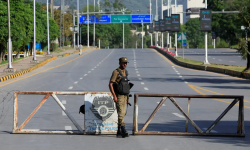
An army soldier stands guard on a road leading to Serena hotel in Islamabad on April 20, 2026. — Reuters

WASHINGTON: As President Donald Trump continues to shift his timeline for ending the war with Iran — from “days” to “weeks,” then “five weeks,” and now simply “soon” — Islamabad remains at the centre of fragile diplomatic expectations for a second round of US–Iran talks.

With the ceasefire under strain and tensions escalating in the Strait of Hormuz, diplomacy is unfolding in parallel with military signalling, economic volatility, and sharply diverging political narratives in Washington and Tehran.

Vice President JD Vance is expected to travel to Islamabad on Tuesday for the next round of talks, but the US media caution that the visit remains contingent on Iran’s confirmation of participation. Preparations are underway in Islamabad for a possible high-level diplomatic engagement, though the situation continues to shift rapidly.

Pakistan remains positioned as host and facilitator, attempting to sustain a process that is still undefined in structure and uncertain in sequencing.

The diplomatic track is unfolding alongside renewed tensions in the Strait of Hormuz, where disruptions to shipping and the seizure of an Iranian-linked vessel by US forces have intensified the confrontation.

Tehran has responded with increased maritime pressure, while Washington insists its blockade will remain in force until a broader agreement is reached.

Energy markets have reacted sharply, with oil prices briefly spiking before easing on expectations that even preliminary talks in Islamabad could still materialise.

Analysts say the absence of a stable diplomatic framework has raised questions about whether a clear endgame was defined at the outset or whether policy is being shaped reactively through public messaging.
 
Trust deficit

Iranian-American scholar Vali Nasr, speaking to Democracy Now, an independent US media outlet, described the current phase as one of “gradual escalation” following the collapse of early diplomatic momentum.

Nasr said early signals of de-escalation — including discussion of a Lebanon ceasefire and limited Iranian openness on maritime access — were reversed after US statements reaffirmed a strict blockade and suggested Iran had already agreed to dismantle its nuclear programme before any formal deal.
 

Trust deficit​

Iranian-American scholar Vali Nasr, speaking to Democracy Now, an independent US media outlet, described the current phase as one of “gradual escalation” following the collapse of early diplomatic momentum.

Nasr said early signals of de-escalation — including discussion of a Lebanon ceasefire and limited Iranian openness on maritime access — were reversed after US statements reaffirmed a strict blockade and suggested Iran had already agreed to dismantle its nuclear programme before any formal deal.
 

KP Assembly supports Islamabad peace talks

Umer Farooq
April 21, 2026

1776769651396.png

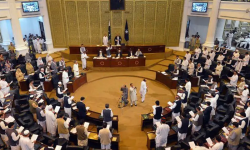
Khyber Pakhtunkhwa Assembly. —Dawn

PESHAWAR: The Khyber Pakhtunkhwa Assembly on Monday unanimously passed a resolution, announcing all-out support for peace talks between the US and Iran in Islamabad, calling it Pakistan’s constructive initiative aimed at the promotion of peace and regional stability.

The resolution, moved by treasury MPA Sher Ali Afridi during a session chaired by Idrees Khan, said that PTI founder Imran Khan had consistently advocated for a foreign policy framework grounded in dialogue, diplomatic engagement and peaceful coexistence among states.
 
As a teenager I visited Iran during Pehelvi era , loved my two weeks of stay there...Iran was way ahead of the region at that time...night clubs were filled with Thai girls , drinks were cheap... traffic was fukked up
Iran was a modern country at the time. Iranians want to live normal lives, like they did back then, like the rest of the world and other countries in our region. The Shah should've never fled the country and handed it over to the extremists, but he did. I suppose that's what happens when your country is ruled by a King that his power comes from foreign countries, instead of his own people. Anyway, the 1979 revolution happened.

The Middle East is the kind of place that independence is very costly to maintain, even more so than the rest of the world. Iran, at the moment, has no good options. And by Iran, I'm talking about the Iranian nation. Fortunately enough, Iranians are patriotic and very patient. They can endure and have endured so much pain to ensure that Iran will always have a fighting chance for a better future and they will continue to do so.
 

Confusion grips Rawalpindi amid strict security measures for US-Iran talks

Aamir Yasin
April 21, 2026

1776769792533.png

• Some roads, markets closed, transport suspended
• Many varsities start online classes and others remain open


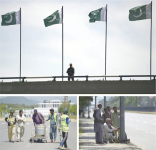
RAWALPINDI: The residents of Rawalpindi are in a state of confusion as some roads have been closed while others remain open, many universities and schools have been shut while others continue to operate. Moreover, both goods and public transport are off the roads.

These disruptions come as the second round of US-Iran peace talks has yet to begin in Islamabad, prompting the government to implement heightened security measures in this regard.

The roads around Nur Khan Airbase and the area between Rawalpindi and Islamabad were closed. Markets in Raja Bazaar, Saddar and other areas were opened, but those in residential streets around the old airport as well on Murree Road from Shamsabad to Faizabad were closed.‎

Moreover, the Metro Bus Service between Rawalpindi and Islamabad and the electric buses remained suspended while the district administration directed to also suspend all public and goods transport connecting the city with other parts of the country for the last two days.

In most parts of the city, life continued as usual and the trademark hustle and bustle I. Saddar and other commercial areas remained unchanged. Shops opened as per routine and even vendors brought out their pushcarts. But this normality faded away as soon as one entered the old Airport Road, Peshawar Road and Murree Road which connect with Islamabad.‎
 

The Blockade Is Scrambling Calculations in Tehran and Beijing

hormuz-strait.jpg
A drone view shows a tanker that sailed through the Strait of Hormuz, arriving in Iraq’s territorial waters off Basra, Iraq, April 17, 2026.(Mohammed Aty/Reuters)

By Noah Rothman

April 20, 2026 2:54 PM


The news over the weekend featured a blizzard of vaporous claims about the status of a potential deal to extend the cease-fire between the U.S. and Iran before it expires on Tuesday night. But each reported breakthrough turned out to be ephemeral. In contrast to the non-events that characterized the chatter around a second round of talks in Islamabad, however, the situation on the ground inside Iran and in the Strait of Hormuz has proven more dynamic.

Iran’s Islamic Revolutionary Guards Corps appears to be attempting to seize control of the regime from the Iranian political figures who presume to speak for it. “Bad and incomplete tweet by [Foreign Minister Seyed Abbas] Araghchi and incorrect ambiguity-creation regarding the reopening of the Strait of Hormuz,” the IRGC-linked Iranian outlet Tasnim reported on Friday, scolding the foreign minister for entertaining proposals to reopen the Strait.

“Clearly, the IRGC is trying to take back control of the talks in Pakistan,” one Jerusalem Post analysis of the emerging schism concluded. “It is willing to make the regime look divided to achieve its goals.”

Hours later, in one of the 27 interdictions the U.S. Navy has conducted since it embarked on a maritime blockade of Iranian ports, U.S. Marines conducted a hostile boarding of an Iranian-flagged cargo vessel that evaded American ships. That vessel “is likely to have what Washington deems dual-use items that could be used by the military onboard,” Reuters reported Monday.

In response to the seizure of its vessel, the disunited Iranian regime insisted that the Strait, which it had never fully reopened to commercial traffic, was once again closed. What remains of the Iranian Navy attempted to retaliate by reportedly targeting American and U.S.-aligned ships with drones – again, according to the IRGC-affiliated Tasnim news agency.

The Iranian regime’s inconstancy contrasts with the apparent U.S. commitment to its blockade strategy – an undertaking that the Pentagon reportedly plans to expand well beyond the Gulf of Oman.

“The U.S. military is preparing in coming days to board Iran-linked oil tankers and seize commercial ships in international waters, according to U.S. officials,” the Wall Street Journal reported Saturday.

Why not? After all, as the Brookings Institution scholar Robin Brooks conceded, the blockade has so far succeeded in throttling Iran’s vital exports, starving the regime of its primary economic lifeline to the world:

To view this content we will need your consent to set third party cookies.
For more detailed information, see our cookies page.


In addition to the blockade, in what it’s calling Operation Economic Fury, the Treasury Department is augmenting the financial pressure the blockade has placed on the Iranian regime by expanding the list of sanctioned Iran-linked vessels and targeting the foreign firms that benefit from the illicit sale of Iranian energy exports – including Chinese banks.

The Chinese played a leading role behind the scenes in compelling the Iranian regime to submit to talks in Islamabad in the first place. It is possible that the U.S. blockade is sapping Beijing of its resolve to stand with the Islamic Republic indefinitely:

In his first public remarks on the status of the Strait, Chinese President Xi Jinping told his Saudi counterpart, Crown Prince Mohammed bin Salman, that Hormuz should “remain open for normal passage.” In his remarks, Xi did not single out either the U.S. or Iran as the primary obstacle to commercial traffic.

Cynics can call the U.S. decision to blockade Iranian ports in the middle of a ceasefire improvisatory. But one man’s improvisation is another’s adaptiveness. Whatever else one might say about the blockade, it has stopped Iran from dictating the tempo and terms of events in global energy markets — the last point of Iranian leverage over the West.

Maybe that helps create the conditions for a satisfactory cessation of hostilities. Perhaps it sets the stage for the fighting to resume when the cease-fire sunsets on Tuesday night. What is certain is that the U.S. is once again in control of the rhythm of events in the Strait of Hormuz.
 
Seen about 20 minutes of this video of the two towering giants of America. Prof. Mearsheimer thinks there might be some agreement in Islamabad in this round of the Talks but Israelis would do anything to sabotage that. He is also saying the Americans know the consequences of another escalation with Iran--the consequences will be indirectly felt in America, too, due to the global economic shock. He is right in saying the Israel Lobby has lost the street level support in America however they have the 'stranglehold' on President Trump. He is also saying America will have to accept that Iran is a 'winner' in this conflict to wrap this up.
Fascinating video but not sure I have the time for the rest of the video.

To view this content we will need your consent to set third party cookies.
For more detailed information, see our cookies page.
 

Users who are viewing this thread

Pakistan Defence Latest

Latest Posts

Back
Top