Islamabad Talks - News & Discussions

Iranians have let Pakistan down badly. Iranian tatpoonjiay were already propagating that Pakistan was doing a service to Trump.

It's the time for Pakistan to kick the ass of both Iranians and Americans and tell them to deal with each other directly or through whatever other country they trust.

It was not a small achievement for Pakistan to make both Iranians and Americans sit across the table in the same room for the first time in 47 years. Now both sides need to pick it from there and talk to each other directly.

They have not let Pakistan down. If anything, they possibly have had the most engaging interaction with a foreign country (Pakistan) in decades. The problem is that they are just unable to reach an internal consensus. It appears they have not been able to restore a centralised authority since Khamenei, and there is a divide between the political leadership and the IRGC. This raises questions about how much control Mujtaba Khamenei has, or if he has even taken control of things.

One of the biggest strategic blunders for Pakistan would be to make an enemy out of Iran.
 
Sir, it's a dog eat dog world out there, Iran is a lone wolf revolutionary state and we forget they can be ruthless if you recall the missile exchange a year ago, and that as a nation everyone is eating the costs

expressions of Goodwill are one thing, but it's about leverage and power right now, and when you consider Iran has been more or less a lone wolf holding the world economy by its throat, it is not a big reach to imagine both Iran and USA pressuring Pakistan to get their way, this you have to accept because it's not going to be honeymoon period and praises forever

The early stages and initial discussions are a honeymoon period, Iran has to decide then if they can sustain and manage round two, and that will then also change equations for Pakistan because they are a neighbor with direct equities in all of this.

You see Pakistan was chosen by the Americans smartly, just looking at this dispassionately they will know that there might be a time in the future where hard national realities will override sympathy and patience. In that scenario both Turkey and Pakistan could start singing a different tune and then automatically equations will change for Iran, yes Pakistan has been a trusted mediator but no country is uninterested in the economic consequences, it just happens that Pakistan is the most acceptable go between but there is no such thing as total and unreserved impartiality, it's not like a civil legal mediation where you pay someone just to do a job, in this case we are dealing with the trajectory of Nations


From Pakistan's perspective, they are doing the right thing by promoting
the good publicity, no serious nation will actually blame Pakistan for anything
I think, there is more at stake for Pakistan than 'good publicity'.

However, Pakistan has tried tirelessly to not only get the two sides sit across the negotiations table but also crafted drafts having common grounds from the proposals received from both sides.

Iranians let down Pakistan by not coming back for the second round. Putting preconditions is just a lame excuse. The negotiation table is meant for discussing exactly those terms and conditions.

It's just my hunch feeling that Iranians have been influenced by a power/country that doesn't want an end to this war. One has to figure out who is/are the beneficiary of a continued war in this region.
 
If Pakistan no longer has the mediation role, they might start being considered an actual actor in the hostility's, the Americans and the Iranians I can imagine will be ruthless about this

Being involved primarily in negotiations gives you protection from involvement in hostilities
Pakistan's only concern should be for Saudi Arabia. Pakistan has been able so far to persuade KSA (and some other Arab countries) not to respond Iranian attacks. It's note worthy that some of these attacks were carried out by Iranian proxies in Iraq.

If Iran starts attacking the KSA again, the best course of action for Pakistan would be trying to defend KSA by shooting down attacking drones/missiles. There is no need to launch any attacks on Iran in response. They should keep it a war between Iran and its enemies by not turning it into a war between Iran and Arabs.

It's also worth noting that both Zionists and Iranians are at the same page to ignite a war between Iran and Arabs. Both have their own evil agenda. Arabs would do the best by avoiding to become a fuel of the war and bring death and destruction to their own people.
 
They have not let Pakistan down. If anything, they possibly have had the most engaging interaction with a foreign country (Pakistan) in decades. The problem is that they are just unable to reach an internal consensus. It appears they have not been able to restore a centralised authority since Khamenei, and there is a divide between the political leadership and the IRGC. This raises questions about how much control Mujtaba Khamenei has, or if he has even taken control of things.

One of the biggest strategic blunders for Pakistan would be to make an enemy out of Iran.
Certainly. Pakistan shouldn't make an enemy out of Iran. Pakistan has never done that even when Iranians were busy creating terrorist proxies right in Pakistan too.

Pakistan has extended its full support and effort to save Iran from further death and destruction by trying to bring the two warring sides across the negotiation table. In my humble opinion it's the time to let them mutually deal with it. Let them handle conditions, preconditions, and negotiations.

This effort has tuned into an exercise of weighing 5 kg of live frogs. You put two of them on the weighing scale and, in the meantime, three of them jump out. Endless effort.
 
I think, there is more at stake for Pakistan than 'good publicity'.

However, Pakistan has tried tirelessly to not only get the two sides sit across the negotiations table but also crafted drafts having common grounds from the proposals received from both sides.

Iranians let down Pakistan by not coming back for the second round. Putting preconditions is just a lame excuse. The negotiation table is meant for discussing exactly those terms and conditions.

It's just my hunch feeling that Iranians have been influenced by a power/country that doesn't want an end to this war. One has to figure out who is/are the beneficiary of a continued war in this region.

Disagree.

In fact, you're wantonly talking nonsense.

Iran had no pre-conditions initially. Iran was happy to talk and was packing its suitcase for the trip to Pakistan until USA suddenly blockaded their ports. Consider the start of the war 50 days back, where Iran was likewise talking but USA abruptly bombed them during negotiations. It is USA who is receiving "guidance" from a 3rd source to act malevolently.

You have everything backwards due to some bizarre self serving narrative. I cannot understand how your inverted timeline of events can even be considered to be remotely accurate.
 
I think, there is more at stake for Pakistan than 'good publicity'.

However, Pakistan has tried tirelessly to not only get the two sides sit across the negotiations table but also crafted drafts having common grounds from the proposals received from both sides.

Iranians let down Pakistan by not coming back for the second round. Putting preconditions is just a lame excuse. The negotiation table is meant for discussing exactly those terms and conditions.

It's just my hunch feeling that Iranians have been influenced by a power/country that doesn't want an end to this war. One has to figure out who is/are the beneficiary of a continued war in this region.
I said publicity was a potential positive externality

Iran does need to monetize in some way
 
They allowed their land to have bases made by Americans - these bases were used to attack a sovereign nation. This nation has therefore the right to defend itself. Is that so difficult to understand?
These arab states are sitting on the same side as Israel. Sit back and let that sink in.
People fall for the GCC funded mullah propaganda or online GCC funded propaganda, they make it out like Iran is some kind of evil but when it comes to Israel they will brush it to the side or downplay it. The fact is GCC are the biggest Usa allies in the Muslim world, GCC funds billions in to western world, buys shares everywhere, companies, their international interests align with the west, this is why they are major allies and Usa has military bases, sells them advance military weaponary, Usa is using GCC lands to shoot down Iranian missiles, is using these lands as bases against Iran. Iran mentioned many times if they are attacked they will retaliate against GCC bases, and Usa interests but GCC still allows Usa to operate on their territory. Look at Syria, Bashar Al Assad, a secular leader was not accepted but new Jolani is a hero in the west, its because he is their boy or part of the GCC crew. Unfortunately educated Muslims cannot see pass this, never mind the ummah who are uneducated people and have no clue what is happening.
 
blaming on tv while Pakistan is doing utmost to protect iran but what we are getting tis this. iran playing double on tv criticizing and while govt praising
Tv is not Iranian government or official policy. Pakistan tv channels also have different opinions.
 
Pakistan is trying to turn a "Mission impossible" to somewhat possible. Even 50% is like topping the class of grads.....

It's no easy flight dealing with the Iranians. Whoever deals with them learns it firsthand....
 
They have not let Pakistan down. If anything, they possibly have had the most engaging interaction with a foreign country (Pakistan) in decades. The problem is that they are just unable to reach an internal consensus. It appears they have not been able to restore a centralised authority since Khamenei, and there is a divide between the political leadership and the IRGC. This raises questions about how much control Mujtaba Khamenei has, or if he has even taken control of things.

One of the biggest strategic blunders for Pakistan would be to make an enemy out of Iran.
I have serious doubts about the whole “Mojtaba Khamenei is the new Supreme Leader”.

First, What qualifies Mojtaba over many other seniors present in the Ayatollah council?

Secondly, I don’t think many of the senior persons would accept the leadership to be chosen on hereditary basis.

Lastly, We have yet to see him or get something from him. A small video message wouldn’t give up his location, Yet he is kept hidden. Did he succumb to his supposed wounds? Is it possible the Ali Khamenei is still alive? Is the “MFA vs IRGC” staged by Iran to play the UNO reverse card on Israel and the USA this time or perhaps play good cop/bad cop to extract max benefit from a peace deal?

Too many possibilities but I for one, Don’t buy the Mojtaba Khamenei Supreme leader thing.
 
The US security umbrella no longer looks untouchable, and regional powers are moving quickly to fill the vacuum before Washington can reassert control.

F.M. Shakil
APR 22, 2026
b0f12be4-3e58-11f1-b79d-00163e02c055.jpeg

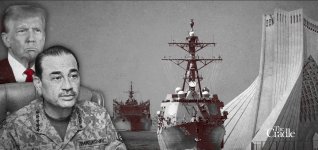
US President Donald Trump’s decision to extend the ceasefire with Iran at Pakistan’s request has given Islamabad more time to push for a broader settlement between Washington, Tel Aviv, and Tehran. Yet even as diplomacy inches forward, the war has already triggered a deeper shift across West Asia.

A Pakistan-brokered truce is now tied to a broader regional realignment. Persian Gulf states, long dependent on Washington’s military shield, are openly questioning whether that shield still works. In its place, a new conversation has emerged: one centered on regional defense cooperation led by Muslim-majority states rather than the US.

Iran signaled cautious optimism last week about joining a second round of talks in Islamabad. Reports had suggested Tehran might refuse to attend after a US naval assault on an Iranian vessel in the Strait of Hormuz, but Trump’s decision to extend the ceasefire has bought negotiators more time.

That development reportedly pushed Pakistan’s army chief, Field Marshal Asim Munir, to press Washington for a ceasefire extension and an easing of the blockade. Trump’s decision to prolong the truce has partly addressed Iran’s conditions for rejoining negotiations, although the blockade remains in place.

Munir, who concluded a three-day visit to Tehran last week, has remained in direct contact with Trump while Pakistani Prime Minister Shehbaz Sharif has carried out parallel diplomacy in Saudi Arabia, Qatar, and Turkiye.

Yet another obstacle to an agreement is the status of the enriched uranium that Iran possesses. Latest updates reveal that both Russia and China have offered to store Iranian uranium to address a major US demand for a peace agreement.

A regional order without Washington

Parallel to the peace effort, intense diplomacy is underway between Saudi Arabia, Pakistan, Turkiye, and Egypt over a possible “Muslim” replacement for the US-led Gulf security architecture.

A quadripartite meeting on the sidelines of the Antalya Diplomacy Forum, held from 17–19 April in Turkiye, reportedly focused on lowering tensions and building a new regional security structure. Sources speaking to The Cradle say there is now broad support for an “internal security apparatus” rooted in economic integration and defense coordination.

Ankara has proposed what it describes as an “organized regional security platform” built around the idea that regional states, not outside powers, should be responsible for defending West Asia.

The urgency behind those discussions is easy to understand.

Several Arab states, particularly Saudi Arabia and Qatar, now believe that US bases in the Persian Gulf have become liabilities rather than assets. After Iranian strikes damaged or destroyed multiple US military facilities in the region, Gulf governments began to question whether the US presence protects them or simply turns them into targets.

Zahir Shah Sherazi, executive vice president of Bol News, tells The Cradle:

“Targeting the US bases and installations in the Gulf states, where American outposts were located, was a strategic and insightful military tactic of Iran that exposed the true nature of Washington. The Gulf nations came to understand that the US is unable to safeguard them, as its primary focus lies on the Zionist state and its expansionist ambitions.”
Sherazi states that the concept of a Greater Israel stems from the expansionist designs of the Zionist state, which is working on it in the West Bank, Lebanon, Gaza, and Syria under US protection. This situation, he argues, has worried the Gulf states, and even Turkiye is at risk of clashing with Israel in Syria and Lebanon.

These apprehensions led to the formation of a NATO-like force in West Asia, not to counter Iran but Israel’s expansionist designs. He says Iran may join this force after its war, making it a strong military alliance against the US and Israel.

Sunni alliance or regional deterrent?

Not everyone sees the proposed force in the same way.

Imtiaz Gul, executive director of the Center for Research and Security Studies (CRSS), tells The Cradle that the project could end up functioning as a Sunni coalition rather than a genuinely regional defense structure.

In his view, the force may ultimately suit both Washington and the occupation state because it could be used to contain Iran while protecting the oil-rich Arab monarchies.

“This force is perceived as a facilitator of the Abraham Accords, as it is designed to fortify regional alliances and counteract Iranian influence in the Middle East. This coterie may emerge as an alternative security arrangement, specifically for Saudi Arabia, as the US military bases have become liabilities rather than functioning as a protective umbrella for the Gulf and Arab states.”
Concerning the prospects of this force, Gul is not so optimistic. He is of the view that such an organization could not effectively assume the responsibility of regulating this region.

“It is a highly intricate issue that is both challenging and difficult to implement due to several internal differences and conflicting interests, such as the ongoing tensions between Iran and Turkiye, with Saudi Arabia and Egypt, which complicate any potential regulatory efforts.”
US bases become a burden

Even as Trump signals a possible drawdown of US military operations in West Asia, Washington continues to expand its military footprint.

Trump has suggested that thousands of US troops could leave Iraq and Syria by September 2026. Yet his administration has also sent an additional 2,500 marines to the region.

That contradiction has reinforced Russian warnings that “the US and Israel can use the peace talks to prepare for a ground operation against Iran, as the Pentagon continues to increase US troop numbers in the region.”

Gul believes a large-scale US withdrawal from Gulf bases would leave the occupation state more isolated. Without those facilities, Tel Aviv would lose much of the logistical and intelligence infrastructure that underpins its military reach across the region.

He argues that Washington will maintain a military foothold in West Asia for as long as it sees Israel as vulnerable.

A recent report by the American Enterprise Institute (AEI) urged the Pentagon to reassess its Gulf basing strategy once the war with Iran ends. The report argued that Bahrain and the UAE should remain key hubs for US naval power, while other facilities may create more problems than advantages.

AEI suggested that Washington rely more heavily on Greece and Cyprus instead of accommodating Turkiye. It also argued that the US should deepen its presence in Somaliland rather than maintain extensive deployments in Saudi Arabia and Oman.

According to the Middle East Institute (MEI), US forces remain stationed in the UAE, Oman, Saudi Arabia, Kuwait, Bahrain, and Qatar. Roughly 50,000 troops are spread across 19 known sites.

“The US security umbrella became more of a liability, directly threatening the sovereignty of the host countries, especially since these bases were implicated in the attack on Iran. Although Iran is not a threat to the GCC's sovereignty, it is assaulting the US bases from which the US attacks Iran,” Gul says.

Sherazi said that given the losses the US sustained despite having an edge over Iran in military might, air superiority, and technology, it had already abandoned outposts in Saudi Arabia and Qatar due to Iranian resilience and intense retaliation.

Pakistan moves in as Gulf protector

Pakistan deployed 13,000 troops and a fleet of 10 to 18 fighter jets, including advanced platforms such as the JF-17 “Thunder” Block III and J-10CE fighters, at King Abdulaziz Air Base in the Eastern Province of Saudi Arabia.

Sherazi goes further. He argues that despite its military superiority and technological edge, Washington has already been forced to abandon some positions in Saudi Arabia and Qatar because of Iranian retaliation.

“Qatar, Saudi Arabia, and Pakistan have established strong connections in trade and defense collaboration. Qatar appears to be signaling its intention to join this Saudi–Pakistan defense mechanism. Saudi Arabia and Qatar have also declared that their territories will not be used for actions against Iran.”
Pakistan has already started positioning itself as an alternative security guarantor for the Gulf monarchies.

Islamabad and Ankara are also deepening military cooperation. Pakistan is involved in the KAAN stealth fighter program, while Turkiye is providing support in drone technology, training, and military equipment.

There is also growing speculation that Iran may quietly support parts of this regional transition. One of Tehran’s key demands in recent negotiations with Washington was reportedly the closure of US military bases across the region.

“Almost all Middle Eastern nations, except for a few like the UAE, support an indigenous security mechanism in the region due to the US-Israel collusion that has caused significant bloodshed among Arab nations,” Sherazi says.

“Now is the time for a robust force to end the barbarity of the Zionists and their supporters.”
 
I have serious doubts about the whole “Mojtaba Khamenei is the new Supreme Leader”.

First, What qualifies Mojtaba over many other seniors present in the Ayatollah council?

Secondly, I don’t think many of the senior persons would accept the leadership to be chosen on hereditary basis.

Lastly, We have yet to see him or get something from him. A small video message wouldn’t give up his location, Yet he is kept hidden. Did he succumb to his supposed wounds? Is it possible the Ali Khamenei is still alive? Is the “MFA vs IRGC” staged by Iran to play the UNO reverse card on Israel and the USA this time or perhaps play good cop/bad cop to extract max benefit from a peace deal?

Too many possibilities but I for one, Don’t buy the Mojtaba Khamenei Supreme leader thing.
IRGC is calling 📞 the shots
 

Users who are viewing this thread

Pakistan Defence Latest

Country Watch Latest

Back
Top