DeepSeek’s Long-Awaited New Model Fails to Narrow US Lead in AI
When China’s
DeepSeek released a competitive new artificial intelligence model called R1 last January purportedly built for less than many rivals, some feared the achievement posed a threat to America’s lead in artificial intelligence.
More than a year later, DeepSeek has
unveiled preview versions of a long-awaited new flagship model called V4, which costs less than many alternatives to use but doesn’t meaningfully narrow the US lead in AI capabilities. You could almost hear sighs of relief emanating from Washington and Silicon Valley.
“It is not competitive with frontier US models, and does not appear to close the gap with the United States in AI,”
saidChris McGuire, a senior fellow for China and emerging technologies at the Council on Foreign Relations.
Dean Ball, a former AI adviser in the Trump administration, echoed the sentiment. “R1 remains the closest I’ve seen Chinese models get to the U.S. frontier,” he
wrote in a post on social media. “V4 is further behind than that.”
DeepSeek unveiled the V4 Flash and V4 Pro series on Friday, touting top-tier performance in coding benchmarks and big advancements in reasoning and agentic tasks. But in a paper accompanying the release, the Chinese company conceded that, in certain respects, the new model lags the most cutting-edge AI software in the US.
“DeepSeek-V4-Pro-Max demonstrates superior performance relative to GPT-5.2 and Gemini-3.0-Pro on standard reasoning benchmarks,” the company said, referring to months-old models from
OpenAI and
Alphabet Inc.’s Google. “Nevertheless, its performance falls marginally short of GPT-5.4 and Gemini-3.1-Pro, suggesting a developmental trajectory that trails state-of-the-art frontier models by approximately 3 to 6 months.”
DeepSeek’s model is likely even further behind
OpenAI’s GPT-5.5, a newer offering released the day before V4 that’s designed to be better at completing tasks without much direction.
While it will take time for people to adopt the model and test it out, the initial details may provide some relief to US executives and officials who have been bracing for DeepSeek’s next release.
US tech companies have
accused DeepSeek and other Chinese firms of basing their chatbots at least in part on American AI models — a practice known as distillation. House lawmakers have pushed for sanctions on Chinese firms, and the White House announced its own efforts to rein in adversarial distillation.
In February of this year, OpenAI sent a memo to Congress noting it has found continued and sophisticated distillation attempts from actors in China and Russia. “DeepSeek’s next model (whatever its form) should be understood in the context of its ongoing efforts to free-ride on the capabilities developed by OpenAI and other US frontier Labs,” OpenAI
wrote in the memo.
Even if DeepSeek’s new model fails to outperform the most advanced software from OpenAI,
Anthropic PBC and Google, it could still pose risks to their businesses by undercutting them on price.
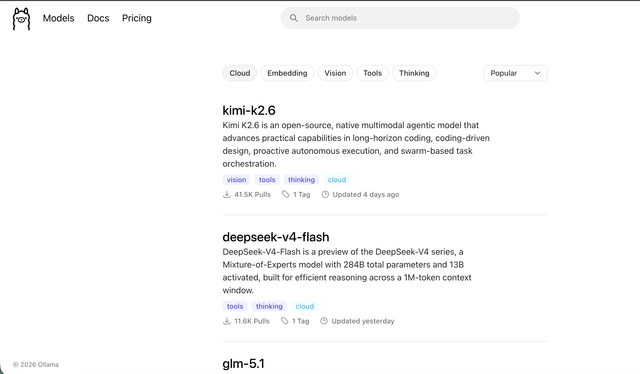
DeepSeek, like its Chinese peers, has focused on open-weight models, meaning that parts of the underlying AI system are publicly available for users to freely download and run on their own platforms — and therefore is cheaper to use. US officials have estimated that unauthorized distillation costs Silicon Valley labs billions of dollars in annual profit, Bloomberg News has reported.
In a blog post Friday, developer Simon Willison
describedDeepSeek’s V4 as “almost on the frontier, a fraction of the price.” For DeepSeek, that may be good enough.


 ... It will open up a whole new world for you.