Chinese Economy: General News, Updates and Discussions

China warns EU over ‘Made in Europe’ plan, vows countermeasures​

EUROPE
China on Monday criticised European Union plans to shield key industries from Chinese competition, warning it would take countermeasures if the measures are adopted. The EU’s proposed “Made in Europe” rules would require companies seeking public funds in sectors including cars, green technology and steel to meet local content thresholds.
Issued on: 27/04/2026 - 05:04
FRANCE 24

As they scramble to agree on a 2028-2034 budget, EU lawmakers proposed some funding could come from a 'digital levy'.


As they scramble to agree on a 2028-2034 budget, EU lawmakers proposed some funding could come from a 'digital levy' © Nicolas Tucat, AFP

Beijing slammed on Monday an EU plan aimed to bolster the bloc's industries against fierce competition from China, vowing countermeasures if it is enacted.

The EU unveiled in March new "Made in Europe" rules for companies trying to access public funds in strategic sectors including cars, green tech and steel, obliging firms to meet minimum thresholds for EU-made parts.

The proposal, held up for months by wrangling over the measures, is a key part of a European Union drive to regain its competitive edge, reduce its industrial decline and stave off hundreds of thousands of job losses.

Beijing's commerce ministry said on Monday that it had submitted comments to the European Commission on Friday, expressing China's "serious concerns" regarding the act it called "systemic discrimination".

"If the EU... presses ahead with the legislation, and thereby harms the interests of Chinese companies, China will have no choice but to take countermeasures to firmly safeguard the legitimate rights and interests of its enterprises," the commerce ministry warned in a statement.

European businesses in many of the sectors concerned by the proposal have long lamented they face unfair competition from heavily subsidised Chinese rivals.

The EU proposal, formally known as the "Industrial Accelerator Act", implicitly targets Chinese makers of batteries and electric vehicles by requiring foreign firms to partner with European firms and pass on technological know-how when setting up shop in the bloc.

The Chinese Chamber of Commerce to the EU said this month the plan marked a shift towards protectionism that would affect trade cooperation between the EU and China.
 
China’s Economy Exceeded Expectations in Q1
MARK KRUGER
China’s Economy Exceeded Expectations in Q1

(Yicai) April 27 -- The data recently released by China’s National Bureau of Statistics (NBS) showed that the economy made a surprisingly good start in the first quarter. GDP grew by 5 percent year-over-year, beating market expectations of 4.8 percent growth.

The composition of growth in the first quarter differed from what we saw in 2025. The contribution of investment more than doubled while that of net exports halved. Consumption’s contribution dipped somewhat (Figure 1).

 
European industry is dead just like America's, there's no way to bring back an already dead person back to life.
 

China's clean tech exporters cash in as Iran war hits oil & gas flows​

April 27, 20262:14 PM GMT+8Updated 54 mins ago

April 27 (Reuters) - China's exporters of batteries, solar systems, electric vehicles and other clean energy components posted record sales last month as the Iran war and subsequent closure of the Strait of Hormuz cut off oil and gas supplies from the Middle East.

Combined sales of Chinese clean energy parts and products totalled $26 billion in March, data compiled by Ember shows, which was by far the highest clean tech monthly tally ever recorded by ‌the world's top battery, EV and solar panel maker.

Exports of batteries and solar sytems surged in March as the war with Iran scrambled global oil and gas markets and reinforced support for home-grown energy supplies

Exports of batteries and solar sytems surged in March as the war with Iran scrambled global oil and gas markets and reinforced support for home-grown energy supplies

The monthly receipts total was up 30% from February and 52% above the same month in 2025 as the seismic shock of bombings across the Middle East and closure of key shipping lanes sparked a surge in orders for clean energy products across the world.

BATTERY BOOM​

Battery systems were by far China's top seller among the suite of clean energy components last month, with just over $10 billion in sales recorded.
Battery exports from China in March 2026  topped $10 billion for the first time, spurred on by worries about the Iran war's impact on oil & fuel supply

Battery exports from China in March 2026 topped $10 billion for the first time, spurred on by worries about the Iran war's impact on oil & fuel supply

That compares to average monthly battery export receipts of around $7 billion since the start of 2025, and so marked a sharp acceleration in global orders for battery systems used by utilities for energy storage and in electric vehicles.

Europe was the top region for Chinese battery imports, accounting for 43% ⁠or $4.3 billion of the total, followed by Asia, which snapped up 29% of the export volumes.

At the country level, Germany was the top market for Chinese batteries in March ($1.26 billion), followed by the United States ($823 million), the Netherlands ($635 million), Vietnam ($597 million) and Australia ($595 million).

Germany also registered the largest monthly increase in battery imports compared to February, posting a $286 million increase in import purchases in March.

Vietnam and Oman also registered monthly increases in excess of $200 million last month.

SOLAR SPURT​

Chinese solar systems recorded the next-largest jump in export receipts in March, jumping from $2.1 billion in February to $4.8 billion, which was the highest monthly total since May 2023 and roughly twice the monthly average since 2025.

Solar system exports shot sharply higher in most regions in March as the war with Iran underscored the importance of home-grown energy supplies

Solar system exports shot sharply higher in most regions in March as the war with Iran underscored the importance of home-grown energy supplies

Asia was the top destination, accounting for 43% or $2 billion of the total, followed by Europe, which snapped up 27% of the total, worth $1.3 billion.

The Netherlands was the top overall solar panel importer in March, paying $400 million, which marked a near $200 million increase from the month before and compares to a monthly average of around $264 million since the start of 2025.

Indonesia, the Philippines, India and Pakistan rounded out the five largest buyers of China's solar systems last month.

EV EXPORT VOLATILITY​

China's exports of electric vehicles have hit turbulence so far in 2026 ‌as changes to ⁠subsidy schemes in several countries impacted consumer demand even before the Middle East war disrupted global trade flows and consumer confidence.

Total EV exports during January to March hit a record $21 billion, despite a steep fall in sales to the Middle East in March due to the Iran war

Total EV exports during January to March hit a record $21 billion, despite a steep fall in sales to the Middle East in March due to the Iran war

Even so, total EV exports for the first three months of 2026 were just over $21 billion, which marked a record for those months and compared to just $12 billion during the same months in 2025.

Europe was by far the largest destination for Chinese EVs in March, accounting for 45% of the sales total, followed by Asia, which had a 25% share.

Belgium was the top country for EV exports, followed by Brazil, the United Kingdom, Germany and Australia.

One notable feature of EV export flows in March was the steep collapse in sales to ⁠the Middle East as the air raids in the region brought the movement of goods to a near standstill.

Indeed, the Middle East only accounted for 4% of China's EV exports in March, compared to an 11% share of EV exports in 2025.

Exports hit record highs in Africa, Asia, Europe, Latin America & Oceania in March just as oil & gas flows from the Middle East were cut off

Exports hit record highs in Africa, Asia, Europe, Latin America & Oceania in March just as oil & gas flows from the Middle East were cut off

The Middle East also registered a steep decline in deliveries for Chinese-made grid systems in March for the same reasons, and reveals that China's exporters of clean energy components have suffered some setbacks from ⁠the Iran war.

However, those drops in Middle East deliveries also indicate potential pent-up demand once peace returns and trade flows finally resume into and out of the region.
 

China’s power demand is rising far faster than everyone else’s​

JAMES EAGLE
APR 29, 2026


<code>For $10 a month, or $100 a year, you support a simple mission: spread great data visualisation wherever it comes from. You help fund the work of finding, sourcing and explaining the charts that deserve a wider audience. And you back a publication built on generosity, transparency and the belief that better understanding makes a better world.

China’s power demand is rising far faster than everyone else’s​

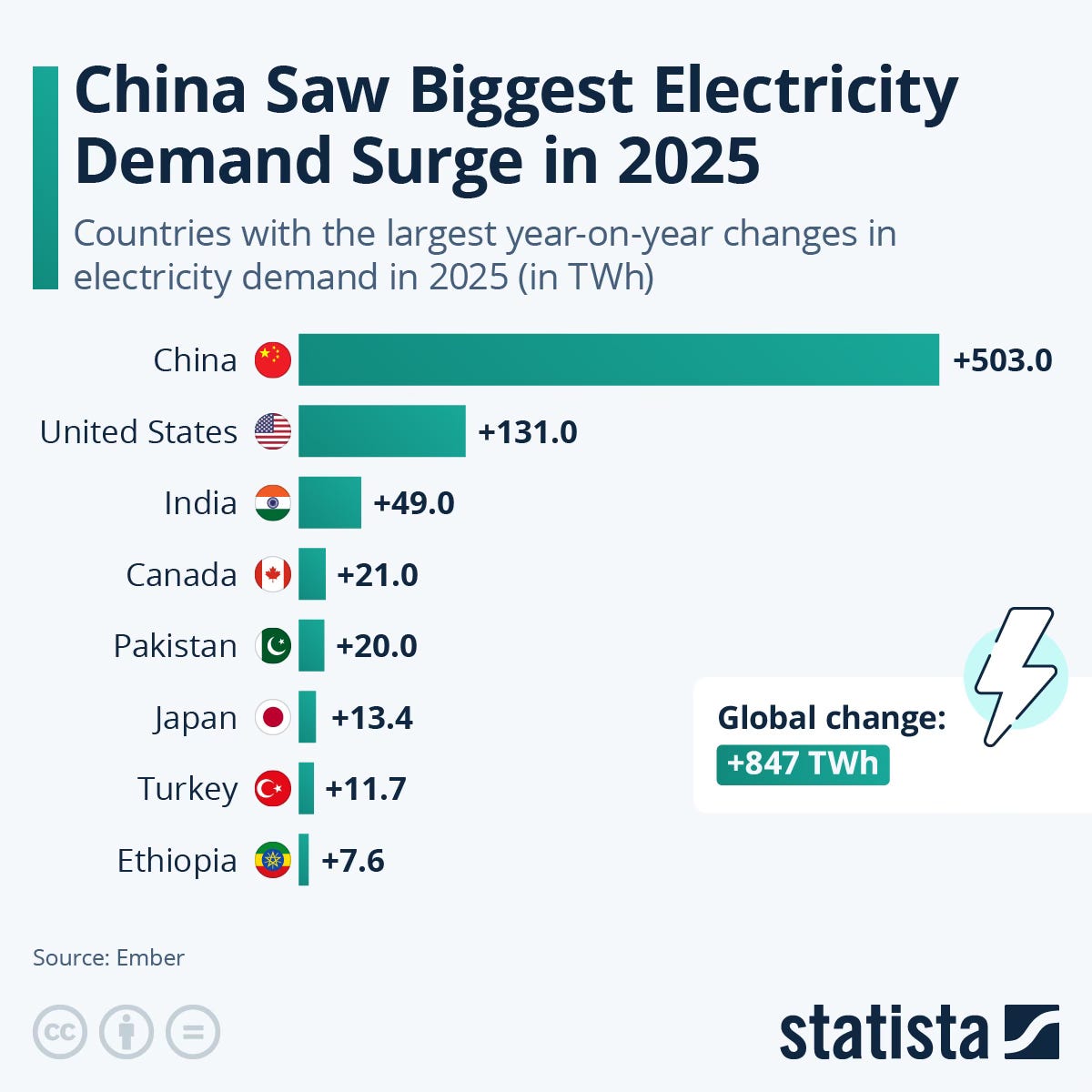
The eye catching number is not simply that China added 503 TWh of electricity demand in 2025. It is that this one country accounted for well over half of the world’s total increase. According to Ember, global demand rose by 847 TWh, which means China alone generated most of the growth.

That is not just a story about factories. China’s economy is becoming more electric in several directions at once. Ember says the country now accounts for a third of global electricity demand for the first time, while the IEA points to rising use from air conditioning, electric vehicle charging, data centres, 5G networks and the manufacturing of batteries, solar cells and new energy vehicles.

The broader point is that China is no longer merely the world’s workshop. It is becoming the central arena of electrification itself. That helps explain why its power demand is pulling away from the US and Europe, and why any serious discussion of future energy systems now starts with China.


Source: Statista

Big stories can hide uneven realities. China’s electrification is enormous, but it is not the same as global energy demand rising evenly. America’s manufacturing boom is real, but not broad. Transport stocks are stronger, but not necessarily shouting that the whole economy is healthy.

That is why charts matter. They force us to separate the slogan from the structure beneath it. A boom can be narrow. A recovery can be fragile. A powerful trend can still depend on a very small part of the system carrying most of the weight.

 
China is pushing onwards and upwards
Yes and I hope so. BUT China is still quite behind USA in Nominal GDP.

China is $21,000,000

USA is $32,000,000. This is Nominal GDP.

China still has a lot of catching up to do.

If China increases its population count to 1.8 billion people it could surpass USA in NOMINAL GDP.

One child policy is not a smart move. Pulling people out of poverty was smart by the Chinese.

A larger population drives the economy.
 
Yes and I hope so. BUT China is still quite behind USA in Nominal GDP.

China is $21,000,000

USA is $32,000,000. This is Nominal GDP.

China still has a lot of catching up to do.

If China increases its population count to 1.8 billion people it could surpass USA in NOMINAL GDP.

One child policy is not a smart move. Pulling people out of poverty was smart by the Chinese.

A larger population drives the economy.

This is true

But I was in China last year

And for $10,000 a year in a mid Chinese city you live very comfortably

$24,000 gets you a very nice posh 3 bed apartment in Shenzhen where you have driverless taxis waiting at the bottom with police robots


$1 in China does very far

The standard of living in some cities in America are absolutely horrendous
 
This is true

But I was in China last year

And for $10,000 a year in a mid Chinese city you live very comfortably

$24,000 gets you a very nice posh 3 bed apartment in Shenzhen where you have driverless taxis waiting at the bottom with police robots


$1 in China does very far

The standard of living in some cities in America are absolutely horrendous
Yes USA is a shitty country. I have seen dirt poor in USA.
 

China's factory activity remains in expansion in April, PMI shows​

By Reuters
April 30, 20269:38 AM GMT+8

BEIJING, April 30 (Reuters) - China's factory activity expanded for a second straight month in April on firmer output and stockpiling activity, an official survey showed on ‌Thursday, suggesting that growth momentum held despite external shocks stemming from the Middle East war.

The official manufacturing purchasing managers' index (PMI) dipped to 50.3 from 50.4 in March, but kept above the 50-mark separating growth from contraction, according to a survey by the National Bureau of Statistics (NBS). It beat a median forecast of 50.1 in a Reuters poll.

The PMI survey's sub-index for production expanded at a slightly ⁠faster pace but that for new orders slowed to 50.6 from 51.6 in March. The sub-index for raw material stockpiles rose but remained in contraction.

The expansion in factory activity, which follows better-than-expected first-quarter growth, highlighted the Chinese economy's resilience in the face of soaring energy costs and disruptions to raw material supplies stemming from the U.S.-Israeli war on Iran.

But a prolonged conflict will likely weigh on the global economy and squeeze external demand, which has been vital in supporting China's growth as domestic consumption remains subdued.

The RatingDog China General Manufacturing PMI, a private survey compiled by S&P Global, came in at 52.2 in April ⁠compared with 50.8 in March.

The NBS focuses more on state-owned and large and medium-sized, domestic-facing enterprises, while the private poll is more sensitive to external demand, profiling producers around Shanghai and in China's southwestern provinces, analysts say.


China factory activity expands at quickest pace since late 2020

Published on 04/29/2026 at 09:47 pm EDT
Reuters

April 30 (Reuters) - China's manufacturing sector expanded in April at its fastest pace since the end of 2020, driven by stronger output and surging new orders, a private survey showed on Thursday.

The RatingDog China General Manufacturing Purchasing Managers' Index (PMI), compiled by S&P Global, rose to 52.2 in April from 50.8 in March, survey data showed. The reading beat analysts forecast of 51.0. The 50-mark separates growth from contraction.

"Overall, the RatingDog PMI in April further confirmed that China's economy is in the recovery stage. The structural data shows that this recovery is driven by the growth of orders and the optimistic expectations of enterprises brought about by the price effect," said Yao Yu, founder at RatingDog.

Soaring energy and raw materials prices drove up production costs and threaten to squeeze already thin margins at factories. China's top leadership on Tuesday pledged to strengthen the country's energy security while pursuing rapid technological development and greater self-sufficiency.

According to the survey, production increased at the fastest pace since June 2024, with firms citing stronger demand, operational improvements and new product launches. The expansion was broad-based and strongest in the consumer goods sector.

New orders soared. New export business expanded for the fourth month running in April, the longest sequence of growth since the first half of 2024.

However, the expansion of production has not yet been transmitted to the recovery of employment. Firms turned to be cautious when adding staff, even as backlogs of work increased for a third consecutive month.

Outstanding business rose across all three sub-sectors, with investment goods producers reporting the sharpest build-up.

As the Middle East war continues, cost pressures on manufacturers intensified, with input price inflation the highest in just over four years.

Firms raised output prices at the fastest rate since October 2021, while export charges also increased at their quickest pace since October 2021.

Some exporters were able to pass the additional costs on to buyers, though others continued to face pressure on already thin margins.

Overall, manufacturers grew more optimistic about the year-ahead outlook, with sentiment improving from March and running above the average of the past two years.

China's economy grew 5.0% in the first quarter, at the top of its full-year target range of 4.5% to 5.0%, showing higher resilience than many other countries to the Middle East conflict, due in part to ample oil reserves and a diversified energy mix.

Analysts expect no imminent plans for high-profile monetary easing measures.

"As the PBOC may continue to rely on low-profile easing measures, we have decided to push out our forecasts for both a 50bp RRR cut in Q2 and a 10bp rate cut in Q4 to next year," Nomura said in a research note on Tuesday.


Feature: China's zero-tariff policy opens wider door for Egyptian citrus exports​


Feature: China's zero-tariff policy opens wider door for Egyptian citrus exports​

Source: Xinhua| 2026-05-01 23:06:15|Editor: huaxia

1602173f16ae4dc99e2f13a2e3efe690.jpg


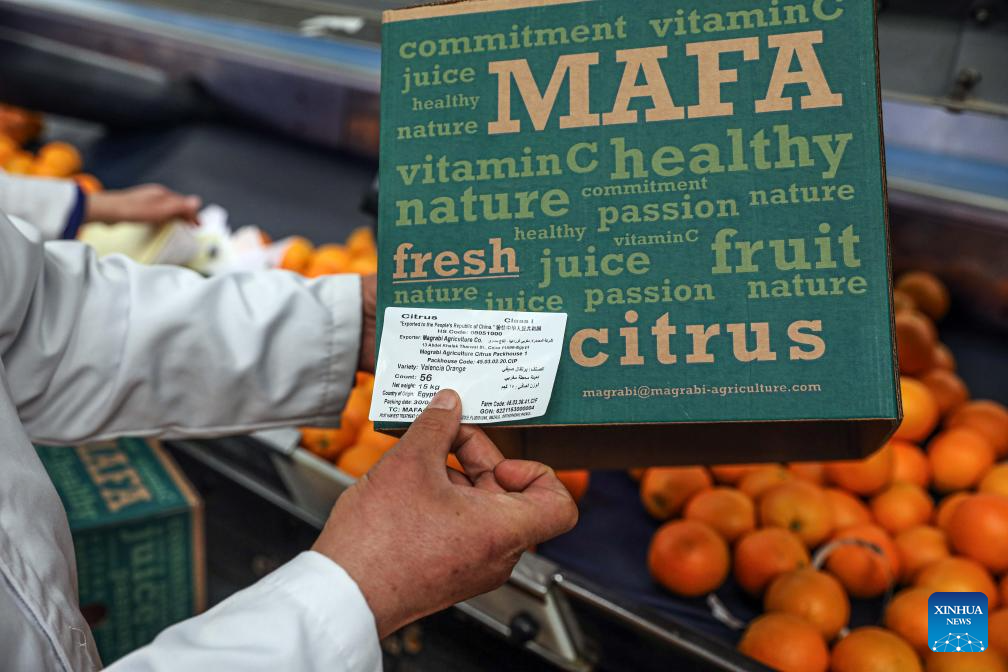
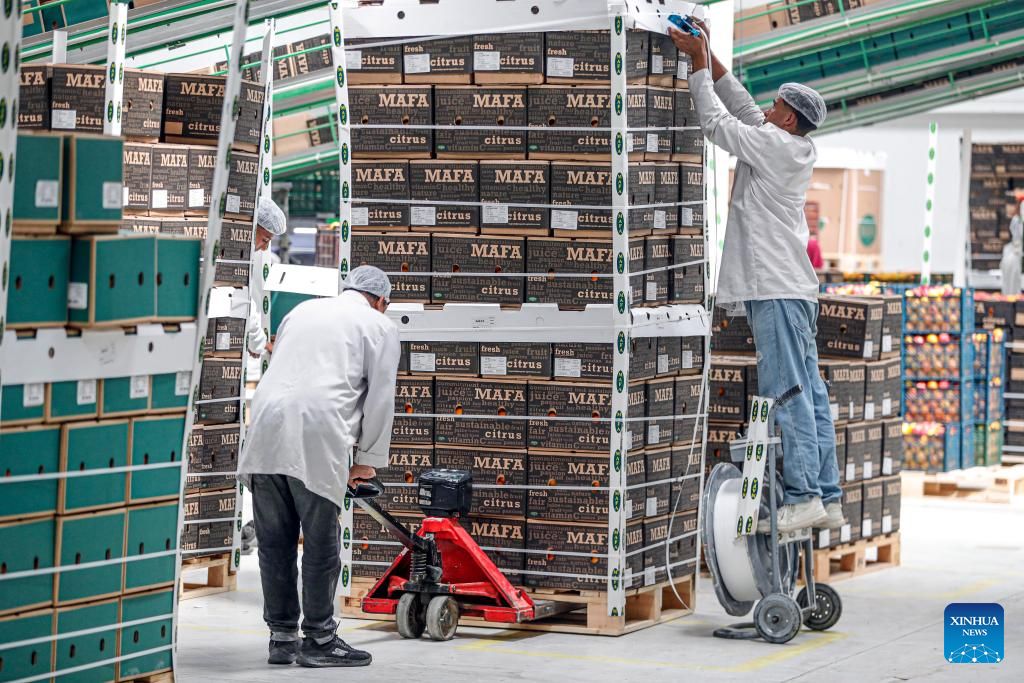
A man labels a carton for export to China in a citrus packing plant of Magrabi Agriculture in Beheira province, Egypt, April 30, 2026. On Friday, China expanded its zero-tariff policy to cover all 53 African nations that maintain diplomatic ties with Beijing, a framework that will run through April 2028. The move brings 20 additional African countries, including Egypt, into a preferential trade arrangement that their competitors elsewhere do not enjoy. Egypt is the world's largest citrus exporter, with the volume reaching around 2 million tonnes. But access to China, even duty-free, is not simply a matter of supply meeting demand. (Xinhua/Ahmed Gomaa)

by Mahmoud Fouly

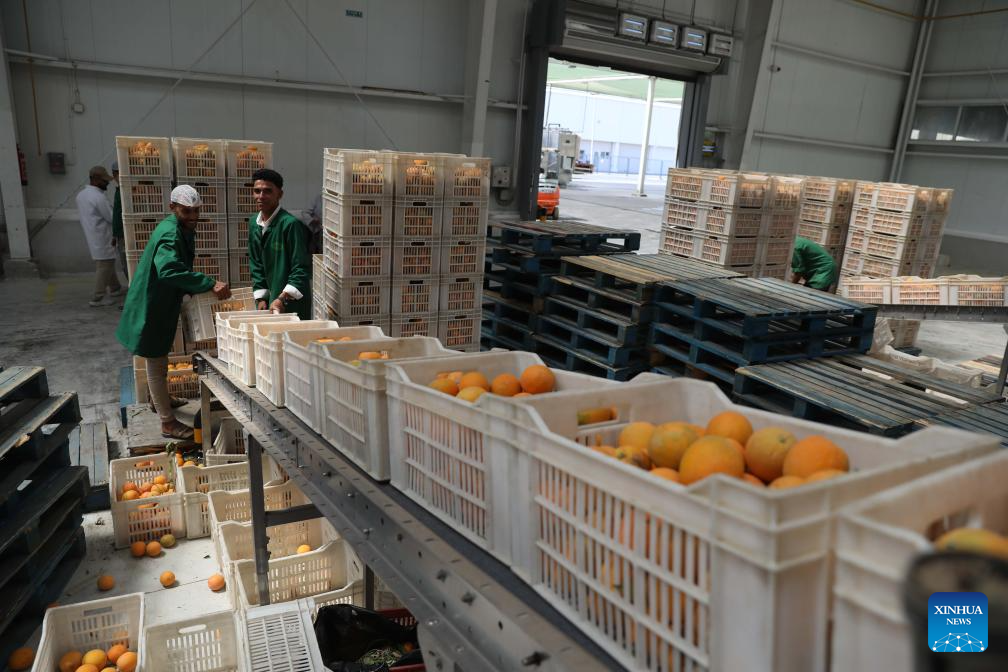
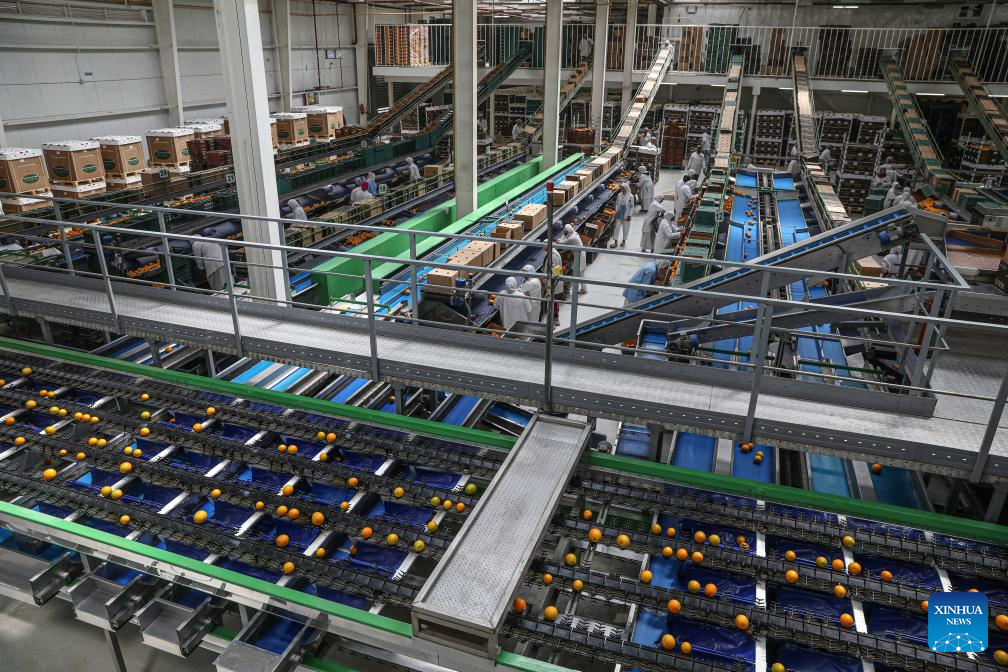
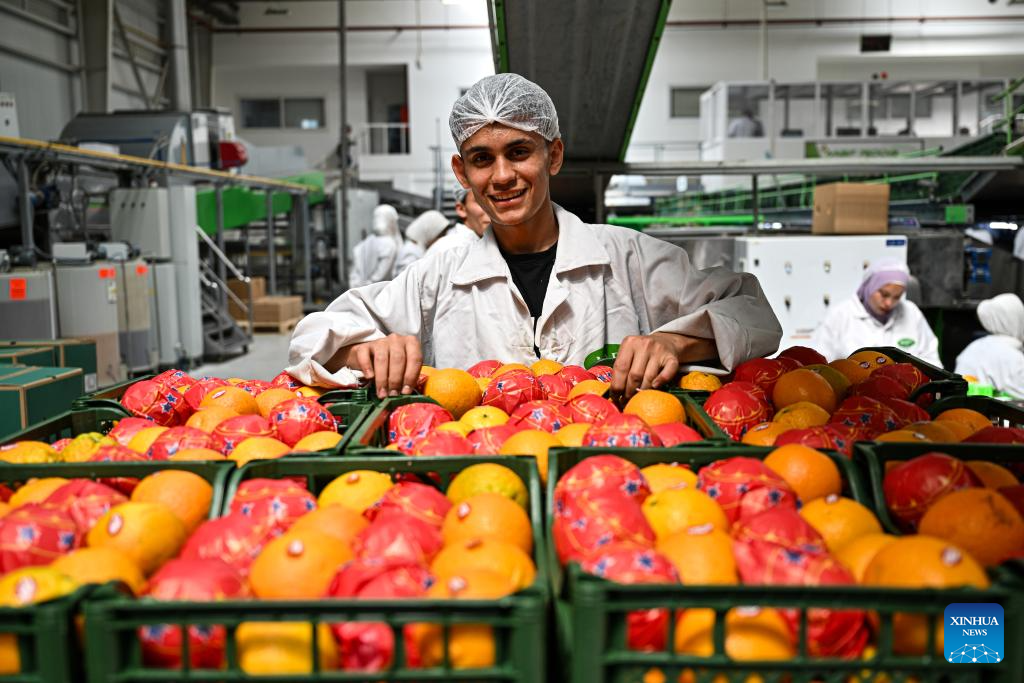
BEHEIRA, Egypt, May 1 (Xinhua) -- Inside a sprawling packing plant at the edge of Egypt's citrus country, workers in white coats and hairnets moved briskly along conveyor belts, stacking cartons of Valencia oranges as the fruit passed through sorting machines, quality checks, and final inspection before being sealed for shipment abroad.

The facility is run by Magrabi Agriculture, known as MAFA, one of the larger players in Egypt's export citrus industry. Its compound, with orchards, warehouses, and production lines carved from reclaimed desert, has the feel of a small agricultural city, governed by the rhythms of harvest and demand.

Now, a new market force is reshaping those rhythms.

On Friday, China expanded its zero-tariff policy to cover all 53 African nations that maintain diplomatic ties with Beijing, a framework that will run through April 2028. The move brings 20 additional African countries, including Egypt, into a preferential trade arrangement that their competitors elsewhere do not enjoy.

For Egyptian citrus exporters, the timing is propitious.

"This decision will certainly help Egyptian exports become more competitive inside the Chinese market," said Ibrahim El-Banna, MAFA's export manager.

Egypt is the world's largest citrus exporter, with the volume reaching around 2 million tonnes. But access to China, even duty-free, is not simply a matter of supply meeting demand.

Exporters must satisfy Chinese phytosanitary regulations, obtain official accreditation for farms and packing facilities, and subject their fruit to cold treatment during transit, keeping the internal pulp temperature below 1.6 degrees Celsius for 16 to 18 consecutive days, a safeguard against fruit fly contamination. The requirements, El-Banna noted, function as a de facto quality filter.

"Those with higher quality and stronger capabilities will be able to achieve the required gains and the required connection with the Chinese market," said Ahmed Fikry, a citrus packhouse assistant manager at MAFA, who described China's tariff policy as evidence of deepening cooperation between Beijing and African governments.

MAFA's packing plants process between 70,000 and 90,000 tonnes of raw citrus each year. About 70 percent is exported, and the facilities employ nearly 1,000 workers. China already receives MAFA oranges, along with smaller volumes of lemons, grapefruit, and mandarins.

For the company's managers, the value of the Chinese market lies only partly in its scale. The discipline it demands in packaging, cold chain logistics, and regulatory compliance has pushed Egyptian producers to raise their standards across the board.

On the packing floor, the work continued without fanfare: cartons loaded, pallets built, trucks waiting in the lot outside. The oranges, grown in reclaimed desert and bound for tables thousands of miles away, moved steadily toward the door. ■

5ebb97cf258840d9b90c5c1f0c4bb3d1.jpg


People work in a citrus packing plant of Magrabi Agriculture in Beheira province, Egypt, April 30, 2026. On Friday, China expanded its zero-tariff policy to cover all 53 African nations that maintain diplomatic ties with Beijing, a framework that will run through April 2028. The move brings 20 additional African countries, including Egypt, into a preferential trade arrangement that their competitors elsewhere do not enjoy.

Egypt is the world's largest citrus exporter, with the volume reaching around 2 million tonnes. But access to China, even duty-free, is not simply a matter of supply meeting demand. (Xinhua/Ahmed Gomaa)

e606f5799bdc4a159756fb0d801f30ba.jpg


A man labels a carton for export to China in a citrus packing plant of Magrabi Agriculture in Beheira province, Egypt, April 30, 2026. On Friday, China expanded its zero-tariff policy to cover all 53 African nations that maintain diplomatic ties with Beijing, a framework that will run through April 2028. The move brings 20 additional African countries, including Egypt, into a preferential trade arrangement that their competitors elsewhere do not enjoy.

Egypt is the world's largest citrus exporter, with the volume reaching around 2 million tonnes. But access to China, even duty-free, is not simply a matter of supply meeting demand. (Xinhua/Ahmed Gomaa)

6ed7a89a8a8a4223b570d2ccc8839806.jpg


People work in a citrus packing plant of Magrabi Agriculture in Beheira province, Egypt, April 30, 2026. On Friday, China expanded its zero-tariff policy to cover all 53 African nations that maintain diplomatic ties with Beijing, a framework that will run through April 2028. The move brings 20 additional African countries, including Egypt, into a preferential trade arrangement that their competitors elsewhere do not enjoy.

Egypt is the world's largest citrus exporter, with the volume reaching around 2 million tonnes. But access to China, even duty-free, is not simply a matter of supply meeting demand. (Xinhua/Ahmed Gomaa)

d8614ed7f000478c8317544904fc0e10.jpg


People work in a citrus packing plant of Magrabi Agriculture in Beheira province, Egypt, April 30, 2026. On Friday, China expanded its zero-tariff policy to cover all 53 African nations that maintain diplomatic ties with Beijing, a framework that will run through April 2028. The move brings 20 additional African countries, including Egypt, into a preferential trade arrangement that their competitors elsewhere do not enjoy.

Egypt is the world's largest citrus exporter, with the volume reaching around 2 million tonnes. But access to China, even duty-free, is not simply a matter of supply meeting demand. (Xinhua/Ahmed Gomaa)

71a3a565237c419aab0357953838c8ea.jpg


A man works in a citrus packing plant of Magrabi Agriculture in Beheira province, Egypt, April 30, 2026. On Friday, China expanded its zero-tariff policy to cover all 53 African nations that maintain diplomatic ties with Beijing, a framework that will run through April 2028. The move brings 20 additional African countries, including Egypt, into a preferential trade arrangement that their competitors elsewhere do not enjoy.

Egypt is the world's largest citrus exporter, with the volume reaching around 2 million tonnes. But access to China, even duty-free, is not simply a matter of supply meeting demand. (Xinhua/Xin Mengchen)


A man works in a citrus packing plant of Magrabi Agriculture in Beheira province, Egypt, April 30, 2026. On Friday, China expanded its zero-tariff policy to cover all 53 African nations that maintain diplomatic ties with Beijing, a framework that will run through April 2028. The move brings 20 additional African countries, including Egypt, into a preferential trade arrangement that their competitors elsewhere do not enjoy.

Egypt is the world's largest citrus exporter, with the volume reaching around 2 million tonnes. But access to China, even duty-free, is not simply a matter of supply meeting demand. (Xinhua/Ahmed Gomaa)


People work in a citrus packing plant of Magrabi Agriculture in Beheira province, Egypt, April 30, 2026. On Friday, China expanded its zero-tariff policy to cover all 53 African nations that maintain diplomatic ties with Beijing, a framework that will run through April 2028. The move brings 20 additional African countries, including Egypt, into a preferential trade arrangement that their competitors elsewhere do not enjoy.

Egypt is the world's largest citrus exporter, with the volume reaching around 2 million tonnes. But access to China, even duty-free, is not simply a matter of supply meeting demand. (Xinhua/Xin Mengchen)


People work in a citrus packing plant of Magrabi Agriculture in Beheira province, Egypt, April 30, 2026. On Friday, China expanded its zero-tariff policy to cover all 53 African nations that maintain diplomatic ties with Beijing, a framework that will run through April 2028. The move brings 20 additional African countries, including Egypt, into a preferential trade arrangement that their competitors elsewhere do not enjoy.

Egypt is the world's largest citrus exporter, with the volume reaching around 2 million tonnes. But access to China, even duty-free, is not simply a matter of supply meeting demand. (Xinhua/Ahmed Gomaa)


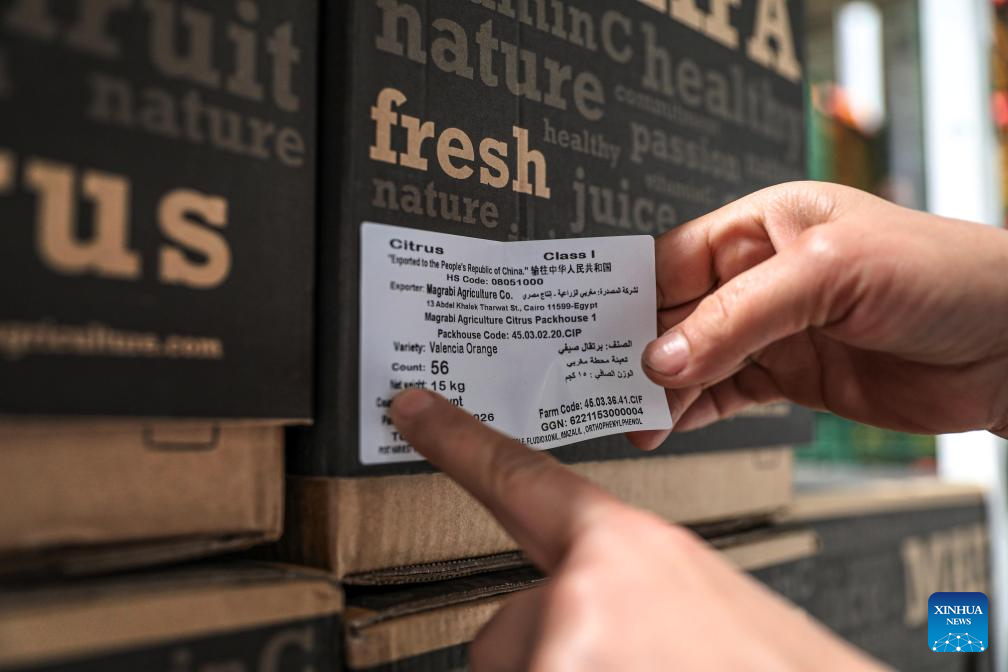
A man labels a carton for export to China in a citrus packing plant of Magrabi Agriculture in Beheira province, Egypt, April 30, 2026. On Friday, China expanded its zero-tariff policy to cover all 53 African nations that maintain diplomatic ties with Beijing, a framework that will run through April 2028. The move brings 20 additional African countries, including Egypt, into a preferential trade arrangement that their competitors elsewhere do not enjoy.

Egypt is the world's largest citrus exporter, with the volume reaching around 2 million tonnes. But access to China, even duty-free, is not simply a matter of supply meeting demand. (Xinhua/Xin Mengchen)


A woman works in a citrus packing plant of Magrabi Agriculture in Beheira province, Egypt, April 30, 2026. On Friday, China expanded its zero-tariff policy to cover all 53 African nations that maintain diplomatic ties with Beijing, a framework that will run through April 2028. The move brings 20 additional African countries, including Egypt, into a preferential trade arrangement that their competitors elsewhere do not enjoy.

Egypt is the world's largest citrus exporter, with the volume reaching around 2 million tonnes. But access to China, even duty-free, is not simply a matter of supply meeting demand. (Xinhua/Ahmed Gomaa)


A man works in a citrus packing plant of Magrabi Agriculture in Beheira province, Egypt, April 30, 2026. On Friday, China expanded its zero-tariff policy to cover all 53 African nations that maintain diplomatic ties with Beijing, a framework that will run through April 2028. The move brings 20 additional African countries, including Egypt, into a preferential trade arrangement that their competitors elsewhere do not enjoy.

Egypt is the world's largest citrus exporter, with the volume reaching around 2 million tonnes. But access to China, even duty-free, is not simply a matter of supply meeting demand. (Xinhua/Ahmed Gomaa)


People work in a citrus packing plant of Magrabi Agriculture in Beheira province, Egypt, April 30, 2026. On Friday, China expanded its zero-tariff policy to cover all 53 African nations that maintain diplomatic ties with Beijing, a framework that will run through April 2028. The move brings 20 additional African countries, including Egypt, into a preferential trade arrangement that their competitors elsewhere do not enjoy.

Egypt is the world's largest citrus exporter, with the volume reaching around 2 million tonnes. But access to China, even duty-free, is not simply a matter of supply meeting demand. (Xinhua/Ahmed Gomaa)


People work in a citrus packing plant of Magrabi Agriculture in Beheira province, Egypt, April 30, 2026. On Friday, China expanded its zero-tariff policy to cover all 53 African nations that maintain diplomatic ties with Beijing, a framework that will run through April 2028. The move brings 20 additional African countries, including Egypt, into a preferential trade arrangement that their competitors elsewhere do not enjoy.

Egypt is the world's largest citrus exporter, with the volume reaching around 2 million tonnes. But access to China, even duty-free, is not simply a matter of supply meeting demand. (Xinhua/Xin Mengchen)


People work in a citrus packing plant of Magrabi Agriculture in Beheira province, Egypt, April 30, 2026. On Friday, China expanded its zero-tariff policy to cover all 53 African nations that maintain diplomatic ties with Beijing, a framework that will run through April 2028. The move brings 20 additional African countries, including Egypt, into a preferential trade arrangement that their competitors elsewhere do not enjoy.

Egypt is the world's largest citrus exporter, with the volume reaching around 2 million tonnes. But access to China, even duty-free, is not simply a matter of supply meeting demand. (Xinhua/Ahmed Gomaa)


A woman works in a citrus packing plant of Magrabi Agriculture in Beheira province, Egypt, April 30, 2026. On Friday, China expanded its zero-tariff policy to cover all 53 African nations that maintain diplomatic ties with Beijing, a framework that will run through April 2028. The move brings 20 additional African countries, including Egypt, into a preferential trade arrangement that their competitors elsewhere do not enjoy.

Egypt is the world's largest citrus exporter, with the volume reaching around 2 million tonnes. But access to China, even duty-free, is not simply a matter of supply meeting demand. (Xinhua/Xin Mengchen)


People work in a citrus packing plant of Magrabi Agriculture in Beheira province, Egypt, April 30, 2026. On Friday, China expanded its zero-tariff policy to cover all 53 African nations that maintain diplomatic ties with Beijing, a framework that will run through April 2028. The move brings 20 additional African countries, including Egypt, into a preferential trade arrangement that their competitors elsewhere do not enjoy.

Egypt is the world's largest citrus exporter, with the volume reaching around 2 million tonnes. But access to China, even duty-free, is not simply a matter of supply meeting demand. (Xinhua/Xin Mengchen)


People work in a citrus packing plant of Magrabi Agriculture in Beheira province, Egypt, April 30, 2026. On Friday, China expanded its zero-tariff policy to cover all 53 African nations that maintain diplomatic ties with Beijing, a framework that will run through April 2028. The move brings 20 additional African countries, including Egypt, into a preferential trade arrangement that their competitors elsewhere do not enjoy.

Egypt is the world's largest citrus exporter, with the volume reaching around 2 million tonnes. But access to China, even duty-free, is not simply a matter of supply meeting demand. (Xinhua/Xin Mengchen)


Yuan payments soar as currency of last resort for Iran, Russia​

China's answer to SWIFT network sees rapid growth in transactions
20260503N Yuan and ruble

The yuan and the ruble have emerged as leading currencies for trade among U.S.-sanctioned Iran, Russia and China. © Reuters

KENTARO SHIOZAKI
May 4, 2026 03:37 JST

BEIJING -- Use of the yuan to pay for crude oil and other goods and services has soared, with Iran and Russia turning to China's currency to sustain dollar-free trade.

 
Big opinions change on Taiwan most recently. Now the report poll says 22.4% Taiwanese will accept China mainland proposed one country two systems modeled after HK, and 60% Taiwanese are willing to discuss reunification with mainland. Maybe a turning point has ben crossed now.


To view this content we will need your consent to set third party cookies.
For more detailed information, see our cookies page.
 

China on track to reach high-income status in one to two years​

In the World Bank's classification in July last year, China was ranked as an upper-middle income economy with 2024 per capita gross national income (GNI) at $13,660, versus the 2024 high-income benchmark of $13,935.

China Daily

May 8, 2026

BEIJING – China is on track to reach high-income status within one to two years, as steady growth and structural upgrading place the country on the cusp of a key developmental milestone, even as external uncertainties add complexity to the outlook, economists said.

“Taking a relatively conservative view, China is likely to reach the threshold of a high-income economy within the next one to two years,” said Sun Xuegong, director-general of the department of policy study and consultation at the Chinese Academy of Macroeconomic Research. The academy is affiliated with the National Development and Reform Commission.

Sun said that crossing the threshold would mark “an important milestone” and signal a new phase of development characterized by upgrades to industrial structures and shifts in household consumption patterns, in line with the country’s broader push for high-quality growth.

The outlook comes as China is now very close to this key milestone. In the World Bank’s classification in July last year, China was ranked as an upper-middle income economy with 2024 per capita gross national income (GNI) at $13,660, versus the 2024 high-income benchmark of $13,935.

In 2025, the country’s GNI reached 139.4 trillion yuan ($19.2 trillion), the National Bureau of Statistics said. Using NBS figures, China Daily estimates per capita GNI at 99,109 yuan for 2025, or about $14,503 at current exchange rates — exceeding the 2024 threshold of $13,935.

The final classification depends on the updated benchmarks for 2025 and exchange rate adjustments based on the World Bank’s calculation method, allowing the next round of income group updates to be released in July to provide a key observation window for assessing whether China formally enters the high-income category.

International institutions share a cautiously optimistic view. Marshall Mills, senior resident representative of the International Monetary Fund in China, said he saw significant potential for further expansion of China’s economy as reforms to improve resource allocation and boost consumption could lift annual GDP growth by nearly 0.5 percentage point.

This will help address the challenges of a shrinking labor force and slowing productivity growth and support the country’s prospects of reaching high-income status within the next five years, he said.

Beyond headline income levels, economists and policy advisers stressed that sustaining growth after reaching high-income status will be critical. Some economies have struggled with slowing momentum after crossing the threshold.

Sun, from the Chinese Academy of Macroeconomic Research, said the key lies in strengthening innovation capacity, which China has prioritized as a strategic priority. The country’s steady rise in the Global Innovation Index rankings — where it ranked 10th in 2025 — reflects significant progress that could help it avoid the so-called middle-income trap.

Equally important is maintaining social stability and improving income distribution, Sun said, adding that advancing common prosperity will be crucial to ensuring long-term, sustainable development after achieving higher income levels.

The outline of the 15th Five-Year Plan (2026-30) has demonstrated China’s determination of achieving steady mid-to-long-term growth, reiterating China’s goal of achieving “mid-level developed country” status by 2035.

With first-quarter GDP growth resilient at 5 percent despite rising external headwinds, Mao Shengyong, deputy head of the NBS, said that growth driven by technological progress and industrial upgrading will be sustainable going forward.

Zhang Bin, deputy director at the Institute of World Economics and Politics under the Chinese Academy of Social Sciences, said that given China’s current level of industrialization and production capacity, reaching the World Bank’s high-income threshold would be a natural outcome.

Crossing the line does not mark the end of development, Zhang said, adding that China’s per capita GNI remains far behind the more than $80,000 in leading advanced economies such as the United States.

“China still faces gaps in frontier technologies and advanced capabilities, requiring continued efforts to catch up with leading economies,” he said.
 

Users who are viewing this thread

Pakistan Defence Latest

Latest Posts

Back
Top