He is responding to your post, not the title. I also agree with him.
Look, calling the IRGC “strategically clueless” sounds catchy, but it doesn’t line up with reality. You don’t last forty‑plus years under sanctions, sabotage, cyberattacks, proxy pressure, and constant surveillance by major powers if you’re just stumbling around. Whether someone likes them or not, their whole playbook is built on asymmetric pressure and making sure no single country can dominate the region. That’s not an accident.
And this idea that Iran somehow “made Israel stronger” that’s a stretch. To be its a childish comment. Israel’s security situation right now is more tense and more expensive than it’s been in years. A state doesn’t become “stronger” when it’s forced to keep its air defenses running nonstop and juggle threats from multiple directions. That’s not stability. That’s strain.
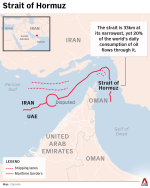
About the UAE, their shift didn’t happen because of one missile launch or one drone strike. Their alignment with Israel was years in the making. Economics, tech, Washington’s blessing, hedging for the future… all of that was already on the table. They made a cold, calculated choice based on their own interests. Saying they did it because “no one came to help them” oversimplifies a decade of policy moves.
And blaming Iran for Israeli air defenses being closer to Pakistan? That’s a reach. The UAE’s partnership with Israel sits inside a much bigger U.S.-led security architecture. It didn’t appear overnight. It didn’t hinge on Tehran’s decisions. Gulf states have been diversifying their security partners because they’re not sure the U.S. will always show up the way it used to. That’s a Gulf decision, not an Iranian failure.
Even the claim that “only Israel helped the UAE” doesn’t hold up. The UAE has always had Western security guarantees, contractors, and CENTCOM coordination. Israel is just another layer they added, not the only one.
If you do care to response to this, make sure to do your homework.