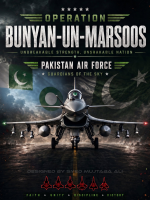
I don't think their will be any conflict between India and Pakistan this year and in the next few years (Deterrence has been established and reinforced). A number of factors for this - India has been humiliated in Swift Retort and May 2025 conflict last year. Despite some perceived success India thinks it has - it has had more setbacks rather than actual successes. India knows this - the sabre rattling and the wish to attack doesn't mean it will do this - it has severe setbacks in its military capability and psyche.
Pakistan just needs to maintain vigilance and be in a ready state (it needs to ensure that all military targets in India have been planned for any rapid reprisals, it also include the extremist BJP headquarters and it's extremist Media).
There are a number of solutions for Pakistan -
Despite India's massive defence budget (approximately $90 billion), Pakistan’s best bet for neutralising India’s bigger defence budget isn’t a head-on fight—it’s a strategic encirclement.
1. The "China Shield" (The North)
Pakistan doesn’t need to beat India if China is constantly breathing down India’s neck. By keeping the Indian army stretched thin across the Himalayas, China ensures that India can never move its full force toward Pakistan.
It’s a psychological game: India has to spend billions on mountain warfare and high-altitude gear that they’d rather spend elsewhere. As long as Beijing and Islamabad are iron brothers, India is permanently fighting a two-front war.
2. The Eastern Headache (Bangladesh)
The recent warming of ties between Pakistan and Bangladesh is a massive pivot. If Pakistan can help build up military cooperation there, India suddenly has to worry about its eastern flank again.
For years, India felt safe in the east; if that changes, they have to divert troops and resources away from the Punjab and Kashmir borders to secure the Chicken’s Neck (that thin strip of land connecting India to its northeast).
3. The Island Ring (Sri Lanka & Maldives)
By strengthening ties with Sri Lanka and the Maldives, Pakistan (often with Chinese backing) chips away at India’s influence in its own backyard. It’s about maritime encirclement.
If India feels surrounded by pro-Pakistan or pro-China naval bases and ports, it forces their Navy to stay on high alert, further draining that $90 billion budget on patrolling the seas rather than prepping for a land war.
4. The Afghan "Clean Up"
The current mess in Afghanistan is a double-edged sword. To truly feel secure, Pakistan’s goal is to dismantle any Indian influence (Indian proxies) in Kabul.
The Militia Plan:
Instead of relying on a temperamental Taliban, the strategy involves a third way —creating a dedicated, pro-Pakistan militia?
The Budget Special Forces:
These wouldn't be a heavy, expensive army. They’d be lightly armed, highly mobile, and trained to a semi-special forces level. They’d be cheap to run but effective enough to keep the border secure and flush out any groups friendly to New Delhi.
5. Summary: The Death by a Thousand Cuts
When you put all this together, the 8-to-1 defence budget difference starts to matter less and less.
India's Position: Forced to spend everywhere—North (China), East (Bangladesh), South (the Islands), and West (Pakistan).
Pakistan’s Position: Staying lean, using smart alliances, and letting India's own size become its biggest weakness.
Basically, the goal for Pakistan isn't to conquer India; it's to keep India so busy, so distracted, and so financially drained by threats on every side that they never actually have the chance to use their superior numbers. It’s checkmate without ever having to take the King.
In the meanwhile, Pakistan needs to upgrade it's production in innovative technologies and ensure it is testing not just key strategic/operational weapons but has a sizeable drone numbers (both defensive or offensive) - being cost effective!