General Economic Updates

Total exports as of April-end (Goods) and March-end (Services) have reached $32.56 billion.

Let's see if last year's record of $40.44 billion can be beaten by June-end (Goods) and July-end (Services).
 
To view this content we will need your consent to set third party cookies.
For more detailed information, see our cookies page.
 
Total exports as of April-end (Goods) and March-end (Services) have reached $32.56 billion.

Let's see if last year's record of $40.44 billion can be beaten by June-end (Goods) and July-end (Services).

Pakistan’s current system has structurally failed. Our exports have been frozen at $30 billion for the last ten years, proving that the provincial model cannot scale growth, cannot enforce accountability, and cannot build a competitive economy. The system itself is the ceiling.

A shift to 34 Economic Zones as the second tier of government is the only structural reform with the capacity to break this stagnation. These zones are designed for specialization, transparency, and direct economic management, not political patronage.

This model doesn’t just revive the economy; it reduces corruption by up to 95% through digital governance, unified regulations, and real‑time audits. It dismantles the monopoly culture by creating 34 competitive, performance‑driven zones, each accountable for exports, investment, and job creation. No single group, family, or sector can dominate the economy when competition is built into the governance structure itself.

With this redesign, Pakistan can realistically move from $30 billion to $100 billion in exports within ten years, not through slogans, but through a new economic operating system.

This is not reform.
This is reconstruction.

With 34 Economic Zones, Pakistan can offer free high quality education and healthcare to all citizens.

Just in case some genius wants to question it, I have included exports data for last 10 years.
Pakistan’s exports have hovered between $24B and $32B almost the entire decade.
• Only 2024 shows a jump to $38.6B, but this includes services and is still far below the required trajectory for a competitive economy.
 
Last edited:
Pakistan’s current system has structurally failed. Our exports have been frozen at $30 billion for the last ten years, proving that the provincial model cannot scale growth, cannot enforce accountability, and cannot build a competitive economy. The system itself is the ceiling.

A shift to 34 Economic Zones as the second tier of government is the only structural reform with the capacity to break this stagnation. These zones are designed for specialization, transparency, and direct economic management, not political patronage.

This model doesn’t just revive the economy; it reduces corruption by up to 95% through digital governance, unified regulations, and real‑time audits. It dismantles the monopoly culture by creating 34 competitive, performance‑driven zones, each accountable for exports, investment, and job creation. No single group, family, or sector can dominate the economy when competition is built into the governance structure itself.

With this redesign, Pakistan can realistically move from $30 billion to $100 billion in exports within ten years, not through slogans, but through a new economic operating system.

This is not reform.
This is reconstruction.

With 34 Economic Zones, Pakistan can offer free high quality education and healthcare to all citizens.

Just in case some genius wants to question it, I have included exports data for last 10 years.
Pakistan’s exports have hovered between $24B and $32B almost the entire decade.
• Only 2024 shows a jump to $38.6B, but this includes services and is still far below the required trajectory for a competitive economy.
Everyone has a bright ideas in Pakistan until they try to implement it.
 
To view this content we will need your consent to set third party cookies.
For more detailed information, see our cookies page.
 
Khurram Schehzad
@kschehzad

May 12

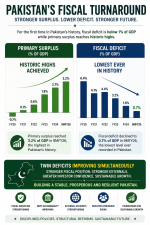
𝗣𝗮𝗸𝗶𝘀𝘁𝗮𝗻 𝗥𝗲𝗰𝗼𝗿𝗱𝘀 𝗙𝗶𝗿𝘀𝘁-𝗘𝘃𝗲𝗿 𝗙𝗶𝘀𝗰𝗮𝗹 𝗗𝗲𝗳𝗶𝗰𝗶𝘁 𝗕𝗲𝗹𝗼𝘄 𝟭%
Pakistan’s fiscal story is undergoing a structural transformation. The latest fiscal data reflects a broader shift toward credible macroeconomic management, stronger sovereign fundamentals, and sustainable growth.

First time in country's history, the fiscal deficit has fallen below 1% of GDP, alongside record primary surpluses, resilient external account, and strengthening macroeconomic stability.

𝗛𝗶𝘀𝘁𝗼𝗿𝗶𝗰 𝗙𝗶𝘀𝗰𝗮𝗹 𝗖𝗼𝗻𝘀𝗼𝗹𝗶𝗱𝗮𝘁𝗶𝗼𝗻
Country’s fiscal deficit declined to just 0.7% of GDP in 9MFY26 vs 2.6% SPLY - the lowest level ever recorded in Pakistan’s history.

𝗧𝗵𝗲 𝗣𝗿𝗶𝗺𝗮𝗿𝘆 𝗦𝘂𝗿𝗽𝗹𝘂𝘀 𝗿𝗲𝗮𝗰𝗵𝗲𝗱 𝟯.𝟮% 𝗼𝗳 𝗚𝗗𝗣 𝗶𝗻 𝟵𝗠𝗙𝗬𝟮𝟲, following an exceptionally strong surplus of 3.0% in 9MFY25 - reflecting prudent and disciplined fiscal management.This reflects improving public finances alongside economic stability and growth recovery.

𝗥𝗲𝘃𝗲𝗻𝘂𝗲 𝗣𝗲𝗿𝗳𝗼𝗿𝗺𝗮𝗻𝗰𝗲 𝗜𝗺𝗽𝗿𝗼𝘃𝗶𝗻𝗴 𝗦𝘁𝗿𝘂𝗰𝘁𝘂𝗿𝗮𝗹𝗹𝘆
Tax-to-GDP and total revenue-to-GDP have continued to improve steadily over the last 2 years.Tax revenues continued to rise - among the strongest improvements in recent years.
The improvement reflects sustained reforms, stronger compliance, digitization, and better fiscal administration.

𝗘𝘅𝗽𝗲𝗻𝗱𝗶𝘁𝘂𝗿𝗲 𝗗𝗶𝘀𝗰𝗶𝗽𝗹𝗶𝗻𝗲 𝗦𝘁𝗿𝗲𝗻𝗴𝘁𝗵𝗲𝗻𝗶𝗻𝗴 𝗙𝗶𝘀𝗰𝗮𝗹 𝗖𝗿𝗲𝗱𝗶𝗯𝗶𝗹𝗶𝘁𝘆
Total expenditures remain well controlled despite global inflationary pressures and legacy debt servicing obligations.
Current expenditure has stabilized, while development spending has been maintained to support long-term growth.Defence expenditure as % of GDP has broadly remained contained over time, highlighting overall fiscal discipline.

𝗗𝗲𝗯𝘁 𝗦𝘂𝘀𝘁𝗮𝗶𝗻𝗮𝗯𝗶𝗹𝗶𝘁𝘆 𝗮𝗻𝗱 𝗦𝘁𝗿𝗼𝗻𝗴𝗲𝗿 𝗣𝘂𝗯𝗹𝗶𝗰 𝗙𝗶𝗻𝗮𝗻𝗰𝗲𝘀
Sustained primary surpluses are improving Pakistan’s debt dynamics and strengthening sovereign sustainability.Public debt ratios are gradually declining, refinancing risks are easing, and debt maturities are improving.

The fiscal adjustment is reducing vulnerabilities and strengthening the foundations of long-term macroeconomic stability.

𝗧𝘄𝗶𝗻 𝗗𝗲𝗳𝗶𝗰𝗶𝘁𝘀 𝗜𝗺𝗽𝗿𝗼𝘃𝗶𝗻𝗴 𝗦𝗶𝗺𝘂𝗹𝘁𝗮𝗻𝗲𝗼𝘂𝘀𝗹𝘆
Historically, Pakistan’s economy faced persistent fiscal and external deficits. As of 9MFY26, both have improved simultaneously:▪︎

𝗙𝗶𝘀𝗰𝗮𝗹 𝗗𝗲𝗳𝗶𝗰𝗶𝘁: 𝟬.𝟳% 𝗼𝗳 𝗚𝗗𝗣▪︎ 𝗖𝘂𝗿𝗿𝗲𝗻𝘁 𝗔𝗰𝗰𝗼𝘂𝗻𝘁: 𝗜𝗻 𝗦𝘂𝗿𝗽𝗹𝘂𝘀
This reinforces macroeconomic stability through fiscal consolidation, reserve accumulation, exchange rate stability, moderating inflation, and improving investor sentiment.

𝗜𝗻𝘃𝗲𝘀𝘁𝗼𝗿 𝗮𝗻𝗱 𝗚𝗹𝗼𝗯𝗮𝗹 𝗖𝗼𝗻𝗳𝗶𝗱𝗲𝗻𝗰𝗲 𝗦𝘁𝗿𝗲𝗻𝗴𝘁𝗵𝗲𝗻𝗶𝗻𝗴
Pakistan’s improving macroeconomic indicators are increasingly reflected in stronger investor confidence.The country has successfully returned to international capital markets, while manufacturing, corporate profitability, foreign inflows, and IPO activity have strengthened significantly.

Multilateral institutions, rating agencies, and global investors are increasingly recognizing the improvement in Pakistan’s fiscal and external fundamentals.

𝗕𝗼𝘁𝘁𝗼𝗺𝗹𝗶𝗻𝗲
Pakistan is transitioning toward greater stability and sustainable growth.Record fiscal consolidation, strong primary surpluses, improving revenues, disciplined spending, and resilient external account are strengthening economic fundamentals.With twin deficits improving simultaneously, Pakistan is emerging as a more stable and credible destination for global investors.

𝗣𝗮𝗸𝗶𝘀𝘁𝗮𝗻’𝘀 𝗵𝗶𝘀𝘁𝗼𝗿𝗶𝗰 𝗰𝗵𝗮𝗹𝗹𝗲𝗻𝗴𝗲 𝗵𝗮𝘀 𝗮𝗹𝘄𝗮𝘆𝘀 𝗯𝗲𝗲𝗻 𝘁𝘄𝗶𝗻 𝗱𝗲𝗳𝗶𝗰𝗶𝘁𝘀.

𝗧𝗼𝗱𝗮𝘆, 𝗯𝗼𝘁𝗵 𝗵𝗮𝘃𝗲 𝗶𝗺𝗽𝗿𝗼𝘃𝗲𝗱 𝘀𝗶𝗺𝘂𝗹𝘁𝗮𝗻𝗲𝗼𝘂𝘀𝗹𝘆 - 𝘀𝘁𝗿𝗲𝗻𝗴𝘁𝗵𝗲𝗻𝗶𝗻𝗴 𝘀𝘁𝗮𝗯𝗶𝗹𝗶𝘁𝘆, 𝗿𝗲𝘀𝗶𝗹𝗶𝗲𝗻𝗰𝗲, 𝗮𝗻𝗱 𝗶𝗻𝘃𝗲𝘀𝘁𝗼𝗿 𝗰𝗼𝗻𝗳𝗶𝗱𝗲𝗻𝗰𝗲.
 
In its recent half-yearly report, the SBP revealed it had been buying dollars from the inter-bank market to improve reserves. During the last three years, the central bank purchased about $27bn from the currency market.

The SBP’s foreign exchange reserves stood at $15.85bn on April 30. With the inflow of $1.3bn from the IMF, reserves have risen to about $17.15bn. The SBP’s target for FY26 is $18bn, which could now be achieved with purchases of less than $1bn from the currency market.

Pakistan, however, has struggled to attract foreign investment, which has been declining for years. Foreign direct investment fell 27 per cent during July-March FY26.

According to the SBP, global FDI flows increased 14pc to $1.6 trillion in 2025, primarily driven by the European Union, while developing economies witnessed disinvestment.

Moreover, the secondary income account recorded a higher surplus, largely reflecting robust workers’ remittances that helped finance a major part of the combined deficit in trade in goods and services and the primary income account.
 

Growth below target

Editorial
May 15, 2026

PAKISTAN’S latest GDP figures offer a picture of modest recovery. A projected growth rate of 3.7pc for the current fiscal falls short of the government’s original 4pc target. This is slightly less than even the lower bound of the State Bank’s projected range of 3.75-4.75pc. But it is still an improvement over the previous year’s 3.18pc expansion. Thankfully, the SBP anticipates growth, albeit tepid, during much of next year in case energy prices stay elevated and the Gulf crisis lingers.

That said, the numbers show that the economy continues its struggle to break out of the low-growth trap. Structural issues are constraining long-term, faster growth prospects without overheating the economy. In this context, even modest growth is welcome after four years of economic instability, external financing crises and inflationary shocks, and despite oil price hikes triggered by the Gulf conflict.


The economy’s size has increased to over $452bn while per capita income has edged up to $1,901. Large-scale manufacturing has rebounded while services remain the dominant contributor to growth. Agriculture, which employs much of the workforce and supports rural incomes, on the other hand, has underperformed. A growth of 2.89pc is hardly robust for a sector seen as the economy’s backbone.
 
To view this content we will need your consent to set third party cookies.
For more detailed information, see our cookies page.
 

Users who are viewing this thread

Pakistan Defence Latest

Latest Posts

Back
Top