
Fatman17
THINK TANK: CONSULTANT

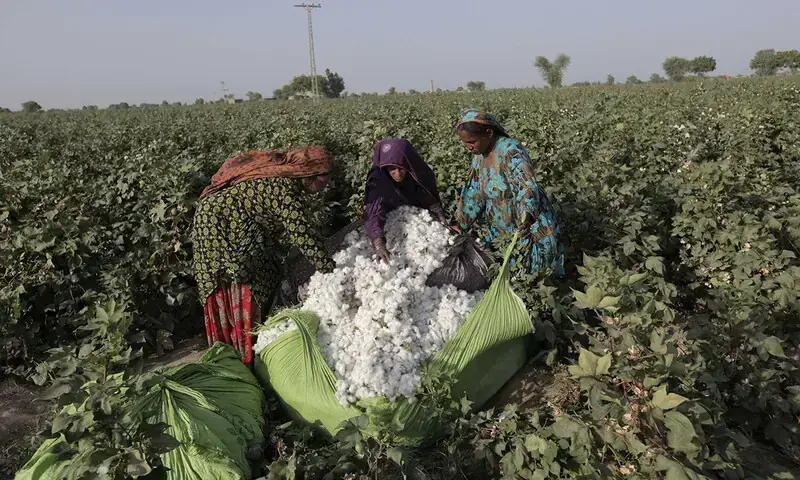
Cotton crisis spurs import surge
Pakistan faces a $1.2bn bill as domestic output hits a four-decade low.
share.google
Follow along with the video below to see how to install our site as a web app on your home screen.
Note: This feature may not be available in some browsers.

On top of what brother Fatman said, the population is rising by 4 million people annually, and the agricultural industry isn't growing at the speed needed to take on this constant population rise.What is driving this?
Sources said Pakistan has conducted a detailed analysis of China’s import patterns to identify sectors where Pakistani products could compete but face higher tariffs compared to those from ASEAN and African countries. China has granted unilateral zero-tariff access to 53 African countries effective May 1, 2026, while ASEAN members continue to enjoy preferential tariff treatment.
Pakistan is seeking market access parity with these countries, arguing that earlier concessions under CPFTA have been eroded by China’s subsequent trade agreements with ASEAN and preferential arrangements with countries such as Bangladesh

Frankly speaking, aside from being a political sideshow, this is completely meaningless.Pakistan seeks Beijing tariff relief on 700 products
Published May 23, 2026
- Hopes to level the playing field and significantly boost its struggling exports
View attachment 198484
By Mushtaq Ghumman
ISLAMABAD: Pakistan is set to formally request China to extend unilateral tariff concessions on around 700 product lines under the proposed third phase of the China-Pakistan Free Trade Agreement (CPFTA), seeking parity with concessions already granted to African and ASEAN countries, well-informed sources told Business Recorder.
Minister for Commerce Jam Kamal and Secretary Commerce Jawad Paul have already arrived in Beijing as part of an advance delegation to finalise proposals in consultation with Chinese counterparts ahead of Prime Minister Shehbaz Sharif’s visit.
Other ministers and senior officials are also in China to support the negotiations.
According to sources, Pakistan exported goods worth USD2.375 billion to China in FY2024–25, of which USD2.16 billion fell under the existing FTA framework. However, the country continues to face a significant trade imbalance, with imports from China hovering around $20 billion annually compared to exports of roughly USD2 billion.
Over the past five years, China’s exports to Pakistan have exceeded USD100 billion, while Pakistan’s exports to China have remained close to USD10 billion.
READ MORE: Free Trade Agreement: Pakistan, China discuss progress on about 700 items
The imbalance is largely attributed to Pakistan’s export structure, which relies heavily on raw materials such as copper and cotton that are re-imported as higher-value finished goods. Officials have stressed the need to shift towards value-added exports, particularly in textiles, minerals, and meat — the latter having an estimated export potential of USD5 billion.
Negotiations are currently focused on securing improved market access for Pakistani products. More than a dozen Sanitary and Phytosanitary (SPS) and Technical Barriers to Trade (TBT) protocols have already been signed under Phase III discussions, alongside a proposed list of 700 tariff lines for concessions. Additional facilitation measures, including the establishment of a “Green Channel” at Khunjerab, are also under consideration.
Sources said Pakistan has conducted a detailed analysis of China’s import patterns to identify sectors where Pakistani products could compete but face higher tariffs compared to those from ASEAN and African countries. China has granted unilateral zero-tariff access to 53 African countries effective May 1, 2026, while ASEAN members continue to enjoy preferential tariff treatment.
Pakistan is seeking market access parity with these countries, arguing that earlier concessions under CPFTA have been eroded by China’s subsequent trade agreements with ASEAN and preferential arrangements with countries such as Bangladesh. The move is aimed at improving Pakistan’s trade deficit and easing pressure on its balance of payments.
Prime Minister Shehbaz Sharif has been briefed to strongly advocate for these concessions during his engagements in Beijing. Officials warn that without such measures, Pakistan will continue to fall short of fully benefiting from the FTA amid China’s expanding global trade outreach.
“Pakistan has not been able to reap the expected benefits from CPFTA due to preferential treatment given to ASEAN and African countries,” the sources noted. “If China agrees to zero tariffs on the identified items, Pakistan’s exports could grow significantly, helping reduce the persistent trade deficit.”
Pakistan will also urge Beijing to encourage Chinese state-owned enterprises, particularly COFCO, to enter into long-term procurement agreements with Pakistani rice suppliers to ensure stable supply chains and support export growth.
Both countries are currently operating under Phase-II of CPFTA, implemented in January 2020. Bilateral trade stood at approximately USD19.4 billion in 2024–25, with Pakistan’s trade deficit accounting for nearly 59% of its overall trade gap in 2025, as exports remained largely stagnant at around USD2.37 billion.
In addition, Pakistan is expected to seek specific relief measures for rice exports, including waiver of the existing 1% import duty and allocation of a special import quota similar to the arrangement provided by China during 2019–20.
Islamabad will also request facilitation in the issuance of visas for Pakistani exporters and businessmen to enable greater market engagement. Officials emphasised that achieving a sustainable trade balance would require China to encourage investment and joint ventures in Pakistan’s export-oriented sectors.
Why do you say that?Frankly speaking, aside from being a political sideshow, this is completely meaningless.
Whether the Chinese government agrees, objects, or offers partial agreement—for Pakistan, it will have no substantive significance whatsoever.
In a nutshell yes we are thanks to incapable ruling elite and reckless policy making.So Pakistan is slowly starving.
How convenient. Your corrupt rules are busy plundering everything while the nation suffers and FI flies elsewhereOn top of what brother Fatman said, the population is rising by 4 million people annually, and the agricultural industry isn't growing at the speed needed to take on this constant population rise.
Consumption is outpacing national production.
Let us establish the following hypothetical conditions:Who do you say that?
Yap, yap, yap.How convenient. Your corrupt rules are busy plundering everything while the nation suffers and FI flies elsewhere
Let's see if Pakistan benefits if it is granted the same preferential treatment as ASEAN and Africa.Let us establish the following hypothetical conditions:
China grants "zero-tariff" access to all products originating from Pakistan.
Furthermore, China does not require Pakistan to offer reciprocal terms; a modest opening of specific sectors—building upon the existing framework—would suffice.
Do you consider the outcome of this "political negotiation" to be sufficiently favorable?
It makes no difference. Under these hypothetical conditions, you may attempt to conduct an in-depth analysis regarding the entry of *any* Pakistani product into the Chinese market. Should you lack the necessary information or data, I can assist you by translating the relevant official Chinese sources and statistics.
You will arrive at an answer identical to mine. I am aware that this outcome will be deeply unsettling for you.
5 years later, 4 years of PDM trying to dig everything down to iddat, I am sure a solid case must have been found and filed by now.Yap, yap, yap.
21/02/2020: Peshawar bus project cost goes up to Rs70.7 billion: Dawn
05/05/2020: SC extends stay in Peshawar BRT case: The Express Tribune
02/02/2021: SC bars NAB from investigating Peshawar BRT project: Business Recorder
For corruption of course.For which conviction?


