HAL LCA Tejas: Updates, News & Discussions

For Context:

1711601420695.png


In addition to the plug, ADA studied a bulged canopy to improve area ruling even further. The combined effect was 6 percent lower supersonic drag, which in turn led to a 20 percent improvement in transonic acceleration and 2 percent improvement in maximum speed [4].

1711601532664.png


Similarly, it was observed that there was a sudden kink in the aft bottom of the fuselage in Mk1 as shown in Figure 3. By eliminating this kink and identifying an optimized smoothened aft fuselage, an improvement of 4.9 percent was predicted in the supersonic drag on the aft body region.

1711601580101.png


A substantial amount of effort was directed towards optimizing the air intakes. The impact of changes in lip and cowl geometries, contractions ratio (i.e. the ratio of air intake to the minimum area of the intake duct) and performance of a newly proposed 3-door auxiliary intake were studied. The goal of these studies was to improve pressure recovery at low speeds without adversely impacting spillage drag at high speeds. It was found that the lip geometry and variation in contraction ratio of these features have minor improvements in low speed regimes, but their attendant side effect on high speed performance was deemed to be too high. On the other hand, cowl geometry optimization showed good improvement in pressure recovery due to its positive impact on the local flow field near the inlet plane. The 3-door design further enhances the gains in pressure recovery. It’s also expected to facilitate improved flow rates through the auxiliary intakes during the low speed, high AoA regimes. The combination of optimized cowl geometry and 3-door design results in a 3 percent improvement in pressure recovery, which should lead to an equivalent improvement in engine performance [11]. The 3-door design can already be seen on LCA Navy Mk1 prototypes.


Removing Some Media Fallacies About The Capabilities of The LCA Tejas Fighter | Delhi Defence Review

 
How long did it take from the beginning of the project to first flight?
 
There huge mismanagement from Tejas in all fronts from IAF not fully supporting it, to ADA inexperience in building 4th Gen, geopolitical issues which delayed the engine in late 90s and most important was frequent changes GSQR changes by IAF.
But what we have achieved is the development of entire aeronautics ecosystem in India with Tejas programme, which will eventually fasten up the Tejas MK2/AMCA delivery

One thing I don’t understand is how does India produce a world class organization such as ISRO but other state owned enterprises like HAL struggle this much. What do you think is the underlying issue? Surely, if it’s cultural or political issue, such issues much have also manifested themselves at ISRO?
 
How long did it take from the beginning of the project to first flight?

Tejas Mk1A development started around 2019 or so. The first contract with the IAF was signed for 83 Tejas Mk1A (including 10 twin seaters) in February 2021.

As per the contract, the first serial production Tejas Mk1A had to be rolled out 36 months after signing the contract. They've mostly managed that.
 
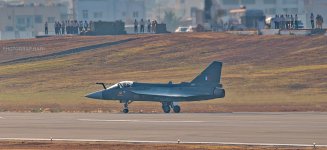
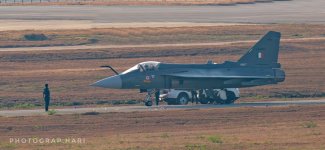
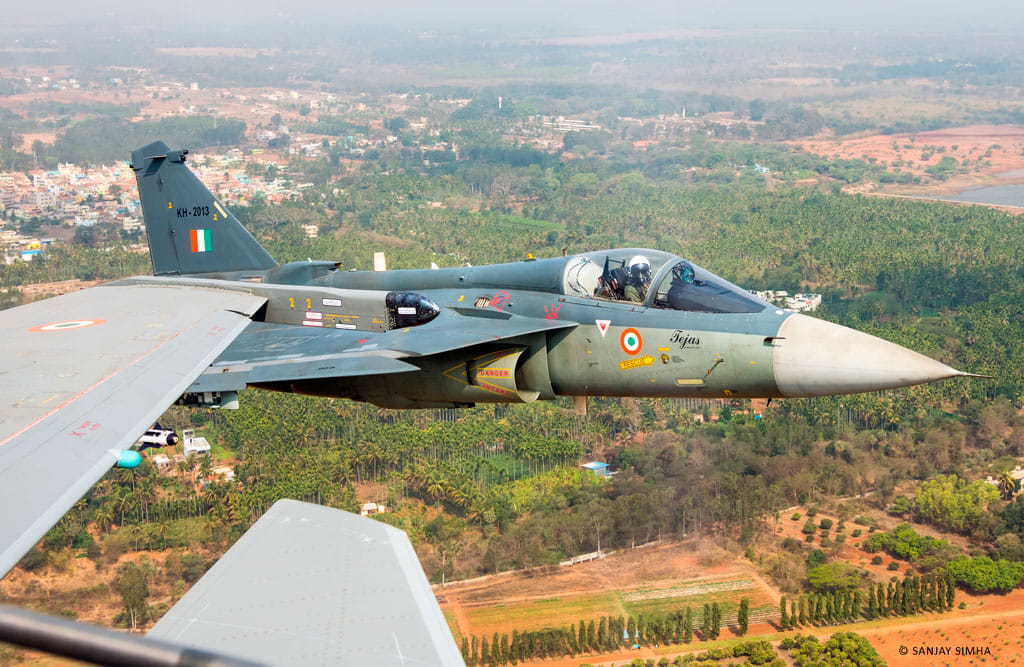
Is this a bubble canopy ?

It is slightly modified, with a little bit higher head room for the pilot. I recall seeing a modified canopy for the first time during LIMA 2019, and it now seems to have been modified further to make the curvature smoother on Tejas Mk1A serial production fighters.

54520897_2196603677100735_725771837195157504_n-jpg.33492


Compare that to the Tejas Mk1 prototype seen her (LSP3) and it's canopy which was a little flatter on the top

Ebd8-XVXYAUnvFA.png
 
To view this content we will need your consent to set third party cookies.
For more detailed information, see our cookies page.

To view this content we will need your consent to set third party cookies.
For more detailed information, see our cookies page.
 
One thing I don’t understand is how does India produce a world class organization such as ISRO but other state owned enterprises like HAL struggle this much. What do you think is the underlying issue? Surely, if it’s cultural or political issue, such issues much have also manifested themselves at ISRO?

Jet fighters are overall a more complex endeavor compared to rockets. Ex: the GSLV is basically 40/50 year old technology, China had it for 35 years. Even manned space is 70 year old tech. So what China and India is doing is catching up.
 
It is slightly modified, with a little bit higher head room for the pilot. I recall seeing a modified canopy for the first time during LIMA 2019, and it now seems to have been modified further to make the curvature smoother on Tejas Mk1A serial production fighters.

54520897_2196603677100735_725771837195157504_n-jpg.33492


Compare that to the Tejas Mk1 prototype seen her (LSP3) and it's canopy which was a little flatter on the top

Ebd8-XVXYAUnvFA.png


Sorry, but I see no changes to the front canopy?! :unsure:
 

Users who are viewing this thread

Pakistan Defence Latest

Country Watch Latest

Back
Top