
hydrabadi_arab
Trusted Member

ISLAMABAD: Total electricity generation capacity in Pakistan increased to 49,651 megawatts (MW) from July-March FY 2026. This was an 8.5% rise compared to 45,782 MW witnessed during the corresponding period of last fiscal year, FY 2025, as stated in the Economic Survey 2025-26, which was launched today by the Economic Adviser’s Wing of the Finance Division.
The reason for the spike is mostly attributed to net metering of the solar energy industry, as 7,319 MW of capacity was added in terms of power capacity. This is mostly driven by an increasing trend towards installing rooftop solar plants on account of increased power tariffs and load shedding.
Closure of the plants can be generally regarded as a good move. Firstly, power production from renewable fuels oil is one of the most costly and environmentally damaging sources of power generation in Pakistan. The other important point here is that due to the closure of these plants, Pakistan becomes less vulnerable to volatile international fuel prices. Nonetheless, it is clear that the actual growth of dispatchable power is much lower than indicated above.
Importance lies not only in terms of capacity but also production-wise. With regard to the total electricity production of 92,835 GWh, the combined percentage of hydroelectricity, nuclear energy, and renewable energy sources is around 53.1%, which means for the first time, most of Pakistan’s electricity is being produced by non-thermal sources.
The domestic or household sector, which has been the largest consumer until now, witnessed a decline in its share from 49.6 percent (39,730 GWh) to 47.5 percent (39,472 GWh). Residential consumption declined marginally due to the impact of increased tariffs since 2023, pushing households to install solar systems or cut back on electricity consumption.
On the other hand, the industrial consumption rose to a high level from 21,083 GWh to 26,205 GWH, resulting in an increment of its share to 31.5%. The 24.3% increment in the industrial electricity consumption indicates a significant revival of manufacturing activity and improved utilization of the capacity within industries including textile, cement, and food processing.
On the contrary, there was a sharp decline of 42.3% in the case of agriculture, in which the electricity consumption fell from 4,566 GWH to 2,636 GWH. Its share in overall electricity consumption also fell by over half to 3.2%. There are several reasons cited for this steep decline, namely changes in irrigation timing, heavy rainfall requiring less pumping activity, and moving towards solar and diesel tube-wells due to high grid tariff prices.
The main cause behind increased demand for petroleum was seen to be increased activity in the transportation sector, comprising 82.5 percent of total consumption at 11.25 MMT, as compared to 10.55 MMT last year.
On the other hand, there was a fall in the usage of petroleum products in the industry by 42.6% to 433,500 metric tonnes against a previous figure of 754,600 metric tonnes. In terms of share in the consumption of petroleum products, the industry accounted for merely 3.2%. The fall can be attributed to active fuel switching since the industries in Pakistan have switched from furnace oil and diesel towards using natural gas, RLNG, and even solar energy and coal when prices are favorable.
The country imported 13.88 million metric tonnes (MMT) of petroleum products that marks an increase of 10.8% in quantity from 12.53 MMT. However, despite the increase in quantity of imported petroleum products, their value increased marginally from $8.4 billion to $8.9 billion in FY 2026. The imports of MS increased by 2.3% to 4.07 MMT, however, in terms of value, they decreased by 2.4% to $2.96 billion.
The reason for the spike is mostly attributed to net metering of the solar energy industry, as 7,319 MW of capacity was added in terms of power capacity. This is mostly driven by an increasing trend towards installing rooftop solar plants on account of increased power tariffs and load shedding.
Net metering is the force behind the headline figure but there’s more to the story thanks to IPP shutdowns.
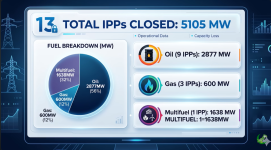
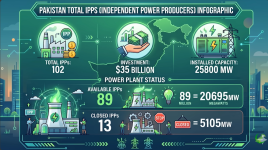
As we see robust growth in gross power capacity, Pakistan has seen 13 out of its total of 102 commissioned IPPs closed, thereby reducing their capacity by 5,105 MW. The list includes nine IPPs with RFO capacity of 2,877 MW, three IPPs using gas/RLNG capacity of 601 MW, and one multi-fuel IPP with a capacity of 1,638 MW.Closure of the plants can be generally regarded as a good move. Firstly, power production from renewable fuels oil is one of the most costly and environmentally damaging sources of power generation in Pakistan. The other important point here is that due to the closure of these plants, Pakistan becomes less vulnerable to volatile international fuel prices. Nonetheless, it is clear that the actual growth of dispatchable power is much lower than indicated above.
Pakistan’s energy generation mix starts to favor anything but thermal energy
The structure of Pakistan’s energy generation mix has started changing. Energy generated from thermal plants, which were dominating until last year, have reduced to just 49.2% of total installed capacity, while hydel contributes 23.4%, renewable contribute 20.3%, and nuclear makes up 7.1%.Importance lies not only in terms of capacity but also production-wise. With regard to the total electricity production of 92,835 GWh, the combined percentage of hydroelectricity, nuclear energy, and renewable energy sources is around 53.1%, which means for the first time, most of Pakistan’s electricity is being produced by non-thermal sources.
Electricity consumption grows by 3.8 percent; sector-wise analysis reveals more issues
Electricity consumption in the months of July to March for fiscal year 2026 stood at 83,143 GWh, marking an increase from 80,811 GWh in the corresponding months of fiscal year 2025, a total growth of 3.8 percent. However, this overall increase in consumption hides a critical shift among different sectors.The domestic or household sector, which has been the largest consumer until now, witnessed a decline in its share from 49.6 percent (39,730 GWh) to 47.5 percent (39,472 GWh). Residential consumption declined marginally due to the impact of increased tariffs since 2023, pushing households to install solar systems or cut back on electricity consumption.
On the other hand, the industrial consumption rose to a high level from 21,083 GWh to 26,205 GWH, resulting in an increment of its share to 31.5%. The 24.3% increment in the industrial electricity consumption indicates a significant revival of manufacturing activity and improved utilization of the capacity within industries including textile, cement, and food processing.
On the contrary, there was a sharp decline of 42.3% in the case of agriculture, in which the electricity consumption fell from 4,566 GWH to 2,636 GWH. Its share in overall electricity consumption also fell by over half to 3.2%. There are several reasons cited for this steep decline, namely changes in irrigation timing, heavy rainfall requiring less pumping activity, and moving towards solar and diesel tube-wells due to high grid tariff prices.
Increase in petroleum usage on account of transportation requirements; Industry fuel switch
Total consumption of petroleum products in Pakistan between July-March FY 2026 was reported to be 13.64 million metric tonnes (MMT), which marks an increase of 3.5 percent over the previous fiscal year at 13.17 MMT.The main cause behind increased demand for petroleum was seen to be increased activity in the transportation sector, comprising 82.5 percent of total consumption at 11.25 MMT, as compared to 10.55 MMT last year.
On the other hand, there was a fall in the usage of petroleum products in the industry by 42.6% to 433,500 metric tonnes against a previous figure of 754,600 metric tonnes. In terms of share in the consumption of petroleum products, the industry accounted for merely 3.2%. The fall can be attributed to active fuel switching since the industries in Pakistan have switched from furnace oil and diesel towards using natural gas, RLNG, and even solar energy and coal when prices are favorable.
The country imported 13.88 million metric tonnes (MMT) of petroleum products that marks an increase of 10.8% in quantity from 12.53 MMT. However, despite the increase in quantity of imported petroleum products, their value increased marginally from $8.4 billion to $8.9 billion in FY 2026. The imports of MS increased by 2.3% to 4.07 MMT, however, in terms of value, they decreased by 2.4% to $2.96 billion.




 akistan is set to save USD 3.239 billion over the next 26 years — and USD 2.113 billion in foreign currency alone — by converting the Jamshoro Unit-01 power plant from imported coal to 100% indigenous Thar lignite, as a Bankable Feasibility Study (BFS) has confirmed the project is technically feasible, economically beneficial and environmentally manageable. The findings of the study, prepared by internationally renowned consultants Dornier …


