Navigation
Install the app
How to install the app on iOS
Follow along with the video below to see how to install our site as a web app on your home screen.
Note: This feature may not be available in some browsers.
More options
Style variation
You are using an out of date browser. It may not display this or other websites correctly.
You should upgrade or use an alternative browser.
You should upgrade or use an alternative browser.
Pakistan-Saudi Arabia mutual defense pact: News & Discussion
- Thread starter Yasser76
- Start date
More options
Who Replied?


Pakistani Dragon
Elite Member

What are we discussing here for past 2 weeks ?
1. This deal is bad for Pakistan.
2. Pakistan was played for peanuts.
3. Pakistan should ask KSA to fund J-35 purchase.
4. we should call back out troops from KSA and dont be a part of this mess.
5. Now Israel is in our range.
Nothing new, nothing substantial, nothing well-known. Just speculations and imaginary scenarios. This thread should be banned till there is something new and meaningful in this regard.
The Defence Pact is and will remain ambiguous, and ambiguity is it's strength.That is not fault of the forum members. No-one has seen the text of this MoU, hence we can only speculate.
Making details public will lose its value.
Pakistani Dragon
Elite Member
I don't understand this block of Pakistan-Saudi Arabia-Egypy-Turkiye, or the so called "R4".
They are very active. What exactly is it's purpose? Are they preparing some sort of security mechanism that will cover all of West Asia including Pakistan?
They are very active. What exactly is it's purpose? Are they preparing some sort of security mechanism that will cover all of West Asia including Pakistan?
| Meeting No. | Date | City | Country | Notes |
| 1st Quadrilateral Meeting | 20 March 2026 | Riyadh | Saudi Arabia | First Pakistan–Saudi Arabia–Egypt–Türkiye quadrilateral foreign ministers’ meeting. |
| 2nd Quadrilateral Meeting | 29 March 2026 | Islamabad | Pakistan | Hosted by Pakistan; focused on regional developments and diplomatic coordination. |
| 3rd Quadrilateral Meeting | 17 April 2026 | Antalya | Türkiye | Held on the sidelines of the Antalya Diplomacy Forum 2026. |
| 4th Quadrilateral Meeting | 21 June 2026 | Cairo | Egypt | Hosted by Egypt; latest meeting of the quadrilateral mechanism. |

Blueishere
Registered Member
What exactly will Egypt contribute besides being American-Israel lapdog?I don't understand this block of Pakistan-Saudi Arabia-Egypy-Turkiye, or the so called "R4".
They are very active. What exactly is it's purpose? Are they preparing some sort of security mechanism that will cover all of West Asia including Pakistan?
Meeting No. Date City Country Notes 1st Quadrilateral Meeting 20 March 2026 Riyadh Saudi Arabia First Pakistan–Saudi Arabia–Egypt–Türkiye quadrilateral foreign ministers’ meeting. 2nd Quadrilateral Meeting 29 March 2026 Islamabad Pakistan Hosted by Pakistan; focused on regional developments and diplomatic coordination. 3rd Quadrilateral Meeting 17 April 2026 Antalya Türkiye Held on the sidelines of the Antalya Diplomacy Forum 2026. 4th Quadrilateral Meeting 21 June 2026 Cairo Egypt Hosted by Egypt; latest meeting of the quadrilateral mechanism.

Ali_Baba
VIP Member
Egypts peace deal with Israel means it cannot join any multilateral defence treaty as the terms of its own peace treaty with Israel means it cannot engage in military operations against Israel.
Egypt is best ignored?
Egypt is best ignored?
Pakistani Dragon
Elite Member
Let's not say that about the Egyptians. Every country has its own limits and challenges.What exactly will Egypt contribute besides being American-Israel lapdog?
The nation has a population of around 108 million people, and it's fairly stable compared to the nations in its surroundings.

FuturePAF
THINK TANK: CONSULTANT
Egypt could be well placed to help stabilize Libya and Sudan, after a Saudi brokered peace agreement would provide a framework and funding. Egyptian army troops and naval vessels could cover large parts of both nations, and open each country up for a return to humanitarian rehabilitation and economic development. Sudan is/was known as a bread basket and having Sudan back up and producing food can help keep cost of living under control in Egypt, as well as have a strong ally in dealing with anything Ethiopia does with the Nile’s water. Securing Libya could benefit Egypt with controlling militant and smuggler groups that operate from there, as well as open up a country in need of redevelopment and a place for Egyptian labor to go, in exchange for Libyan oil/gas. Libya use to employ 2 million Egyptian laborers, prior to the civil war.Egypts peace deal with Israel means it cannot join any multilateral defence treaty as the terms of its own peace treaty with Israel means it cannot engage in military operations against Israel.
Egypt is best ignored?
A stable Sudan and an expanded railway network from Egypt to Sudan opens up the possibility of rail extensions into the Central African Republic and beyond, opening up mining and mine processing value added work for Egyptians and Sudanese, on the way to European markets via the port of Alexandria, or Asian markets via Port Sudan.
Saudi investors would then have intermediate materials to supply the upper end industrial production in their country, for domestic use and for export, in order to diversify their economy. Probably also spread around industrial parks to places like Yemen, to keep that country stable and friendly to Saudi Arabia.
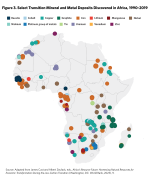
Last edited:
RealNapster
Elite Member
The Defence Pact is and will remain ambiguous, and ambiguity is it's strength.
Making details public will lose its value.
I just don't want KSA to drag us to ICJ incase it is attacked and we don't show up and suddenly we come to know that there was a clause that if KSA is attacked and Pakistan didn't come to help, Pakistan will pay the damages...
 Because Pakistan is fcukedup by many of such clauses.
Yasser76
Elite Member
- Thread starter
- #4,960
I wonder why Qatar is not announcing joining the Pak-KSA pact ?
From what I understand these things take a lot of time, it took several years for Saudi pact.
Maybe someone can correct me but things like
Financing, weapons systems integration, joint training, logistics, housing, supplies, legal frameworks etc all have to be sorted out in advance.
Qatar could not even physically cope with hosting a Pakistani Brigade let alone a Division right now.
Air defence has to be made seamless with Pak systems and planes
These are just the things off the top of my head, there are possibly many other factors I do not know about. If a Pakistani soldier accidnentally kills a Qatari citizen if he tried in Qatari courts or Pak Court marshal for example?
Yasser76
Elite Member
- Thread starter
- #4,962
Writer is ex Saudi Ambassador to Pak so these words carry weight....
When Saudi Arabia and Pakistan signed the Strategic Mutual Defense Agreement last year, the security pact was widely welcomed as the natural next step in a partnership that has evolved over many decades. Yet the true value of such arrangements is revealed only during moments of crisis.
The recent Iran conflict provided the first major test of the defense pact and of the broader Saudi-Pakistani strategic relationship. The manner in which both countries responded demonstrated not only the strength of their bilateral ties but also the extent to which their approaches to regional security have increasingly converged.
The conflict created one of the most dangerous moments the Middle East has faced in recent years. As military exchanges intensified and fears of wider escalation grew, concerns emerged that Gulf energy infrastructure, maritime routes and regional economies could once again become direct targets.
Given the scale of the confrontation, the possibility that the conflict could spread beyond its initial participants appeared real. Those concerns were understandable. Saudi Arabia’s strategic importance, its leadership role in the Arab and Islamic worlds, and its close partnership with the US made the Kingdom a potential target if the conflict widened.
Yet, despite the intensity of the confrontation, especially the unwarranted Iranian attacks, Saudi Arabia did not become a battlefield. Gulf energy infrastructure remained operational, maritime commerce continued to flow through alternative routes, and the wider regional war that many feared never materialized.
That outcome reflected a combination of deterrence, restraint and effective coordination among regional partners. The defense pact played an important role in shaping that outcome. As tensions escalated and concerns mounted that the conflict could spread toward Gulf states, attention naturally turned to how the agreement would function under real-world conditions.
For many observers, the central question was whether it would remain a symbolic expression of solidarity or demonstrate practical value during a major security challenge. The answer emerged before the ceasefire was reached. Pakistan publicly reaffirmed its commitment to the security of Saudi Arabia, consultations between the two countries intensified and defense coordination became increasingly visible.
Following the ceasefire, the Saudi Ministry of Defense disclosed that a Pakistan Air Force squadron, together with supporting personnel, had been deployed to the Kingdom during the crisis as part of ongoing defense cooperation arrangements. These measures were not intended to widen the conflict. Their purpose was to reinforce deterrence, reassure the Kingdom and remove any ambiguity regarding the consequences of expanding the war toward the Gulf.
Saudi Arabia’s conduct throughout the crisis reflected a clear strategic calculation. Crown Prince Mohammed bin Salman understood that a wider regional war would threaten not only Gulf security but also the economic transformation underway across the Kingdom and the wider region. Rather than allowing the crisis to expand, Saudi Arabia focused on preserving stability, protecting international commerce and supporting diplomatic efforts aimed at ending the conflict. At a time when emotions were running high across the region, Riyadh consistently chose restraint over escalation.
Pakistan played an equally important diplomatic role. Prime Minister Shehbaz Sharif and Field Marshal Asim Munir remained engaged with regional and international leaders throughout the crisis. Pakistan maintained communication with all relevant parties and utilized relationships developed over many years to support efforts aimed at preventing further escalation. Few countries possess the ability to engage credibly with Riyadh, Tehran, Washington and Doha simultaneously. Pakistan employed that position responsibly at a moment when diplomatic channels were urgently needed.
At the same time, Pakistan’s military and political leadership consistently encouraged a return to diplomacy, while cautioning all parties, including the hard-line elements in Iran, about the benefits of restraint and costs of escalation. Messages conveyed through multiple channels emphasized that further expansion of the conflict would impose severe economic and security consequences on the region and risk outcomes that none of the principal actors desired. This combination of deterrence and diplomacy ultimately became one of Pakistan’s most important contributions to preventing a wider war.
These efforts eventually contributed to an outcome that would have appeared highly unlikely only months earlier. After decades of hostility between the US and Iran, a diplomatic process has emerged, with Pakistan creating the political conditions necessary for dialogue. The Islamabad Memorandum of Understanding, followed by the agreement on a roadmap for implementation, has transformed a dangerous military crisis into a diplomatic process that continues to evolve.
The reopening of the Strait of Hormuz, the continuation of negotiations, the beginning of sanctions relief and the visit of Iranian President Masoud Pezeshkian to Islamabad all reflect how significantly the regional environment has changed. Public recognition of Pakistan’s role by senior American officials further underlines the importance of the diplomatic efforts that helped prevent a wider war and created space for negotiations.
The conflict demonstrated not only the resilience of Saudi-Pakistani relations but also the extent to which Riyadh and Islamabad increasingly view regional challenges through a similar lens. Both countries support secure maritime routes, the protection of energy infrastructure and the uninterrupted flow of international commerce. Both support dialogue as the preferred mechanism for resolving disputes and view economic development as the foundation of long-term stability. Both have concluded that the era of proxy warfare has imposed enormous costs on the region and that stable, sovereign states must form the foundation of any durable regional order.
Both countries also share a common assessment of what must happen next. Neither Saudi Arabia nor Pakistan seeks a weakened or isolated Iran. Both would welcome an Iran that is integrated into the regional economy, focused on development and engaged constructively with its neighbors. The current diplomatic process offers Tehran opportunities that previous generations of Iranian leaders rarely enjoyed, including sanctions relief, expanded trade and improved regional relations.
One of the clearest lessons of recent decades is that proxy conflicts have weakened states, prolonged instability and diverted resources away from development. From Iraq and Syria to Yemen and Lebanon, state institutions have frequently paid the price. Saudi Arabia and Pakistan therefore share a common interest in strengthening sovereign states, rather than parallel military structures operating outside state authority. Both countries view strong national institutions as essential to lasting peace and development.
Lebanon illustrates the same principle. Iran rightly expects its sovereignty to be respected. The same standard must apply elsewhere. Lebanon cannot achieve lasting stability while decisions relating to war and peace remain outside the authority of the Lebanese state. The long-term objective must be a sovereign Lebanon in which national institutions exercise sole responsibility for security and national defense.
The Iran conflict also demonstrated how Hezbollah and Israel have repeatedly reinforced cycles of confrontation that undermine Lebanon’s stability, just as decades of Iran-Israel confrontation have jeopardized Gulf security and regional development. Saudi Arabia and Pakistan share a common interest in ending these recurring cycles of escalation and strengthening sovereign states as the foundation of a more stable regional order.
If progress continues on the Iran file, opportunities may emerge to address other long-standing regional challenges. Among these, none is more important than Palestine. Saudi Arabia has consistently maintained that lasting regional peace requires a just resolution of the Palestinian question based on the Arab Peace Initiative and a two-state solution. Pakistan has long supported that position. Reduced tensions elsewhere in the region would create greater political space for renewed diplomatic efforts toward that objective and could open the door to a broader regional peace process.
The significance of recent months therefore extends beyond the successful management of a single crisis. The conflict demonstrated that credible deterrence, responsible leadership and sustained diplomacy can prevent regional wars. It also demonstrated that Saudi Arabia and Pakistan increasingly share a common understanding of the challenges facing the Middle East and of the principles required to address them.
The Iran conflict was the first major test of the defense pact. It validated the logic behind the agreement, reinforced the importance of Saudi-Pakistani strategic cooperation and helped preserve Gulf security during one of the most dangerous periods the region has faced in recent years. More broadly, it demonstrated that the partnership between Riyadh and Islamabad now rests not only on decades of friendship and cooperation but also on a shared vision for regional stability, sovereign statehood and peaceful development.
For decades, Saudi Arabia and Pakistan have described one another as brotherly nations. During the Iran conflict, that brotherhood was demonstrated not through rhetoric but through action. Together, both countries helped prevent a wider war, supported a return to diplomacy and contributed to a more stable regional environment. In doing so, they reaffirmed that their partnership remains one of the most important pillars of stability in the Muslim world and that it will continue to play an important role in shaping the region’s future.
• Dr. Ali Awadh Asseri is deputy chairman of the International Institute for Iranian Studies in Riyadh and a former Saudi ambassador to Pakistan.
Saudi Arabia and Pakistan: A real test of brotherhood
When Saudi Arabia and Pakistan signed the Strategic Mutual Defense Agreement last year, the security pact was widely welcomed as the natural next step in a partnership that has evolved over many decades. Yet the true value of such arrangements is revealed only during moments of crisis.
The recent Iran conflict provided the first major test of the defense pact and of the broader Saudi-Pakistani strategic relationship. The manner in which both countries responded demonstrated not only the strength of their bilateral ties but also the extent to which their approaches to regional security have increasingly converged.
The conflict created one of the most dangerous moments the Middle East has faced in recent years. As military exchanges intensified and fears of wider escalation grew, concerns emerged that Gulf energy infrastructure, maritime routes and regional economies could once again become direct targets.
Given the scale of the confrontation, the possibility that the conflict could spread beyond its initial participants appeared real. Those concerns were understandable. Saudi Arabia’s strategic importance, its leadership role in the Arab and Islamic worlds, and its close partnership with the US made the Kingdom a potential target if the conflict widened.
Yet, despite the intensity of the confrontation, especially the unwarranted Iranian attacks, Saudi Arabia did not become a battlefield. Gulf energy infrastructure remained operational, maritime commerce continued to flow through alternative routes, and the wider regional war that many feared never materialized.
That outcome reflected a combination of deterrence, restraint and effective coordination among regional partners. The defense pact played an important role in shaping that outcome. As tensions escalated and concerns mounted that the conflict could spread toward Gulf states, attention naturally turned to how the agreement would function under real-world conditions.
For many observers, the central question was whether it would remain a symbolic expression of solidarity or demonstrate practical value during a major security challenge. The answer emerged before the ceasefire was reached. Pakistan publicly reaffirmed its commitment to the security of Saudi Arabia, consultations between the two countries intensified and defense coordination became increasingly visible.
Following the ceasefire, the Saudi Ministry of Defense disclosed that a Pakistan Air Force squadron, together with supporting personnel, had been deployed to the Kingdom during the crisis as part of ongoing defense cooperation arrangements. These measures were not intended to widen the conflict. Their purpose was to reinforce deterrence, reassure the Kingdom and remove any ambiguity regarding the consequences of expanding the war toward the Gulf.
The significance of these measures became evident in what followed. Despite the intensity of the conflict, Saudi Arabia remained secure, critical infrastructure was protected and the confrontation did not spread into a broader regional war. The first major test of the defense pact therefore demonstrated its value in precisely the manner successful security arrangements are intended to function. It strengthened deterrence, reinforced strategic clarity and helped convince potential adversaries that escalation would carry unacceptable risks.The first major test of the defense pact demonstrated its value in precisely the manner successful security arrangements are intended to function
Dr. Ali Awadh Asseri
Saudi Arabia’s conduct throughout the crisis reflected a clear strategic calculation. Crown Prince Mohammed bin Salman understood that a wider regional war would threaten not only Gulf security but also the economic transformation underway across the Kingdom and the wider region. Rather than allowing the crisis to expand, Saudi Arabia focused on preserving stability, protecting international commerce and supporting diplomatic efforts aimed at ending the conflict. At a time when emotions were running high across the region, Riyadh consistently chose restraint over escalation.
Pakistan played an equally important diplomatic role. Prime Minister Shehbaz Sharif and Field Marshal Asim Munir remained engaged with regional and international leaders throughout the crisis. Pakistan maintained communication with all relevant parties and utilized relationships developed over many years to support efforts aimed at preventing further escalation. Few countries possess the ability to engage credibly with Riyadh, Tehran, Washington and Doha simultaneously. Pakistan employed that position responsibly at a moment when diplomatic channels were urgently needed.
At the same time, Pakistan’s military and political leadership consistently encouraged a return to diplomacy, while cautioning all parties, including the hard-line elements in Iran, about the benefits of restraint and costs of escalation. Messages conveyed through multiple channels emphasized that further expansion of the conflict would impose severe economic and security consequences on the region and risk outcomes that none of the principal actors desired. This combination of deterrence and diplomacy ultimately became one of Pakistan’s most important contributions to preventing a wider war.
These efforts eventually contributed to an outcome that would have appeared highly unlikely only months earlier. After decades of hostility between the US and Iran, a diplomatic process has emerged, with Pakistan creating the political conditions necessary for dialogue. The Islamabad Memorandum of Understanding, followed by the agreement on a roadmap for implementation, has transformed a dangerous military crisis into a diplomatic process that continues to evolve.
The reopening of the Strait of Hormuz, the continuation of negotiations, the beginning of sanctions relief and the visit of Iranian President Masoud Pezeshkian to Islamabad all reflect how significantly the regional environment has changed. Public recognition of Pakistan’s role by senior American officials further underlines the importance of the diplomatic efforts that helped prevent a wider war and created space for negotiations.
The conflict demonstrated not only the resilience of Saudi-Pakistani relations but also the extent to which Riyadh and Islamabad increasingly view regional challenges through a similar lens. Both countries support secure maritime routes, the protection of energy infrastructure and the uninterrupted flow of international commerce. Both support dialogue as the preferred mechanism for resolving disputes and view economic development as the foundation of long-term stability. Both have concluded that the era of proxy warfare has imposed enormous costs on the region and that stable, sovereign states must form the foundation of any durable regional order.
Both countries also share a common assessment of what must happen next. Neither Saudi Arabia nor Pakistan seeks a weakened or isolated Iran. Both would welcome an Iran that is integrated into the regional economy, focused on development and engaged constructively with its neighbors. The current diplomatic process offers Tehran opportunities that previous generations of Iranian leaders rarely enjoyed, including sanctions relief, expanded trade and improved regional relations.
Those opportunities, however, carry responsibilities. The attacks on Gulf states, threats to maritime security and reliance on proxy networks that characterized earlier periods of regional tension cannot become recurring features of the regional landscape. The success of the current diplomatic process will ultimately depend on confidence-building measures that reassure neighboring states and demonstrate a sustained commitment to peaceful coexistence.The defense pact strengthened deterrence, reinforced strategic clarity and helped convince potential adversaries that escalation would carry unacceptable risks
Dr. Ali Awadh Asseri
One of the clearest lessons of recent decades is that proxy conflicts have weakened states, prolonged instability and diverted resources away from development. From Iraq and Syria to Yemen and Lebanon, state institutions have frequently paid the price. Saudi Arabia and Pakistan therefore share a common interest in strengthening sovereign states, rather than parallel military structures operating outside state authority. Both countries view strong national institutions as essential to lasting peace and development.
Lebanon illustrates the same principle. Iran rightly expects its sovereignty to be respected. The same standard must apply elsewhere. Lebanon cannot achieve lasting stability while decisions relating to war and peace remain outside the authority of the Lebanese state. The long-term objective must be a sovereign Lebanon in which national institutions exercise sole responsibility for security and national defense.
The Iran conflict also demonstrated how Hezbollah and Israel have repeatedly reinforced cycles of confrontation that undermine Lebanon’s stability, just as decades of Iran-Israel confrontation have jeopardized Gulf security and regional development. Saudi Arabia and Pakistan share a common interest in ending these recurring cycles of escalation and strengthening sovereign states as the foundation of a more stable regional order.
If progress continues on the Iran file, opportunities may emerge to address other long-standing regional challenges. Among these, none is more important than Palestine. Saudi Arabia has consistently maintained that lasting regional peace requires a just resolution of the Palestinian question based on the Arab Peace Initiative and a two-state solution. Pakistan has long supported that position. Reduced tensions elsewhere in the region would create greater political space for renewed diplomatic efforts toward that objective and could open the door to a broader regional peace process.
The significance of recent months therefore extends beyond the successful management of a single crisis. The conflict demonstrated that credible deterrence, responsible leadership and sustained diplomacy can prevent regional wars. It also demonstrated that Saudi Arabia and Pakistan increasingly share a common understanding of the challenges facing the Middle East and of the principles required to address them.
The Iran conflict was the first major test of the defense pact. It validated the logic behind the agreement, reinforced the importance of Saudi-Pakistani strategic cooperation and helped preserve Gulf security during one of the most dangerous periods the region has faced in recent years. More broadly, it demonstrated that the partnership between Riyadh and Islamabad now rests not only on decades of friendship and cooperation but also on a shared vision for regional stability, sovereign statehood and peaceful development.
For decades, Saudi Arabia and Pakistan have described one another as brotherly nations. During the Iran conflict, that brotherhood was demonstrated not through rhetoric but through action. Together, both countries helped prevent a wider war, supported a return to diplomacy and contributed to a more stable regional environment. In doing so, they reaffirmed that their partnership remains one of the most important pillars of stability in the Muslim world and that it will continue to play an important role in shaping the region’s future.
• Dr. Ali Awadh Asseri is deputy chairman of the International Institute for Iranian Studies in Riyadh and a former Saudi ambassador to Pakistan.
mythbuster
Trusted Member
In a nutshell the article says ! Hezbollah must be disarmed and it will be disarmed...not sure you are going to like this part.Writer is ex Saudi Ambassador to Pak so these words carry weight....
Saudi Arabia and Pakistan: A real test of brotherhood
When Saudi Arabia and Pakistan signed the Strategic Mutual Defense Agreement last year, the security pact was widely welcomed as the natural next step in a partnership that has evolved over many decades. Yet the true value of such arrangements is revealed only during moments of crisis.
The recent Iran conflict provided the first major test of the defense pact and of the broader Saudi-Pakistani strategic relationship. The manner in which both countries responded demonstrated not only the strength of their bilateral ties but also the extent to which their approaches to regional security have increasingly converged.
The conflict created one of the most dangerous moments the Middle East has faced in recent years. As military exchanges intensified and fears of wider escalation grew, concerns emerged that Gulf energy infrastructure, maritime routes and regional economies could once again become direct targets.
Given the scale of the confrontation, the possibility that the conflict could spread beyond its initial participants appeared real. Those concerns were understandable. Saudi Arabia’s strategic importance, its leadership role in the Arab and Islamic worlds, and its close partnership with the US made the Kingdom a potential target if the conflict widened.
Yet, despite the intensity of the confrontation, especially the unwarranted Iranian attacks, Saudi Arabia did not become a battlefield. Gulf energy infrastructure remained operational, maritime commerce continued to flow through alternative routes, and the wider regional war that many feared never materialized.
That outcome reflected a combination of deterrence, restraint and effective coordination among regional partners. The defense pact played an important role in shaping that outcome. As tensions escalated and concerns mounted that the conflict could spread toward Gulf states, attention naturally turned to how the agreement would function under real-world conditions.
For many observers, the central question was whether it would remain a symbolic expression of solidarity or demonstrate practical value during a major security challenge. The answer emerged before the ceasefire was reached. Pakistan publicly reaffirmed its commitment to the security of Saudi Arabia, consultations between the two countries intensified and defense coordination became increasingly visible.
Following the ceasefire, the Saudi Ministry of Defense disclosed that a Pakistan Air Force squadron, together with supporting personnel, had been deployed to the Kingdom during the crisis as part of ongoing defense cooperation arrangements. These measures were not intended to widen the conflict. Their purpose was to reinforce deterrence, reassure the Kingdom and remove any ambiguity regarding the consequences of expanding the war toward the Gulf.
The significance of these measures became evident in what followed. Despite the intensity of the conflict, Saudi Arabia remained secure, critical infrastructure was protected and the confrontation did not spread into a broader regional war. The first major test of the defense pact therefore demonstrated its value in precisely the manner successful security arrangements are intended to function. It strengthened deterrence, reinforced strategic clarity and helped convince potential adversaries that escalation would carry unacceptable risks.
Saudi Arabia’s conduct throughout the crisis reflected a clear strategic calculation. Crown Prince Mohammed bin Salman understood that a wider regional war would threaten not only Gulf security but also the economic transformation underway across the Kingdom and the wider region. Rather than allowing the crisis to expand, Saudi Arabia focused on preserving stability, protecting international commerce and supporting diplomatic efforts aimed at ending the conflict. At a time when emotions were running high across the region, Riyadh consistently chose restraint over escalation.
Pakistan played an equally important diplomatic role. Prime Minister Shehbaz Sharif and Field Marshal Asim Munir remained engaged with regional and international leaders throughout the crisis. Pakistan maintained communication with all relevant parties and utilized relationships developed over many years to support efforts aimed at preventing further escalation. Few countries possess the ability to engage credibly with Riyadh, Tehran, Washington and Doha simultaneously. Pakistan employed that position responsibly at a moment when diplomatic channels were urgently needed.
At the same time, Pakistan’s military and political leadership consistently encouraged a return to diplomacy, while cautioning all parties, including the hard-line elements in Iran, about the benefits of restraint and costs of escalation. Messages conveyed through multiple channels emphasized that further expansion of the conflict would impose severe economic and security consequences on the region and risk outcomes that none of the principal actors desired. This combination of deterrence and diplomacy ultimately became one of Pakistan’s most important contributions to preventing a wider war.
These efforts eventually contributed to an outcome that would have appeared highly unlikely only months earlier. After decades of hostility between the US and Iran, a diplomatic process has emerged, with Pakistan creating the political conditions necessary for dialogue. The Islamabad Memorandum of Understanding, followed by the agreement on a roadmap for implementation, has transformed a dangerous military crisis into a diplomatic process that continues to evolve.
The reopening of the Strait of Hormuz, the continuation of negotiations, the beginning of sanctions relief and the visit of Iranian President Masoud Pezeshkian to Islamabad all reflect how significantly the regional environment has changed. Public recognition of Pakistan’s role by senior American officials further underlines the importance of the diplomatic efforts that helped prevent a wider war and created space for negotiations.
The conflict demonstrated not only the resilience of Saudi-Pakistani relations but also the extent to which Riyadh and Islamabad increasingly view regional challenges through a similar lens. Both countries support secure maritime routes, the protection of energy infrastructure and the uninterrupted flow of international commerce. Both support dialogue as the preferred mechanism for resolving disputes and view economic development as the foundation of long-term stability. Both have concluded that the era of proxy warfare has imposed enormous costs on the region and that stable, sovereign states must form the foundation of any durable regional order.
Both countries also share a common assessment of what must happen next. Neither Saudi Arabia nor Pakistan seeks a weakened or isolated Iran. Both would welcome an Iran that is integrated into the regional economy, focused on development and engaged constructively with its neighbors. The current diplomatic process offers Tehran opportunities that previous generations of Iranian leaders rarely enjoyed, including sanctions relief, expanded trade and improved regional relations.
Those opportunities, however, carry responsibilities. The attacks on Gulf states, threats to maritime security and reliance on proxy networks that characterized earlier periods of regional tension cannot become recurring features of the regional landscape. The success of the current diplomatic process will ultimately depend on confidence-building measures that reassure neighboring states and demonstrate a sustained commitment to peaceful coexistence.
One of the clearest lessons of recent decades is that proxy conflicts have weakened states, prolonged instability and diverted resources away from development. From Iraq and Syria to Yemen and Lebanon, state institutions have frequently paid the price. Saudi Arabia and Pakistan therefore share a common interest in strengthening sovereign states, rather than parallel military structures operating outside state authority. Both countries view strong national institutions as essential to lasting peace and development.
Lebanon illustrates the same principle. Iran rightly expects its sovereignty to be respected. The same standard must apply elsewhere. Lebanon cannot achieve lasting stability while decisions relating to war and peace remain outside the authority of the Lebanese state. The long-term objective must be a sovereign Lebanon in which national institutions exercise sole responsibility for security and national defense.
The Iran conflict also demonstrated how Hezbollah and Israel have repeatedly reinforced cycles of confrontation that undermine Lebanon’s stability, just as decades of Iran-Israel confrontation have jeopardized Gulf security and regional development. Saudi Arabia and Pakistan share a common interest in ending these recurring cycles of escalation and strengthening sovereign states as the foundation of a more stable regional order.
If progress continues on the Iran file, opportunities may emerge to address other long-standing regional challenges. Among these, none is more important than Palestine. Saudi Arabia has consistently maintained that lasting regional peace requires a just resolution of the Palestinian question based on the Arab Peace Initiative and a two-state solution. Pakistan has long supported that position. Reduced tensions elsewhere in the region would create greater political space for renewed diplomatic efforts toward that objective and could open the door to a broader regional peace process.
The significance of recent months therefore extends beyond the successful management of a single crisis. The conflict demonstrated that credible deterrence, responsible leadership and sustained diplomacy can prevent regional wars. It also demonstrated that Saudi Arabia and Pakistan increasingly share a common understanding of the challenges facing the Middle East and of the principles required to address them.
The Iran conflict was the first major test of the defense pact. It validated the logic behind the agreement, reinforced the importance of Saudi-Pakistani strategic cooperation and helped preserve Gulf security during one of the most dangerous periods the region has faced in recent years. More broadly, it demonstrated that the partnership between Riyadh and Islamabad now rests not only on decades of friendship and cooperation but also on a shared vision for regional stability, sovereign statehood and peaceful development.
For decades, Saudi Arabia and Pakistan have described one another as brotherly nations. During the Iran conflict, that brotherhood was demonstrated not through rhetoric but through action. Together, both countries helped prevent a wider war, supported a return to diplomacy and contributed to a more stable regional environment. In doing so, they reaffirmed that their partnership remains one of the most important pillars of stability in the Muslim world and that it will continue to play an important role in shaping the region’s future.
• Dr. Ali Awadh Asseri is deputy chairman of the International Institute for Iranian Studies in Riyadh and a former Saudi ambassador to Pakistan.
mythbuster
Trusted Member
Pakistan is in the thick of it ....disarming of Hezbollah is an unwritten understanding amongst all the players.Saudis always wanted that, to a large extent this does not effect Pak too directly
Users who are viewing this thread
Total: 1 (members: 0, guests: 1)
Pakistan Defence Latest
-

-
-
-

-
 Federal cabinet gives nod to imposition of emergency in KP; summary sent to president (7 Viewers)
- Latest: Forsvaret


