Top 10 countries with the most skyscrapers in the world 2026: China, US, UAE and other leading nations

See, what i suggested, doesn't mean you have to pack them in a small area. You can have a city made up of appartment buildings and still look beautiful, well planned and well managed. I took help of chatgpt to give me a 3D visualization of this idea and the following is the result.

It doesn't have to look ugly.


Well there are other downsides to having tall residential buildings

June 24th, 2026 at 6:04 PM with most people in their homes:
To view this content we will need your consent to set third party cookies.
For more detailed information, see our cookies page.


Venezuela earthquake latest: 'Devastating' number feared dead after two tremors​


earthquake.png


ea1.png
ea_2.png
ea3.png


Venezuela just had a Magnitude 7 and they are worried about mass casualties.

usDeaths.png

Single family home vs 7.1 quake
To view this content we will need your consent to set third party cookies.
For more detailed information, see our cookies page.

7.1 Massive California Earthquake caught on Camera
 
Last edited:
Well there are other downsides to having tall residential buildings

6:04 PM with most people in their homes
To view this content we will need your consent to set third party cookies.
For more detailed information, see our cookies page.


Venezuela earthquake latest: 'Devastating' number feared dead after two tremors​


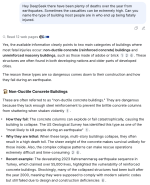
View attachment 203090


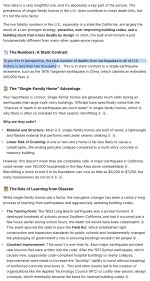
View attachment 203091
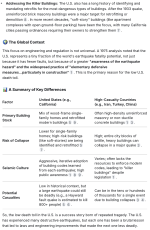
View attachment 203093
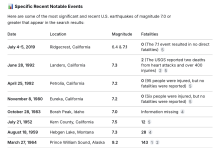
View attachment 203094


Buildings don't fail in earthquakes because they want to.... they fail because they are constructed that way. Cost cutting is the culprit here. Not the building itself. I am a civil engineer by profession. Modern construction approaches can ensure that a structure remain safe even in magnitude 8.0 earthquake. Heck, even modular highrise buildings these days offer same level of earthquake resistance.

See there are things to consider,

1. Type of land and its bearing capacity matters.
2. Total load of the building and its design parameters matters.
3. Right materials and approach for the right structure.

You can not build every building on every soil condition using every material. I am sure the world can find small pockets of lands dispersed throughout the globe suitable to build these blocks each containing 50-100 such buildings. This is the need of the hour becaise unlike USA, the world dont have enough land to build suburban design towns. Pakistan is adding 5 million people every year to its population. India too. Hongkong dont have land. New Zealand is a small island country. Majority of the countries dont have much options. They got limited land which they can either use to grow food or build suburban towns over it.
 
Agreed... Hong Kong looks dead with no beauty.... European architecture is any day beautiful and Turkiye also looks same like Europe as it's so closed to Europe....
You Indians can only dream to have a city like Hong kong.

960px-Hong_Kong_Night_Skyline.jpg
 
Buildings don't fail in earthquakes because they want to.... they fail because they are constructed that way. Cost cutting is the culprit here. Not the building itself. I am a civil engineer by profession. Modern construction approaches can ensure that a structure remain safe even in magnitude 8.0 earthquake. Heck, even modular highrise buildings these days offer same level of earthquake resistance.

See there are things to consider,

1. Type of land and its bearing capacity matters.
2. Total load of the building and its design parameters matters.
3. Right materials and approach for the right structure.

All engineers can do is to attempt to defensively prepare for the worst but it is mostly about crossing their fingers when that big earthquake does hit that nothing bad happens.

You can not build every building on every soil condition using every material. I am sure the world can find small pockets of lands dispersed throughout the globe suitable to build these blocks each containing 50-100 such buildings. This is the need of the hour becaise unlike USA, the world dont have enough land to build suburban design towns. Pakistan is adding 5 million people every year to its population. India too. Hongkong dont have land. New Zealand is a small island country. Majority of the countries dont have much options. They got limited land which they can either use to grow food or build suburban towns over it.

Well you are correct that the best land in Pakistan happens to have the most housing on it. In the US it is the opposite...the best agricultural land was in remote inland areas that nobody wanted to live in (like Kansas). The land where most people in the US live in (which is within 100 miles of the ocean or great lakes) is actually the worst for agriculture (a sand, rock, or limestone layer not far below the surface..plus for many harsh winters).
 
Last edited:
All engineers can do is to attempt to defensively prepare for the worst but it is mostly about crossing their fingers when that big earthquake does hit that nothing bad happens.

There is always that risk that I might die of any of the 100 possible reasons while typing this reply. Doesn't mean I should stop living. Same is with buildings. If disastours was the issue then nobody would be living on coast but despite that, 40% of the world population lives in 100 km of the coast. And 15% lives just in 10 km of coast.

By the way if you are reading this, it means i didn't die while responding.
 

Users who are viewing this thread

Back
Top