CPEC News and Discussions

Pakistan Launches Landmark Desert Horticulture Cooperation with China to Transform Arid Lands​

By Wang Kai | China Economic Net
Jun 18, 2026

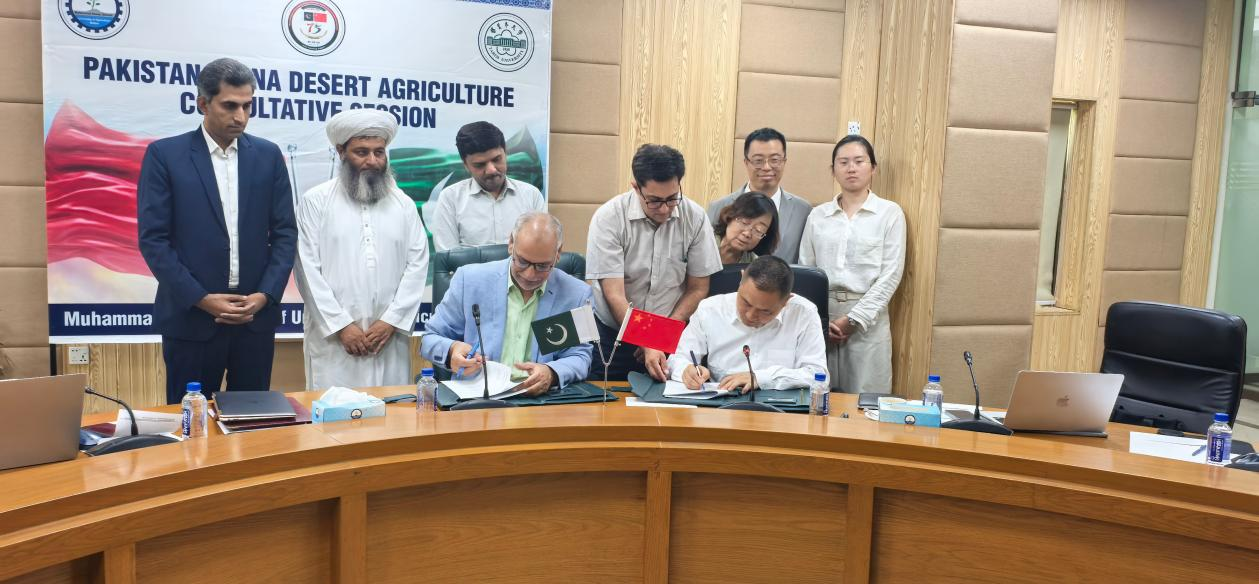
MULTAN, — Pakistan's first-ever Joint Laboratory for Desert Agriculture; and Science and Technology Backyard on Desert Horticulture were unveiled on Wednesday through an MOU to turn vast stretches of desert land of Pakistan into productive farmland.

Pakistan Launches Landmark Desert Horticulture Cooperation with China to Transform Arid Lands


Bringing together China's Tarim University in Xinjiang and Pakistan's Muhammad Nawaz Sharif University of Agriculture (MNSUA) in Multan, the partnership is expected to serve as a platform for technology transfer, scientific research, and farmer training focused on desert agriculture.

Dr. Abid Ali, chief scientist on Pakistani side, revealed the cooperation will focus on introducing a range of advanced technologies, including solar-powered greenhouse systems, precision agriculture, drone-based crop monitoring, and water-saving drip irrigation.

According to Dr. Ali, technologies developed by Tarim University could help address some of Pakistan's most pressing agricultural challenges, including water scarcity and low productivity in desert regions.

"The technologies have already proven successful in Xinjiang," Dr. Ali said. “For example, the low-cost, high-efficiency desert solar greenhouse technology addresses the longstanding challenge of low land utilization in traditional solar greenhouses, increasing land-use efficiency by up to 35%. Its simple modular assembly structure enables rapid construction while ensuring excellent daylighting and heat-retention performance with a construction cost of only about RMB 290–320 (PKR 11,000–12,500) per square meter.”
Increasing farmable land out to the eastern desert also open up opportunities for people who don’t have farmland to become at least subsistence farmers. With a population set to grow from 250 million to 400 million, we need to not only provide for this 60% increase in population, but also get productive exportable goods from this population; with time, higher value farm products could be produced, even in the desert and feed the GCC market in the near future, and the expected booming African market (due to population set to triple, from 1.33 Billion to 4 Billion over the next 50 years).
 

University of Sargodha and Civil Aviation University China to establish civil aviation school​

By Tahir Ali | Gwadar Pro
Feb 3, 2024

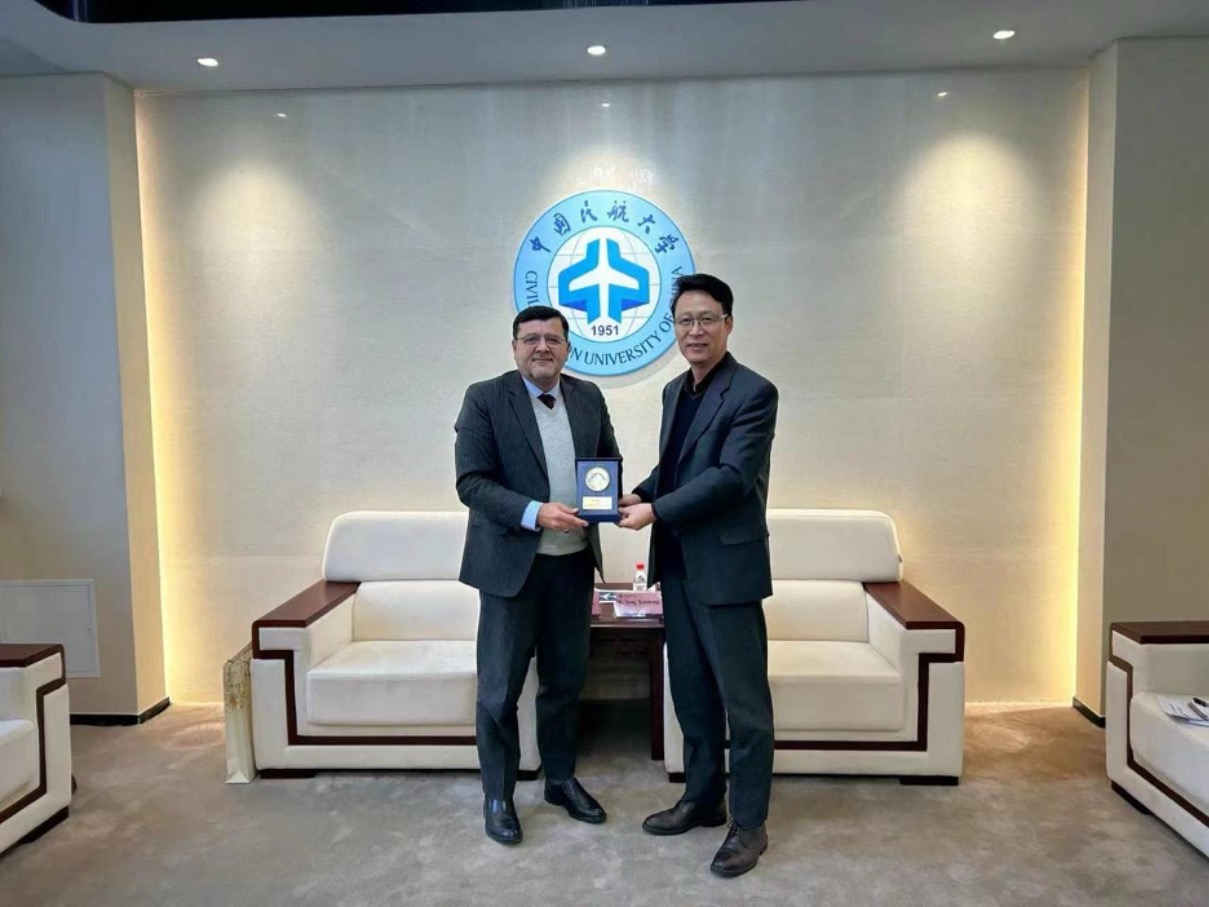
University of Sargodha and Civil Aviation University China to establish civil aviation school


Vice Chancellor Dr. Qaisar Abbas with President of Civil Aviation University China. [Photo/UoS]

HANGZHOU, Feb 3 (Gwadar Pro) - The University of Sargodha (UoS) and the Civil Aviation University China (CAUC) have agreed to explore cooperation avenues and establish a Civil Aviation School at UoS in Punjab, Pakistan.

During his visit to China to attend the First Forum on Asian Development at Zhejiang University in Hangzhou, UoS Vice Chancellor, Prof. Dr. Qaisar Abbas, met with the President of CAUC. The meeting aimed to foster international collaboration and educational advancement in aviation.

An official statement revealed that Dr. Abbas's proposal received enthusiastic support from the CAUC President, initiating a significant partnership in aviation education.

The collaboration extends beyond establishing the school, with plans for faculty and student exchange programs, joint research, and organizing conferences, seminars, and workshops.

Prof. Dr. Qaisar Abbas expressed gratitude for the warm reception and the mutual commitment to enhancing aviation education and research.
Needs to be merged
 
Its simple modular assembly structure enables rapid construction while ensuring excellent daylighting and heat-retention performance with a construction cost of only about RMB 290–320 (PKR 11,000–12,500) per square meter.”
That is around 4 Cr /acre. Around 10 times the cost of good quality agriculture land in Punjab.
 
To view this content we will need your consent to set third party cookies.
For more detailed information, see our cookies page.


Please get a new agreement with Karachi (the worst city in Pakistan and get rid of PPP mafia party who controlled the city many years).

Let's turn this oldest city to Hong Kong or Beijing.


Great Job! Another 10 billion dollars will be transferred to offshore banks.
دس لگاؤ نوے گھر لے جاؤ
 

Govt Drops ML-1 Railway Project From CPEC​

By Muhammad Bilal | Published Jul 3, 2026 | 9:36 am


The federal government has informed lawmakers that the Main Line-1 (ML-1) railway project is no longer part of the China-Pakistan Economic Corridor (CPEC) and will instead seek financing from the Asian Development Bank (ADB) and other international financial institutions.

The disclosure was made during a meeting of the Senate Standing Committee on Economic Affairs, where Economic Affairs Secretary Hameer Karim said the project, originally planned under the CPEC framework at an estimated cost of $7.7 billion, has been separated from the initiative. The government is now pursuing funding from multilateral lenders, including the ADB.

ML-1 is Pakistan’s largest railway modernization project and aims to upgrade the country’s main railway line from Karachi to Peshawar by replacing tracks, modernizing signaling systems, increasing train speeds, and improving freight capacity. The project has long been considered the flagship transport component of CPEC but has faced repeated delays over financing and cost negotiations.


The Senate committee also sought details about the project’s revised financing plan and questioned the Economic Affairs Division over its handling of legal matters related to foreign-funded projects.

Separately, the National Assembly Standing Committee on Railways directed Pakistan Railways to submit detailed reports on railway land encroachments and the progress of its restructuring and revival plan, including updates on the ML-1 and Pipri Marshalling Yard (PIPRI) projects.

The committee also reviewed recent railway accidents, including the Shalimar Express collision near Lakha Road Station and the Tezgam derailment on the Lodhran-Bahawalpur section. Pakistan Railways briefed lawmakers on the causes of the incidents, departmental inquiries, and disciplinary action taken against officials.


Lawmakers also asked the Ministry of Railways to present a comprehensive update at the committee’s next meeting on progress made under the railway restructuring plan and the implementation status of the ML-1 project.
 

Govt Drops ML-1 Railway Project From CPEC​

By Muhammad Bilal | Published Jul 3, 2026 | 9:36 am


The federal government has informed lawmakers that the Main Line-1 (ML-1) railway project is no longer part of the China-Pakistan Economic Corridor (CPEC) and will instead seek financing from the Asian Development Bank (ADB) and other international financial institutions.

The disclosure was made during a meeting of the Senate Standing Committee on Economic Affairs, where Economic Affairs Secretary Hameer Karim said the project, originally planned under the CPEC framework at an estimated cost of $7.7 billion, has been separated from the initiative. The government is now pursuing funding from multilateral lenders, including the ADB.

ML-1 is Pakistan’s largest railway modernization project and aims to upgrade the country’s main railway line from Karachi to Peshawar by replacing tracks, modernizing signaling systems, increasing train speeds, and improving freight capacity. The project has long been considered the flagship transport component of CPEC but has faced repeated delays over financing and cost negotiations.


The Senate committee also sought details about the project’s revised financing plan and questioned the Economic Affairs Division over its handling of legal matters related to foreign-funded projects.

Separately, the National Assembly Standing Committee on Railways directed Pakistan Railways to submit detailed reports on railway land encroachments and the progress of its restructuring and revival plan, including updates on the ML-1 and Pipri Marshalling Yard (PIPRI) projects.

The committee also reviewed recent railway accidents, including the Shalimar Express collision near Lakha Road Station and the Tezgam derailment on the Lodhran-Bahawalpur section. Pakistan Railways briefed lawmakers on the causes of the incidents, departmental inquiries, and disciplinary action taken against officials.


Lawmakers also asked the Ministry of Railways to present a comprehensive update at the committee’s next meeting on progress made under the railway restructuring plan and the implementation status of the ML-1 project.


Just bring japan. They will be more then willing to finance it. Their loan for this project will be even cheaper with 1-2% interest rate, maybe even less.
 

Users who are viewing this thread

Latest Posts

Back
Top