Central Asia Seeks New Trade Route to Pakistani Ports

Asfandyar Bhittani

THINK TANK: CONSULTANT
Joined
Jan 2, 2017
Messages
1,395
Reaction score
3,316
Reputation
2,791.1
Country of Origin
Country of Residence
Updated: Jul 28, 2026, 1:00 PM CD

Uzbekistan appears to be hedging its bets when it comes to Afghanistan’s ability to serve as a trade corridor.

Over the past year, Tashkent has ramped up its engagement with Afghanistan, setting an ambitious target of almost tripling annual bilateral trade volume over the next few years. Uzbek President Shavkat Mirziyoyev also recently stated that the government was “actively working” with the Taliban leadership to create a trans-Afghan rail route to speed the flow of Uzbek goods to Pakistani seaports.

But according to Pakistani media reports, Tashkent and Islamabad have reached a provisional agreement to boost bilateral trade via routes that bypass Afghanistan and traverse China.

A trans-Afghan trade corridor would be the most efficient way for goods to move from Central Asia to Pakistan. Plans to develop the route, however, have been clouded by a deep freeze in Afghan-Pakistani relations, which has prompted Islamabad to close its main land border crossings, halting truck-borne trade.

Uzbekistan and Pakistan plan to sign a protocol that formalizes the expansion of trans-China trade soon, according to Pakistani sources. “The protocol is aimed at expanding transit options and ensuring uninterrupted movement of goods between the two countries despite evolving regional security challenges,” a Pakistan outlet called Profit quoted an unnamed official source as saying.

Uzbekistan, Kyrgyzstan and China are presently constructing a railway that would link into China’s rail network, opening access to Pakistani ports. But that project is years away from completion. For the immediate future, any Uzbek-Pakistani protocol would likely cover truck-borne trade via China.

Uzbekistan is not the only Central Asian state interested in the trans-China option. Earlier this year, Kyrgyzstan successfully tested an overland route to Pakistan via China. And in early July, Kyrgyzstan and Pakistan announced an intention to forge a strategic partnership.

By Eurasianet
 
It's good to hear that Pakistan has essentially walked out on Afghan transit rail. And I hope we also officially pull out of TAPI which will not only provide more expensive gas compared to current sources but also grant an hostile state a chokehold on Pakistan's energy. There is also the fact that even in best case scenario of that chokehold, the enemy state will be making 200 million dollars from Pakistan alone. I don't know what we were thinking.

It would be better if Pakistan lobbies to secure a sanctions waiver for Iranian gas instead.
 
It's good to hear that Pakistan has essentially walked out on Afghan transit rail. And I hope we also officially pull out of TAPI which will not only provide more expensive gas compared to current sources but also grant an hostile state a chokehold on Pakistan's energy. There is also the fact that even in best case scenario of that chokehold, the enemy state will be making 200 million dollars from Pakistan alone. I don't know what we were thinking.

It would be better if Pakistan lobbies to secure a sanctions waiver for Iranian gas instead.
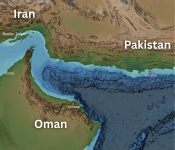
If TAPI is out and an Iranian gas pipeline is going to be hard to get, with the potential new regional posture of containing Iran, Pakistan should look at a Saudi-Omani-Pakistan-India pipeline; SOPI pipeline, with the underwater portion being just the muscat to Gwadar part (under 500 km, at a cost of approx. $1 billion for the underwater portion). Not only would he send oil or gas from a large and reliable producer, through stable nations, but would decrease the chances of a UAE-India pipeline through our territorial waters, and who knows what could be “attached” to that pipeline to spy on Pakistani naval activity.

Pakistan can be Saudi “open ocean oil storage facility”, considering the Iranian and Iran allied Houthis tying up two vital water ways for Saudi to get their oil and gas to market. It would also then make economic sense for Saudi to build that $10 billion state of the art modern oil refinery in Pakistan, and would also create an economically competitive petrochemical industry in Pakistan, including all adjacent industries such as pharmaceuticals, for onwards shipment to China and Central Asia via that railway as well as on to the largest growing open market in Africa.


Besides, that pipeline could be a way to then build an extension later on, all the way up to China, and earn a lot from transit trade, as well the benefits of a large volume pipeline through the length of the nation.

But if a pipeline is not built all the way to China, a railway could also do the shipment of oil or gas, so a railway could get a lot of use.

1785278334130.png
 
Last edited:
If TAPI is out and an Iranian gas pipeline is going to be hard to get, with the potential new regional posture of containing Iran, Pakistan should look at a Saudi-Omani-Pakistan-India pipeline; SOPI pipeline, with the underwater portion being just the muscat to Gwadar part (under 500 km, at a cost of approx. $1 billion for the underwater portion). Not only would he send oil or gas from a large and reliable producer, through stable nations, but would decrease the chances of a UAE-India pipeline through our territorial waters, and who knows what could be “attached” to that pipeline to spy on Pakistani naval activity.

Besides, that pipeline could be a way to then build an extension later on, all the way up to China, and earn a lot from transit trade, as well the benefits of a large volume pipeline through the length of the nation.

View attachment 208516

Pakistan will not have to import after shale gas come online in few years.

 
Pakistan will not have to import after shale gas come online in few years.

1. Saudi oil would be cheaper.
2. Saudis could export via a pipeline to India and Pakistan could be compensated in oil
3. We need economic tie ins to leverage to protect the nation. A Saudi oil city in Pakistan would help do that.

It’s not about independence but the right kinds of interdependence to blunt the plans of some and be a hopefully decisive part of the growth of others. Our economic class is not motivated to even reinvest locally in a major way, but a Saudi move such as this could shift the motivation dynamics, making more industries worthwhile to invest in locally again, compared to other places.
 
Last edited:
Sounds like pipe dreams to me. You cannot defeat geography and the right approach would be to stop destabilizing Afghanistan and build a relationship with it.

This plan also flies in the face of what China wants which is to exploit Afghan minerals and use Pakistani cpec infrastructure to export it, leading to a win-win-win.
 
1. Saudi oil would be cheaper.
2. Saudis could export via a pipeline to India and Pakistan could be compensated in oil
3. We need economic tie ins to leverage to protect the nation. A Saudi oil city in Pakistan would help do that.

It’s not about independence but the right kinds of interdependence to blunt the plans of some and a part of the growth of others. Our economic class is not motivated to even reinvest locally in a major way, but a Saudi move such as this could shift the motivation dynamics, making more industries worthwhile to invest in locally again, compared to other places.
Why would India sign on to this if they are not interested in the much cheaper IPI project, when their ally UAE would be opposed to this ?
 
Why would India sign on to this if they are not interested in the much cheaper IPI project, when their ally UAE would be opposed to this ?
India buys 500,000 to 700,000 barrels of oil from Saudi Arabia alone, daily. The Saudis could sell the oil minus the transit cost of a tanker. India may take a deal or not, but India likes a good arbitrage, especially at such volume. Also, India is trying hard to keep good relations with the Saudis to have access to the job market there. The Saudis could also put pressure on the UAE not to try to build a pipeline directly to India.

Suffice it to say, there is a lot of room for creative Saudi diplomatic moves, but a key unified goal of the Saudis and Emiratis would be to contain Iran and prevent an IPI pipeline.
 
India buys 500,000 to 700,000 barrels of oil from Saudi Arabia alone, daily. The Saudis could sell the oil minus the transit cost of a tanker. India may take a deal or not, but India likes a good arbitrage, especially at such volume. Also, India is trying hard to keep good relations with the Saudis to have access to the job market there. The Saudis could also put pressure on the UAE not to try to build a pipeline directly to India.

Suffice it to say, there is a lot of room for creative Saudi diplomatic moves, but a key unified goal of the Saudis and Emiratis would be to contain Iran and prevent an IPI pipeline.
If India is willing to forgo the "arbitrage " of trading through the Wagah border, they are not going to be willing to pay, ditectly or indirectly, transit fees to Pakistan to get their oil.

Also, no arbitrage exists. This is an extremely risky capital intensive project, which, AFAIK, none of the four countries you named are pursuing with any degree of seriousness, or have even evinced any interest in. In any case, it will politically suicidal for the government in India to even mention this in the present situation.
 
If India is willing to forgo the "arbitrage " of trading through the Wagah border, they are not going to be willing to pay, ditectly or indirectly, transit fees to Pakistan to get their oil.

Also, no arbitrage exists. This is an extremely risky capital intensive project, which, AFAIK, none of the four countries you named are pursuing with any degree of seriousness, or have even evinced any interest in. In any case, it will politically suicidal for the government in India to even mention this in the present situation.
Regional dynamics are shifting as we speak. Iran has made controlling both water ways Saudis need to export oil now a core tenet of their aims of this war.

Saudis have the cheapest cost to produce oil, but have a breakeven price somewhere around at least $80 a barrel. While the current conditions will not last forever, damage to oil production and transport infrastructure will mean global oil supplies will be restricted for some time. There will be a demand to refill strategic reserves in many of the largest industrialized economies once the war is over. Oil not getting out of Saudi, when there is clear demand will be where this pipeline would come in.

Sure no one is speaking about it; I’m proposing it, but as an alternative to the proposed UAE-India pipeline. As for this Indian government not being for it at all, well this government or whatever follows it will have to find ways to source the cheapest and most diplomatically palatable hydrocarbons to maximize their growth, during their demographic moment. As I said, the Saudi could get creative diplomatically (call the pipeline exclusively Saudi owned), especially if it means cutting off competitors/rivals, UAE and Iran, from building their own pipelines to the Indian market.

For India, there is also that freight rail project Saudi will be looking to build (as part of the GCC railway), which India maybe interested in bidding for. Quid pro quo for India signing on to a Saudi pipeline (via Pakistan) could therefore make sense.
 
Regional dynamics are shifting as we speak. Iran has made controlling both water ways Saudis need to export oil now a core tenet of their aims of this war.

Saudis have the cheapest cost to produce oil, but have a breakeven price somewhere around at least $80 a barrel. While the current conditions will not last forever, damage to oil production and transport infrastructure will mean global oil supplies will be restricted for some time. There will be a demand to refill strategic reserves in many of the largest industrialized economies once the war is over. Oil not getting out of Saudi, when there is clear demand will be where this pipeline would come in.

Sure no one is speaking about it; I’m proposing it, but as an alternative to the proposed UAE-India pipeline. As for this Indian government not being for it at all, well this government or whatever follows it will have to find ways to source the cheapest and most diplomatically palatable hydrocarbons to maximize their growth, during their demographic moment. As I said, the Saudi could get creative diplomatically (call the pipeline exclusively Saudi owned), especially if it means cutting off competitors/rivals, UAE and Iran, from building their own pipelines to the Indian market.

For India, there is also that freight rail project Saudi will be looking to build, which India maybe interested in bidding for. Quid pro quo for India signing on to a Saudi pipeline (via Pakistan) could therefore make sense.
You are completely ignoring the overwhelming domestic political considerations in India, which will always trump any economic logic. India has weaponised its upstream status on water by suspending the IWT. There is absolutely no way any Indian government will facilitate an agreement that provides Pakistan with similar "upstream" status on their oil supplies, which Pakistan could similarly weaponise, or even allow such a perception to be created.

Also, while Saudi Arabia and India do not have inimical relations, they are clearly in opposing geopolitical camps as fault lines develop. Saudi Arabia is much closer to Pakistan and India is increasingly closer to the UAE. While India will want to continue to have a constructive relationship with Saudi Arabia, they will not want to do so at the expense of the UAE, especially if Pakistan is going to be a major beneficiary of any such project.

So, SOPI is DOA unless there is a major detente between India and Pakistan, at the very least, and Saudi Arabia and UAE.
 
You are completely ignoring the overwhelming domestic political considerations in India, which will always trump any economic logic. India has weaponised its upstream status on water by suspending the IWT. There is absolutely no way any Indian government will facilitate an agreement that provides Pakistan with similar "upstream" status on their oil supplies, which Pakistan could similarly weaponise, or even allow such a perception to be created.

Also, while Saudi Arabia and India do not have inimical relations, they are clearly in opposing geopolitical camps as fault lines develop. Saudi Arabia is much closer to Pakistan and India is increasingly closer to the UAE. While India will want to continue to have a constructive relationship with Saudi Arabia, they will not want to do so at the expense of the UAE, especially if Pakistan is going to be a major beneficiary of any such project.

So, SOPI is DOA unless there is a major detente between India and Pakistan, at the very least, and Saudi Arabia and UAE.
With the current modi government, I agree. It’s DOA. But governments could change, especially on the back of a domestic Indian electorate demanding economic progress over nationalist jingoism. But, granted, even without India, a Saudi oil city (oil storage facilities and a major refinery on the Pakistani coast) can make economic sense in a world where the Saudi want to diversify their ability to export. Also, China may want a pipeline that the USN can’t blockade.

Sure all these options are theoretical, but so is a Sino-Pak railway, which more countries are coming around to considering, as a missing link, needed for regional growth, and not just as an insurance policy.

India can come on board, later on or not, as a sweetener to any deal, but they are not necessary to make it economically viable, or at least geopolitically viable.
 
Last edited:

Users who are viewing this thread

Back
Top