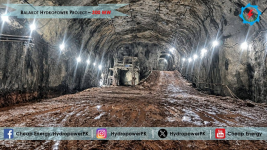
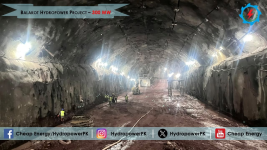
Balakot Hydropower Project -300MW

We all know the shitty planning by Pakistanis. Do you think the Pakistan we got today in this state was because of any planning (long or short term ) ?? Which other nationality can decide to put an imported coal based power plant 1400 km away (in sahiwal) from coast and port which is used to import that coal ? And that too on agricultural land. I forget where I read this but agriculture and land fertility reduced alot in the nearby areas of that sahiwal coal power plant because of the harmful emissions.


That's why, I believe we deserve to become bankrupt (like officially) for atleast once. And then tell the international lenders to forget about any returns because of our bankruptancy. So that when a corrupt government of Pakistan ask them next time to fund such a ridiculous project, they wouldn't accpet.
Agreed. However, rather than bankrupt, the best would be if we as awam get educated and get our head out of the cast, linguistic and geographical divide. Honestly speaking, even if the masses wnat to do it, our leaders wont let us.

Till education remains an industry and election commission and judiciary are subservient to military and bureaucracy, we can kiss any hope goodbye.
 

300MW Balakot Hydropower Project faces pushback over cost, take-or-pay structure​

Stakeholders urge PSDP financing instead of Rs17/kWh tariff, as Nepra questions 17% dollar-indexed return during public hearing

The 300MW Balakot Hydropower Project, being developed by the Pakhtunkhwa Energy Development Organisation (PEDO), is facing strong opposition. Public sector entities under the Power Division and private stakeholders remain reluctant to support the project, citing its high cost and proposed take-or-pay structure.

Business Recorder reported that the concerns surfaced during a public hearing held by the National Electric Power Regulatory Authority (Nepra) on Tuesday. The hearing was chaired by Nepra Chairman Waseem Mukhtar, alongside Member (Tariff and Finance) Amina Ahmed and Member (Development) Maqsood Anwar Khan.

The project has been included as a committed scheme in the proposed Indicative Generation Capacity Expansion Plan (IGCEP) 2025-35.

Industrial stakeholders argued the project should instead be treated as a strategic initiative and financed through the Public Sector Development Programme (PSDP), rather than imposing a tariff exceeding Rs17 per kWh, or 6.3576 US cents per kWh, on consumers.

PEDO filed its tariff petition on October 10, 2025, under the Nepra (Tariff Standards and Procedures) Rules, 1998. The petition was admitted on December 2, 2025.

Project documents put the plant factor at 43.5%, with financing structured through a mix of foreign and local debt.

The foreign loan carries a rate of six-month FOFR plus a 0.75% spread, while local borrowing is based on six-month KIBOR plus a 3% spread, with a 20-year repayment period.

The project envisages a 10.21% equity component with a 17% return on equity, indexed to the US dollar. Working capital financing has been proposed at three-month KIBOR plus 2%.

Total project cost is estimated at $612.56 million, calculated at an exchange rate of Rs278.57 per dollar, under the Power Generation Policy 2015.

Nepra raised concerns over the claimed EPC cost of $513.22 million, which includes a foreign component of $303.09 million and a local component of Rs34.008 billion, inclusive of duties, taxes and price escalation.

Member Amina Ahmed pressed the sponsors on their request to have the project approved under a take-or-pay mechanism rather than take-and-pay, particularly regarding debt servicing and equity recovery.

The authority also questioned the 17% dollar-indexed return on equity. Confusion emerged during the hearing over the mechanism for dollar procurement, which was clarified by Director General (Tariff) Muhammad Yousaf.

Intervener Arif Bilwani argued that since PEDO is developing the project in Khyber Pakhtunkhwa, its electricity should serve local industry and consumers rather than being fed into the national grid.

He also criticised the project's profitability assumptions, take-or-pay structure and dollar indexation, drawing a comparison to the 969MW Neelum-Jhelum Hydropower Project, which remains non-operational due to a tunnel collapse.
 

300MW Balakot Hydropower Project faces pushback over cost, take-or-pay structure​

Stakeholders urge PSDP financing instead of Rs17/kWh tariff, as Nepra questions 17% dollar-indexed return during public hearing

The 300MW Balakot Hydropower Project, being developed by the Pakhtunkhwa Energy Development Organisation (PEDO), is facing strong opposition. Public sector entities under the Power Division and private stakeholders remain reluctant to support the project, citing its high cost and proposed take-or-pay structure.

Business Recorder reported that the concerns surfaced during a public hearing held by the National Electric Power Regulatory Authority (Nepra) on Tuesday. The hearing was chaired by Nepra Chairman Waseem Mukhtar, alongside Member (Tariff and Finance) Amina Ahmed and Member (Development) Maqsood Anwar Khan.

The project has been included as a committed scheme in the proposed Indicative Generation Capacity Expansion Plan (IGCEP) 2025-35.

Industrial stakeholders argued the project should instead be treated as a strategic initiative and financed through the Public Sector Development Programme (PSDP), rather than imposing a tariff exceeding Rs17 per kWh, or 6.3576 US cents per kWh, on consumers.

PEDO filed its tariff petition on October 10, 2025, under the Nepra (Tariff Standards and Procedures) Rules, 1998. The petition was admitted on December 2, 2025.

Project documents put the plant factor at 43.5%, with financing structured through a mix of foreign and local debt.

The foreign loan carries a rate of six-month FOFR plus a 0.75% spread, while local borrowing is based on six-month KIBOR plus a 3% spread, with a 20-year repayment period.

The project envisages a 10.21% equity component with a 17% return on equity, indexed to the US dollar. Working capital financing has been proposed at three-month KIBOR plus 2%.

Total project cost is estimated at $612.56 million, calculated at an exchange rate of Rs278.57 per dollar, under the Power Generation Policy 2015.

Nepra raised concerns over the claimed EPC cost of $513.22 million, which includes a foreign component of $303.09 million and a local component of Rs34.008 billion, inclusive of duties, taxes and price escalation.

Member Amina Ahmed pressed the sponsors on their request to have the project approved under a take-or-pay mechanism rather than take-and-pay, particularly regarding debt servicing and equity recovery.

The authority also questioned the 17% dollar-indexed return on equity. Confusion emerged during the hearing over the mechanism for dollar procurement, which was clarified by Director General (Tariff) Muhammad Yousaf.

Intervener Arif Bilwani argued that since PEDO is developing the project in Khyber Pakhtunkhwa, its electricity should serve local industry and consumers rather than being fed into the national grid.

He also criticised the project's profitability assumptions, take-or-pay structure and dollar indexation, drawing a comparison to the 969MW Neelum-Jhelum Hydropower Project, which remains non-operational due to a tunnel collapse.

This is disaster, another IPP with guaranteed 17% return in dollars which will be paid by federal govt and taken from national grid consumers.

PEDO is being unreasonable. Pakistan cannot afford another IPP with 17% return in dollars. $0.07 cent per unit for hydro power is day light robbery in this day and age.

I like these 2 alternatives instead.

  • Keep it local: If KP is building it, the power should be used to provide cheap electricity to KP’s own industrial zones rather than burdening the national grid.
  • Fund it normally: Because it is a state-owned project, it should be funded through the federal Public Sector Development Programme (PSDP) as a strategic national asset. This would remove the need for commercial "take-or-pay" contracts and exorbitant 17% dollar-indexed profits, ultimately saving the average consumer from paying higher electricity bills.

KPK govt need to use some brain cells for once and stop being hadh haram. You can easily setup up industrial zones near Balakot dam in Hazara region which is terrorism free. Provide them guaranteed cheap electricity through this dam. Instead they want to extract easy 17% return in dollars from debt ridden national grid.

Consider Hazara part of KPK for once.
 
Last edited:

Users who are viewing this thread

Latest Posts

Back
Top