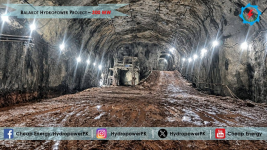
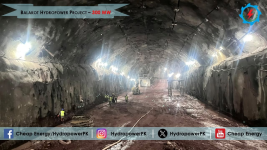
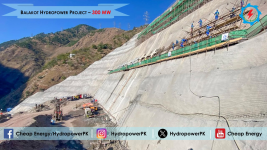
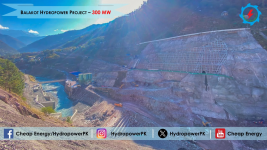
300MW Balakot Hydropower Project faces pushback over cost, take-or-pay structure
Stakeholders urge PSDP financing instead of Rs17/kWh tariff, as Nepra questions 17% dollar-indexed return during public hearing
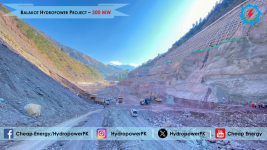
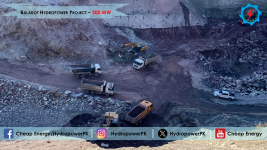
The 300MW Balakot Hydropower Project, being developed by the Pakhtunkhwa Energy Development Organisation (PEDO), is facing strong opposition. Public sector entities under the Power Division and private stakeholders remain reluctant to support the project, citing its high cost and proposed take-or-pay structure.
Business Recorder reported that the concerns surfaced during a public hearing held by the National Electric Power Regulatory Authority (Nepra) on Tuesday. The hearing was chaired by Nepra Chairman Waseem Mukhtar, alongside Member (Tariff and Finance) Amina Ahmed and Member (Development) Maqsood Anwar Khan.
The project has been included as a committed scheme in the proposed Indicative Generation Capacity Expansion Plan (IGCEP) 2025-35.
Industrial stakeholders argued the project should instead be treated as a strategic initiative and financed through the Public Sector Development Programme (PSDP), rather than imposing a tariff exceeding Rs17 per kWh, or 6.3576 US cents per kWh, on consumers.
PEDO filed its tariff petition on October 10, 2025, under the Nepra (Tariff Standards and Procedures) Rules, 1998. The petition was admitted on December 2, 2025.
Project documents put the plant factor at 43.5%, with financing structured through a mix of foreign and local debt.
The foreign loan carries a rate of six-month FOFR plus a 0.75% spread, while local borrowing is based on six-month KIBOR plus a 3% spread, with a 20-year repayment period.
The project envisages a 10.21% equity component with a 17% return on equity, indexed to the US dollar. Working capital financing has been proposed at three-month KIBOR plus 2%.
Total project cost is estimated at $612.56 million, calculated at an exchange rate of Rs278.57 per dollar, under the Power Generation Policy 2015.
Nepra raised concerns over the claimed EPC cost of $513.22 million, which includes a foreign component of $303.09 million and a local component of Rs34.008 billion, inclusive of duties, taxes and price escalation.
Member Amina Ahmed pressed the sponsors on their request to have the project approved under a take-or-pay mechanism rather than take-and-pay, particularly regarding debt servicing and equity recovery.
The authority also questioned the 17% dollar-indexed return on equity. Confusion emerged during the hearing over the mechanism for dollar procurement, which was clarified by Director General (Tariff) Muhammad Yousaf.
Intervener Arif Bilwani argued that since PEDO is developing the project in Khyber Pakhtunkhwa, its electricity should serve local industry and consumers rather than being fed into the national grid.
He also criticised the project's profitability assumptions, take-or-pay structure and dollar indexation, drawing a comparison to the 969MW Neelum-Jhelum Hydropower Project, which remains non-operational due to a tunnel collapse.