Indian Air Force News and Discussions ll

But was will proposal be "cleared"? Then after that when will Cabinet committee "approve"? After that when will finance ministry "clear"? After that when will Prime Ministers Office give the "Green Light"?

When all this is done then "Final Vendor negotiations" will commence right?
Shows you done know basic order. Cabinet committee orders come last.
This are the steps now:
Cost and Negotiations commitee
Finance Ministry approval.
PMO Vetting.
Cabinet Committee of security approval (last step).
 
To view this content we will need your consent to set third party cookies.
For more detailed information, see our cookies page.

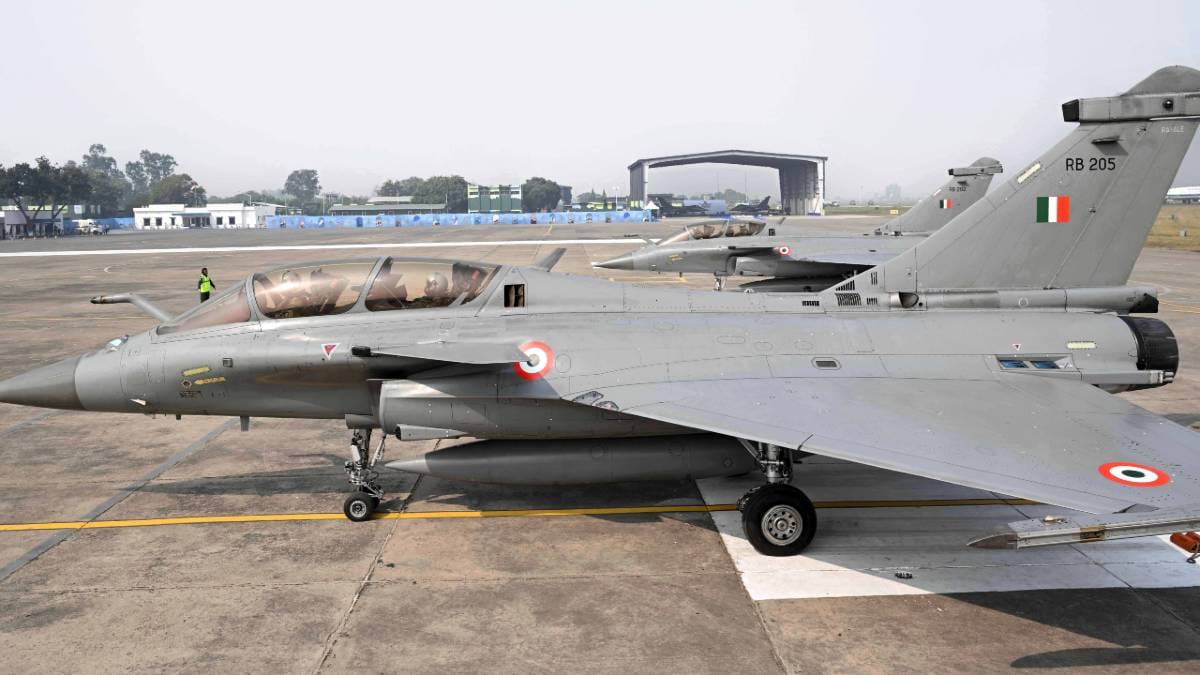
1. Aircraft like the F-15 and Su-30 had the luxury of space which made integrating new avionics over the years relatively straightforward. The Rafale didn't. Its compact 10-tonne design and low rcs left far less internal volume to work with bringing it to a volumetric ceiling much sooner...Avionics bay behind the nose cone and cockpit was packed so tightly that adding new hardware later became increasingly difficult. F4 gets around that by replacing multiple hardware boxes with next gen Modular Data Processing Units and CONTACT SDR. Smaller microelectronics and consolidated computing racks free up internal space, creating room for high bandwidth SATCOM modems, advanced encryption nodes and AI-driven processing units all without touching the fuselage.

2. As electronics become more densely packed, EMI and signal cross-talk across conventional copper wiring quickly become a limiting factor. F4 addresses the problem at the architecture level. Miniaturized electronics make room for digital isolation and unified optical backplanes in place of bulky coaxial shielding, while shared processing removes dozens of antenna interface boxes and RF filters. The result is a much cleaner signal environment inside the avionics bay before data ever reaches the cockpit displays.

3. F4's next gen MDPU fundamentally changes the Rafale's avionics architecture. Instead of relying on dozens of separate hardware boxes linked by wiring, radar processing, image generation, data encryption and spectral analysis now run as isolated software functions on shared high performance computing modules. Freeing up internal space is only part of the story. The bigger gain is that data no longer has to move back and forth between multiple physical boxes, cutting inter system latency to almost nothing.

4. Modern semiconductor nodes give the F4 MDPU far more computing power without a proportional increase in heat. The lower thermal output keeps the Environmental Control System from being pushed beyond its limits, even with much denser computing racks. That avoids the need for larger cooling inlets or external scoops, leaving the Rafale's aerodynamic profile and low rcs untouched.
 
Last edited:
31 more for Navy will take total to $40 bn :rolleyes:
Navy's original MRCBF requirement was for 57 fighters. With the contract now signed for 26 Rafale M, that still leaves 31 aircraft unaccounted for. If the IAF also brings in another 114 Rafales alongside its existing 36, the logic becomes pretty obvious. Why create another logistics chain for a different fighter when you can build around a common Rafale fleet? Training, maintenance, spares and support all become easier. And if things ever get serious, Rafale M can operate from land bases and carry out land attack missions just like the Air Force version.
 
Navy's original MRCBF requirement was for 57 fighters. With the contract now signed for 26 Rafale M, that still leaves 31 aircraft unaccounted for. If the IAF also brings in another 114 Rafales alongside its existing 36, the logic becomes pretty obvious. Why create another logistics chain for a different fighter when you can build around a common Rafale fleet? Training, maintenance, spares and support all become easier. And if things ever get serious, Rafale M can operate from land bases and carry out land attack missions just like the Air Force version.
That was for INS Vikrant, with replacement of INS Vikramaditya in future, this number will go to 100+.
 
You can't easily shoot down a threat when your command nodes are reduced to smoking concrete, your air defense C2 is crushed under its own cave-in and your forward operators are sitting in the dust waiting for ambulances and salvage trucks.

You can't easily post on PDF when you smoke crack....
 
Precision strikes didn't just rattle your mobile trailers, they razed your entire C4I complexes to the ground. When your air defense centers at Nur Khan and Murid are literally smoking rubble, your pilots are flying deaf into a blackout while your command staff digs through the dust for surviving hardware. There's satellite verified BDA confirming it

OK, lets stick to facts and the IAF on this thread shall we, Indian multi ID trolls have been getting nuked here of late.
 

Users who are viewing this thread

Country Watch Latest

Back
Top