Indian Air Force News and Discussions ll

But was will proposal be "cleared"? Then after that when will Cabinet committee "approve"? After that when will finance ministry "clear"? After that when will Prime Ministers Office give the "Green Light"?

When all this is done then "Final Vendor negotiations" will commence right?
Shows you done know basic order. Cabinet committee orders come last.
This are the steps now:
Cost and Negotiations commitee
Finance Ministry approval.
PMO Vetting.
Cabinet Committee of security approval (last step).
 
To view this content we will need your consent to set third party cookies.
For more detailed information, see our cookies page.

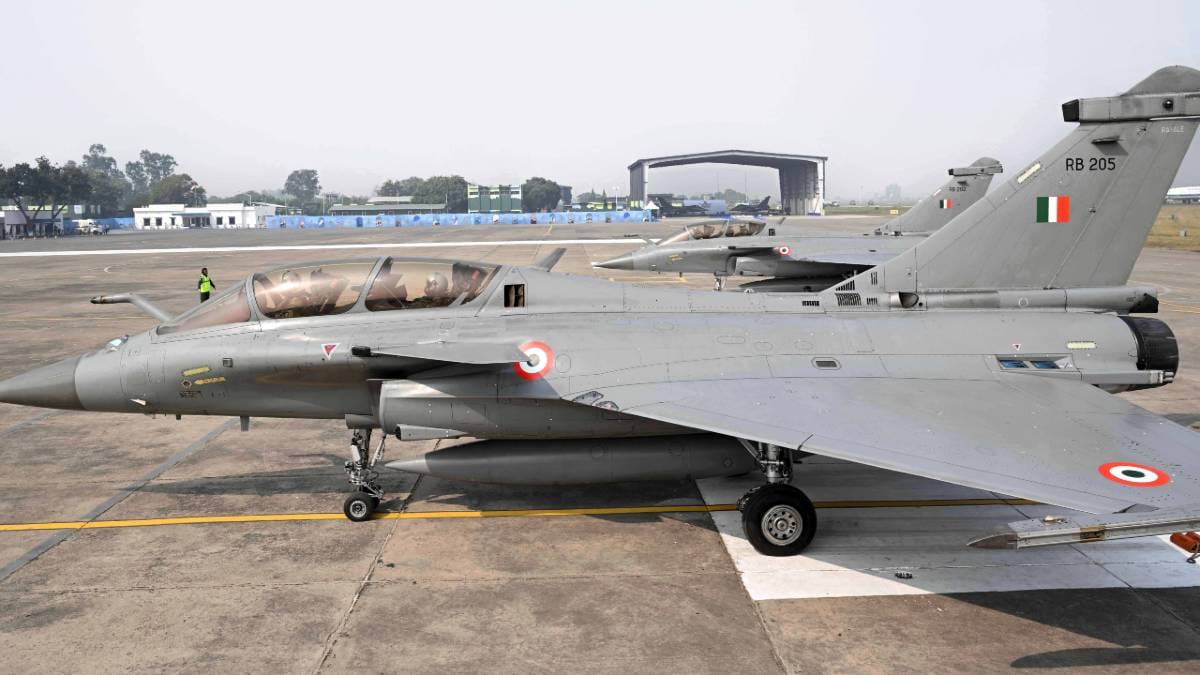
1. Aircraft like the F-15 and Su-30 had the luxury of space which made integrating new avionics over the years relatively straightforward. The Rafale didn't. Its compact 10-tonne design and low rcs left far less internal volume to work with bringing it to a volumetric ceiling much sooner...Avionics bay behind the nose cone and cockpit was packed so tightly that adding new hardware later became increasingly difficult. F4 gets around that by replacing multiple hardware boxes with next gen Modular Data Processing Units and CONTACT SDR. Smaller microelectronics and consolidated computing racks free up internal space, creating room for high bandwidth SATCOM modems, advanced encryption nodes and AI-driven processing units all without touching the fuselage.

2. F4 doesn't enlarge the cockpit, it simply gets more out of it. Thales Scorpion HMD moves weapon symbology, sensor tracks and night vision video off the instrument panel and onto the pilot's visor, opening up a virtual 360° workspace. Streamlined touch-interactive displays and an improved pilot vehicle interface cut down on reaching for controls while reducing helmet canopy interference in high-g manoeuvres.

3. Every bit of internal space in a fighter has to deal with heat as much as hardware. As more high-density electronics are packed into the Rafale's compact avionics bay, heat becomes the limiting factor. F4 overhauls the ECS, redesigns the heat-exchanger routing, reconfigures the liquid cooling loops and upgrades the power system. The result is enough thermal capacity to support higher-wattage processing units in exactly the same space, with no changes to the aircraft's external dimensions. @Nimble
 
Last edited:

Users who are viewing this thread

Back
Top