retaxis
Trusted Member


Heres some examples:
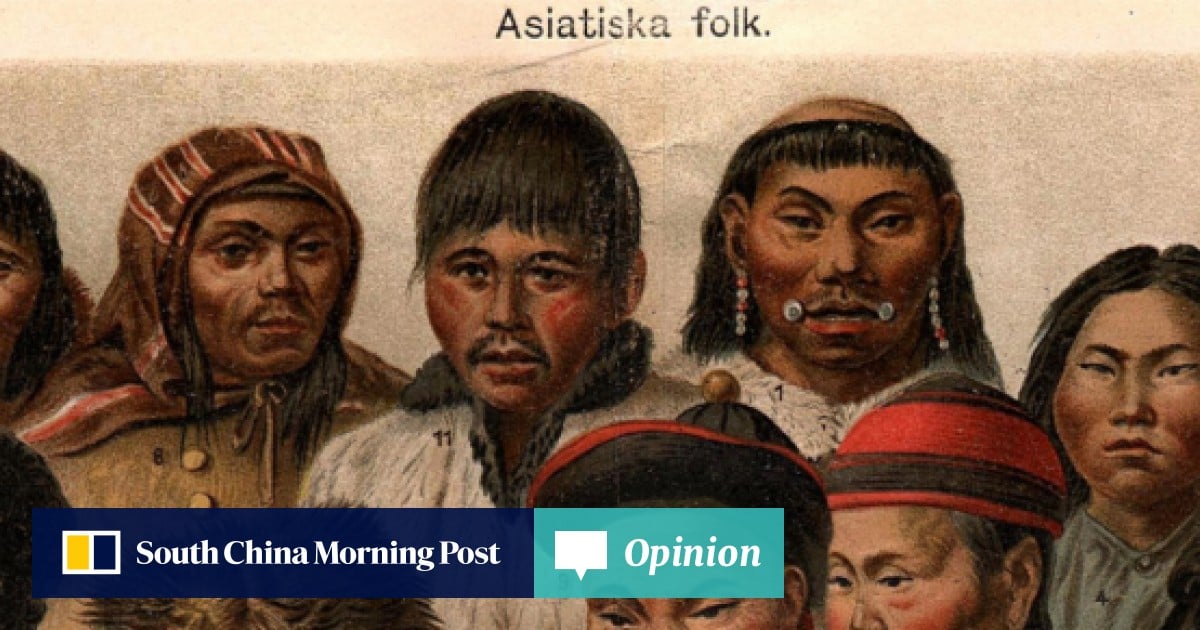
 www.scmp.com
"
How did East Asians come to be referred to as yellow-skinned? It was the result of a series of racial mappings of the world and had nothing to do with the actual colour of people’s skin.
In fact, when complexion was mentioned by an early Western traveller or missionary or ambassador (and it very often wasn’t, because skin colour as a racial marker was not fully in place until the 19th century), East Asians were almost always called white, particularly during the period of first modern contact in the 16th century. And on a number of occasions, even more revealingly, the people were termed “as white as we are”."
Historically, Europeans did not consider the Chinese "white" before Europeans existed; rather, early European travelers, merchants, and missionaries described Chinese people as white until the 18th and 19th centuries, when modern racial classifications and the "yellow" designation were invented. [1, 2, 3]
Early European Perceptions
The Shift to "Yellow"
On Reflection | The Chinese were white, until white men called them yellow
Europeans referred to East Asians as white until the end of the 18th century. But as the Chinese and Japanese resisted cultural assimilation they darkened – both in Western eyes and their own
www.scmp.com
"
How did East Asians come to be referred to as yellow-skinned? It was the result of a series of racial mappings of the world and had nothing to do with the actual colour of people’s skin.
In fact, when complexion was mentioned by an early Western traveller or missionary or ambassador (and it very often wasn’t, because skin colour as a racial marker was not fully in place until the 19th century), East Asians were almost always called white, particularly during the period of first modern contact in the 16th century. And on a number of occasions, even more revealingly, the people were termed “as white as we are”."
Historically, Europeans did not consider the Chinese "white" before Europeans existed; rather, early European travelers, merchants, and missionaries described Chinese people as white until the 18th and 19th centuries, when modern racial classifications and the "yellow" designation were invented. [1, 2, 3]
Early European Perceptions
- Traveler accounts: From Marco Polo in the 13th century to Portuguese merchant Tomé Pires in the 1516, Europeans consistently described East Asians as having a skin tone similar to their own. [1, 2]
- Markers of civilization: Labeling the Chinese as "white" in early modern texts had less to do with literal skin pigmentation and more to do with praising their perceived wealth, high culture, sophisticated governance, and potential for trade and Christian conversion. [1, 2, 3, 4]
The Shift to "Yellow"
- Scientific categorization: During the Enlightenment and the 19th century, European anthropologists and taxonomers began assigning rigid color codes to human groups and grouping populations into distinct racial categories. [1, 2]
- Political and religious divergence: As European powers shifted toward global dominance and imperialism—and as China resisted European trade demands and religious conversion—Western writers began "darkening" East Asian descriptions. [1, 2]
- Invention of the "yellow race": The label "yellow" was formalized through 18th- and 19th-century scientific and medical discourse, eventually completely replacing earlier references to Asian whiteness in the Western imagination. [1, 2, 3]
Last edited:


