Pioneer
Registered Member

- Thread starter
- #46
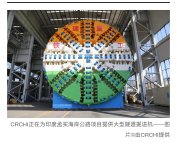
difficult. You need to invest a large amount of capital (with potential for long-term losses)... and develop the related industrial chain. Cultivate relevant talents. And there is no guarantee of market acceptance. Even if you can manufacture, it is very difficult to gain local market recognition.Try to understand the economics. Why would every country manufacture TBMs locally when proven machines are already available internationally at a lower cost? Many countries need only a few TBMs for specific projects, so importing is far more practical than building an entire domestic industry.
China developed a major TBM industry partly because its huge domestic demand justified it. Not every country has that scale.
So importing a TBM doesn't mean a country lacks the capability to develop the technology—it may simply be the more economical choice. TBM technology itself is over a century old, although modern machines have evolved significantly with advanced automation, sensors, materials and control systems.
And overall, I agree. China successfully positioned itself in the 1980s and 1990s by offering cheap labour, large-scale manufacturing capacity and favourable facilities. It then gradually absorbed and developed the technology. Many countries missed the opportunity, but China caught it with both hands and turned that advantage into remarkable industrial and technological progress.
Are you sure that Indian bureaucrats would do this?