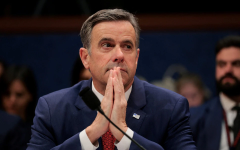
Estonia Defence Minister Resigns Over €70 Million Ukraine Ammunition Deal

_NOBODY_

Trusted Member
Joined
Jan 6, 2016
Messages
4,705
Reaction score
8,686
Reputation
7,851.0
Country of Origin
Country of Residence
Estonia Defence Minister Resigns Over €70 Million Ukraine Ammunition Deal

By: NewsMobile Desk Date: September 3, 2026

Estonia’s Defence Minister Hanno Pevkur resigned on Wednesday, taking political responsibility after a €70 million (over Rs 768 crore) ammunition deal intended for Ukraine unravelled amid procurement concerns.

The contracts were signed in 2024 by Estonia’s Centre for Defence Investments (ECDI) with Datasel S.R.L., an Italy-registered company acquired by India’s Neco Defence Munitions in March 2024. Reports said neither Datasel nor its Indian owner had previously manufactured or sold the artillery shells sought by Estonia.

Estonia paid about €15 million upfront in August 2024, followed by another payment of more than €10 million in October.

Further contracts took total advance payments to around €70 million, using EU European Peace Facility funds. Deliveries were delayed by reported production problems, while ammunition received in 2025 allegedly failed quality checks.

Estonia terminated the contracts and began arbitration proceedings in Strasbourg to recover the money. The European Commission is also engaged in the recovery process.

The National Audit Office criticised defence spending and procurement management, warning Estonia could bear the €70 million cost if EU funds cannot be recovered.

Datasel disputes Estonia’s account, saying it supplied and invoiced €58 million of material against €59 million in advances and that no quality problems were established.

It blamed delayed government and regulatory approvals, saying Estonia prematurely terminated the contracts despite material ready or in production.

Pevkur said Estonia remains committed to strengthening its defence and supporting Ukraine.
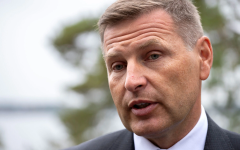
 

Estonia’s defence minister resigns over £60m Ukraine weapons scandal

Alexandra Snow | Published 03 September 2026 2:11pm BST

EU-funded contract was awarded to firm that failed to produce functioning weapons for front lin

1788458898722.png
Hanno Pevkur quit after it emerged that not a single explosive shell had been delivered by a company paid €70m Credit: Anders Wiklund/EPA/ Shutterstock

Estonia’s defence minister has resigned over a €70m (£60m) scandal involving EU-funded artillery for Ukraine.

Hanno Pevkur announced his resignation after it was revealed the Estonian government had awarded a €70m contract to supply weapons to a company that had not previously produced or sold a single shell.

When Datasel SRL eventually delivered munitions intended for Ukraine, they were faulty and incomplete, according to Eesti Ekspress, the Estonian newspaper.

The scandal is an embarrassment for Estonia, which has increased its military spending because it could be Nato’s first line of defence against a Russian attack.

In August 2024, Estonia used money from an EU military fund to pay Datasel to send munitions to Ukraine’s front line by November 2024.

The Indian-run, Italy-based company repeatedly delayed delivery. When a shipment was eventually inspected in 2025, the rounds were found to be faulty and none were sent to Ukraine.

Estonia’s national audit office revealed the scandal in a report last week, and the Estonian prosecutor’s office has said it is opening a criminal investigation. Estonia has taken the case to the European Court of Arbitration in Strasbourg.

Mr Pevkur said that he had not been aware of the issues with the deal, but took responsibility for the outcome.

In a Facebook post announcing his resignation, he said: “A leader must possess the stature and courage to take responsibility even when that responsibility is not personal but serves a greater purpose for the protection of the country.”

Kristen Michal, Estonia’s prime minister, called a cabinet meeting on Thursday to discuss Mr Pevkur’s resignation and the findings of the audit reports, while the government and Datasel remain locked in legal battles over the shipment.

Defence spending raised

Estonia has had a significant military drive over fears of a Russian attack on the countries’ shared 183-mile border.

Its defence spending last year was 3.4 per cent of its GDP, well above Britain’s 2.4 per cent and even the US’s 3.2 per cent.

Estonia moved money away from education and hospitals to fund the substantial increase through its Centre for Defence Investments.

Late last month, John Ratcliffe, the CIA director, paid an unexpected visit to Moscow. A source told Politico that the primary purpose had been to warn Russia against “any escalatory action against the Baltic states”.

1788458993616.png
John Ratcliffe, the CIA director, travelled to Moscow on a US air force plane on a secret mission in August Credit: Kylie Cooper/Reuters

Kaupo Rosin, Estonia’s intelligence director general, told The Telegraph that Russia was conducting “state-sponsored terrorism” across Europe.

In recent months, pro-Kremlin Telegram accounts have been calling for an attack on Narva, a small Russian-speaking Estonian border town that is considered particularly vulnerable.


Hanno Pevkur
Hanno Pevkur quit after it emerged that not a single explosive shell had been delivered by a company paid €70m Credit: Anders Wiklund/EPA/ Shutterstock

Estonia’s defence minister has resigned over a €70m (£60m) scandal involving EU-funded artillery for Ukraine.

Hanno Pevkur announced his resignation after it was revealed the Estonian government had awarded a €70m contract to supply weapons to a company that had not previously produced or sold a single shell.

When Datasel SRL eventually delivered munitions intended for Ukraine, they were faulty and incomplete, according to Eesti Ekspress, the Estonian newspaper.

The scandal is an embarrassment for Estonia, which has increased its military spending because it could be Nato’s first line of defence against a Russian attack.

In August 2024, Estonia used money from an EU military fund to pay Datasel to send munitions to Ukraine’s front line by November 2024.

The Indian-run, Italy-based company repeatedly delayed delivery. When a shipment was eventually inspected in 2025, the rounds were found to be faulty and none were sent to Ukraine.
Advertisement

Estonia’s national audit office revealed the scandal in a report last week, and the Estonian prosecutor’s office has said it is opening a criminal investigation. Estonia has taken the case to the European Court of Arbitration in Strasbourg.

Mr Pevkur said that he had not been aware of the issues with the deal, but took responsibility for the outcome.

In a Facebook post announcing his resignation, he said: “A leader must possess the stature and courage to take responsibility even when that responsibility is not personal but serves a greater purpose for the protection of the country.”

Kristen Michal, Estonia’s prime minister, called a cabinet meeting on Thursday to discuss Mr Pevkur’s resignation and the findings of the audit reports, while the government and Datasel remain locked in legal battles over the shipment.
Defence spending raised

Estonia has had a significant military drive over fears of a Russian attack on the countries’ shared 183-mile border.

Its defence spending last year was 3.4 per cent of its GDP, well above Britain’s 2.4 per cent and even the US’s 3.2 per cent.

Estonia moved money away from education and hospitals to fund the substantial increase through its Centre for Defence Investments.

Late last month, John Ratcliffe, the CIA director, paid an unexpected visit to Moscow. A source told Politico that the primary purpose had been to warn Russia against “any escalatory action against the Baltic states”.
Ratcliffe
John Ratcliffe, the CIA director, travelled to Moscow on a US air force plane on a secret mission in August Credit: Kylie Cooper/Reuters

Kaupo Rosin, Estonia’s intelligence director general, told The Telegraph that Russia was conducting “state-sponsored terrorism” across Europe.

In recent months, pro-Kremlin Telegram accounts have been calling for an attack on Narva, a small Russian-speaking Estonian border town that is considered particularly vulnerable.
Advertisement

Mr Michal previously told The Telegraph: “In Narva and the eastern part of Estonia, the message is quite clear, we are starting the protection of Nato and that of the EU from the eastern border, from the first metre.”

Narva is separated from Russia only by a narrow river, with anti-tank fortifications on the bridge that spans it.

Datasel were approached for comment.

 
It must be a very well-crafted scam, or the minister was so gullible as to believe fabricated websites, offices, documents, etc.
 

Users who are viewing this thread

Back
Top