The Case for Pakistan as a Civilizational State

Impossible. This would be scientifically inaccurate.

No, you will have to go to sleep every night content with the reality that ancient Pakistanis are one of your (many) fathers.
Wasn’t present day Pakistan basically the ancient world’s Laem Chabang, a stopover for armies heading into India? Calling the IVC Pakistani is a bit like calling the USS Abraham Lincoln Thai. I’d probably go easy on the 'many fathers' joke 🤣
 
Wasn’t present day Pakistan basically the ancient world’s Laem Chabang, a stopover for armies heading into India? Calling the IVC Pakistani is a bit like calling the USS Abraham Lincoln Thai. I’d probably go easy on the 'many fathers' joke 🤣
I wouldn't know. You can enlighten me as you seem to be an expert on this matter.
 
It's funny to see Sindhis complaining about Lashkari posing a threat to their language but are so keen on becoming English experts.

Sind has done an exceptional job in preserving the language and culture. English is an official language of the State and thus is treated as such.

Apart from the metropolitan port of Debal, English is seldom understood, spoken and mixed with any of the indigenous dialects of Sind.
 
I read the title as "The case for Pakistan as a civilised state" and scoffed.
 
I think we should have adopted a printed alphabet to make reading easier for our own people. Such as a modified Scythian alphabet.
Like AtaTurk changed the Turkish alphabet. He ended up destroying the real language.
The Urdu alphabet we use today represents a history and civilization. Making people forget about it would be a crime.
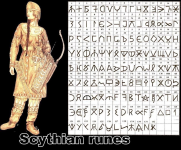
 
Civilizational continuity is a better framing.

I think there will be differences in foundational texts, between those found in current day Pakistan, versus Gangetic India.


This could be the next area to understand better, means understanding those texts better , philologically

@Master Chief


From ai

The Rigveda reflects early Vedic religion (Vedism), an outdoor sacrificial tradition that contrasts sharply with generic Hinduism (the Puranic, temple-centered, devotional faith characterized by bhakti, temple pūjā, and the quest for spiritual liberation).
1. Ritual Apparatus: Fire Altars (Yajña) vs. Temple Worship (Pūjā)
* The Rigveda: There are no temples, permanent shrines, or consecrated statues (mūrtis). Worship was outdoor and impermanent. Priests built geometrical brick altars (vedi) specifically for each ceremony. The gods were invoked by chanting metrical hymns and were fed through Agni (the sacred fire), who acted as a messenger carrying physical oblations up to the skies.
* Generic Hinduism: Worship is predominantly iconic and temple-centered. Devotees visit shrines to gaze upon the deity (darśana), making offerings of water, flowers, fruit, and incense (pūjā). The divine is treated as an honored guest housed in a permanent abode.
2. Metaphysics: Earthly Flourishing vs. Liberation from Rebirth
* The Rigveda: It lacks the bedrock philosophical concepts of mainstream Hinduism: Karma (moral retribution across lifetimes), Saṃsāra (the cycle of reincarnation), and Mokṣa (release from rebirth). The Rigvedic worldview is thoroughly world-affirming. Prayers seek immediate, tangible goods: a lifespan of "one hundred autumns" (śata-śārada), abundant cattle, rain, brave sons, and victory over rival tribes. The deceased travel to the realm of the fathers (Pitṛloka), ruled by Yama, to live in an ancestral paradise without returning to Earth.
* Generic Hinduism: Existence on Earth is viewed as cyclical and fundamentally bound to suffering (saṃsāra). The ultimate spiritual aim is transcending the cycle through liberation (mokṣa), attained via knowledge (jñāna), selfless action (karma yoga), or loving devotion (bhakti).
3. The Pantheon: Elemental Devas vs. Theistic Sects
* The Rigveda: The cosmos is governed by elemental and social forces. Indra (warrior king and storm god) and Agni (fire) account for nearly half the text, accompanied by Soma (the deified ritual drink) and Varuṇa (the overseer of cosmic order, Ṛta).
* Generic Hinduism: The central deities of the modern pantheon either do not exist or are minor footnotes in the Rigveda:
* Śiva: Appears only in the embryonic, marginal form of Rudra, a fierce, wild deity associated with disease and storms, ritually appeased outside the settlement.
* Viṣṇu: A subordinate solar deity who takes three cosmic strides; he possesses none of the cosmic supremacy, devotional cults, or avatāras (such as Rāma or Kṛṣṇa) seen today.
* Ganeśa, Durgā/Kālī, and Hanumān: Completely absent.
* Modern Hinduism is organized into sectarian traditions—Vaiṣṇavism, Śaivism, and Śāktism—none of which existed in the Rigvedic period.
4. Diet, Animal Sacrifices, and Cattle
* The Rigveda: Cattle were pastoral wealth and standard currency, but the culture was not vegetarian. Solemn rituals (Śrauta) involved the consecration and slaughter of animals—including goats, sheep, horses (Aśvamedha), and cattle/bulls (Gomedha)—whose portions were offered to the gods and consumed by the assembly. While certain milking cows were given the protective epithet aghnyā ("not to be killed"), the doctrine of absolute cow sanctity did not exist.
* Generic Hinduism: Ahiṃsā (non-violence) and vegetarianism are high moral ideals. The cow is revered as sacred (Gau Mātā) and universally protected from slaughter, while animal sacrifice has been virtually eliminated outside of specific regional Shakta traditions.
5. The Entheogen: The Centrality of Soma
* The Rigveda: The entire Ninth Mandala (114 hymns) is addressed to Soma—a psychotropic or stimulating mountain plant whose juices were pressed, strained, mixed with milk, and consumed by priests and warriors to produce divine ecstasies and heightened vision.
* Generic Hinduism: The botanical identity of the original Soma plant was forgotten thousands of years ago. It survived only as a mythological concept associated with the moon, and intoxicants are generally viewed as spiritually degrading (tamasic) in orthodox worship.
Direct Comparison
| Dimension | The Rigveda (c. 1500–1200 BCE) | Generic / Puranic Hinduism |
|---|---|---|
| Central Deities | Indra, Agni, Soma, Varuṇa | Śiva, Viṣṇu, Devī, Ganeśa, Kṛṣṇa, Rāma |
| Primary Ritual | Animal & plant sacrifice in open fire altars (Yajña) | Temple worship, image offerings (Pūjā), prayer (Aarti) |
| Core Concern | Material wealth, health, sons, victory | Escaping rebirth (Mokṣa), ethical duty (Dharma) |
| Reincarnation | Absent; linear afterlife in Yama's realm | Universal; soul migrates across bodies based on Karma |
| Dietary Ideal | Pastoral meat-eating & ritual animal slaughter | Vegetarianism, cow veneration, strict ahiṃsā |
| Core Sacrament | Consumption of the psychoactive drink Soma | Offerings of vegetarian blessed food (Prasāda) |
| Scriptural Authority | Solemn revealed auditory canon (Śruti) | Epic/Puranic narratives (Smṛti), Bhagavad Gītā |
The transformation from Rigvedic religion to generic Hinduism was catalyzed centuries later by the Upaniṣads (which internalized the fire sacrifice into meditation) and the rival ascetic movements (Buddhism and Jainism), which challenged animal slaughter and introduced ahiṃsā into the pan-Indian mainstream.
 

Users who are viewing this thread

Back
Top