XAC H-20 stealth bomber - development & news

There were rumours they did two yes. The first one was with the canted movable tail as shown in the popular speculated design from that time in history but I think they are still going with this design? Or refined this design so much it is different but still a flying wing type. I just don't like flying wings that much because they can't turn for shit unlike China's 6th gen fighter designs but flying wings do have the advantage of range and slightly better stealth since there are fewer angles.

Oh and most importantly, pure flying wing design cannot go supersonic. Maybe it is stealthier and has longer reach but I want China to field a supersonic regional bomber JH-xx.

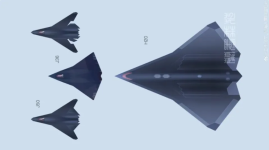
The giant J-36 design is indeed the dreamy one for most Chinese military fans, but a hypersonic strategic bomber of that size perhaps needs to be powered by four 7th gen rotating detonation engines, not even four vce can power it.

China has just tested the rde since the last 2 years, and it may need more time to refine it.

H201.png
 
The giant J-36 design is indeed the dreamy one for most Chinese military fans, but a hypersonic strategic bomber of that size perhaps needs to be powered by four 7th gen rotating detonation engines, not even four vce can power it.

China has just tested the rde since the last 2 years, and it may need more time to refine it.

View attachment 213875

I understand current tech does not allow us to develop a supersonic strategic bomber (intercontinental reach but for one way journey only otherwise China needs regional bases everywhere for return journeys).

I prefer a scenario where H-20 is the intercontinental ranged Ultra Low Observable bomber so keep the pure flying wing for just that little bit better stealth and longer reach. But also develop a JH-xx that has one way range to 2nd island chain (range) and combat radius (operation and return journey accounted for) to 1st island chain when taking off from between central and coastal China. Combat radius to 2nd island chain if taking off from coastal China. Supersonic design kills range but doable with what China has.

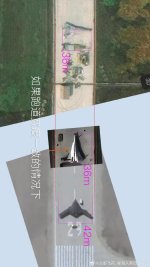
With the recent leakers discussing the test flight H-20's details, it sounds like a pure flying wing design. This means it is subsonic and the size suggests intercontinental range. There are actually other programs for supersonic strike aircraft that are around the same length but much thinner.

If JH-xx isn't for next generation and basically will become operational around the same time as H-20, it is going to be using existing engines. This isn't difficult since 4 WS-10 or WS-15 can easily take an optimised design to well past mach 2.5. The limit isn't the airframe but the engine compression staging and bypass ratios which even fighter optimised WS-10 and WS-15 can achieve around Mach 2.5. This is enough speed for JH-xx. If the aircraft is not much larger than a heavy fighter, 2x WS-15 can even take it to mach 2 which is plenty of a strike aircraft.

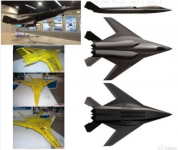
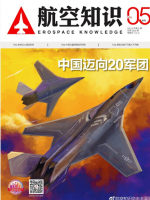
JH-xx was an actual real program that produced flying prototypes according to Chinese leakers and the evidence does stack up that way. It may eventually even be revealed.

1788482979317.png

1788482995355.png

There was even a leak of XAC or SAC (whoever was developing it) test facility and there was this aicraft cockpit section in the background of two photos and this planform used in promotion material the exact same way the planform of J-50 was leaked back in 2018 photos of site visits and factory celebrations.

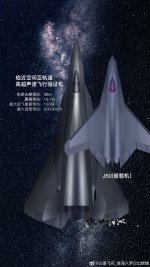
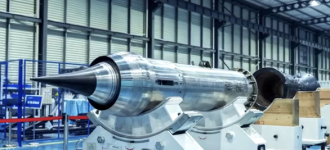
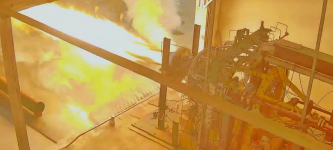
The mystery supersonic, large aircraft (arrowtip planform one) is different to JH-xx and has sweep angle that indicates speeds >mach 3.5 though. It also doesn't appear to be able to support 4 WS-10 or even 4 WS-19. It is likely two engines and two WS-15 even modified to suit such a platform is unlikely to be able to push such a large and heavy strike aircraft to past even mach 2. Therefore this aircraft is testing with some other engine. China has tested many types of combined cycle engine in flights since 2019. The rotating detonation is still much more experimental compared to the turbofan - rocket and turbofan - ramjet combined cycle engines. Scramjets are used by the hypersonic cruise missiles YJ-19 and CJ-1000 and quite unlikely to be powering an aircraft because they require rocket boost to scramjet operating speeds. Same issue with ramjets, requires boost or combined cycle with turbofan in lower speed stages.

Therefore the engine used for this mystery aircraft is probably some turbofan - ramjet combined cycle and it's likely only two units.77ebe151ly1i7h69yr3onj22653uwqv8.jpg


77ebe151ly1i7h69wwc1ij228h3z1b29.jpg

Note that the GJ-xx which is now speculated to be a large unmanned tanker is B-21 sized in wingspan.

VCE will not be able to push this supersonic aircraft to the speed (mach 3.5+) indicated by wing sweep angle. In fact my measurements this sweep angle is more than the WZ-8 which is already a mach 4 aircraft at altitude. I suspect 2 units of combined cycle is the only way to push beyond mach 3. VCE will start struggling around mach 3 and is mainly great for fuel efficiency -> range.
 
Last edited:
I understand current tech does not allow us to develop a supersonic strategic bomber (intercontinental reach but for one way journey only otherwise China needs regional bases everywhere for return journeys).

I prefer a scenario where H-20 is the intercontinental ranged Ultra Low Observable bomber so keep the pure flying wing for just that little bit better stealth and longer reach. But also develop a JH-xx that has one way range to 2nd island chain (range) and combat radius (operation and return journey accounted for) to 1st island chain when taking off from between central and coastal China. Combat radius to 2nd island chain if taking off from coastal China. Supersonic design kills range but doable with what China has.

With the recent leakers discussing the test flight H-20's details, it sounds like a pure flying wing design. This means it is subsonic and the size suggests intercontinental range. There are actually other programs for supersonic strike aircraft that are around the same length but much thinner.

If JH-xx isn't for next generation and basically will become operational around the same time as H-20, it is going to be using existing engines. This isn't difficult since 4 WS-10 or WS-15 can easily take an optimised design to well past mach 2.5. The limit isn't the airframe but the engine compression staging and bypass ratios which even fighter optimised WS-10 and WS-15 can achieve around Mach 2.5. This is enough speed for JH-xx.

The mystery supersonic, large aircraft has sweep angle that indicates speeds >mach 3.5 though. It also doesn't appear to be able to support 4 WS-10 or even 4 WS-19. It is likely two engines and two WS-15 even modified to suit such a platform is unlikely to be able to push such a large and heavy strike aircraft to past even mach 2. Therefore this aircraft is testing with some other engine. China has tested many types of combined cycle engine in flights since 2019. The rotating detonation is still much more experimental compared to the turbofan - rocket and turbofan - ramjet combined cycle engines. Scramjets are used by the hypersonic cruise missiles YJ-19 and CJ-1000 and quite unlikely to be powering an aircraft because they require rocket boost to scramjet operating speeds. Same issue with ramjets, requires boost or combined cycle with turbofan in lower speed stages.

Therefore the engine used for this mystery aircraft is probably some turbofan - ramjet combined cycle and it's likely only two units.View attachment 213879


View attachment 213880

Note that the GJ-xx which is now speculated to be a large unmanned tanker is B-2 sized in wingspan.

VCE will not be able to push this supersonic aircraft to the speed (mach 3.5+) indicated by wing sweep angle. In fact my measurements this sweep angle is more than the WZ-8 which is already a mach 4 aircraft at altitude. I suspect 2 units of combined cycle is the only way to push beyond mach 3. VCE will start struggling around mach 3 and is mainly great for fuel efficiency -> range.

The JH-XX might be cancelled due that China already got the unmanned GJ-X to be complementary with the H-20.

As for the TBCC, there are people even suggest the current J-36 is using this type of propulsion, whereas the VCE is designated only for the J-50.

And the 7th gen aircraft gonna be hypersonic near the edge of atmosphere, and the most suitable engine could be the RDE.
 
The JH-XX might be cancelled due that China already got the unmanned GJ-X to be complementary with the H-20.

As for the TBCC, there are people even suggest the current J-36 is using this type of propulsion, whereas the VCE is designated only for the J-50.

And the 7th gen aircraft gonna be hypersonic near the edge of atmosphere, and the most suitable engine could be the RDE.

There are a lot of hidden programs, failed programs, rejected programs and experimental/study programs that either yield something, nothing or lessons for platforms that eventually become mainstream.

Even last few months SAC was rumoured to have flown some high supersonic aircraft. Maybe it is the arrowhead aircraft maybe something different. I don't think arrowhead has been linked to SAC.

For engines which is arguably more difficult since China has all the aerodynamics, supercomputing and wind tunneling tools down for some time (look at all the hypersonic maneuoverables, tailless supersonic fighters, UADFs, unmanned platforms with exotic designs). Engines are still pretty much world leading at this moment EXCEPT for commercial high bypass engines which lag behind US and UK by some margin despite the component technology branches being delivered, the whole is still to be mastered to the same degree it has in the US and UK. Military turbofan is better but I suspect behind the US even with 5th gen engine ready and VCE nearing readiness.

China is a little ahead in scramjets (started in the 1990s and mastered in the late 2010s and put into service with HCMs already), a little ahead in rotating detonation but this is only based on the fact that China flew two before the US experimented on a single one. The US could have gone above for all we know now. Combined cycle I would say is also a field China is ahead with multiple test flights with Tengyun related programs.

Ramjet is an interesting one because even though basic ones were introduced in the 1980s and throughout. Recently there is the newer form of ramjet that blends with scramjet was experimented with DF-100 missile. In fact even civilian company LingKong tested an exotic next generation ramjet with their Yunxing experiment. These ramjets operate above mach 3 and like DF-100's engine, it's supposed to be touching hypersonic speed so they usually describe as near hypersonic typically mach 4+ but under mach 5.

1788486783946.png

1788486832841.png

1788486869877.png

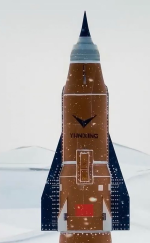
I suspect DF-100's intake looks like the one in this Lingkong program's. Lingkong is a very public, civilian company, the one that produced the "super affordable" HGV weapon.

The combined cycle programs are definitely the most interesting because reusable aircraft will be powered by these rather than the standalone ramjets, scramjets and rotating detonation or other forms of continuous detonation like the oblique detonation engine the US claims China managed to build in the early 2020s with the context being China's hypersonic missile programs making use of oblique detonation engine.

The cheaper exotic mach 4+ ramjet used by the DF-100 is considered outdated. DF-100 stopped in 2019-2020 and maybe that's why that tech was given to commercial entity Lingkong? Just like how CASIC and CASC sometimes give outdated tech to the commercial space companies.

There are so many new exotic non-turbofan engine types that are flying. The good thing about these is that like with EVs and battery technology, it is a departure from the conventional mainstream technology. Though even in turbofans, China has basically caught up just like with internal combustion engines for cars. The exotic new engines are mostly an even starting with the US. The US may have played around with these since the 1970s and 1980s but they moved extremely slowly back then and their military posture largely does not require this stuff except for their global prompt strike program which required at least a scramjet if not continuous detonation engine.

The thing that allowed China to surpass is really the many types of hypersonic wind tunnels that the US only are now trying to produce to the same speed as China's. Previously they only had very old and speed constrained hypersonic tunnels. China's explosion based hypersonic tunnels consume the energy of a small city.
 
There are a lot of hidden programs, failed programs, rejected programs and experimental/study programs that either yield something, nothing or lessons for platforms that eventually become mainstream.

Even last few months SAC was rumoured to have flown some high supersonic aircraft. Maybe it is the arrowhead aircraft maybe something different. I don't think arrowhead has been linked to SAC.

For engines which is arguably more difficult since China has all the aerodynamics, supercomputing and wind tunneling tools down for some time (look at all the hypersonic maneuoverables, tailless supersonic fighters, UADFs, unmanned platforms with exotic designs). Engines are still pretty much world leading at this moment EXCEPT for commercial high bypass engines which lag behind US and UK by some margin despite the component technology branches being delivered, the whole is still to be mastered to the same degree it has in the US and UK. Military turbofan is better but I suspect behind the US even with 5th gen engine ready and VCE nearing readiness.

China is a little ahead in scramjets (started in the 1990s and mastered in the late 2010s and put into service with HCMs already), a little ahead in rotating detonation but this is only based on the fact that China flew two before the US experimented on a single one. The US could have gone above for all we know now. Combined cycle I would say is also a field China is ahead with multiple test flights with Tengyun related programs.

Ramjet is an interesting one because even though basic ones were introduced in the 1980s and throughout. Recently there is the newer form of ramjet that blends with scramjet was experimented with DF-100 missile. In fact even civilian company LingKong tested an exotic next generation ramjet with their Yunxing experiment. These ramjets operate above mach 3 and like DF-100's engine, it's supposed to be touching hypersonic speed so they usually describe as near hypersonic typically mach 4+ but under mach 5.

View attachment 213883

View attachment 213884

View attachment 213885

I suspect DF-100's intake looks like the one in this Lingkong program's. Lingkong is a very public, civilian company, the one that produced the "super affordable" HGV weapon.

The combined cycle programs are definitely the most interesting because reusable aircraft will be powered by these rather than the standalone ramjets, scramjets and rotating detonation or other forms of continuous detonation like the oblique detonation engine the US claims China managed to build in the early 2020s with the context being China's hypersonic missile programs making use of oblique detonation engine.

The cheaper exotic mach 4+ ramjet used by the DF-100 is considered outdated. DF-100 stopped in 2019-2020 and maybe that's why that tech was given to commercial entity Lingkong? Just like how CASIC and CASC sometimes give outdated tech to the commercial space companies.

There are so many new exotic non-turbofan engine types that are flying. The good thing about these is that like with EVs and battery technology, it is a departure from the conventional mainstream technology. Though even in turbofans, China has basically caught up just like with internal combustion engines for cars. The exotic new engines are mostly an even starting with the US. The US may have played around with these since the 1970s and 1980s but they moved extremely slowly back then and their military posture largely does not require this stuff except for their global prompt strike program which required at least a scramjet if not continuous detonation engine.

The thing that allowed China to surpass is really the many types of hypersonic wind tunnels that the US only are now trying to produce to the same speed as China's. Previously they only had very old and speed constrained hypersonic tunnels. China's explosion based hypersonic tunnels consume the energy of a small city.

Well, except for the commercial jetliner, China is definitely sailing ahead of the US.

The VCE program of the US is also facing delay after the 2030 due their hollowed industrialization and the current ongoing rare earth restriction from China.

For China's aviation industry, the only missing puzzle is an intercontinental jetliner like the C929 and a commercial high-bypass turbofan engine like the CJ-2000.

Based on the recent information, China is now preparing for the maiden flight of the C929 with the CJ-2000 engine, and it is very likely to move forward in 2027-2028 instead of 2030.

China did have the Y-10 in the 1980, but the contemporary Chinese leaders of that time wanted to appease the US, therefore they just cancelled it.

Otherwise, China would have already surpassed both Boeing and Airbus by now.
 

Users who are viewing this thread

Back
Top