
MNZGamerX
Registered Member

September 14, 2026
By: Mohammed Ayoob
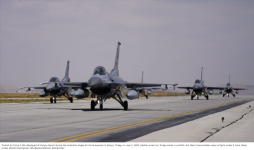
Another serious interstate crisis appears to be looming on the horizon in the Middle East, this one pitting Israel against Turkey. It was foreshadowed two years ago by Turkish President Recep Tayyip Erdoğan’s statement in October 2024, shortly before the rebel assault that brought down Syrian President Bashar al-Assad, that “Israel’s next target will be Turkey.”
The Israeli air strike on Syria’s Abu al-Duhur airbase on August 18 may eventually be remembered as the beginning of the fulfillment of that prophecy and the moment when the long deterioration in Israeli-Turkish relations acquired a distinctly military dimension. The base, roughly 50 miles from the Turkish border, had been visited only hours earlier by a Turkish military delegation examining rehabilitation work. Israel subsequently said it acted because Syria was on the verge of violating a security understanding by permitting a Turkish military deployment there. Turkey and Syria rejected Israel’s justification.
More remarkable was the reaction of Tom Barrack, the American ambassador to Turkey and President Donald Trump’s special envoy for Syria. Barrack disclosed that Ankara had not been warned of the Israeli operation and therefore could reasonably have interpreted Israeli aircraft approaching the Turkish frontier as a threat and scrambled its own fighters. He went further, suggesting that one possible explanation was that Israel had been “baiting the Turks” into a military confrontation.
Whatever Israel’s precise motivation, the episode demonstrates how radically the strategic landscape in the Middle East has changed. Turkey and Israel were once pillars of an informal regional alignment. During the 1990s, their military establishments cooperated closely, intelligence ties were substantial, and both regarded each other as useful counterweights to hostile neighbors. That relationship deteriorated sharply under President Erdoğan, particularly after the 2010 Mavi Marmara incident in which Israeli attacks killed 10 Turkish citizens. However, periods of tension were repeatedly followed by attempts at reconciliation. As recently as 2022, the two governments restored full diplomatic relations.
Israel’s devastation of Gaza that killed over 70,000 Palestinians and displaced most of its two million inhabitants shattered that fragile normalization. Erdoğan became one of the most uncompromising critics of Israel’s policy of ethnic cleansing of Gaza, and Ankara suspended direct trade with Israel. Israeli officials, in turn, increasingly came to publicly characterize Turkey not merely as an unfriendly government but as a potential strategic adversary.
But now the arena for a potential Israeli-Turkish showdown has shifted from Gaza to Syria, which is of much greater strategic significance to Turkey. The overthrow of Bashar al-Assad and the installation of the government headed by Ahmed al-Sharaa dramatically strengthened Turkey’s position in Syria. Ankara has become one of Damascus’s principal political and military partners, providing training and assistance as Syria attempts to reconstruct its armed forces and state institutions. Israel sees the same development through an entirely different prism. It wants to preserve freedom of military action inside Syria and prevent the emergence of military capabilities, whether Syrian or Turkish, that could restrict Israeli operations in Syria.
The result is a collision between two incompatible conceptions of Syria’s future. Turkey favors restoring a sovereign, territorially integrated Syrian state closely connected to Ankara. Israel prefers a weak and decentralized Syria in which no powerful military force can establish itself to constrain Israeli freedom of action. Israel’s continuing military presence in parts of southern Syria and its repeated attacks on Syrian military infrastructure reinforce Turkish assessments that Israel intends to keep Syria militarily debilitated and territorially fragmented.
This makes the Abu al-Duhur attack especially significant. Israel was not striking an Iranian weapons convoy or Hezbollah facility, the familiar justification for Israeli operations in Syria so far. It was attacking infrastructure whose rehabilitation was being undertaken by the Turkish military. Syria’s foreign minister has stated that Damascus had explicitly informed Israel that no permanent Turkish base was planned at the site.
The implicit Israeli message therefore seems broader: there are limits to the Turkish military role in Syria that Israel will not allow it to exceed. That is a dangerous proposition when addressed to Turkey. Unlike Iran, Turkey is a NATO member with one of the region’s largest and most sophisticated armed forces. Moreover, Ankara’s strategic position has recently been strengthened by the Mecca Joint Defence Agreement with Saudi Arabia and Pakistan, which declares that an armed attack against any of the three will be regarded as an attack against all (although recent Houthi attacks on Saudi Arabia may soon bring this commitment to its first test).
Neither Israel nor Turkey really wants war, and Erdoğan has responded rhetorically rather than militarily to repeated Israeli provocations. But deterrence becomes increasingly unstable when both sides believe vital strategic interests are at stake. Turkey cannot indefinitely accept an Israeli veto over its military cooperation with a sovereign Syrian government, particularly when Ankara regards Syrian stability as essential to its own national security, especially given the Kurdish presence on both sides of the Turkish-Syrian border.
This is why Barrack’s warning deserves attention. Washington is consequently attempting to construct a trilateral deconfliction mechanism involving Israel, Turkey, and Syria, but nothing concrete has come out of it so far. This is urgently necessary, but it addresses the symptom rather than the underlying disease.
The deeper problem is that Israel and Turkey are increasingly competing over the architecture of the post-Assad Middle East. Israel’s destruction of Gaza destroyed much of the political foundation of their relationship; Syria is now converting that political estrangement into strategic rivalry. Turkey’s latest move seeking an Interpol Red Notice against Israeli Prime Minister Benjamin Netanyahu for his role in the Israeli attack on the Sumud flotilla in October 2025 is a sign of how far relations between the two countries have deteriorated.
Since the Abu al-Duhur strike, the immediate danger of confrontation appears to have receded somewhat, although the underlying rivalry has sharpened. Israeli officials have made clear that they regard the establishment of Turkish bases or air-defense systems in Syria as a red line and are prepared to use force to prevent it. At the same time, Azerbaijan has also sought to mediate between Ankara and Jerusalem. Thus, even if diplomacy helps reduce the danger of an accidental clash, the fundamental question remains unresolved: can Israel hold a veto over Turkey’s military cooperation with the new Syrian government?
For the moment, mutual caution and American mediation will probably prevent direct conflict. But the trajectory is unmistakably dangerous. If Israel continues to define Turkey’s expanding role in Syria as a security threat, while Turkey increasingly interprets Israeli military actions as an attempt to dictate the regional order, the two strongest non-Arab military powers in the Middle East could find themselves moving from rivalry to confrontation, an outcome that could make a turbulent regional environment infinitely more dangerous.
Moreover, such an eventuality would pose a great dilemma for the United States by forcing it to choose between a NATO ally and its closest strategic partner in the region. Washington’s predicament could become especially acute if, in an armed conflict, Turkey invokes the collective-defense guarantee under Article 5 of the North Atlantic Treaty, which requires all members to assist any NATO member under attack. Given the fact that the Trump administration is committed to assuring stability in Syria under the post-Assad government, a goal it shares with Turkey, it must use all its leverage with Israel to persuade it to de-escalate its confrontation with Turkey before it reaches a point of no return.
By: Mohammed Ayoob
Another serious interstate crisis appears to be looming on the horizon in the Middle East, this one pitting Israel against Turkey. It was foreshadowed two years ago by Turkish President Recep Tayyip Erdoğan’s statement in October 2024, shortly before the rebel assault that brought down Syrian President Bashar al-Assad, that “Israel’s next target will be Turkey.”
The Israeli air strike on Syria’s Abu al-Duhur airbase on August 18 may eventually be remembered as the beginning of the fulfillment of that prophecy and the moment when the long deterioration in Israeli-Turkish relations acquired a distinctly military dimension. The base, roughly 50 miles from the Turkish border, had been visited only hours earlier by a Turkish military delegation examining rehabilitation work. Israel subsequently said it acted because Syria was on the verge of violating a security understanding by permitting a Turkish military deployment there. Turkey and Syria rejected Israel’s justification.
More remarkable was the reaction of Tom Barrack, the American ambassador to Turkey and President Donald Trump’s special envoy for Syria. Barrack disclosed that Ankara had not been warned of the Israeli operation and therefore could reasonably have interpreted Israeli aircraft approaching the Turkish frontier as a threat and scrambled its own fighters. He went further, suggesting that one possible explanation was that Israel had been “baiting the Turks” into a military confrontation.
Whatever Israel’s precise motivation, the episode demonstrates how radically the strategic landscape in the Middle East has changed. Turkey and Israel were once pillars of an informal regional alignment. During the 1990s, their military establishments cooperated closely, intelligence ties were substantial, and both regarded each other as useful counterweights to hostile neighbors. That relationship deteriorated sharply under President Erdoğan, particularly after the 2010 Mavi Marmara incident in which Israeli attacks killed 10 Turkish citizens. However, periods of tension were repeatedly followed by attempts at reconciliation. As recently as 2022, the two governments restored full diplomatic relations.
Israel’s devastation of Gaza that killed over 70,000 Palestinians and displaced most of its two million inhabitants shattered that fragile normalization. Erdoğan became one of the most uncompromising critics of Israel’s policy of ethnic cleansing of Gaza, and Ankara suspended direct trade with Israel. Israeli officials, in turn, increasingly came to publicly characterize Turkey not merely as an unfriendly government but as a potential strategic adversary.
But now the arena for a potential Israeli-Turkish showdown has shifted from Gaza to Syria, which is of much greater strategic significance to Turkey. The overthrow of Bashar al-Assad and the installation of the government headed by Ahmed al-Sharaa dramatically strengthened Turkey’s position in Syria. Ankara has become one of Damascus’s principal political and military partners, providing training and assistance as Syria attempts to reconstruct its armed forces and state institutions. Israel sees the same development through an entirely different prism. It wants to preserve freedom of military action inside Syria and prevent the emergence of military capabilities, whether Syrian or Turkish, that could restrict Israeli operations in Syria.
The result is a collision between two incompatible conceptions of Syria’s future. Turkey favors restoring a sovereign, territorially integrated Syrian state closely connected to Ankara. Israel prefers a weak and decentralized Syria in which no powerful military force can establish itself to constrain Israeli freedom of action. Israel’s continuing military presence in parts of southern Syria and its repeated attacks on Syrian military infrastructure reinforce Turkish assessments that Israel intends to keep Syria militarily debilitated and territorially fragmented.
This makes the Abu al-Duhur attack especially significant. Israel was not striking an Iranian weapons convoy or Hezbollah facility, the familiar justification for Israeli operations in Syria so far. It was attacking infrastructure whose rehabilitation was being undertaken by the Turkish military. Syria’s foreign minister has stated that Damascus had explicitly informed Israel that no permanent Turkish base was planned at the site.
The implicit Israeli message therefore seems broader: there are limits to the Turkish military role in Syria that Israel will not allow it to exceed. That is a dangerous proposition when addressed to Turkey. Unlike Iran, Turkey is a NATO member with one of the region’s largest and most sophisticated armed forces. Moreover, Ankara’s strategic position has recently been strengthened by the Mecca Joint Defence Agreement with Saudi Arabia and Pakistan, which declares that an armed attack against any of the three will be regarded as an attack against all (although recent Houthi attacks on Saudi Arabia may soon bring this commitment to its first test).
Neither Israel nor Turkey really wants war, and Erdoğan has responded rhetorically rather than militarily to repeated Israeli provocations. But deterrence becomes increasingly unstable when both sides believe vital strategic interests are at stake. Turkey cannot indefinitely accept an Israeli veto over its military cooperation with a sovereign Syrian government, particularly when Ankara regards Syrian stability as essential to its own national security, especially given the Kurdish presence on both sides of the Turkish-Syrian border.
This is why Barrack’s warning deserves attention. Washington is consequently attempting to construct a trilateral deconfliction mechanism involving Israel, Turkey, and Syria, but nothing concrete has come out of it so far. This is urgently necessary, but it addresses the symptom rather than the underlying disease.
The deeper problem is that Israel and Turkey are increasingly competing over the architecture of the post-Assad Middle East. Israel’s destruction of Gaza destroyed much of the political foundation of their relationship; Syria is now converting that political estrangement into strategic rivalry. Turkey’s latest move seeking an Interpol Red Notice against Israeli Prime Minister Benjamin Netanyahu for his role in the Israeli attack on the Sumud flotilla in October 2025 is a sign of how far relations between the two countries have deteriorated.
Since the Abu al-Duhur strike, the immediate danger of confrontation appears to have receded somewhat, although the underlying rivalry has sharpened. Israeli officials have made clear that they regard the establishment of Turkish bases or air-defense systems in Syria as a red line and are prepared to use force to prevent it. At the same time, Azerbaijan has also sought to mediate between Ankara and Jerusalem. Thus, even if diplomacy helps reduce the danger of an accidental clash, the fundamental question remains unresolved: can Israel hold a veto over Turkey’s military cooperation with the new Syrian government?
For the moment, mutual caution and American mediation will probably prevent direct conflict. But the trajectory is unmistakably dangerous. If Israel continues to define Turkey’s expanding role in Syria as a security threat, while Turkey increasingly interprets Israeli military actions as an attempt to dictate the regional order, the two strongest non-Arab military powers in the Middle East could find themselves moving from rivalry to confrontation, an outcome that could make a turbulent regional environment infinitely more dangerous.
Moreover, such an eventuality would pose a great dilemma for the United States by forcing it to choose between a NATO ally and its closest strategic partner in the region. Washington’s predicament could become especially acute if, in an armed conflict, Turkey invokes the collective-defense guarantee under Article 5 of the North Atlantic Treaty, which requires all members to assist any NATO member under attack. Given the fact that the Trump administration is committed to assuring stability in Syria under the post-Assad government, a goal it shares with Turkey, it must use all its leverage with Israel to persuade it to de-escalate its confrontation with Turkey before it reaches a point of no return.


