Nickel Exports Surge 50.12%, Supporting Indonesia’s Downstream Industrialization
Lili Handayani
6 Oktober 2026
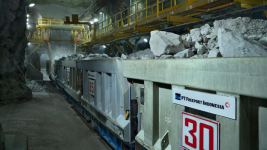
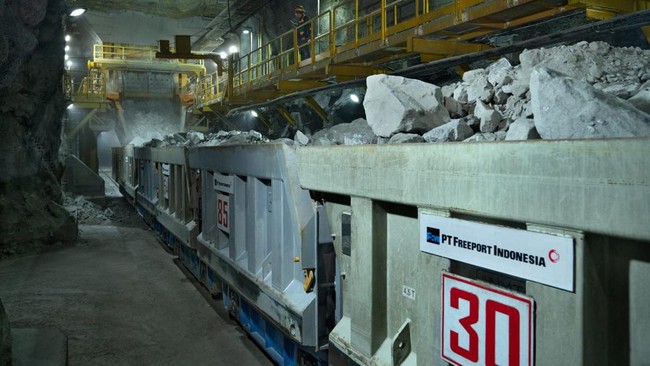
Harita Nickel, one of Indonesian local companies in Nickel Processing Industry
The processing industry has become not only the largest contributor to exports, but also a key driver of Indonesia’s foreign trade growth.
NIKEL.CO.ID, JAKARTA – Indonesia’s exports of nickel and nickel products recorded significant growth during January–August 2026. Exports under HS Code 75 increased
50.12% compared with the same period a year earlier on a cumulative-to-cumulative (CtC) basis.
The increase in nickel exports is a strong indication of the continued development of Indonesia’s domestic mineral-processing industry. The growth also came amid strong performance from the broader processing industry, which remains the main pillar of the country’s exports.
According to the Ministry of Trade, Indonesia’s total exports during January–August 2026 reached
US$193.64 billion, up 4.74% from the same period in 2025. Non-oil and gas exports reached
US$185.63 billion, rising 5.48% year-on-year, while oil and gas exports stood at
US$8.01 billion, down 9.98%.
By sector, the processing industry was the main driver of national export growth. Exports from the sector reached
US$159.55 billion, accounting for approximately
82.40% of Indonesia’s total exports.
Processing-industry exports grew 7.87% during January–August 2026. In addition to nickel and nickel products, which increased 50.12%, exports of aluminum and aluminum products (HS 76) surged
102.25%, while copper and copper products (HS 74) rose
47.13%.
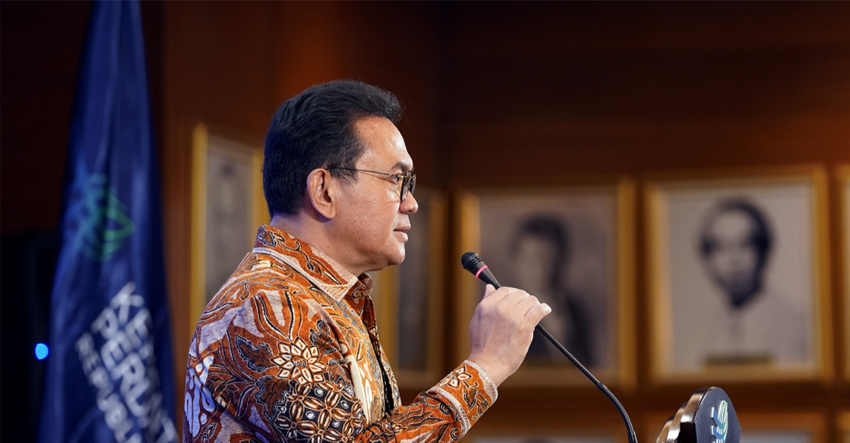
Trade Minister
Budi Santoso said the figures showed that Indonesia’s downstream industrialization policy had helped shift the country’s export structure toward higher-value-added products.
“Indonesia’s export achievements are the positive result of downstream industrialization. This policy demonstrates that Indonesia’s economic transformation toward higher-value-added products has been successful and is further strengthening the country’s export structure in the global market,” Budi said in Jakarta on Tuesday, October 6, 2026.
According to Budi, the processing industry has become not only Indonesia’s largest export contributor but also a key driver of the country’s foreign trade growth.
“The success of downstream industrialization has now proven to be the main pillar and growth engine of national exports. With a contribution of 82.40% of total exports and export value reaching US$159.55 billion during January–August 2026, the processing industry demonstrates that Indonesian-made manufactured products are becoming increasingly established, competitive, and important in international markets,” he said.
Nickel Strengthens the Processing Industry’s Export Structure
The
50.12% growth in nickel exports stands out as an indication of the increasing role of processed nickel products in Indonesia’s trade structure. The performance is in line with the government’s policy of encouraging domestic mineral processing before products are exported.
As a result, Indonesia’s exports are becoming less dependent on raw commodities and increasingly oriented toward products with higher added value.
Nickel export growth is also part of a broader positive trend among processed mineral commodities. In addition to nickel, aluminum exports more than doubled, while copper exports grew by nearly 50%. These developments demonstrate that minerals are playing an increasingly important role in the expansion of Indonesia’s processing industry and the growth of the country’s export value.
Alongside stronger exports of processed industrial products, Indonesia also recorded a substantial trade surplus. In August 2026, the country posted a
US$3.55 billion trade surplus, a sharp increase from just
US$0.12 billion in July 2026.
The August surplus was primarily supported by the non-oil and gas sector, which recorded a
US$6.09 billion surplus, while the oil and gas sector posted a
US$2.54 billion deficit.
Cumulatively, Indonesia’s trade surplus for January–August 2026 reached
US$7.25 billion, comprising a non-oil and gas surplus of
US$28.54 billion and an oil and gas deficit of
US$21.29 billion.
In August alone, Indonesia’s exports reached
US$26.61 billion, up 1.51% from July 2026 and 6.72% from August 2025. The performance was also supported by processing-industry exports, which increased 2.46% month-on-month.
Downstream Industrialization Supports Export Growth
The increase in exports of nickel and other processed minerals demonstrates the increasingly strategic role of downstream industrialization in Indonesia’s trade. With processing-industry exports reaching
US$159.55 billion during the first eight months of 2026, manufactured products and processed minerals are playing an increasingly important role in strengthening the country’s export structure.
For the nickel industry, the
50.12% increase in exports signals that the development of domestic processing industries is beginning to make a tangible contribution to Indonesia’s trade performance. It also reinforces nickel’s position as a strategic commodity in Indonesia’s economic transformation from an exporter of raw materials into a producer of higher-value-added products.
At the same time, industrial demand for raw materials and capital goods remains high. Cumulative imports during January–August 2026 reached
US$186.39 billion, an increase of 19.84% compared with the same period a year earlier.
Imports of raw and auxiliary materials increased
20.67%, while capital-goods imports rose
18.82%, reflecting continued expansion in manufacturing activity.
For Indonesia’s downstream nickel industry, these developments form part of a broader industrial ecosystem encompassing mineral processing, demand for raw materials, construction of production facilities, and the development of higher-value-added downstream products.
(Li Han)
Industri pengolahan kini tidak hanya menjadi penyumbang terbesar ekspor, tetapi juga menjadi motor pertumbuhan perdagangan luar negeri Indonesia. NIKEL.CO.ID, JAKARTA – Kinerja ekspor nikel dan barang dari nikel Indonesia mencatatkan pertumbuhan signifikan sepanjang Januari–Agustus 2026...

nikel.co.id



 finance.detik.com