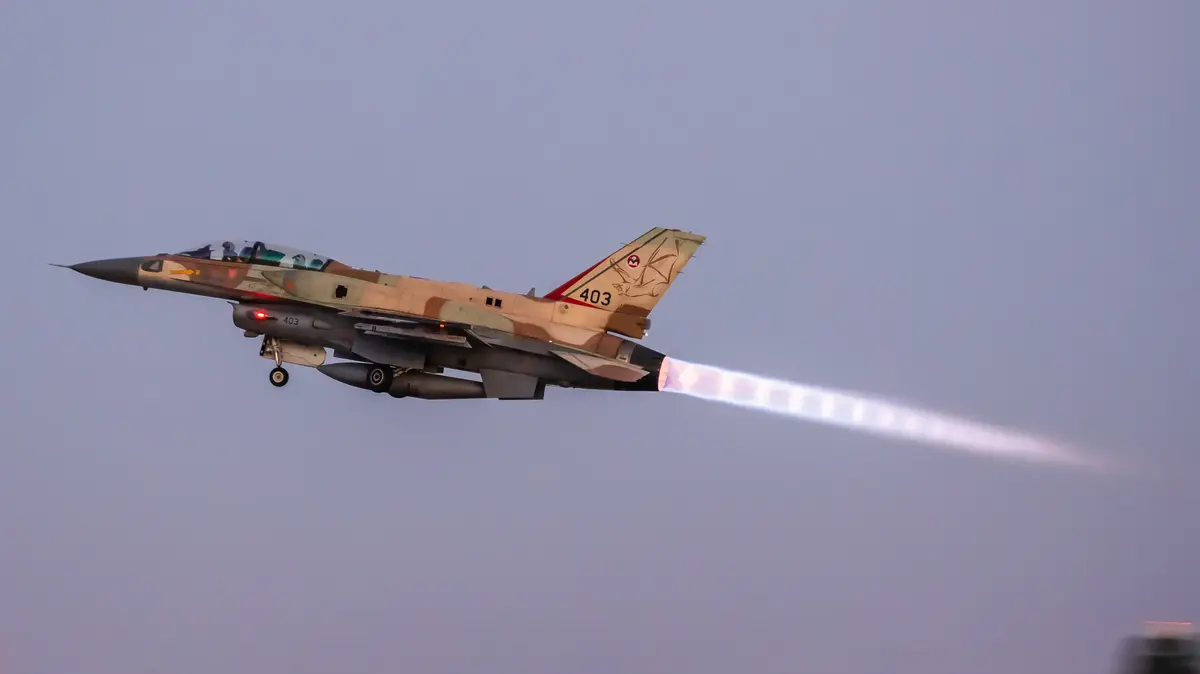
Squadron commander preparing for an attack on Iran: "This is the order of the hour, we were not at a boiling point like this"
The commander of the 119th Squadron "The Bat" referred in an interview with Walla to the operation that the IDF has been preparing for years - damage to Iran's nuclear program. 15 years after the reactor attack in Syria, the commander spoke about the preparations for a similar operation, lessons learned and mental preparation. "We will do as they ask. From us - we are ready"
In a special interview with Walla, he spoke about the reactor attack and what can be learned from it in preparation for a possible attack on Iran. “Before the attack on Syria, we trained at long distances. I personally participated in exercises in the United States and Canada. I was deputy commander of B Squadron and participated in the transfer of F-16 aircraft from Hill base, in the United States, to Israel. This is truly a long-range flight with a lot of features," Sa recalled, "LA. "We had four refuelings. A crazy operation, a very big Air Force operation, a very impressive operation. At the time, there were maybe four air forces in the world that could mount such an operation."
What do you think can be learned from this for an attack far from Israel, like Iran?
"I'm comparing for a moment the 2007 attack and the return of the United States, which is the closest I can imagine. The occupation regime is different, in practice. As a pilot who connects to the machine and becomes part of a The hoist works with everything needed. When you train for complicated and complex things, even if they are short, you break the training into small chunks."
What does the second part of the preparation for the operation in Iran include?
"Build a training program that is intertwined with the army's plan of attack. Some of it is accompanied by models and training, some are famous and others not so much. It could be a flight abroad, training in Cyprus, Europe, targets more close ones that help us to simulate relevant intervals,
"complementary part to the air program being the technical part. Training a lot in aerial refueling, that's what happened last year. The issue of armaments is also a significant part of the story. Today there are more advanced weapons than there were in the past. part is the synchronization of the body's flight and the assembly of the entire puzzle. Last year we were busy each within ourselves and now we have to build the puzzle so that this entire symphony works together."
Do you already know today what your part will be in attacking Iran if they decide to do so? ?
"I can tell you what they're going to ask of me. It's in various stages of maturity, we're at certain levels. We're ready for action even today. There's still room to move forward."
There has been a lot of talk in the media about their level of preparedness for an attack. What is the degree and quality of readiness for Command Day in Iran compared to a year and a half ago?
"It's hundreds of percent higher than it was a year and a half ago. There are still steps to take, but today I know how to get there and execute, and we're ready. It's not comparable, and if necessary, we know how to do it? Unequivocally." As time passes, we will become more ready. We will do whatever they ask of us. If they ask us to come? We will come. Attack is attack.
During his remarks, squadron commander Lt. Col. T. explained that Air Force fighter pilots' friction with the various threats in the immediate vicinity of the first circle, such as Lebanon and Syria, helps them prepare for an attack on Iran. . "There are a lot of things that are in the immediate vicinity, so you have advantages and disadvantages. It allows you to know very intimately the ranks that may have been there and ended up here."