Z-10 ME/P News, Updates

Does any fellow member been following Wz9c and Wz16 development? is there a further improvement of Wz9c planned?

i remember reading here or in the sinodefence forum that Wz9c may be the last improvement of Wz9 series engines, before the eventual mass production of the wz16 engines. Simialrly, I recently came across information that Wz9c has a slightly higher weight (210-220kg) compared to similar power output engines, a lower power to weight ratio (<8.0SHP/kg), and the upwards facing engines also led to a small (<5%) raw horsepower penalty.
This makes an excellent case for a further upgradation of the engine before the highly improved Wz16 engine.

Even a 5-6% decrease in dry weight (e.g. using composite materials for caing and harness, better/improved technology single crystal alloys for engine blades, etc.) will make the change worthwhile for future upgrades to Z10ME. As an example, this might allow for a slightly improved performance in the Himalyas/karakoram and Balochista. Similarly, this may give it weight advantage to have an anti-drone system (jammers, or onboard C-UAS, a dedicated sensor suit in the near future). Alternatively, Z10ME incorporated extra protection/plates for the cockpit protection. A reduced engine weight, may allow pak to ask for better or a newer protection changes.

Is there any news of Aero engine company working on a better/improved WZ9c?
 
Bhai, Pakistan has no intention to invade Venezuela or Cuba....

Be realistic.......30 Z-10s at this technological level are far superior to 60 Helos of obsolete standard.

Similar to how J-10CEs knocked every jet of IAF out of sky clean sheet..........Quality vs Quantity.
Good. This is one of the type of replies i was expecting.

A formation (like an infantry or armored division) is given resources (various arms like troops, MBTs, APCs etc) to complete its objectives. This is the age of combined arms warfare. Helicopters form an integral part of firepower and transport. This missing component is one of the weaknesses that PA formations suffer.

As an example, in 1965 Ops Grandslam, various units from other formations were attached to the main attacking force since it didn't have sufficient units to launch a successful attack. The plan worked. In 1971 war, IA in East Pakistan bypassed strong points through helis and dropped troops at weakest points to infiltrate PA defended positions.

There are various articles which show why heli transports are the fastest form of transport for capturing key points when time is critical. No ground transport comes closer. That crucial timing can decide the outcome of the battle.

As another example, look at 12th Infantry Division with its 6 x brigades structure. The troops deployed along LOC are supported primarily through mules. Then look at structure of Infantry or armored formations in PA. You would get to know which formations require dedicated helicopter assets.

This also brings the discussion of air assault operations in PA, which is another factor to look at.
 
Last edited:
Does any fellow member been following Wz9c and Wz16 development? is there a further improvement of Wz9c planned?

i remember reading here or in the sinodefence forum that Wz9c may be the last improvement of Wz9 series engines, before the eventual mass production of the wz16 engines. Simialrly, I recently came across information that Wz9c has a slightly higher weight (210-220kg) compared to similar power output engines, a lower power to weight ratio (<8.0SHP/kg), and the upwards facing engines also led to a small (<5%) raw horsepower penalty.
This makes an excellent case for a further upgradation of the engine before the highly improved Wz16 engine.

Even a 5-6% decrease in dry weight (e.g. using composite materials for caing and harness, better/improved technology single crystal alloys for engine blades, etc.) will make the change worthwhile for future upgrades to Z10ME. As an example, this might allow for a slightly improved performance in the Himalyas/karakoram and Balochista. Similarly, this may give it weight advantage to have an anti-drone system (jammers, or onboard C-UAS, a dedicated sensor suit in the near future). Alternatively, Z10ME incorporated extra protection/plates for the cockpit protection. A reduced engine weight, may allow pak to ask for better or a newer protection changes.

Is there any news of Aero engine company working on a better/improved WZ9c?
This is a piece of misinformation spread by some military enthusiasts.

The WZ-16 turboshaft engine is a joint development between China and the French company Safran. It is a civil-certified turboshaft engine, developed in accordance with both Chinese (CAAC) and European (EASA) civil aviation standards.

Currently, it is primarily used in China’s AC352 civil helicopter, which serves roles in both civilian and para-military (police/search and rescue) sectors—including law enforcement, maritime patrol, emergency response, and transport for offshore oil platforms.

In theory, the engine could be adapted for military use. However, given the current international political climate, the likelihood of this happening is extremely low, with the stance of the French side serving as a complicating factor.

===================================

IMO.
The future development trajectory for the Z-10 series of attack helicopters involves a transition toward hybrid-electric propulsion, as well as an evolution into unmanned platforms that function as nodes within an information network. Neither the WZ-9C nor the WZ-16 represents the ideal engine for these future requirements.
 
Last edited:
Does any fellow member been following Wz9c and Wz16 development? is there a further improvement of Wz9c planned?

i remember reading here or in the sinodefence forum that Wz9c may be the last improvement of Wz9 series engines, before the eventual mass production of the wz16 engines. Simialrly, I recently came across information that Wz9c has a slightly higher weight (210-220kg) compared to similar power output engines, a lower power to weight ratio (<8.0SHP/kg), and the upwards facing engines also led to a small (<5%) raw horsepower penalty.
This makes an excellent case for a further upgradation of the engine before the highly improved Wz16 engine.

Even a 5-6% decrease in dry weight (e.g. using composite materials for caing and harness, better/improved technology single crystal alloys for engine blades, etc.) will make the change worthwhile for future upgrades to Z10ME. As an example, this might allow for a slightly improved performance in the Himalyas/karakoram and Balochista. Similarly, this may give it weight advantage to have an anti-drone system (jammers, or onboard C-UAS, a dedicated sensor suit in the near future). Alternatively, Z10ME incorporated extra protection/plates for the cockpit protection. A reduced engine weight, may allow pak to ask for better or a newer protection changes.

Is there any news of Aero engine company working on a better/improved WZ9c?
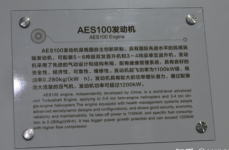
This is the 2022 data for the AES100, the civilian version of the WZ-9C turboshaft engineAES10001111.png
 
This is the 2022 data for the AES100, the civilian version of the WZ-9C turboshaft engineView attachment 221577
The problem is not the reliability and the technology used in the Wz-9c. The engine is 150-200 kgs heavier than the engines with similar power output. This affects the power to weight ratio and hampering the on-board sensor package. Even if we shed 1/3 of that extra weight, it wud be substantial in terms of future potential upgrades or performance in karakoram/Himalayan/Hindukush mountains and the hot deserts of Balochistan.
 

Users who are viewing this thread

Back
Top