AMCA News and Discussion

if tata can manufecture such Airbus C295, The programme involves 40 aircraft assembled in India, with more than 85% of the structural and final-assembly work for those aircraft being done in India by TATA

why not such fighter aircrafts? why keep depending on HAL for manufectring?
 
India can gradually move towards a model where private companies like Tata, Reliance and others take a bigger role in defence manufacturing, while HAL, ADA and global aerospace companies continue to handle key areas such as design, technology, system integration and certification. This could eventually help India build complete fighter aircraft through a combination of public and private-sector capabilities in faster pace.

Later, these companies itself can build inhouse capacity to design and develop the aircrafts.
 

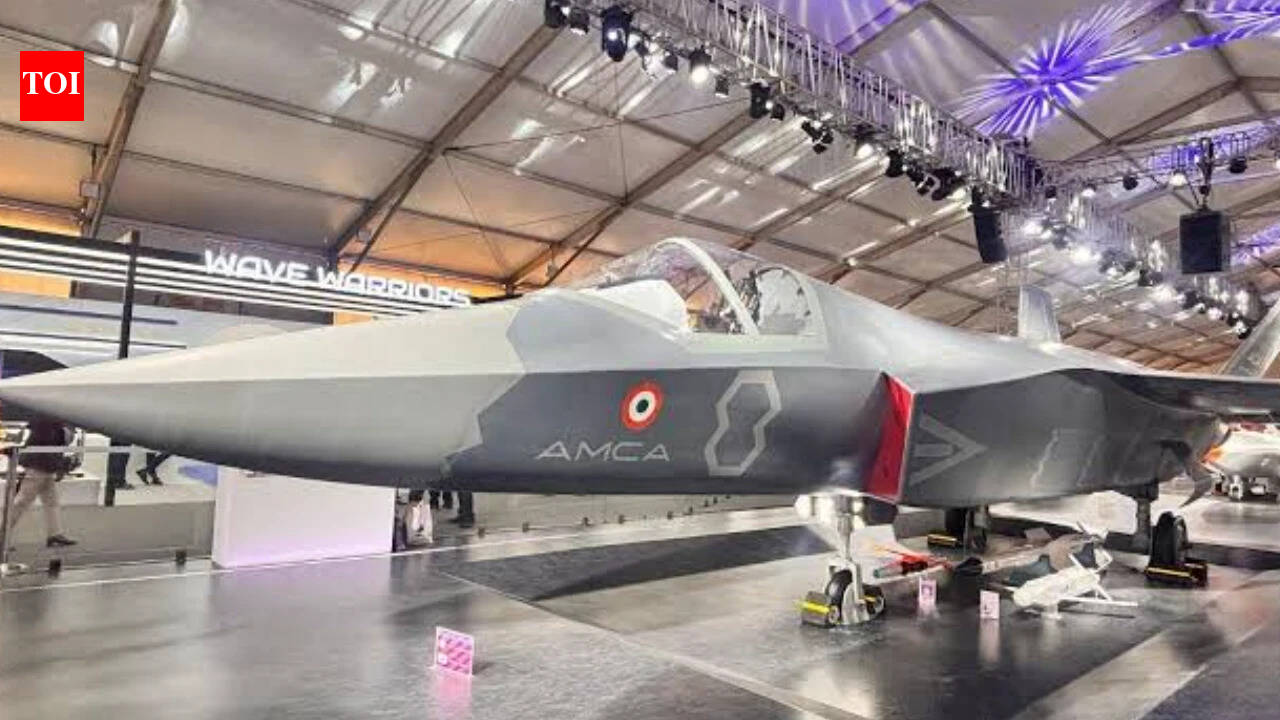
India's Fifth-Generation Stealth Fighter Program Advances as Three Bidders Submit AMCA Proposals​


By Surendra Singh
Nov 16, 2026

1795068415371.png


NEW DELHI
– India's efforts to develop a fifth-generation stealth fighter aircraft have reached a significant milestone, with three domestic bidders submitting proposals for the Rs 15,000-crore Advanced Medium Combat Aircraft (AMCA) program.

The bids are currently being evaluated by a high-level review committee established by India's Ministry of Defence.

Three Bidders Compete for Prototype Development​

Industry sources confirmed to The Times of India (TOI) that three contenders submitted their proposals by the October 30 deadline:

  1. Larsen & Toubro (L&T)-led consortium: Comprising Bharat Electronics Limited (BEL) and Dynamatic Technologies.
  2. Tata Advanced Systems Limited (TASL): The only company bidding independently.
  3. Bharat Forge-led consortium: Comprising BEML Limited and Data Patterns.
The bids were opened on November 1 to select a Development-cum-Production Partner (DCPP) responsible for manufacturing five AMCA prototypes.

The aircraft has been designed by the Aeronautical Development Agency (ADA), a laboratory under India's Defence Research and Development Organisation (DRDO).

Based in Bengaluru, ADA conceived the program and will oversee the manufacturing of five twin-engine AMCA prototypes.

Engine Development and Flight Testing​

The AMCA is expected to use two General Electric F414 engines, provided a proposed agreement between India's state-owned Hindustan Aeronautics Limited (HAL) and US-based GE for joint engine production in India is finalized.

ADA requires 15 F414 engines to support the development and testing of the five flying prototypes.

The prototypes are expected to conduct approximately 1,800 test sorties over seven years to validate the aircraft's critical capabilities, including flight-control systems, stealth characteristics, sensors and radar, weapons integration, and propulsion performance.

Fifth-Generation Capabilities and Development Timeline​

The AMCA is intended to provide the Indian Air Force (IAF) with an indigenous fifth-generation fighter aircraft.

Its planned advanced capabilities include:

  • Stealth design: Internal weapons bays to reduce radar detectability.
  • Supercruise: The ability to sustain supersonic flight without afterburners.
  • AI-driven avionics: Advanced onboard systems supporting aircraft operations.
  • Next-generation sensor fusion: Integration of information from multiple sensors to improve situational awareness.
The first batch of AMCA aircraft is expected to be ready around 2034–2035.

The program is also intended to help address the Indian Air Force's fighter squadron shortage. Its operational strength has declined to 29 squadrons, compared with an authorized strength of 42.5 squadrons.

The original bidding deadline of August 27 was extended to October 30 after prospective bidders requested additional time to complete the formalities required for the complex stealth fighter program.

Regional Fifth-Generation Fighter Developments​

India's AMCA program is advancing amid developments in fifth-generation fighter capabilities across the region.

China already operates the Chengdu J-20 and Shenyang J-35, according to the report.

Meanwhile, Pakistan is reportedly planning to acquire 40 Chinese J-35 stealth fighter aircraft.

The AMCA program represents India's effort to develop an indigenous fifth-generation fighter platform while strengthening its domestic aerospace and defense manufacturing capabilities.

Source: The Times of India, Surendra Singh.

 
I would prefer their collaboration. They might cobble up a functional design, if not a great plane. The old engine problem remains.
 

India's Fifth-Generation Stealth Fighter Program Advances as Three Bidders Submit AMCA Proposals​


By Surendra Singh
Nov 16, 2026

View attachment 223412


NEW DELHI
– India's efforts to develop a fifth-generation stealth fighter aircraft have reached a significant milestone, with three domestic bidders submitting proposals for the Rs 15,000-crore Advanced Medium Combat Aircraft (AMCA) program.

The bids are currently being evaluated by a high-level review committee established by India's Ministry of Defence.

Three Bidders Compete for Prototype Development​

Industry sources confirmed to The Times of India (TOI) that three contenders submitted their proposals by the October 30 deadline:

  1. Larsen & Toubro (L&T)-led consortium: Comprising Bharat Electronics Limited (BEL) and Dynamatic Technologies.
  2. Tata Advanced Systems Limited (TASL): The only company bidding independently.
  3. Bharat Forge-led consortium: Comprising BEML Limited and Data Patterns.
The bids were opened on November 1 to select a Development-cum-Production Partner (DCPP) responsible for manufacturing five AMCA prototypes.

The aircraft has been designed by the Aeronautical Development Agency (ADA), a laboratory under India's Defence Research and Development Organisation (DRDO).

Based in Bengaluru, ADA conceived the program and will oversee the manufacturing of five twin-engine AMCA prototypes.

Engine Development and Flight Testing​

The AMCA is expected to use two General Electric F414 engines, provided a proposed agreement between India's state-owned Hindustan Aeronautics Limited (HAL) and US-based GE for joint engine production in India is finalized.

ADA requires 15 F414 engines to support the development and testing of the five flying prototypes.

The prototypes are expected to conduct approximately 1,800 test sorties over seven years to validate the aircraft's critical capabilities, including flight-control systems, stealth characteristics, sensors and radar, weapons integration, and propulsion performance.

Fifth-Generation Capabilities and Development Timeline​

The AMCA is intended to provide the Indian Air Force (IAF) with an indigenous fifth-generation fighter aircraft.

Its planned advanced capabilities include:

  • Stealth design: Internal weapons bays to reduce radar detectability.
  • Supercruise: The ability to sustain supersonic flight without afterburners.
  • AI-driven avionics: Advanced onboard systems supporting aircraft operations.
  • Next-generation sensor fusion: Integration of information from multiple sensors to improve situational awareness.
The first batch of AMCA aircraft is expected to be ready around 2034–2035.

The program is also intended to help address the Indian Air Force's fighter squadron shortage. Its operational strength has declined to 29 squadrons, compared with an authorized strength of 42.5 squadrons.

The original bidding deadline of August 27 was extended to October 30 after prospective bidders requested additional time to complete the formalities required for the complex stealth fighter program.

Regional Fifth-Generation Fighter Developments​

India's AMCA program is advancing amid developments in fifth-generation fighter capabilities across the region.

China already operates the Chengdu J-20 and Shenyang J-35, according to the report.

Meanwhile, Pakistan is reportedly planning to acquire 40 Chinese J-35 stealth fighter aircraft.

The AMCA program represents India's effort to develop an indigenous fifth-generation fighter platform while strengthening its domestic aerospace and defense manufacturing capabilities.

Source: The Times of India, Surendra Singh.


Well, again much fanfare for hopefully finally some decicions.

Anyway, the more relevant part is still this issue and the same is for the new engine to be developed with Safran for the AMCA:

Despite India moving forward with the estimated $36 billion #MRFA programme to acquire 114 #Rafale fighter jets, French engine manufacturer Safran has made it clear that the most critical components of the M-88 engine will continue to be manufactured exclusively in France. According to a French report published on 12th November, Safran is willing to establish an M-88 engine assembly line in India and procure components from Indian suppliers, but will retain production of its most sensitive engine parts in France. Similarly, Dassault Aviation will retain control over the Rafale's core aircraft design and technical specifications, raising concerns about India's long-term dependence on French technology despite extensive local manufacturing.This also raises questions about DRDO's proposed partnership with Safran to jointly develop a 120 kilonewton-class engine for the AMCA programme, particularly regarding the company's promise of complete technology transfer, including critical hot-section technology and intellectual property rights for India.

via


M-88 first flew in 1990 right? By the time they start assembling it, it will be over 40 years old tech....
 
Well, again much fanfare for hopefully finally some decicions.

Anyway, the more relevant part is still this issue and the same is for the new engine to be developed with Safran for the AMCA:

Despite India moving forward with the estimated $36 billion #MRFA programme to acquire 114 #Rafale fighter jets, French engine manufacturer Safran has made it clear that the most critical components of the M-88 engine will continue to be manufactured exclusively in France. According to a French report published on 12th November, Safran is willing to establish an M-88 engine assembly line in India and procure components from Indian suppliers, but will retain production of its most sensitive engine parts in France. Similarly, Dassault Aviation will retain control over the Rafale's core aircraft design and technical specifications, raising concerns about India's long-term dependence on French technology despite extensive local manufacturing.This also raises questions about DRDO's proposed partnership with Safran to jointly develop a 120 kilonewton-class engine for the AMCA programme, particularly regarding the company's promise of complete technology transfer, including critical hot-section technology and intellectual property rights for India.

via

To date, no country or enterprise anywhere in the world has managed to acquire complete and independent manufacturing capabilities from another party through Transfer of Technology (ToT).

To truly attain complete and independent manufacturing capabilities, one must start from the very foundation—a level that cannot be reached through ToT alone.

Regrettably, the vast majority of Pakistanis and Indians on this forum seem to disagree; they remain firmly convinced that complete and independent manufacturing capabilities can indeed be acquired via ToT.

I do not see Pakistanis claiming that
 
I do not see Pakistanis claiming that
Of course, you can understand it that way.

On this forum, we often see some of our Pakistani friends—whenever Pakistan secures a Transfer of Technology (ToT) to begin producing certain weapons or goods—claim that "from now on, Pakistan can mass-produce them on a large scale, free from any constraints." Or something to that effect.

Let’s leave it at that. If I go any further, someone will surely accuse me of being “anti-Pakistan” again.
 
Of course, you can understand it that way.

On this forum, we often see some of our Pakistani friends—whenever Pakistan secures a Transfer of Technology (ToT) to begin producing certain weapons or goods—claim that "from now on, Pakistan can mass-produce them on a large scale, free from any constraints." Or something to that effect.

That is very different from claiming what Indians do. If China for example shares some tech that enables us to mass produce but still import vital components then that is actually what s going on with many systems. I do not recall any Pak poster claiming we can make our own radar or engines. Mainly because it would not only be tecnhcially too difficult, but the numbers we order would not justify any investment.

Indians on the other hand....
 
M-88 first flew in 1990 right? By the time they start assembling it, it will be over 40 years old tech....


Like so many Indian systems ... look at the Tejas in numbers vs. the J-10 or other comparable fighters, look at engines, and the same will be with AMCA vs F-35 or J-35.

As @Michael noted, "To truly attain complete and independent manufacturing capabilities, one must start from the very foundation—a level that cannot be reached through ToT alone."
 

Users who are viewing this thread

Country Watch Latest

Latest Posts

Back
Top