2. Iran would not use them in massive numbers and properly networked to make a difference unless it was total war. The occasional air strike in neighbouring Syria is not a reason to deploy a complete air defence network in Syria. It is cost versus benefit calculation as always.
Even to protect let's say...the embassy? Come on!
Here's a list of Israeli air strikes against Iranian and pro-Iranian targets in Syria. I'll just c/p the ones from 2021 onwards:
2021
January
On 7 January, Israeli airstrikes targeted pro-Iranian forces' weapons depots in the al-Kiswa area, in addition to the radar system battalion to the west of Al-Dour village in Suwayda Governorate.
[205] The strikes killed three Iran-backed fighters.
[206]
On 12–13 January, at least
10 airstrikes hit the mountains around
Deir ez-Zor city killing 26 people, 14 Syrian soldiers and 12 Iranian-backed militiamen. Six airstrikes hit weapons warehouses and ammunition depots in the Al-Bokamal desert killing 16 Iraqi militiamen. Two airstrikes targeted warehouses in the Al-Mayadeen desert killing 15 foreign militiamen. In total 18 airstrikes across
Deir ez-Zor Governorate killed 57 in what was the highest death toll ever since Israel started its attacks on Syria.
[207][208]
On 22 January, Israel carried out an airstrike near the city of Hama, killing a family of four, including two children.
[209]
February
On 3 February, Israeli Air Force launched an attack on Hezbollah positions in Quneitra Governorate,
[210] and other sites near Damascus International Airport.
[211]
On 11 February, unidentified drones targeted a weapons shipment at an illegal military crossing, near Al-Bukamal in the eastern Deir Ezzor Governorate.
[212]
On 15 February, Israeli airstrikes struck positions and warehouses, west and south-west of the capital Damascus, in the area of Damascus International Airport as well as Al-Kiswah and the headquarters of the Syrian Army's
4th Armoured Division.
[213][214] Nine pro-Iranian militiamen were killed in the airstrikes. The dead were all of the non-Syrian and non-Arab nationalities, and it is not known whether they were Afghans, Pakistanis or Iranians, as these militias are substantially deployed in the area near the Lebanese border.
[215]
On 28 February, Iran-related sites were targeted around Damascus in what Hebrew media outlets suggest was a response to an Iranian attack against an Israeli-owned vessel in the
Gulf of Oman the previous week.
[216]
March
On 11 March,
The Wall Street Journal reported that Israel had used weaponry including
naval mines to target a dozen Iranian ships carrying oil or weapons to Syria in the past two years.
[217]
On 16 March, a Syrian military source claimed that Israel attacked Iranian weapon shipments near Damascus.
[218]
April
On 22 April, Syria fired an SA-5 surface-to-air missile in response to what it claims was an Israeli airstrike near Damascus. The missile reportedly landed close to Israel's
nuclear reactor in Dimona, after Israel failed to intercept the missile. Israel retaliated by attacking a number of Syrian missile launchers, including the one that fired the projectile.
[219]
May
On 4 May, Israeli aircraft hit targets in northern Syria, killing one and wounding six.
[220]
On 5 May, Israeli forces attacked Hezbollah outposts near Quneitra on the Syrian ceasefire line in the Golan Heights.
[221]
June
On 8 June, Israeli airstrikes took place in southern and central Syria, causing damage.
[222]
July
On 19 July, Russian anti-aircraft systems in Syria intercepted a number of missiles launched by Israeli warplanes southeast of Aleppo. Senior Iranian IRGC and Hezbollah fighters were reportedly killed in the strikes.
[223]
On 20 July, Israeli airstrikes took place south of Aleppo. Syrian air defense systems were activated in response. Syrian media claimed a factory and research center were targeted.
[224]
On 22 July, Syrian air defenses intercepted Israeli missiles in the
al Qusair area of Homs. Syrian state media reported some material damage but no casualties.
[225]
August
On 17 August, Syrian media reported two Israeli missiles were fired toward the town of
Hader in the northern Quneitra countryside, located on the Syrian-controlled side of the Golan Heights. Britain-based Syrian Observatory for Human Rights said the strikes targeted an area where Iranian-backed fighters are based.
[226]
On 19 August, Syrian air defenses fired over ten anti-aircraft missiles against Israeli jets targeting sites belonging to Iran-backed militias in the
Qalamoun mountains near the capital Damascus. The defense missiles fell on residential areas in the town of
Qara, killing four Syrian civilians as a result. Another three people were reportedly injured as well.
[227]
September
On 3 September, Israeli aircraft carried out airstrikes against weapons development centers near Damascus used by Iranian-backed militias. A Syrian air defense missile that was fired at the aircraft traversed Israeli skies before exploding over the Mediterranean Sea off the coast of central Israel, without causing injuries or damage.
[228]
On 27 September, an Iranian-backed base in eastern Syria was struck by unidentified aircraft.
[229]
October
On 8 October, an Israeli airstrike targeted a drone depot at a
T-4 base in central Syria, killing two foreign fighters and wounding others.
[230]
On 13 October, an Israeli airstrike targeted a
communications tower and other sites near Palmyra in central Syria. At least one Syrian soldier was killed and three wounded. Iranian militias warned of a "harsh response."
[231] The Syrian Observatory for Human Rights said nine pro-government fighters were killed in the strike, four of them Syrians and five of undetermined nationality.
[232]
On 16 October, Syrian media reported that an Israeli sniper shot dead Syrian MP Midhat as-Saleh in the town of
Ain al-Tinah. As-Saleh, who was previously jailed in Israel for security-related offenses for twelve years, was believed to be working with Iran to establish a front against Israel on the Golan ceasefire line.
[233]
On 20 October, the
Al Tanf base in southern Syria was under attack by five Iranian suicide drones in retaliation for Israeli air strikes, no casualties were reported.
[234]
On 25 October, Israeli helicopters struck three Hezbollah-related targets on the outskirts of
Madinat al-Baath and other locations in southern Syria, causing material damage but no casualties. According to Syrian media, two of the sites were observation posts used by Hezbollah, while the third target was a site next to a Syrian military facility that Israel has claimed was cooperating with Hezbollah.
[235]
On 30 October, five people were reportedly killed in a rare daytime Israeli strike outside Damascus, according to the Syrian Observatory for Human Rights. The strike was carried out with surface-to-surface missiles and targeted a shipment of weapons intended for Hezbollah that was making its way to Lebanon.
[236]
November
On 3 November, Syrian media reported an Israeli airstrike on a military post in the town of
Zakiyah in the western Damascus countryside.
[237]
On 8 November, Israeli forces carried out strikes around Homs and
Tartus in Western Syria. Syrian media reported injuries to two Syrian soldiers and material losses. The Syrian Observatory for Human Rights identified the targets as Iranian-controlled weapons caches.
[238]
On 10 November, an unidentified drone carried out strikes on Iranian-backed militias in the Bukamal region of eastern Syria close to the border with Iraq, destroying arms depots. It was not clear if the attack was carried out by American-led coalition forces or by Israel.
[239]
On 17 November, Israeli forces fired two missiles from the Golan Heights towards an empty warehouse near Damascus. No wounded were reported.
[240]
On 24 November, Israel struck a site in Homs in central Syria, killing two civilians and injuring a civilian and six soldiers.
[241]
December
On 6 December, according to Syrian media, an Israeli strike targeted a container yard at the
Latakia port. A number of shipping containers caught on fire, but no casualties were reported.
[242]
On 16 December, Israeli jets bombed areas in southern Syria, killing one soldier and causing damage to unspecified sites.
[243]
On 28 December, Israeli airstrikes targeted the Latakia port again, causing massive damage to containers in the area.
[244]
2022
The
Syrian Observatory of Human Rights documented 32 Israeli airstrikes and ground rocket attacks, during which Israel targeted several positions in Syria, destroying nearly 91 targets, including buildings, warehouses, headquarters, centres, and vehicles in 2022. These strikes killed one civilian and 89 combatants and injured 121 others.
[245]
January
On 31 January, Israel carried out airstrikes near Damascus, causing material damage.
[246]
February
On 8 February, rocket sirens sounded in and near
Umm al-Fahm in northern Israel after an alleged Israeli airstrike near Damascus. The IDF confirmed that an anti-aircraft missile fired from Syria exploded mid-air and set off the sirens.
[247]
On 17 February, Israel attacked targets south of Damascus with a surface-to-surface missile, causing material damage but no casualties.
[248]
On 23 February, a number of Israeli surface-to-surface missiles were launched from the Golan towards areas near
Madinat al-Baath and Rwihinah close to Israel's border, causing material damage.
[249]
On 24 February, three Syrian soldiers were killed during an Israeli airstrike near Damascus, hours after Israel dropped leaflets on Syrian army positions warning that they could be attacked for cooperating with Hezbollah.
[250]
March
On 7 March, two people were killed during an Israeli airstrike in the Damascus area. According to the Syrian army, the air defense system was activated "to deal with Israeli aggression."
[251]
April
On 9 April, Israel carried out daylight airstrikes on Syrian government-held positions. Syrian state media claimed its air defenses intercepted some of the incoming missiles over the
Hama province.
[252]
On 14 and 27 April, Israel carried out airstrikes near Damascus.
[253][254]
May
On May 11, Israel launched four missiles at a site in Quneitra in southwest Syria close to the border with Israel.
[255]
On May 13, five people were killed and seven others injured during an alleged Israeli airstrike in Masyaf. The area, which is home to a facility belonging to the Scientific Studies and Research Center and thought to be used as a base for Iranian forces, has been repeatedly targeted in recent years in attacks attributed to Israel.
[256]
On May 20, three Syrian soldiers were killed when Israel fired surface-to-surface missiles near Damascus, causing damage.
[257]
June
On June 6, Israeli jets struck targets in the suburb of
al-Kiswah south of Damascus and near the Damascus International Airport, causing damage to several sites. The al-Kiswah area has been bombed by Israel in the past for purportedly containing Iranian military bases.
[258]
On June 10, Israeli warplanes carried out a series of strikes south of Damascus, causing material damage and at least one injured.
[259]
July
Further information:
July 2022 Damascus airstrikes
On July 2, Israeli jets carried out a daytime airstrike at the town of
al-Hamidiyah, south of Tartus.
[260]
On July 6, a Syrian militant affiliated with Hezbollah and the Assad regime was killed by an Israeli drone strike in Quneitra.
[261]
On July 22, Israeli fighter jets attacked sites belonging to the Syrian military and pro-Iranian militias near Damascus, killing three Syrian soldiers and wounding others. A temporary storage warehouse of the IRGC was also targeted.
[262]
August
On August 14, Israeli jets struck areas near Tartus and Damascus, killing three Syrian soldiers and wounding another three.
[263]
On August 25, Israel carried out airstrikes in northwestern Syria, an area thought to be used by Iranian forces that has been repeatedly attacked in recent years. Two civilians were injured. Photos and videos showed large plumes of smoke and prolonged secondary explosions at the targeted sites.
[264] The Syrian Observatory for Human Rights reported that the airstrike in Masyaf destroyed a warehouse containing over 1,000 Iranian-made missiles.
[265]
On August 31, Israel was accused by Syria of carrying out two consecutive airstrikes against the Aleppo International Airport and near the capital Damascus. A sanctioned Iranian cargo plane reportedly landed at the
Aleppo airport earlier in the day.
[266]
September
Further information:
September 2022 Damascus airstrikes
On September 6, Israeli jets struck Aleppo International Airport, taking it out of service for the second time in less than a week.
[267]
On September 17, Israeli aircraft struck the Damascus International Airport and other positions south of the Syrian capital, causing material damage and killing five soldiers, including two members of Iranian-backed militias.
[268]
October
On October 21, an Israeli airstrike destroyed an Iranian-backed drone manufacturing and weapons storage site at the
Dimas military airport near the Lebanese border.
[269]
On October 24, daytime Israeli airstrikes struck Damascus, Syrian state media reported. There was material damage and one Syrian soldier was injured.
[270]
On October 27, Israeli missiles targeted sites close to Damascus, causing material damage.
[271]
November
On November 9, Israeli forces allegedly struck a convoy carrying fuel or weapons destined for Lebanon as they crossed into Syria from Iraq at the al-Qaim border crossing, killing at least ten people, including a number of Iranian fighters.
[272][273]
On November 13, Israeli airstrikes targeted a runway at the
Shayrat Airbase in northeastern Syria, which military sources told
Reuters was recently used by the
Iranian airforce.
[274][275]
On November 19, Israeli airstrikes targeted central and coastal regions of Syria, killing four soldiers and wounding one.
[276]
December
On December 19, Israeli strikes in the Damascus area killed three non-Syrian and two Iranian-backed Syrian fighters.
[277]
2023
January
On January 1, Israeli air forces struck the Damascus International airport, putting it out of service and killing three Syrian soldiers and two non-Syrian fighters.
[245] On January 29, unidentified aircraft attacked a convoy of Iranian trucks at the
al-Qaim crossing on the
Syria-Iraq border.
[278] The following day another airstrike targeted a truck near the Syria-Iraq border that was carrying weapons and ammunition for Iranian militias.
[279]
February
On February 18, an
Israeli airstrike in Damascus left four civilians and a soldier killed, and 15 wounded.
[280]
March
On March 7, Israeli air forces attacked the Aleppo airport, causing it to shut down due to damage, though no casualties were reported.
[281]
On March 12, the city of Masyaf in Western Syria was struck by daytime Israeli airstrikes. Three soldiers were injured.
[282]
On March 22, Israel conducted airstrikes against several Iran-linked targets in Syria, including in Damascus, the Aleppo international airport and the Latakia area.
[283]
On March 29, Israel was accused of carrying out several airstrikes against army positions in the
Al-Midan neighborhood of Damascus, injuring two Syrian soldiers and causing some material damage.
[284]
On March 31, an Israeli strike near Damascus killed an IRGC officer.
[285] Two days later another IRGC member died of injuries sustained in the strike. It was speculated that the Israeli attack was a response to last month's suspected Hezbollah bombing near Megiddo in northern Israel that left a man seriously injured, which is believed to have been carried out by a terrorist who crossed the Lebanon border fence using a ladder. The terrorist was shot dead while trying to return to Lebanon.
[286]
April
On April 1, Israeli airstrikes near Homs injured five soldiers.
[287]
On April 2, an unidentified aircraft—likely of Iranian origin—that crossed into Israeli airspace from Syria was shot down by Israeli helicopters and planes. Shortly after, Syrian media reported explosions at an airport near Damascus, but did not blame Israel.
[288]
On April 4, Israeli airstrikes near Damascus killed two Syrian civilians.
[289]
On April 9, Israel conducted airstrikes in the Damascus area,
UAV strikes against rocket launchers and fired artillery shells in response to six rockets launched toward the Golan Heights overnight. The sites targeted by the Israeli strikes included a military compound belonging to the Syrian Army's 4th Division, radar sites and artillery sites used by the Syrian military.
[290]
On April 24, Israeli artillery shelled a number of positions near Quneitra where Iranian and Hezbollah-affiliated militias are known to be stationed.
[291]
On April 29, Israel carried out airstrikes near the city of Homs in Western Syria, wounding three.
[292]
May
On May 1, Israeli aircraft attacked the Aleppo airport, killing a soldier and wounding seven (five soldiers and two civilians). The airport was forced to shut down.
[293] It was later reported that the targeted sites were Iranian weapon factories operating in Syria secretly.
[294]
On May 28, Israeli fighter jets carried out airstrikes around Damascus, causing damage but no injuries.
[295]
June
On June 14, Israel struck military warehouses belonging to Iranian militias near the Damascus airport and an area southwest of the Syrian capital.
[296]
July
On July 2, Israel carried out airstrikes near the city of Homs, causing unspecified "material losses". An anti-aircraft missile launched from Syria exploded over Israeli airspace, causing shrapnel to fall in the southern city of
Rahat.
[297] Later Israeli jets attacked the anti-aircraft battery behind the launch and struck "additional targets in the area."
[298]
On July 5, Israeli aircraft targeted warehouses near Damascus storing "advanced Iranian weapons."
[299]
On July 18, two Syrian soldiers were injured after Israeli aircraft struck sites in the Damascus area.
[300]
August
On August 6, four Syrian soldiers were killed and another four wounded in Israeli airstrikes around Damascus. Material damage was also reported.
[301]
On August 21, Israeli jets carried out airstrikes on targets around Damascus, wounding a soldier and causing material damage.
[302]
On August 28, Israel launched an airstrike against the Aleppo international airport, putting it out of service.
[303]
September
On September 13, an Israeli strike in
Tartus killed at least two Syrian soldiers and injured another six.
[304] Another Israeli strike in the
Hama area caused material damage.
[305]
October
See also:
Israel–Hezbollah conflict (2023–present)
On October 1, Israel reportedly carried out airstrikes near Damascus against an Iranian weapons shipment that was heading to Lebanon.
[306]
On October 3, Israel reportedly carried out airstrikes in the Deir ez-Zor province in eastern Syria, wounding at least two soldiers and causing material damage.
[307]
On October 12, Israel was reported to have attacked runways at the two international airports of Aleppo and Damascus, making an Iranian
Mahan Air flight that was about to land in Syria turn back to Tehran.
[308] According to some reports, two flights were diverted, one flight was carrying Iran Foreign Minister
Amir-Abdollahian and IRGC members, while the other carried 10 tons of missiles.
[309]
On October 14, an Israeli airstrike put Aleppo airport out of service, according to the
Syrian defense ministry.
[310]
On October 22, Israeli aircraft struck the Aleppo and Damascus airports, knocking both out of service. Two Syrian workers from the meteorology service based in Damascus airport were killed.
[311]
On October 25, Israeli forces struck several Syrian military targets after rockets were fired from Syria toward Israeli communities in the Golan Heights, killing eight Syrian soldiers and wounding another seven in the
Daraa area.
[312] Later in the day, Israeli fighter jets targeted the Aleppo International Airport once again, knocking it out of service
[313]
November
On November 8, Israeli and US forces reportedly carried out separate airstrikes against Iranian-backed militias in Syria, killing a total of 12 fighters.
[314]
After a drone launched from Syrian territory crashed into a school in
Eilat on November 9, Israel carried out airstrikes in Syria.
[315]
On November 16, Israeli strikes targeted the town of
Sayyida Zeinab near Damascus, where Iran-backed militias have a heavy presence.
[316]
On November 22, Syria accused Israel of carrying out two airstrikes near Damascus. One of the missiles were downed by Syrian air defenses, and the other caused an unspecified amount of damage.
[317] Two people who allegedly worked with Hezbollah were killed in the strike.
[318]
On November 22, Israeli warplanes fired two missiles from the Golan Heights at a site near Damascus, causing material damage but no injuries, according to Syrian media.
[319]
On November 26, Syrian media reported Israeli airstrikes on Damascus International Airport and other targets near the capital.
[320]
December
 Razi Mousavi
, killed by Israel on December 25, together with late
IRGC Quds Force commander
Qasem Soleimani.
On December 2, two officers from the Islamic Revolutionary Guard Corps were killed in alleged Israeli airstrikes near Damascus. The strikes reportedly came from the direction of the Golan Heights, according to Syrian state news agency, most of the missiles were shot down.
[321]
On December 8, the son of a senior Hezbollah leader and four others were killed in an Israeli airstrike in southern Syria.
[322]
On December 10, eight people were injured and damage was reported from Israeli airstrikes around Damascus. A Syrian military source claimed that the country’s air defenses shot down some of the Israeli missiles.
[323] Strikes on two Hezbollah sites in Sayyida Zeinab and a "radar battalion" killed two of its members and two other Syrians.
[324]
On December 17, two Syrian soldiers were injured from Israeli missiles launched from the Golan Heights. Some of the missiles which targeted areas around Damascus were shot down by air defenses.
[325]
On December 20, four rockets were fired from Syria at the Israeli-occupied Golan Heights, setting off sirens in
Mas'ade and
Ein Qiniyye. The IDF shelled the source of the fire and targeted a Syrian Army position in response.
[326]
On December 25,
Sayyed Razi Mousavi, a
brigadier general in the
IRGC, was killed in an Israeli airstrike in Sayyida Zeinab. Mousavi was in charge of coordinating Iran's alliance with Syria and was reported as close to
Qassem Soleimani.
[327] According to the Syrian opposition, he was killed in a farm which acted as a Hezbollah office.
[328]
On December 28, a series of purported Israeli strikes were conducted in southern Syria and the area around Damascus. It was reported that the aim of the strikes were air defense installation. In one instance a Syrian Army radar site was targeted in Tal al-Sahn, near the
Jordanian border.
[329] Saudi media later reported that eleven IRGC leaders were killed that day in a airstrike targeting the Damascus International Airport. IRGC spokesman denied these reports.
[330]
On December 30, Six Iran backed militants were killed, including four from Hezbollah, in three overnights strikes on the
Syrian-Iraqi border. According to Syrian opposition, the strikes targeted a convoy and a weapons warehouse.
[331]Later that day, the
Aleppo International Airport was targeted in an Israeli strike, killing three.
[332]
2024
Since the start of the
2023 Israel–Hamas war, the frequency of Israeli attacks have increased, while also becoming deadlier.
[13]
It was reported that Israel has abandoned the previous "rules of the game" and no longer provides warning shots before attacking. This resulted in the death of 19 Hezbollah members in Syria since the start of the war.
[13]
January
On January 8, an Israeli strike killed Hassan Hakashah, a central member of
Hamas in Syria that was in charge of rocket attacks against Israel. The assassination occurred in
Beit Jinn.
[333]
On January 15, According to Syrian media and
SOHR, Israel has attacked Iranian-linked targets in
Aleppo, and explosions were heard in the vicinity of the airport.
[334]
On January 20, five
IRGC members including senior generals were killed in a strike in
Mezzeh. Among the dead are the head of the
Quds Force intelligence in Syria and his deputy.
[335]
On January 29, two people were killed during an alleged Israeli strike against IRGC operational headquarters on the outskirts of Damascus.
[336]
February
On February 1, a member of Iran’s Revolutionary Guards, Saeed Alidadi, was killed in a suspected Israeli air strike near Damascus, marking the second such attack against Tehran’s forces in Syria within weeks.
[337]
On February 6,
Israel attacked the Shuyrat Airbase and other sites near the city of Homs.
[338] According to the Syrian Observatory for Human Rights, ten people were killed, including six civilians and two
Hezbollah fighters.
[339]
On February 10, Israeli airstrikes allegedly hit several sites on the outskirts of Damascus, causing material damage. The Syrian Observatory for Human Rights reported that three people were killed and they could have been "non-Syrian nationals", though it could not immediately confirm whether the dead were fighters.
[340]
On February 21, an Israeli aistrike on a residential area of Damascus killed at least two people, according to Syrian media.
[341]
On February 25, an Israeli strike killed two Hezbollah militants on a truck outside Qusayr, a city south of Homs near the border with northern Lebanon.
[342]
On February 28, Israeli strikes caused damage to pro-Iranian strongholds near Damascus.
[343]
March
On March 17, Israeli airstrikes hit several sites in southern Syria, causing material damage and wounding a soldier. The Syrian Observatory for Human Rights reported the strikes also hit two military sites in the Qalamoun mountains northeast of Damascus, an area where Hezbollah operates. One of the targets was a weapons shipment, the observatory said.
[344]
On March 19, Syria's state news agency said Israel struck a number of targets in the Damascus countryside, resulting in material losses.
[345]
On March 26, the Israeli air force carried out airstrikes in the Deir Ezzor and al-Bukamal areas, close to eastern Syria's border with Iraq, targeting Iranian assets and operatives involved in a recent plot to smuggle advanced arms to West Bank terrorists. More than 15 people were reportedly killed.
[346]
On March 28, Syrian state media reported Israeli aircraft struck a building in the Damascus area, injuring two and causing material damage.
[347]
On March 29, an Israeli airstrike targeting Aleppo airport killed 38 Syrian soldiers, 7 Hezbollah fighters and 7 militiamen.
[348] It is the single deadliest Israeli attack on Syria since 2021.
[349]
On March 31, two civilians were injured in Israeli strikes on the outskirts of Damascus.
[350]
April
See also:
2024 Iranian consulate airstrike in Damascus
On April 1, an Israeli airstrike from the direction of the
Golan Heights region destroyed the Iranian consulate in the capital of Syria, Damascus. Syrian authorities said that the strike "destroyed the entire building, killing and injuring everyone inside". Iranian state media reported that a senior
Quds force commander of the
Islamic Revolutionary Guard Corps was also killed in the attack.
[351]
And to check the entire list:
https://en.wikipedia.org/wiki/Iran–Israel_conflict_during_the_Syrian_civil_war#2021


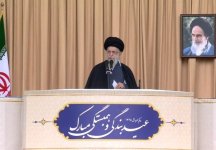
 Razi Mousavi, killed by Israel on December 25, together with late IRGC Quds Force commander Qasem Soleimani.