
Navigation
Install the app
How to install the app on iOS
Follow along with the video below to see how to install our site as a web app on your home screen.
Note: This feature may not be available in some browsers.
More options
Style variation
You are using an out of date browser. It may not display this or other websites correctly.
You should upgrade or use an alternative browser.
You should upgrade or use an alternative browser.
Russia-Ukraine War - News, Discussions & Updates
- Thread starter ghazi52
- Start date
- Status
- Not open for further replies.
More options
Who Replied?

Fatman17
Moderator

RUSSIA’S DISRUPTIVE AIR POWER IN UKRAINE
- Aviation Features
- Russia’s disruptive air power in Ukraine
By Fahad ibne Masood 12th January 2023
FEATURE
Russia has taken the use of disruptive airpower to new heights in Ukraine. Fahad ibne Masood assesses the impact of technological warfare
Russia has been pursuing disruptive technologies (DTs) for the past few decades and has gained a competitive advantage in many spheres, hypersonic weapons being one of them. What follows is based on ongoing research through available open-source intelligence literature, looking at the impact of the DTs being employed in current Russia-Ukraine conflict.
Electronic warfare
Electronic warfare (EW) holds a special place within the concept of operations of both Russia and Ukraine. One concern that frequently features in Russian military news outputs is the massed aerospace missile attack (MRAU), which is essentially the combined use of air, space, land, and sea assets to deliver long-range air and missile strikes against the critical nodes of Russian manoeuvre formations as well as critical infrastructure. However, Russia does have radio-electronic warfare (REB), which is used by the Russian Armed Forces to degrade the combat systems of an opponent to such an extent that any technological superiority will be severely compromised.
To provide wide-area protection of critical nodes within a Russian formation there are the 1RL257 Krasukha-4 and the 1L260 Krasukha-2, 8x8 vehicles carrying EW payloads designed to jam the operational systems of aircraft such as the Northrop Grumman E-8C Joint Surveillance Target Attack Radar System (JSTARS) and the airborne warning and control systems (AWACS) of aircraft like the Boeing E-3 Sentry respectively. The Krasukha-2 is used to jam S-band (2.3GHz to 2.5GHz/2.7GHz to 3.7GHz) airborne radars, while the Krasukha-4 is effective against X-band and Ku-band airborne radars (8.5GHz to 10.68GHz and 13.4GHz to 14GHz/15.7GHz to 17.7GHz respectively). The Russian news agency TASS states that the Krasukha-4 is specifically intended to protect command posts, troops, GBAD systems and industrial facilities from radar reconnaissance and precision weapons. It employs broadband active jamming.
Another system that has garnered considerable attention is RB-341V Leer-3.Based on a 6x6 truck and utilising an Orlan-10 UAV, which can carry its EW payload and extend its range. It reportedly has a mobile phone tower simulator built into the UAV that is designed to interact with and jam the GSM-900 and GSM-1800 mobile phone networks. Other EW systems, such as Pole-21 or R-330H Zhitel, can be used to jam or suppress GPS. This would have two effects: degrading the accuracy of GPS-guided weapons and preventing forward targeting cells from identifying its location.

Directed energy weapons
Russian President Vladimir Putin claims Russia has deployed its ‘secretive’ but powerful new-generation directed energy weapon in the war against Ukraine. Known as Zadira (Bully), this laser-based system can silently burn drone targets out of the sky, allegedly within five seconds. Moscow is using the new weapon to counter Ukraine’s Baykar Bayraktar TB2 UCAVs that have been patrolling the waters near Odessa and were deployed near Snake Island to deter Russia’s dominance in the Black Sea.Putin is also using his state-of-the-art laser weapon – the Peresvet, named after an ancient Russian warrior – which Russia’s military units are now using in its advanced combat operations against Kyiv’s military forces on the eastern flank. Moscow has been tight-lipped about the system, but Russia’s Deputy Prime Minister, Yury Borisov, noted that the main difference between the two is that Peresvet ‘blinds’ an enemy system, whereas Zadira destroys it. Air Force Technology analysts agree with this statement, noting that: “Russian EMP [electromagnetic pulse] guns mounted on aircraft significantly increase the combat capabilities of the Russian aerospace forces, because with them the aircraft can blind the defences [of] NATO – and they burned the drones.”
Developed by the Main Robotics Research and Test Center, the Stupor transmits an EMP to block the channel used to direct and operate unmanned systems. As a result, drones lose the connection with their controllers and crash to the ground. The weapon can also block drone cameras and their navigation and transmission channels. It reportedly has a range of 1.24 miles and a 20º field of effect.

Cyber warfare
In modern military conflicts, cyberattacks are best used in combination with EW, disinformation campaigns, anti-satellite attacks and precision-guided munitions. The objective is to degrade informational advantage and intangible assets such as data, communications, intelligence assets and weapons systems to give an operational advantage.Russia has used cyberattacks in three different ways. First, it has deployed cyberattacks to prepare and facilitate military conflict by attacking critical infrastructure such as government websites, IT servers, banks, media outlets and powerplants. In the past, it has also used cyberattacks as part of a hybrid strategy combined with other political techniques, such as disinformation campaigns and civil action in targeted countries. In these instances, Russia does not appear to intend imminent military action, but may seek to degrade defensive capabilities. Cyber operations can also be used for political effect by disrupting finance, energy, transportation and government services to overwhelm defenders’ decision-making and create social turmoil. However, as evidenced by its alleged attempts to disrupt the recent US presidential election, Russia has been unable to achieve any of these objectives at a meaningful scale.
The Russians have been able to attain immense cyber warfare competency over the past few decades, but this is being put to limited use vis-à-vis the kinetic operations taking place, especially in the airpower domain. It might potentially try to interfere with or destroy satellites or underwater communications satellites, which are not directly tied to cyberspace but facilitate military and civilian communications. Based on intelligence reports, Russia launched a broad cyber campaign shortly before the invasion of Ukraine, showing a huge increase in exploits on the first day to create disorder and overwhelm Ukrainian defences.
Russia sought to disrupt services and install destructive malware on Ukrainian networks, incorporating phishing, denial of service attacks and taking advantage of software vulnerabilities. Russia’s most significant cyber success so far was the disruption of Viasat Inc’s KA-SAT satellite.
Ukraine published a national cybersecurity strategy in 2016 and established a degree of redundancy and resilience for data and expanding the use of encryption before the invasion. It implemented some basic cyber ‘hygiene’ measures after 2015.

Artificial intelligence
Armed conflict cannot be successfully resolved without the use of the latest weapons, modern intelligence, data transmission, control and destruction systems, all of which, at least in part, contains an artificial intelligence (AI) component. Use of AI – which is a combination of technologies that blend data, algorithms and computing power– is one of the most sensitive issues of the current conflict.In March 2022, a radio transmission between multiple Russian troops in Ukraine was recorded via an unencrypted channel. It showed the soldiers evacuating in fear and confusion after coming under artillery fire. Several AI algorithms created by Primer, a US business that offers AI services for intelligence analysts, eavesdropped on the conversation and were used to automatically record, transcribe, translate and analyse everything they said.
Use of AI systems to monitor Russia’s army on a large scale illustrates the rising significance of sophisticated intelligence in military confrontations, even if it is unclear whether Ukrainian soldiers also intercepted the transmission. Russian transmissions that were not encrypted have been uploaded online, translated and discussed on social media. Similar scrutiny has been given to other data sources, such as social media posts and smartphone videos. However, what is particularly new is how natural language-processing technology is being used to examine Russian military communications.
There is little evidence of the use of the feared kamikaze drone KUB-BLA built by ZALA Aero, a subsidiary of the Russian manufacturer Kalashnikov, probably because of a lack of training data through which AI systems learn. The combination of a learning algorithm and training data is how AI systems can recognise what is shown in an image, but training data is generally application-specific. Satellite image recognition training data cannot use satellite image data to train an AI for a robotic drone’s targeting computer – at least not with today’s technology.

Hypersonics
The future of airpower in weapon delivery has been pushed to Mach 5+, which is hypersonic velocity. There were various hypersonic weapon categories announced by Putin in 2018, of which one – Kinzhal (Russian for ’dagger’) – has been used at least three times by the Russian defence minister. He stated that these missiles were launched against important targets in Ukraine.Kinzhal is a nuclear-capable hypersonic air-to-surface ballistic missile with a range of more than 1,242 miles and capable of performing evasive manoeuvres at every stage of its flight. These missiles are difficult for defence systems to detect, while their sensors help to pinpoint targets more accurately. In addition, the damage they cause is much greater than that caused by conventional missiles.
This type of missile can be launched from Tu-22M3 bombers or MiG-31K fighters. The Kinzhal can also be tipped with a nuclear warhead and is part of a suite of weapons unveiled by Russia in 2018 that were classified as “invincible”. The ‘dagger’ is joined by Zirkon and Avangrad, which have even greater speed and range but have not so far seen active use in the Russia-Ukraine war. The Russian military has said it has deployed warplanes armed with state-of-the-art hypersonic missiles to Chkalovsk Air Base in the country’s Kaliningrad region – right on NATO’s doorstep – as part of additional measures of deterrence.

Fatman17
Moderator
Robotics
The word ‘robot’ is derived from the Slavic term ‘robota’ meaning ‘forced labour’, but was first applied to the concept of an artificial human in the 1920s by Czech writer Karel Capek. While technology has not yet reached the stage of a war being fought entirely by robot combatants, the Ukrainians have taken it one small step forward with a locally made robotic battlefield scout called GNOM. This compact machine can stealthily reconnoitre Russian positions and provide fire support with a machine gun, according to its maker, a company called Temerland in Zaporizhia.While drones seem to be almost omnipresent in the skies over Ukraine, remotely operated robots or uncrewed ground vehicles (UGVs) have so far played little part in this conflict. As the battle lines have stabilised, both forces are increasingly using portable radio frequency jammers to knock drones out of the sky, helping reduce their impact.
However, in a recent development, Russia unveiled a robotic dog that can carry and fire weapons, according to Russia-based media outlets. The robot made its first public appearance on August 15, during the week-long ARMY-2022 International Military-Technical Forum in Russia. According to an English translation provided by Vice, the news agency RIA Novosti claimed that the robot may “be engaged in target designation, patrolling and security.”
Before this war, no country was known to have used autonomous weapons. Their potential use is controversial because they would select and attack targets without human oversight.
Autonomous systems
The unmanned aerial vehicle (UAV) is fast becoming the weapon of choice in the conflict, with a wide array of unmanned aircraft being used by both Russia and Ukraine. From airliner-sized surveillance aircraft to kamikaze loitering munitions to bomb-dropping octocopters, the crowded skies in this war are occupied by a variety of UAVs or drones.The three main categories of UAVs are rotary wing drones, loitering munition drones and fixed-wing aircraft. Each has unique operational capabilities and strategic values. Rotary wing drones are the most popular as a commercial/consumer option, but their capabilities also have value on the battlefield.
Over the course of the current conflict, Russia and Ukraine have successfuly made use of these types:
• Ukrainian R18s operated by Aerorozvidka, a ground force that started out as a group of volunteers
• Russian KBLA-IVTs, a robot helicopter powered by internal combustion propulsion
• Chinese Autel Evo IIs used by both Ukraine and Russia, with a maximum take-off weight of four-and-a half-pounds, making it one of the largest options available
• DJI Mavic Series quadcopters from China operated by both sides and the most widely used drones in the conflict
• American Golden Eagles introduced by Ukraine after the US Army banned its forces from using Chinese-made drones
• US-based Skydio X2s in use by Ukraine. Its AI-powered engine allows some versions to fly autonomously
• USAF/NATO-operated RQ-4B/Ds used to gather intelligence from just across the Polish border
• Russian Orion or Inokhodets (‘Amblers’), a medium-altitude, long-endurance UAV used mostly for reconnaissance and strike missions
• Turkish-made Bayraktar TB2s, an effective combat drone in several previous conflicts and now operated by Ukraine
• The Ukrainian UJ-22 Airborne developed by UKRJET of Kyiv, which resembles a light aircraft like the Cessna 172 and is used for intelligence gathering and artillery spotting
• The Forpost (‘Outpost’), a Russian-made version of Israel’s Searcher II drone that entered service in 2018
• Russian Zala 421-16E5 HDs, a fixed-wing drone that is larger than consumer models and is typically used for inspecting pipelines, power lines or other industrial infrastructure

Using UAVs is one thing, but defending against them is another. Russia uses radar defences against military drones and electronic devices against commercial ones. The Stupor rifle shoots electromagnetic pulses that stop commercial drones from being able to navigate with GPS. Russian forces have also used online systems, such as Aeroscope, to detect and interrupt communications between commercial drones and their operators. These systems can cause a drone to crash or return to base and can also stop it from sending back information.

Information warfare
Narrative building has been at the forefront of all use of social media since the start of the conflict. Both state and non-state actors are active participants in generating competing pictures about the course of the war, whether that is disseminating the mounting casualty figures to demoralise adversaries or censoring dissenting voices to reduce resistance to the war at home.Spreading disinformation has been an element of waging war since time immemorial, but the advent of social media has brought about a transformation in tactics, becoming the primary distribution channel for strategic propaganda. Examining the underlying dynamics of how information and disinformation are impacting the war in Ukraine is crucial to making sense of the war and working towards a solution.

Conclusion
Over the past few decades, technological revolutions have brought changes in our perceptions and usage of military equipment, but nothing as radical as those witnessed in both kinetic and non-kinetic applications to airpower. Disruptive technologies are here to stay and the maturity and versatility of systems will increase over time. With nanotechnology and 3D printing increasing, there is little that will not be possible in the future of airpower application.Topics
Read more about
Originally published in AIR International Magazine
F-22Raptor
Elite Member
F-22Raptor
Elite Member
F-22Raptor
Elite Member
Russian assault destroyed
F-22Raptor
Elite Member
Russian artillery destroyed


Putin demands the new defense minister Belassov new “innovation” on battlefield.
Here the first result
russian bikers covered by tarp
ridiculous but somewhat effective against Ukraine drones

Russische Kämpfer mit Motorrad in der Ukraine.
(Foto: IMAGO/SNA)
Here the first result
russian bikers covered by tarp
ridiculous but somewhat effective against Ukraine drones
Russische Kämpfer mit Motorrad in der Ukraine.
(Foto: IMAGO/SNA)
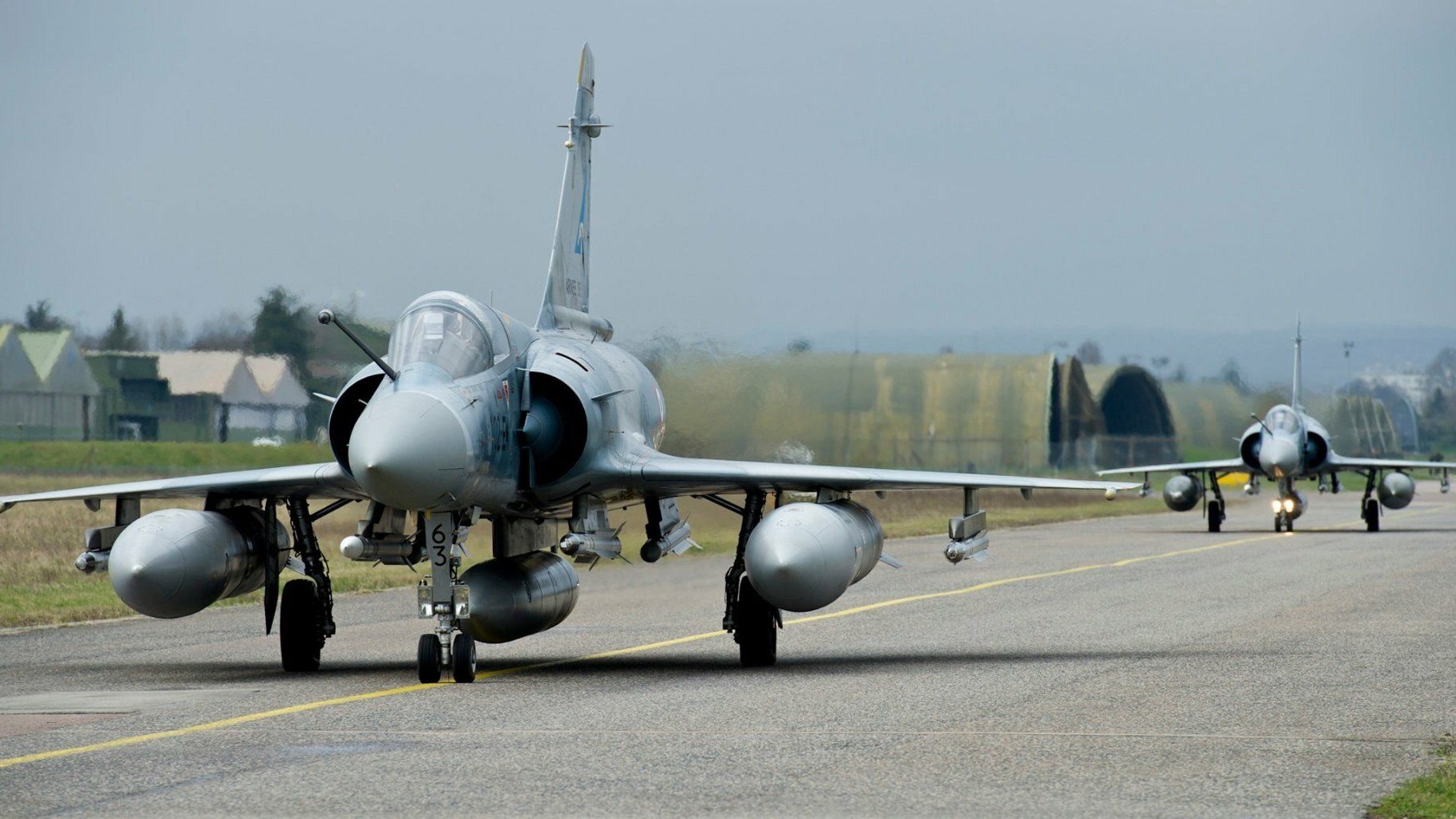
France will deliver the first tranch of 5 Mirage 2000 to Ukraine. Discussion ongoing how many more jets France and other can give. Qatar can give part of its Mirage fleet to Ukraine.
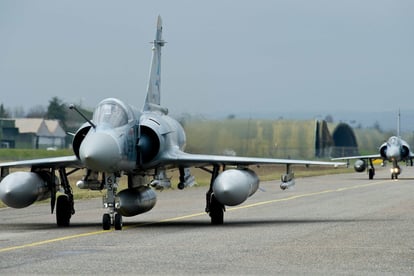 Mirage-Jet: Die Kampfflugzeuge werden bei der französischen Luftwaffe nach und nach ausgemustert. Foto: Reuters
 www.handelsblatt.com
Ukraine-Krieg: Was bringen französische Mirage-Kampfjets der Ukraine?
Frankreich will Soldaten aus der Ukraine für die in den 1980er-Jahren entwickelten Kampfjets trainieren. Die Mirage ist in die Jahre gekommen, doch sie kann der Ukraine helfen.
www.handelsblatt.com

SolarWarden
Trusted Member
Soooooo...... the whole point of Mordor opening Kharkiv front was to stress out a thin Ukraine army that was low on ammo and men so that Russia forces could breakout from Avdiivka area and into Chasiv Yar and it sure is working out. 
Avdiivka mechanize assault started early October of 2023 and they only been able to get 8-10 kilometers west of the town center which means since early October Russian forces have only gained around 20kms at a cost of more than a division worth of soldiers and armored vehicles.
Russians are fighting as if they don't have a top 3 air force. Russian grunts must hold VKS in high regard at this point of war, eh?
Avdiivka mechanize assault started early October of 2023 and they only been able to get 8-10 kilometers west of the town center which means since early October Russian forces have only gained around 20kms at a cost of more than a division worth of soldiers and armored vehicles.
Russians are fighting as if they don't have a top 3 air force. Russian grunts must hold VKS in high regard at this point of war, eh?
F-22Raptor
Elite Member
Soooooo...... the whole point of Mordor opening Kharkiv front was to stress out a thin Ukraine army that was low on ammo and men so that Russia forces could breakout from Avdiivka area and into Chasiv Yar and it sure is working out.
Avdiivka mechanize assault started early October of 2023 and they only been able to get 8-10 kilometers west of the town center which means since early October Russian forces have only gained around 20kms at a cost of more than a division worth of soldiers and armored vehicles.
Russians are fighting as if they don't have a top 3 air force. Russian grunts must hold VKS in high regard at this point of war, eh?
The Russians are completely bogged down and there minimal progress has been almost completely stopped with the new shipments of weapons from the US.
The Russians have lost this war. The only question is how long it will take Putin to realize that. At the end of this war, Russia may have 1,000,000+ dead and wounded and 30,000+ equipment destroyed. Unfathomable numbers in February 2022.
SolarWarden
Trusted Member
This war only ends with Pooty's death I'm afraid. He's just going to keep the meat factory going and it is only going to stop when he's gone.The Russians are completely bogged down and there minimal progress has been almost completely stopped with the new shipments of weapons from the US.
The Russians have lost this war. The only question is how long it will take Putin to realize that. At the end of this war, Russia may have 1,000,000+ dead and wounded and 30,000+ equipment destroyed. Unfathomable numbers in February 2022.
I'm sticking to my prediction when this war started in 2022... this war is going to escalate and suck neighboring nations. It's taking long but we're slowly getting there, unless Pooty dies.
SolarWarden
Trusted Member
Speaking of Kharkiv...
F-22Raptor
Elite Member


- Status
- Not open for further replies.
Users who are viewing this thread
Total: 25 (members: 0, guests: 25)
Pakistan Defence Latest


Country Watch Latest
-
-

-
-

-
Bangladesh Keen To Join Saudi-Pak-Turkey Defence Alliance, Says PM's Top Aide (8 Viewers)
- Latest: Ali_Baba

