How dangerous was the Galwan Valley four years ago? Indian senior officials are still worried: We had the right to open fire, but fortunately we made

ety

Trusted Member
Joined
Dec 11, 2023
Messages
6,234
Reaction score
3,737
Reputation
1,118.2
Country of Origin
Country of Residence

How dangerous was the Galwan Valley four years ago? Indian senior officials are still worried: We had the right to open fire, but fortunately we made the right choice​


2024-07-26 15:36

Published in: Tianjin


"Not only did the enemy refuse to surrender, they even had the audacity to fight back against me!"


This famous quote, which is almost known to every household in China, came from the mouth of our young soldier, Pang Guoxing.


The fighter was only 22 years old at the time.


In the self-defense counterattack against India, with only three people, they defeated all the Indian army's ace troops and won the battle.


As a result, he was awarded the title of "National Combat Hero".


It was also because of this battle that the entire war was won.


It not only makes people across the country cheer and feel proud of the strength of their motherland.


At the same time, it also ensures the stability of the border and allows our country to continue to develop in a peaceful and stable environment.


However, at the China-India border in 2020.


The smell of gunpowder seemed to spread again.


Also in the Aksai Chin region, the Indian army disregarded the treaty agreement between the two countries.


They even crossed borders at will and deliberately provoked disputes.


Despite this incident, it ended peacefully.


But when the atmosphere was most tense, the Indian Army's Chief of Staff was even directly authorized to go to war.


So, what exactly caused this incident?


How was it resolved? What caused the dispute?


In the military parades of various countries, India is often known for its unique performance.


For example, a variety of motorcycle techniques and folk-style performances.


It makes people from all over the world laugh.


However, according to official data, the Indian Army has millions of conventional troops, a military budget of more than 40 billion US dollars, and a modernized navy, army and air force.


As well as advanced weapons such as armored vehicles, destroyers, and frigates, ranking fourth in the world.


Moreover, before the Sino-Indian border conflict broke out in 2020, India purchased a large number of advanced weapons from other countries.


This includes 72,000 SIG716 automatic rifles.


It is not only more powerful than the previous QB95, AK-56 and other series of equipment.


The effective range can reach an astonishing 600 meters.


More importantly, for the Indian army, this equipment is very suitable for use in plateau areas:


It has a short-stroke piston-driven operating system that greatly improves aiming accuracy;


Moreover, it is equipped with M1913 military standard rails, which can be used to install night vision, lighting and other equipment, thereby improving the combat efficiency of the army.


In addition to this type of light weapons.


At this time, the Indian army also possessed a variety of heavy weapons such as T-90MS, 2A46M-5, Arjun MK2, and their number should not be underestimated.


Remove support from military strength.


There are certain historical reasons why the Indian army provoked incidents on the border.


Since 1962, the two sides have held many consultations and discussions on border issues.


It was not until 2005 that China and India reached a consensus.


Identifying guiding principles is the first step in solving the problem.


However, the "Doklam standoff" broke out in 2017, and on June 15, 2020.


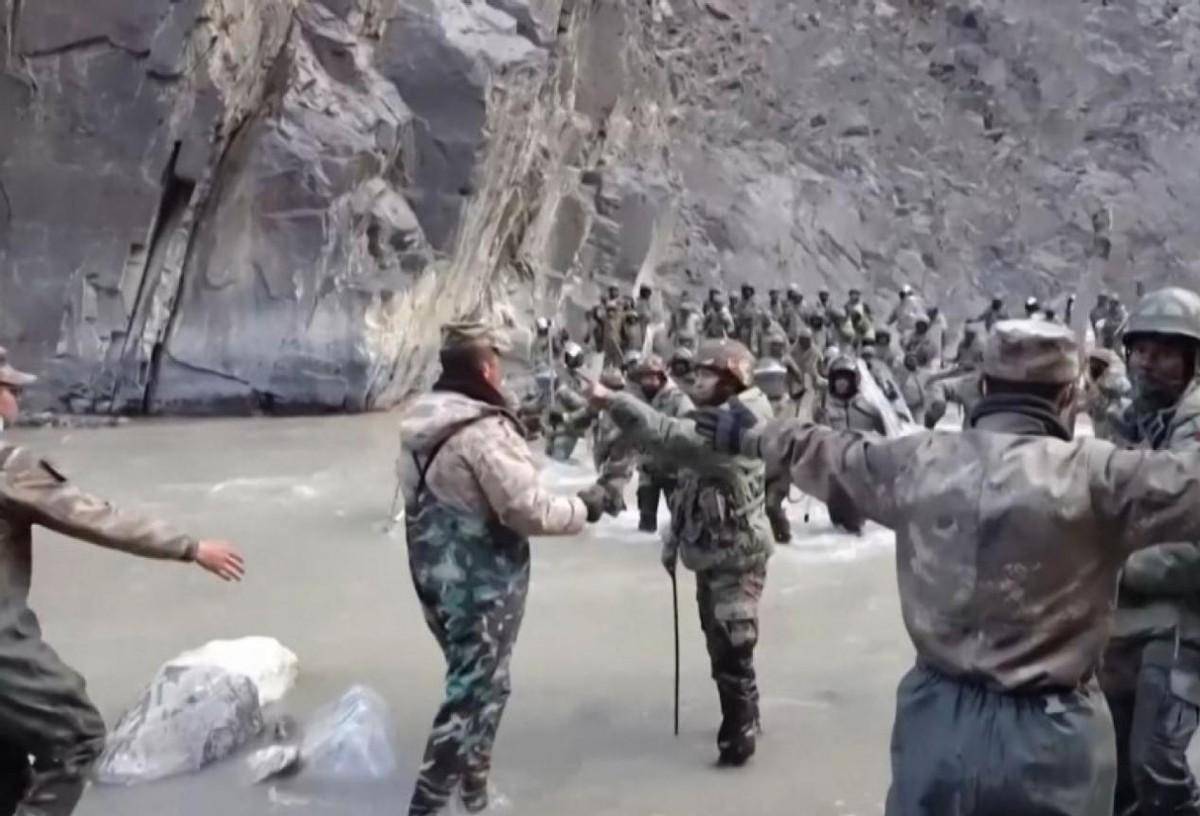
China and India once again clashed in the Kalwan Valley over border issues.


The outbreak of this incident not only resulted in the death of four Chinese soldiers but also serious injuries to one.


The peaceful border was once again shrouded in a tense and uneasy atmosphere.


In August 2020, the Kalwan Valley area was shrouded in a startling atmosphere of solemnity.


Under the cover of night, Indian special forces quietly sneaked into the southern bank of Pangong Lake and occupied four commanding heights.


In the nearby Moldo area, the People's Liberation Army also began its operational deployment.


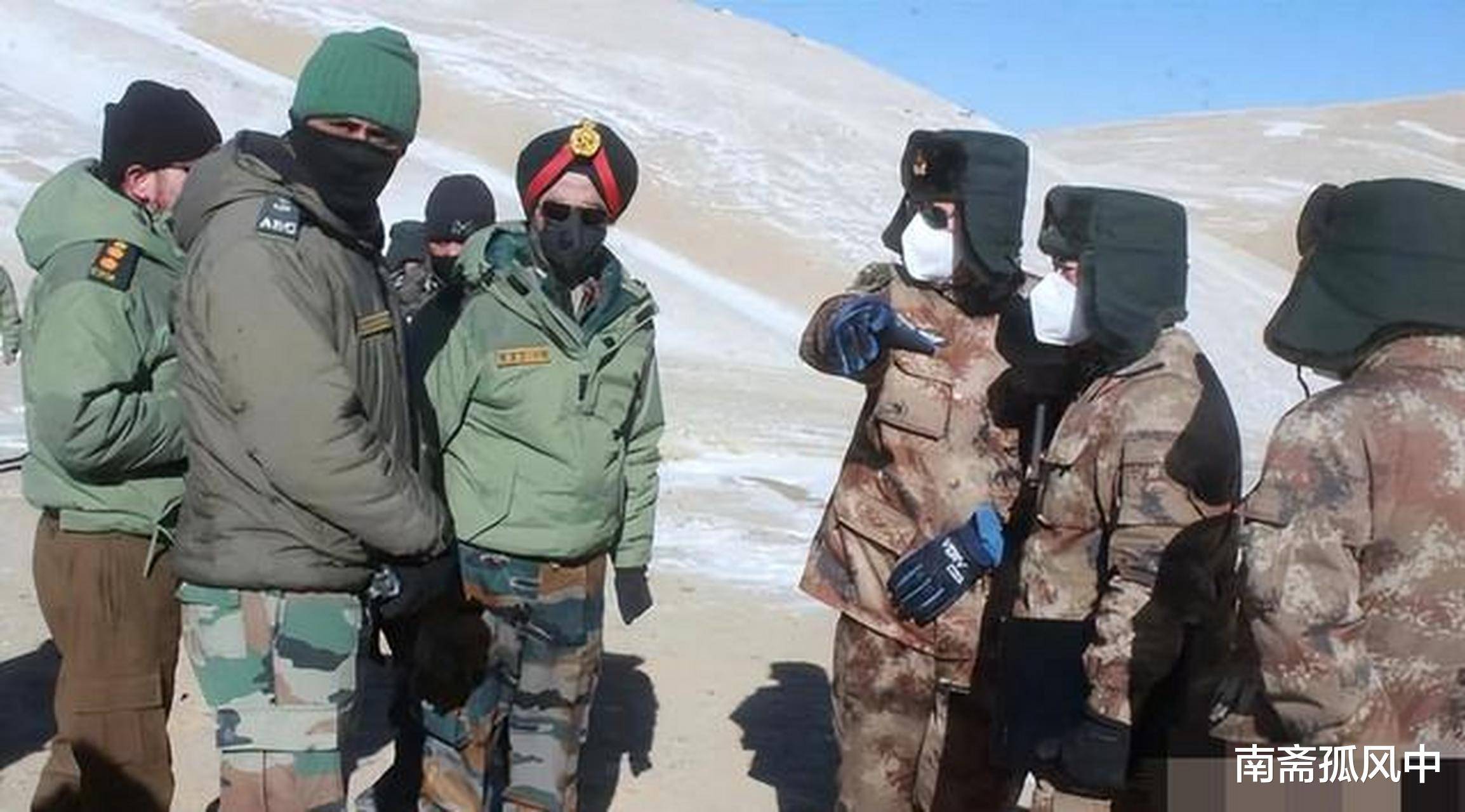
Elite infantry units moved one after another to the Chutichangla area and stopped only 500 meters away from the Indian front line.


They quickly dug out long and narrow trenches, set up machine guns and built fortifications.


In this tense atmosphere, before dawn on August 31, the Indian Army outpost suddenly reported:


The PLA's armored forces actually appeared in the distant Mordo garrison!


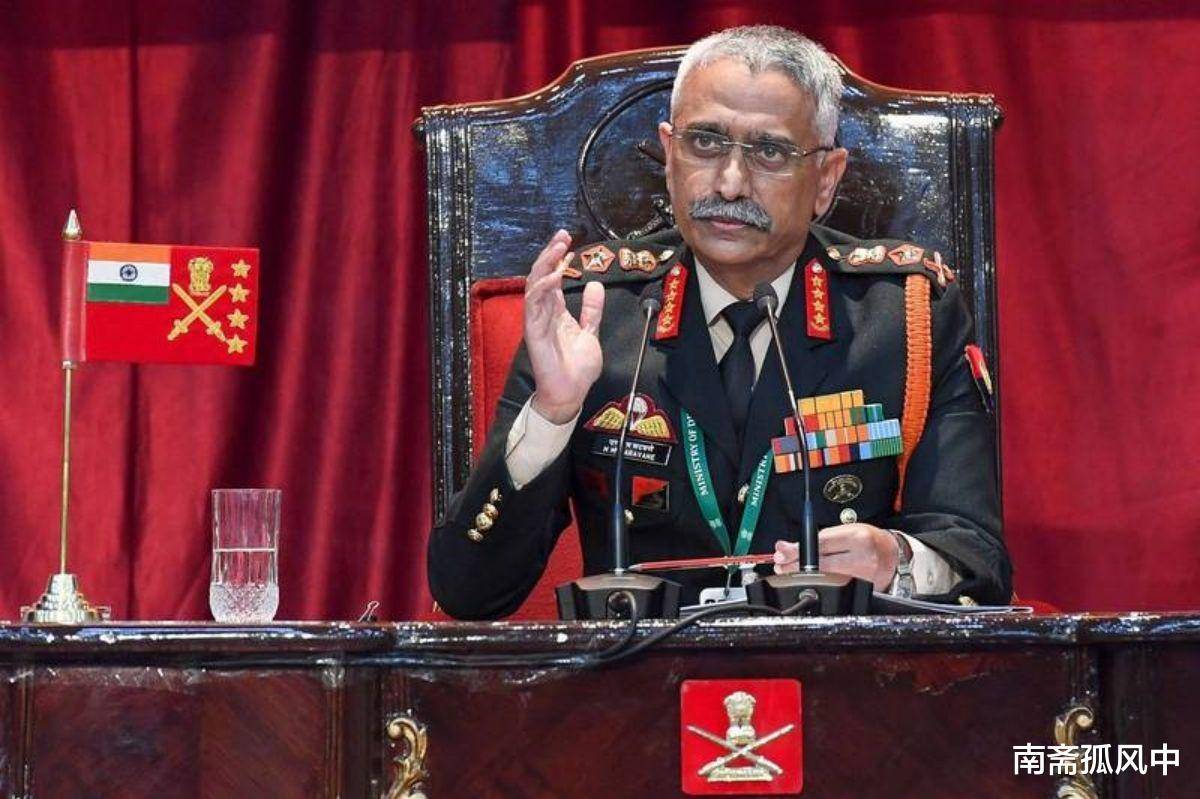
Shocked, Indian commander Naravane immediately mobilized T-90 tanks to provide reinforcements.


At the same time, even more disturbing news continued to come to the Indian army:


Large PLA troops have appeared in multiple different directions to encircle the Indian Army's front line!


As soon as the news came out, Naravane's vest was soaked with sweat in an instant.


He clearly realized that this was no longer a scale comparable to previous local conflicts, and that a life-and-death battle might break out between the two armies in this narrow mountain area.


Deep in the Kalwan Valley, war clouds are gathering.


Once upon a time, this was the "Pure Land" that India longed for.


Naravane knew very well that once the war broke out, the Indian army surrounded in this small area would be in a desperate situation.


So he began to frantically talk to Prime Minister Modi, National Security Advisor Doval and Defense Minister Singh, reporting the latest battle situation, his voice full of panic.


However, unexpectedly, after listening to this, Modi spoke in a calm tone and in a few words pushed all the responsibility and pressure onto Naravane alone.


"This is purely a military judgment, do what you think should be done."


This undoubtedly put Naravane into a highly tense and extremely passive position.

ca9fff24e71d410ba8bf11adda8135a4.jpeg


The atmosphere in the tent was almost frozen.


Naravane sat alone in his office chair, frowning.


Naravane's mind flashed with the figures of his family, the faces of his comrades, the land of India... everything seemed to be swirling and entangled.


Finally, it condensed into a heavy force that made it hard for him to breathe.


In this way, he sat alone in the office for a long time before he came to his senses.


The roaring brain finally calmed down, and reason began to recover. Naravane ordered:


"The Indian troops on the front line must not fire the first shot!"


Later, according to the Indian Army Chief of Staff, Naravane, he recalled:


"The atmosphere on the border was very tense at the time. The tanks of the two armies were less than 500 meters apart. It seemed that the war would start at any time. I was even authorized to start a war, but fortunately I chose to refuse to open fire and solve the problem in a peaceful way."


There are two main reasons why Naravane made such a choice:


First, China’s strength should not be underestimated.


As early as 1962, China demonstrated its strong strength in the self-defense counterattack against India.


In this battle, our country won great victories in succession in the Battle of Xishankou, the counterattack in Wanong area, the Battle of Limijin and other battles.


Not only did they annihilate three enemy brigades, they also captured more than 3,000 people and a large amount of weapons and equipment.


Even though decades have passed.


However, when faced with danger, our soldiers showed a selfless spirit of fighting for the country and the people.


Instead of weakening, it became even deeper.


The most direct evidence is that during the outbreak in 2019, our soldiers responded positively regardless of their own safety.


Go to the most urgent areas and provide assistance.


This will nip the danger in the bud and minimize the harm to other areas.

587da50248a2483088ffe08a283ee35d.jpeg


Moreover, in addition to its impressive soft power, my country's hard power is also developing rapidly.


In 2020, the Shandong, an aircraft carrier independently designed and built by my country, was launched and put into service, strengthening my country's water defense;


At the same time, our country's air force is gradually being modernized.


The fifth-generation fighter fleet has been further expanded to safeguard the security of the motherland and the people;


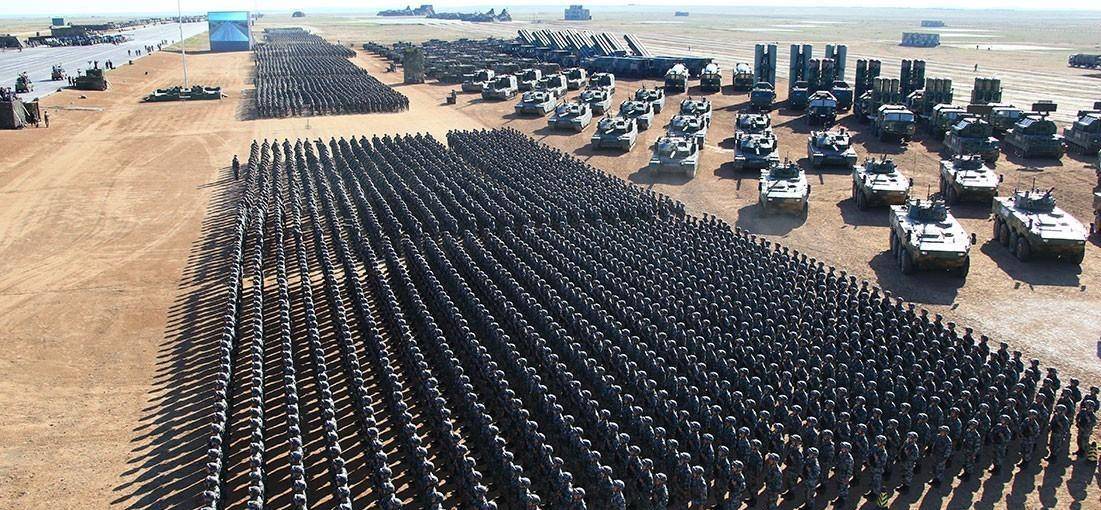
The strength of our army is self-evident.


From the Huaihai and Pingjin Campaigns in modern times to the later War to Resist U.S. Aggression and Aid Korea and the War to Resist French Aggression and Aid Vietnam.


The execution, mobility and other combat capabilities demonstrated by our army are obvious to all.

7023a081d29a4dbbbdacd841ed40b58e.jpeg


The second reason is that Naravane took the overall situation into consideration, even though he had been granted the power to declare war.


But they understand that once the first shot is fired, a larger conflict will inevitably break out.


Although the Indian army was prepared at this time and had even placed heavy weapons on the border.


Taking into account the reaction of the domestic people and the impact of the new crown epidemic.


Naravane did not want to escalate the conflict or increase unnecessary casualties.


Moreover, if a larger conflict breaks out, Naravane will inevitably bear the corresponding responsibility and even be subjected to certain public opinion attacks.


Taking many factors into consideration, Naravane did not choose to open fire directly.

d876f4398a3d41fe9679906122205cfe.jpeg


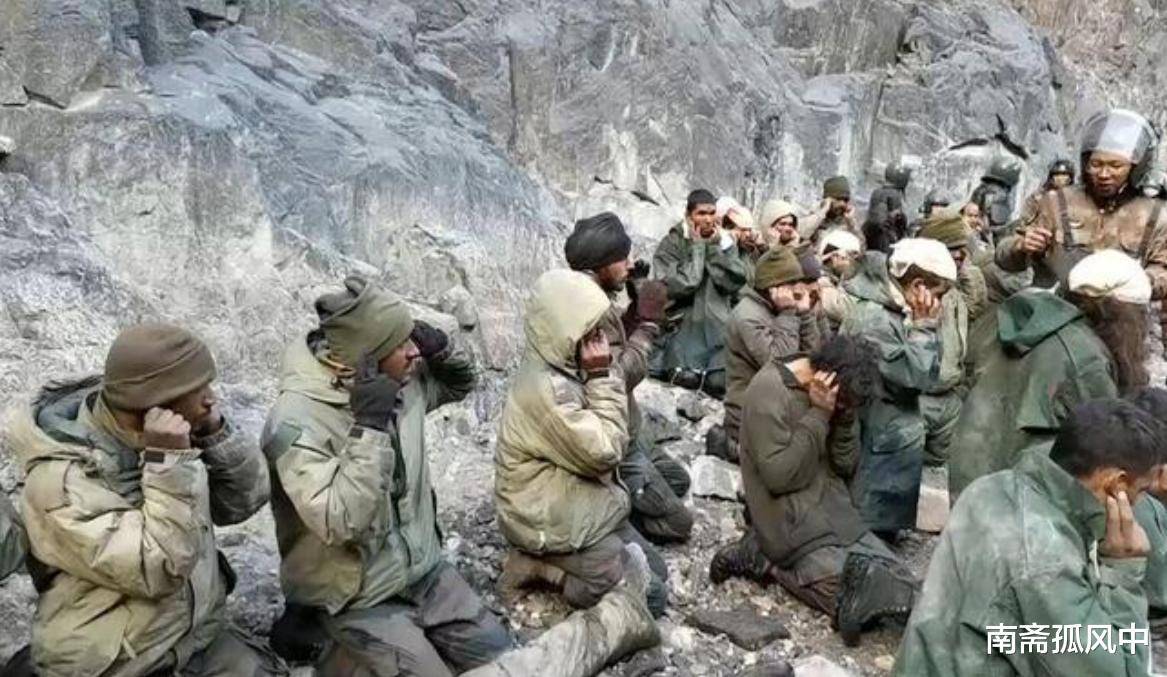
Instead, after a small-scale physical conflict, they chose to take the initiative to express their position:


He expressed his willingness to proceed from the overall situation of bilateral relations, resolve the dispute through peaceful means of "communication and consultation" and ease the tension on the border as soon as possible.


The conflict was eventually resolved after five rounds of talks between China and India.


Consensus was reached on controlling the border situation and maintaining regional peace.


At the same time, the Indian army has also completed disengagement from the Kalwan Valley, Hot Springs, Kongka Pass, and the coastal areas of Pangong Lake.


ececa6522e2648c9952e9a2c67df76d1.jpeg


Our country has once again successfully safeguarded its territorial integrity and effectively defended its national sovereignty.


It was also during this incident that the indomitable and tenacious spirit of patriotism displayed by our soldiers moved the world.


Among the four people who died, there was even a young soldier who was only 19 years old.


However, according to his comrades, when the conflict broke out, he did not show the slightest fear, but chose to fight for the future of his country.


For the happiness of the people, they rushed to the front line without hesitation and fought the enemy until the last moment.

f9fad7b6416044d496ea231122908831.jpeg


It is precisely because of this group of lovely people that they choose to stand up in times of crisis, even at the cost of their lives, to fight for peace and stability for the country and the people.
 
I be very happy if India fired the first shot.
Or go BOOMING with Big Guns India contracted to buy from other countries
together with shells India got to buy from other countries.
The big guns are ready to boom if required in this high-altitude region
To view this content we will need your consent to set third party cookies.
For more detailed information, see our cookies page.


How many 155 mm rounds India currently got in her inventory that DDG-80 so eager to BOOM across into China?

How many 155mm rounds India seeking to contract to other countries and how many can those other countries make for India?

Anything like that 100,000 rounds that China can make in just one day now? and at that, not even at war footing.

Still wanna go BOOMING with big guns that you contracted to buy and cannot even make yourself?

laughing-hysterically.gif


A glorious fireworks will ensure
Indian soldiers got no fear of getting old

To view this content we will need your consent to set third party cookies.
For more detailed information, see our cookies page.


To view this content we will need your consent to set third party cookies.
For more detailed information, see our cookies page.


Do not forget China can make 100,000 155mm artillery shells in just one day.
To view this content we will need your consent to set third party cookies.
For more detailed information, see our cookies page.


Chinese can produce Fire Dragon missiles like dim sum and tea bags
 
I also hope India shoots first. That way India will take the blame for causing the conflict.

And we don't need to occupy India, we simply need to repeat the tactics of 1962, rout the Indian Army, then hand over Kashmir to Pakistan, and retreat back to the border to declare a truce. Such a war would completely destroy what is left of India's international influence and the possibility of its rise to power.

PDF Those Indians who think China will get bogged down in a law and order war are ridiculous. First of all why would China want to occupy India when India has no resources other than a stinking population of 1.4 billion? Secondly China has never been caught in the quagmire of a security war, be it 1950, 1962, 1979, we have all retreated after destroying the enemy's war & economic potential and infrastructure.
 
I also hope India shoots first. That way India will take the blame for causing the conflict.

And we don't need to occupy India, we simply need to repeat the tactics of 1962, rout the Indian Army, then hand over Kashmir to Pakistan, and retreat back to the border to declare a truce. Such a war would completely destroy what is left of India's international influence and the possibility of its rise to power.

PDF Those Indians who think China will get bogged down in a law and order war are ridiculous. First of all why would China want to occupy India when India has no resources other than a stinking population of 1.4 billion? Secondly China has never been caught in the quagmire of a security war, be it 1950, 1962, 1979, we have all retreated after destroying the enemy's war & economic potential and infrastructure.
200w.gif
 
China can’t control small taiwan, dreaming about fighting india
 
Why doesn't India fire the shot then, China is scared.
Why to fire? We already have south tibet and ladakh. And we messed up chinese investments in gwadar
 
Why to fire? We already have south tibet and ladakh. And we messed up chinese investments in gwadar
They will be back in time. Why not, since Indian army is so superior to Chinese and you people want more land from China.
 
They will be back in time. Why not, since Indian army is so superior to Chinese and you people want more land from China.
It will be back when taiwan is back. Never. Puny china too weak to take anything
 
It will be back when taiwan is back. Never. Puny china too weak to take anything
Yeah, like 1962 and 2020, don't be too quick with your big mouth, you'll get what you ask for.
 
Yeah, like 1962 and 2020, don't be too quick with your big mouth, you'll get what you ask for.
No, like 1987 and 2020. Taiwan routinely makes fun of puny chinese PLA
 
It will be back when taiwan is back. Never. Puny china too weak to take anything
Your army is just a laughing stock, lol. Just like it chickened out in 1987.
 
No, like 1987 and 2020. Taiwan routinely makes fun of puny chinese PLA
During the last clash of the August 29-30, 2020 operation, the Indian Army, alongside the SFF, captured seven peaks at Kailash Range. From these commanding heights, we overlooked the PLA's Moldo garrison, with the G219 lifeline of the Chinese military within our artillery range. When Indian commanders placed medium artillery on those peaks, the PLA bolted with their tails between their legs. They knew fighting in the Himalayan theater against our well-acclimatized troops would be a disaster for them. Additionally, maintaining a long supply line from eastern China to the Himalayan theater could be easily interdicted by the Indian military.

Something similar went down in 1986-87 under General Sundarji's command. The Indian Army moved a massive number of troops, captured all the surrounding peaks, and cut off the PLA's supply lines. The Indian Army even humiliated the PLA by speaking to them in Mandarin over loudspeakers. They were ready to capture 10,000 sq km of Tibetan territory and forced the PLA to move back to the pre-1962 status quo. However, Rajiv Gandhi ordered the Indian Army to back off. Despite this, the Chinese were seriously freaked out by General Sundarji and his Operation Falcon.
 
During the last clash of the August 29-30, 2020 operation, the Indian Army, alongside the SFF, captured seven peaks at Kailash Range. From these commanding heights, we overlooked the PLA's Moldo garrison, with the G219 lifeline of the Chinese military within our artillery range. When Indian commanders placed medium artillery on those peaks, the PLA bolted with their tails between their legs. They knew fighting in the Himalayan theater against our well-acclimatized troops would be a disaster for them. Additionally, maintaining a long supply line from eastern China to the Himalayan theater could be easily interdicted by the Indian military.

Something similar went down in 1986-87 under General Sundarji's command. The Indian Army moved a massive number of troops, captured all the surrounding peaks, and cut off the PLA's supply lines. The Indian Army even humiliated the PLA by speaking to them in Mandarin over loudspeakers. They were ready to capture 10,000 sq km of Tibetan territory and forced the PLA to move back to the pre-1962 status quo. However, Rajiv Gandhi ordered the Indian Army to back off. Despite this, the Chinese were seriously freaked out by General Sundarji and his Operation Falcon.
Next time, just don't run away into frozen glacial river and cry.
 
The backbone of the PLA's ground forces consists of its mechanized formations, specifically the heavy combined arms brigades. However, due to the geographical conditions, there's limited scope for deploying these heavy CABs outside the Depsang Plains, North Sikkim Plateau, and Spanggur Gap. As a result, the PLA has formed mountain formations that lack heavy weaponry and rely on 122mm howitzers for artillery support. The road networks to these contested areas are sparse and can be disrupted at crucial points such as bridges, passes, and unstable slopes using missile attacks and PGMs. This would significantly limit the PLA's mobility, while we can protect our own assets through tunneling and localized deployment of formations. Unlike the PLA, which only has border guard formations as localized combat units, we have a distinct advantage.

Our forces are capable of launching a limited-scale counteroffensive (up to 10 km in depth) to gain leverage in negotiations. Our short lines of communication are a major advantage, as the Western Theater Command's headquarters are in Chengdu, along with their central stores where reserve equipment is kept. We have scout units and the SFF, which can infiltrate behind enemy lines, blend in with locals, and disrupt enemy logistics, cutting off frontline troops from supplies. The PLA's supply lifeline, the GH219, runs as close as 30 km from the Indian border at its nearest point. This gives us numerous opportunities to cut off the Xinjiang Military Command from the Tibet Military District by interdicting PLA convoys and supplies along GH219. We're well-prepared for the land battle, but sustaining our troops with ammunition and logistics is crucial to avoid retreating.

Regarding naval capabilities, it's unrealistic to believe the PLAN can send a fleet to the Indian Ocean and attack India. The PLAN must maintain the Northern and Eastern Fleets to deter the Japanese Maritime Self-Defense Force, Korean Navy, and the US Navy's 7th Fleet in Okinawa. The Eastern Fleet also serves as the primary naval formation for a potential invasion of Taiwan, leaving no room to spare ships. The PLAN's Southern Fleet, which has some expeditionary capability, is the same size as the Indian Navy and primarily focuses on enforcing claims in the South China Sea, bringing it into direct confrontation with Vietnam, the Philippines, and Malaysia. About 70% of the Southern Fleet is dedicated to patrolling these claims and facing US, Australian, and NATO forces entering through the Malacca and Sunda Straits.

This leaves roughly 30% of their force for expeditionary operations, including about 1,000 marines, 2 LPDs, a few LSTs, possibly a carrier, and 4-5 destroyers and frigates at best. This would be their peak force, which they cannot sustain. Their first obstacle would be the Andamans, where we have full-fledged naval anti-shipping units and an air force base at Car Nicobar capable of launching Sukhois. This region alone would significantly challenge them. Additionally, India has a SOSUS chain in the area to detect PLAN submarines via their acoustic signatures, supported by P-8Is for anti-submarine operations.

The Indian Army has one amphibious brigade in the Andamans, but if necessary, it can deploy the entire 54th Infantry Division to defend the islands. Such a large force would be more than a match for not just 1,000, but even an entire brigade of PLA marines.
 

Users who are viewing this thread

Pakistan Defence Latest

Country Watch Latest

Back
Top