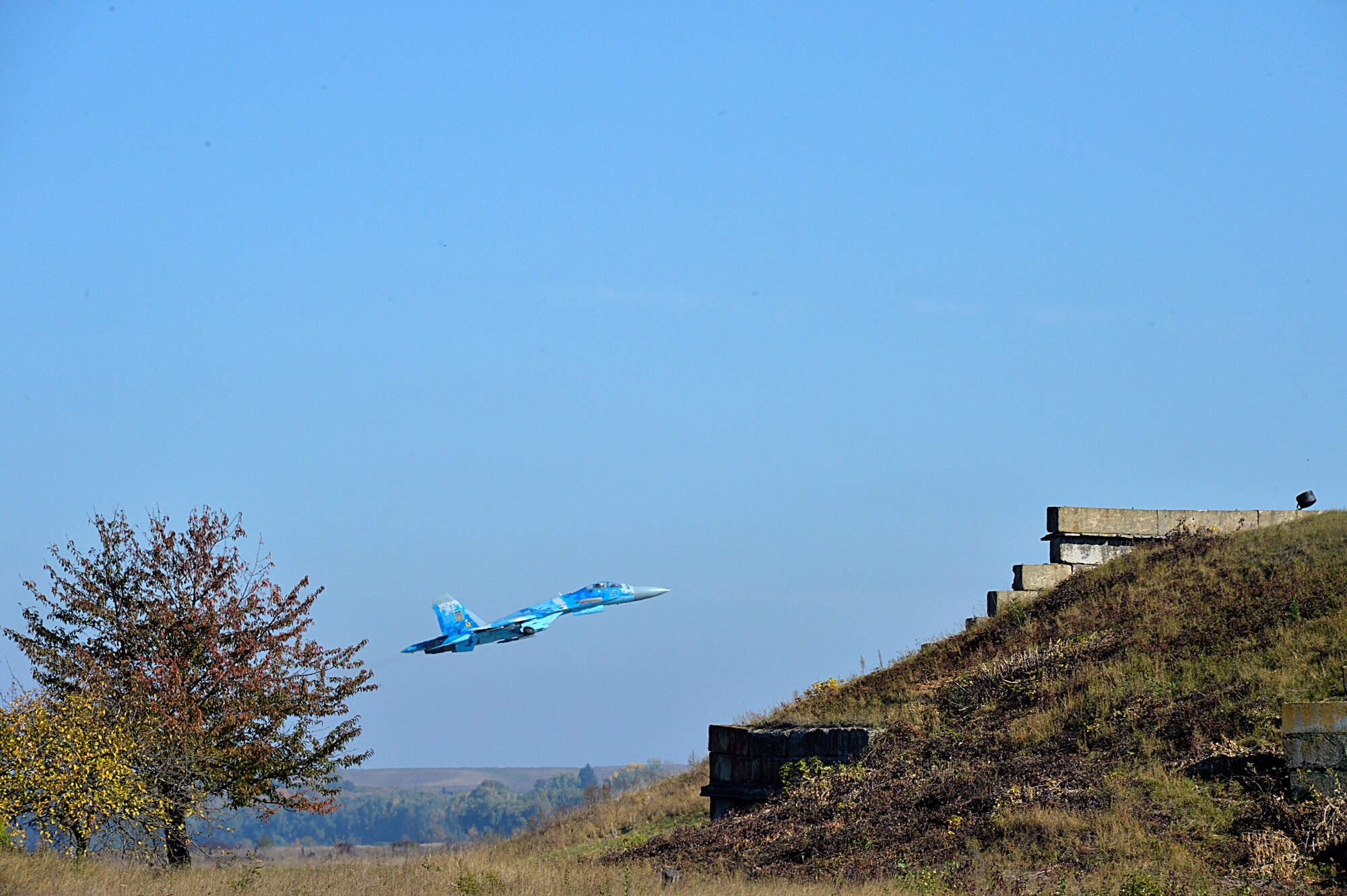
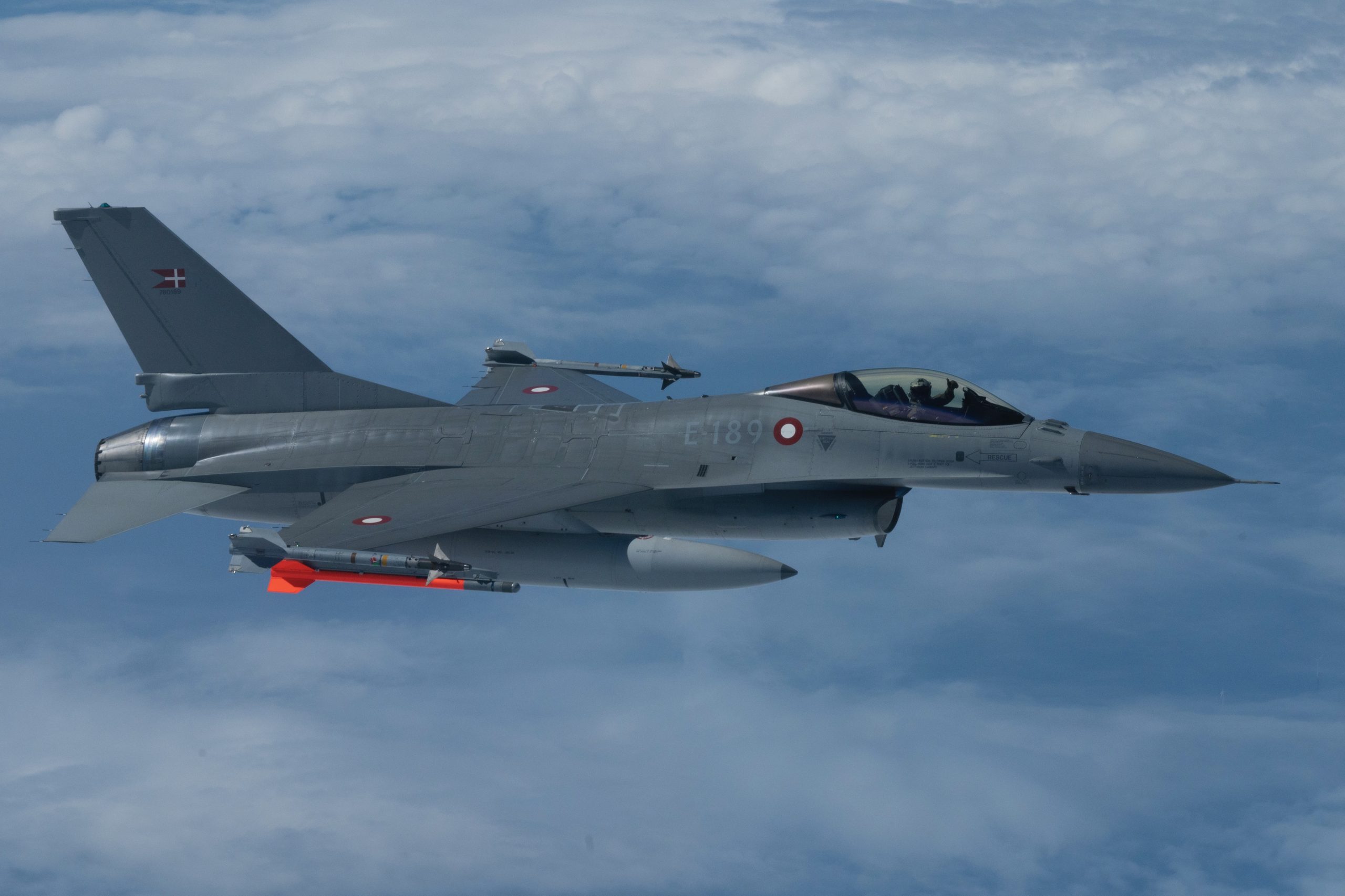
F-16 Officially In Ukrainian Service

I know that but they would be useful to fire against F-16s that are out on CAP or about to launch ground attacks against Russian targets.

F-16 would then have to take evasive action to avoid being hit and so reducing the effectiveness or scuppering the mission totally.

Russia can use twin missiles fired a few seconds apart to really increase the threat to the F-16. First missile forces the F-16 to take evasive action and the 2nd one just slams straight into it, after it has stopped its evasive manouevre to avoid first missile.

Russians are already doing this and so the F-16 would have to use the same tactics as the other aircraft in UAF have been doing over the last 2 years.
You know what is being fired if you were being painted 300km + away, it's not going to be anything like AA-6 or something medium range that it could mean something when you are painted 300km away.

And evasive action is not the same as withdrawing from the battle or scrubbing the mission........ you are talking about countermeasure and a few high G turn to break lock, it wouldn't reduce anything. Effectively you are spending millions of dollars to have the F-16 make a few high G pull.......

as I said, if you already said it's unlikely to hit a F-16, then how is it a "threat"?
 
You can't contest air space with Anti-Air weapon alone, you also need SEAD and DEAD, or Russian surface defence WILL shoot you down. You don't just go Air-to-Air on superiority fight.

Again, unless either Ukraine fancy gaining Air Superiority in Russia or Russia fancy flying anything in Ukraine, I don't see any aerial engagement for those F-16, I mean do tell me what are they going to be shooting at if either they won't go to Russia, or the Russian aren't coming for them?

And you think these F16s will be used for CAS! Do you release how much inter services coordination/infra/support is required for it be successful? How long it took to train the Ukrainians on these F16s? how long will it take to train the ground forces for successful CAS operations?

As I said, pay attention to what Ukraine is "showing" these F16s carrying, not what you think.
 
And you think these F16s will be used for CAS! Do you release how much inter services coordination/infra/support is required for it be successful? How long it took to train the Ukrainians on these F16s? how long will it take to train the ground forces for successful CAS operations?

As I said, pay attention to what Ukraine is "showing" these F16s carrying, not what you think.
According to my brother, who was a Marine FA-18 Pilot, CAS is the least required for training, because well, what do I know? But from the ground prespective, I think we are doing all the job here, they just swoop in and drop ordinance that have already painted by us.....And you say it like I never called a strike package before......

I will tell you what I don't know tho, how you can do CAP when either the Ukrainian fighter don't go over to Russia or the Russian fighter don't show up in Ukraine.........
 
According to my brother, who was a Marine FA-18 Pilot, CAS is the least required for training, because well, what do I know? But from the ground prespective, I think we are doing all the job here, they just swoop in and drop ordinance that have already painted by us.....And you say it like I never called a strike package before......

I will tell you what I don't know tho, how you can do CAP when either the Ukrainian fighter don't go over to Russia or the Russian fighter don't show up in Ukraine.........

Yes good luck training those Ukrainian conscripts to call in CAS. Poor sods might become a laughing stock for Russians.

At this point its getting rather silly. You refusing to comprehend as to what Ukrainian themselves showing their intentions for F16s. I will let you carry on.
 
Yes good luck training those Ukrainian conscripts to call in CAS. Poor sods might become a laughing stock for Russians.

Now you sounded like Ukraine don't know anything about CAS before getting F-16....

Tell me, how is it different for Ukraine to do CAS with Su-24 or Su-25 than F-16?? So much so they will have to "re-learn" everything......

At this point its getting rather silly. You refusing to comprehend as to what Ukrainian themselves showing their intentions for F16s. I will let you carry on.

That's your perception of what you think they were doing with them, unless you know someone on the Ukrainian high up, you don't know if that was their intention, even I know a few Ukrainian Colonel (one of them is actually a friend of mine as we KNOW EACHOTHER in Iraq) I wouldn't know what their actual intention was and I can only guess, but you seems to think you know more than I do. Maybe you do? I don't know.
 
First Su35 have to detect small targets like F16s at 250-300 km range ( F16s has a much less RCS as compared to Su-35 3m2 to 5m2 which is much less Su-35 RCS of 8m2 to 10m2) after that talk about the tracking and engagement range which are much less than detection range,

So why Su-35 has least chance to see and destroy F16s, and F16s has a advantage over Su-35 to detect/track and engage Su-35 earlier than Su-35 could detect/track and engage F16s because Su-35 has bigger RCS than armed F16s

So Su-35 has no chance to destroy F16s at range of 250-300 km range, understand sir
What is the source for this claim? I want evidence that the RCS of a Su-35S is 8m2 to 10m2.
 
And you think these F16s will be used for CAS! Do you release how much inter services coordination/infra/support is required for it be successful? How long it took to train the Ukrainians on these F16s? how long will it take to train the ground forces for successful CAS operations?

As I said, pay attention to what Ukraine is "showing" these F16s carrying, not what you think.
Much more than most people suppose.

The first thing is that air support is not as easy as adding a new weapons system. Most of the Russian GBAD in Ukraine is close to the front line and directed against ZSU fixed wing aircraft, drones and GMLRS, not rear-based and configured to defend cities from strategic strikes, as Ukraine has done in Kiev with a large IADS.

What are the challenges that must be overcome to carry out CAS missions? How large will the Strike Package be, including AWACS, CAP, EW, SEAD, CSAR, etc. just to get into range? Will ground units perform SEAD and other roles? The Ukrainians are not really trained, equipped, or organized to field large Strike Packages of the kind they would need to get close enough to the front lines to identify Russian armor and fire on them.

And ZSU ground forces will have trouble trying to deploy SEAD to support ground attacks, and they will probably be reluctant to see the attention and ammunition expenditure being wasted when they could engage Russian armor without waiting.

When the ZSU ground forces spot the Russians, will the CAS strike aircraft be able to show up in time? How quickly would they take off, fly potentially long distances across the country, and before arriving at the station, communicate with the Forward Air Traffic Controllers (FACs/TACPs), transmitting targets and instructions to strike them?

These tasks are easier for helicopters, many of their fixed wing regiments are deliberately positioned away from the front lines to protect them. At least out of range of ISR drones. This has not been a problem for them, because it seems that they only use ground attack tactics as part of deliberately planned operations.

The only other option is to have strike or Strike Package aircraft in the air at all times, 24/7, waiting for a call for assistance, but only the US has that capability because it is absurdly expensive in terms of the number of aircraft and unit sorties required, the operational planning difficulties, and the absurdly expensive logistical burden of flying aircraft 24 hours a day that do nothing but perhaps conduct ground attack missions that artillery and other weapons can replicate. In other words, it is a luxury that only a few countries can afford.

Furthermore, are the pilots and ground observers trained to operate together? Is there at least someone in each ZSU battalion who is well trained and experienced to call in air strikes and provide the necessary information that the pilots need to know? Who knows how to communicate with them who have the proper equipment to do so?

I cannot stress this enough, one guy with a radio and a map cannot call in an effective CAS. This needs to be someone who is not only well versed in ground operations, but also an expert on aircraft, their ordnance, and the tactics they use, because this person’s job is not just to relay information about the target, they need to be able to brief the pilot on everything they need to know to make an attack and not only hit the target, but also to try to survive. This is difficult, and often requires specialized air force troops who are permanently attached to the ground forces.

Which pilots are also trained to conduct CAS?

Especially problematic because the PS ZSU was not really trained for this before the war, and in addition to highly planned operations carrying out rocket attacks, the hasty support of CAS would be a new skill set for most serving pilots in the Ukrainian air force. One that they would need to perform in non-permissive airspace.

What about airspace deconfliction? It’s a nightmare to deal with, but extremely necessary if aircraft start flying into artillery flight paths.

There are many people here doing due diligence without knowing all the intrinsic details of the complexity of each dedicated mission.
 
Much more than most people suppose.

The first thing is that air support is not as easy as adding a new weapons system. Most of the Russian GBAD in Ukraine is close to the front line and directed against ZSU fixed wing aircraft, drones and GMLRS, not rear-based and configured to defend cities from strategic strikes, as Ukraine has done in Kiev with a large IADS.

What are the challenges that must be overcome to carry out CAS missions? How large will the Strike Package be, including AWACS, CAP, EW, SEAD, CSAR, etc. just to get into range? Will ground units perform SEAD and other roles? The Ukrainians are not really trained, equipped, or organized to field large Strike Packages of the kind they would need to get close enough to the front lines to identify Russian armor and fire on them.

And ZSU ground forces will have trouble trying to deploy SEAD to support ground attacks, and they will probably be reluctant to see the attention and ammunition expenditure being wasted when they could engage Russian armor without waiting.

When the ZSU ground forces spot the Russians, will the CAS strike aircraft be able to show up in time? How quickly would they take off, fly potentially long distances across the country, and before arriving at the station, communicate with the Forward Air Traffic Controllers (FACs/TACPs), transmitting targets and instructions to strike them?

These tasks are easier for helicopters, many of their fixed wing regiments are deliberately positioned away from the front lines to protect them. At least out of range of ISR drones. This has not been a problem for them, because it seems that they only use ground attack tactics as part of deliberately planned operations.

The only other option is to have strike or Strike Package aircraft in the air at all times, 24/7, waiting for a call for assistance, but only the US has that capability because it is absurdly expensive in terms of the number of aircraft and unit sorties required, the operational planning difficulties, and the absurdly expensive logistical burden of flying aircraft 24 hours a day that do nothing but perhaps conduct ground attack missions that artillery and other weapons can replicate. In other words, it is a luxury that only a few countries can afford.

Furthermore, are the pilots and ground observers trained to operate together? Is there at least someone in each ZSU battalion who is well trained and experienced to call in air strikes and provide the necessary information that the pilots need to know? Who knows how to communicate with them who have the proper equipment to do so?

I cannot stress this enough, one guy with a radio and a map cannot call in an effective CAS. This needs to be someone who is not only well versed in ground operations, but also an expert on aircraft, their ordnance, and the tactics they use, because this person’s job is not just to relay information about the target, they need to be able to brief the pilot on everything they need to know to make an attack and not only hit the target, but also to try to survive. This is difficult, and often requires specialized air force troops who are permanently attached to the ground forces.

Which pilots are also trained to conduct CAS?

Especially problematic because the PS ZSU was not really trained for this before the war, and in addition to highly planned operations carrying out rocket attacks, the hasty support of CAS would be a new skill set for most serving pilots in the Ukrainian air force. One that they would need to perform in non-permissive airspace.

What about airspace deconfliction? It’s a nightmare to deal with, but extremely necessary if aircraft start flying into artillery flight paths.

There are many people here doing due diligence without knowing all the intrinsic details of the complexity of each dedicated mission.
You don't actually do that. Well, at least this is not how the US do it

FIrst of all, all terminal controllers are Air Force pilot. The detail are more in the air than on the ground, however, the major issue is that how are you going to coordinate the incoming and outgoing of the supporting aircraft, because, A.) you want to avoid blue on blue. and B.) You want to have a quick solution on adjustment.

In CAS, it's call vectoring, you basically have the controller direct the aircraft into the strike zone, guide the aircraft into attack and relay appropriate data to the aircraft (like windspeed, azimuth direction of travel and so on) then you will have secondary issue, such as was that airspace being used by something else, you can't call airstrike when you are prepping the area with artillery or you can't call airstrike if you have helo in the area, the danger close, blue on blue, blue on green situation come into play. And then comes the legality issue. Can you call an airstrike on a certain area, that would have been done by senior JAG attachment

As for in the air, you need to have pilot on orbit, and have are cleared package on strike, and then you have the rotation, usually you drop arty in between each airstrike to keep the area prepped. For the pilot, the only thing they ever need to do is to fly to the target area, put on a racetrack pattern, and then either attack with terminal guidance or ground guidance, and then you RTB and let the second set rotate to your place.

This is how we in the USAF did CAS. As for whether or not Ukraine was trained for it.

well......


Think Ukraine has certified NATO JTAC operation since either 2019 or 2020
 
Last edited:
Now you sounded like Ukraine don't know anything about CAS before getting F-16....

Tell me, how is it different for Ukraine to do CAS with Su-24 or Su-25 than F-16?? So much so they will have to "re-learn" everything......

And how is that going?
Flip it and ask yourself why do they need f16s when they already got other platforms for the CAS job?

That's your perception of what you think they were doing with them, unless you know someone on the Ukrainian high up, you don't know if that was their intention, even I know a few Ukrainian Colonel (one of them is actually a friend of mine as we KNOW EACHOTHER in Iraq) I wouldn't know what their actual intention was and I can only guess, but you seems to think you know more than I do. Maybe you do? I don't know.

Rather spending forum bandwidth on what your siblings, uncle, aunt, friends and friend's friend are doing, pay attention to what Ukrainian themselves are "showing" to the world. That's not my prespection rather common knowledge easily available.

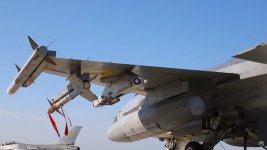
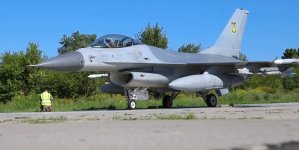
What configuration is this? What does it imply? As in our Pakistan military circles, they say, "koi shak"?

ukraine-f-16-1-66b020e19e970.jpgFirst-ten-F-16-fighter-jets-officially-entered-in-service-in-the-Ukrainian-Air-Force.jpg


Good read. Sure you can find more info and enlighten yourself.
 
And how is that going?
Flip it and ask yourself why do they need f16s when they already got other platforms for the CAS job?

Again, so I guess F-16 in the US don't do CAS as well, since that was already the job for A-10 and F-15 Strike eagle.

What you said does not make sense at all.

Rather spending forum bandwidth on what your siblings, uncle, aunt, friends and friend's friend are doing, pay attention to what Ukrainian themselves are "showing" to the world. That's not my prespection rather common knowledge easily available.

I also quote MY OWN experience operating under US Special Force, may I ask how many time have you called CAS and interact with any JTAC unit in your own experience??

What configuration is this? What does it imply? As in our Pakistan military circles, they say, "koi shak"?

View attachment 58447View attachment 58448


Good read. Sure you can find more info and enlighten yourself.
Those are anti-air configuration with EM pod, but then what does it mean? They aren't showing it on JDAM configuration does that mean they can't do CAS??, in fact, if you were to do CAP, then you will also need AWACS to vector you in, what AWACS does Ukraine have at the moment? Or are you suggesting Ukraine sortie out blindly and patrol the border and look for target on their own with their F-16? NATO were flying rivot joint on black sea, not E-3 sentry, so are you suggesting the Ukrainian doing CAP blind?? Don't think it will go well........

Dude, even myself as Army guy know that you need to step the hell up
 
What is the source for this claim? I want evidence that the RCS of a Su-35S is 8m2 to 10m2.
Educated guess, F16s is much smaller than Su-35, in clean config F16s has a RCS of 1m2, and Su-35 is based on the design of Su-27 which has a RCS of 15m2 in clean cofig so as we we assume russians are able to manage to lower RCS of Su-35 but they're not able to manage to reduce that much because size of Su-35 is remains same as old Su-27 and this is not (LO design) and they don't use RAM (RADAR ABSORBENT MATERIAL) to reduce RCS to all Su-35 airframe, which massively Increase price/ manufacturing costs as well as maintenance costs so they used RAM only critical areas like leading edges of the wings/ on air intake lips etc etc So overall Su-35 has a bigger RCS as compare to F16s
 
Yaar just watch iranis will shoot down an F-35 and that will totally destroy that Demi god of the F-35. It will demolish the whole program and officially usher in the unmanned drone era!
Bas kr de yar tun
Har than te Shattay ChukrY shru kr dena tun.
 
Again, so I guess F-16 in the US don't do CAS as well, since that was already the job for A-10 and F-15 Strike eagle.

What you said does not make sense at all.


You can create a thread about F16s in US and what they are tasked to do. We are discussing Ukraine here, not sure you realised?

I also quote MY OWN experience operating under US Special Force, may I ask how many time have you called CAS and interact with any JTAC unit in your own experience??

Dont give monkies what you are doing or been doing, but clearly you are not putting your reading glasses on and educating yourself about the matter under discussion.

Those are anti-air configuration with EM pod, but then what does it mean? They aren't showing it on JDAM configuration does that mean they can't do CAS??, in fact, if you were to do CAP, then you will also need AWACS to vector you in, what AWACS does Ukraine have at the moment? Or are you suggesting Ukraine sortie out blindly and patrol the border and look for target on their own with their F-16? NATO were flying rivot joint on black sea, not E-3 sentry, so are you suggesting the Ukrainian doing CAP blind?? Don't think it will go well........

Dude, even myself as Army guy know that you need to step the hell up

There is a small matter of Aim120 and Aim9 being on display? How many tank columns and infantry you are going to destroy with these? These pictures are relesed for a purpose to convey the message across. You should be intelligent enough for the all noise you make to understand this.

Since you didnt read the article:

they will help address a problem that has persisted from the start of the invasion in February 2022: Russia’s more modern combat aircraft have been difficult for Ukraine’s military to counter with its own aging fighters.


The F-16s will be superior to Ukraine’s older jets. With their more powerful radars and better resistance to jamming, the F-16s will be able to detect Russian aircraft at longer distances and allow Ukrainian pilots to stay further outside the range of front-line Russian air defenses. Furthermore, these F-16s will likely be equipped with AIM-120 AMRAAMs, air-to-air missiles that have similar, and likely superior, performance compared to the Russian R-77.


In the short term, Ukrainian officials say, F-16s and other advanced Western fighter jets are needed to enhance air defenses, since frequent barrages of Russian missiles are exhausting Kyiv’s existing ground-launched systems. The jets can be launched within minutes and equipped to shoot down incoming missiles and enemy aircraft.


F-16s likely will not grant Ukraine air superiority, but they will facilitate the defense of their air space.

.
.
.
.
.

So on and so forth.

And if you are still clueless, let me tell you straight, they are NOT brought in for CAS in mind, their primary role is to augment air to air capabilities. And thats where I mentioend their role on ADA duties where they can perform air to air roles as the situation develops.
 
Educated guess, F16s is much smaller than Su-35, in clean config F16s has a RCS of 1m2, and Su-35 is based on the design of Su-27 which has a RCS of 15m2 in clean cofig so as we we assume russians are able to manage to lower RCS of Su-35 but they're not able to manage to reduce that much because size of Su-35 is remains same as old Su-27 and this is not (LO design) and they don't use RAM (RADAR ABSORBENT MATERIAL) to reduce RCS to all Su-35 airframe, which massively Increase price/ manufacturing costs as well as maintenance costs so they used RAM only critical areas like leading edges of the wings/ on air intake lips etc etc So overall Su-35 has a bigger RCS as compare to F16s
A very wrong guess, by the way! And totally wrong data. A clean F-16 has an RCS of over 4m2, only the latest versions have a much lower RCS that is comparable to 1m2 and these aircraft were not sent to Ukraine. So, here your guess is already way off by all metrics.

Also, I don't know where you got the idea that the Su-35S does not use RAM. Yes, they do. Thanks to RAM, the RCS of the Su-35S is now claimed to be up to six times smaller than that of the Su-27, somewhere between 1-3m2, compared to 10-15m2 for the Su-27. The engine face (fan and compressor) and the air intake walls were covered with magnetic RAM. The hot parts of the engine at the rear were applied heat-resistant ceramic RAM. The canopy was treated with an electroconductive material that acts to hide the high reflection of the metal components in the cockpit. The radome has been selectively coated to alter its conductivity and make it transparent only to the radar's own operating band. The manufacturer says that the RCS reduction is optimized in the X-band and only in the frontal aspect. The lower RCS of the Su-35S compared to the Su-27 is capable of reducing the detection range of the enemy radar by up to 40%. In other words, while the Su-27 is hypothetically detected at 200 km by a fire control radar, the Su-35S will be detected at approximately 120 km by the same radar.

Despite the lower RCS, the Su-35S is not a stealth fighter; its radar signature is slightly above models such as the F/A-18E/F and Rafale, which have an estimated RCS of between 0.1-1m², and well above American fifth-generation fighters with an RCS of around 0.0001m². However, the claim that the Ukrainian F-16 has a lower RCS than the Su-35S is laughable.
 
You don't actually do that. Well, at least this is not how the US do it

FIrst of all, all terminal controllers are Air Force pilot.
Are they all Air Force pilots? Where did you get that information?
In CAS, it's call vectoring, you basically have the controller direct the aircraft into the strike zone, guide the aircraft into attack and relay appropriate data to the aircraft (like windspeed, azimuth direction of travel and so on) then you will have secondary issue, such as was that airspace being used by something else, you can't call airstrike when you are prepping the area with artillery or you can't call airstrike if you have helo in the area, the danger close, blue on blue, blue on green situation come into play.
And do you think that the ZSU holds all these capabilities? The coordination is much greater than you infer, the controller is only part of the CAS process and he is not aware of all the airspace conflicts within his respective area of operation. It’s a nightmare to deal with, but extremely necessary if aircraft start flying into the flight paths of helicopters, drones, artillery…

A short report on airspace deconfliction during COIN which is a much less complex environment than anything we’ve seen in Ukraine so far:


And again I want to emphasize how this would become even more difficult because Ukrainian ground force commanders in their tactical operations center (TOC) with a dozen tablets and laptop screens showing various drone images and sharing drone images with supporting units are not going to want to turn off their artillery just so 1-2 F-16s can show up 30-45 minutes, probably hours later and fire a few missiles that may or may not hit the targets that need to be hit ASAP.

These rocket attacks with GMLRS/ATACMS made sense because they replicated artistic fire, especially MLRS, allowing artillery batteries to save their own ammunition with the same effects, consuming a larger stockpile. It is not the same to repel an active attack with CAS when artillery can be faster and more efficient.
And then comes the legality issue. Can you call an airstrike on a certain area, that would have been done by senior JAG attachment
Legality? Are you kidding me? This is not COIN. This is an open war between two states with one nation being invaded and the other being the aggressor. Ukraine has ZERO concern about collateral damage, especially in Russian-occupied Ukrainian territory.
As for in the air, you need to have pilot on orbit, and have are cleared package on strike, and then you have the rotation, usually you drop arty in between each airstrike to keep the area prepped. For the pilot, the only thing they ever need to do is to fly to the target area, put on a racetrack pattern, and then either attack with terminal guidance or ground guidance, and then you RTB and let the second set rotate to your place.
No. These are not the only tasks of the fighter pilot in a CAS. He needs to be fully aware of the conflict in the airspace of the target area until he returns to base. He needs to consider the presence of enemy air threats, whether IADS or fighters, among several other activities, all because instead of being guided by an AWACS/JSTARS (which does this complete sweep of the air-ground space) which the PS ZSU does not yet have, he will end up having to be guided by ground control for the coordination and control of the air-ground space, which should have the joint ground and air commander of the unit to do this work for him.
This is how we in the USAF did CAS. As for whether or not Ukraine was trained for it.


well......

Think Ukraine has certified NATO JTAC operation since either 2019 or 2020
If Ukraine really thinks CAS is solely the job of the JTAC, they are completely mistaken. The JTAC provides the intelligence with all the essential information they need to employ munitions. Their other big piece of the puzzle is making sure they understand the situation on the ground—any threats, where the targets are, artillery deconfliction. The JTAC does not have the challenge of aircraft deconfliction. The pilots determine what other aircraft are in the area and provide clear airspace. The next challenge comes with building an area of operations upgrade, or AO. This is why other airframe platforms in the area are useful when it comes to building the AO upgrade, because air-to-air communication is easier than air-to-ground. Whatever the method, the upgrade must be built quickly.

And I am not even getting complicated here about emergency CAS. Weapons employment is the biggest challenge when it comes to emergency CAS. When an emergency CAS call is made, nearby airborne assets are dispatched. These aircraft may not be equipped with the ideal weapon for the job. In an emergency CAS, the pilot is taking all the responsibility and risk in deploying weapons, with the JTAC taking some responsibility—he identifies what you are bringing and how you can use it.
 

Users who are viewing this thread

Latest Posts

Back
Top