Whatever

Surprisingly, they weren't. I could go through a list of dynasties, but just to illustrate the point, neither the Mauryas nor the Guptas were. The successors to the Mauryas were Brahmin, and quite reactionary, compared to Ashoka the Great.
There is a lot of myth-building about the Indian state, both contemporary and subsequent.

Guptas are our modern day Banyas Joe.

Cheers, Doc
 
Guptas are our modern day Banyas Joe.

Cheers, Doc
No, they were not those Guptas. The origins of the imperial Guptas is obscure. Incidentally, most of them used the name not as a surname, but as part of their proper name.

Second, I'll take supari on you. Gupta/Agarwals are banias up to Bihar, and in the south through Andhra Pradesh and Karnataka. NOT in the east.
 
Agnihotri?
Heh.

An agnihotri is a specialist; he was responsible for keeping the sacred fire going during a fire-sacrifice, or a yagna. The Yagna itself evolved, the role of fire especially, from being once the recipient of sacrifices or oblations meant for the gods, to being a witness. A Hindu marriage, legally speaking, is not a marriage until the bride and groom complete seven circuits of the sacred fire.
 
Heh.

An agnihotri is a specialist; he was responsible for keeping the sacred fire going during a fire-sacrifice, or a yagna. The Yagna itself evolved, the role of fire especially, from being once the recipient of sacrifices or oblations meant for the gods, to being a witness. A Hindu marriage, legally speaking, is not a marriage until the bride and groom complete seven circuits of the sacred fire.
Joe,a small advice.you are a respected,senior member and lots of people here ,including me,take your word for the truth.So please be careful while writing.
I am from northeast,and I know for a fact that in our marriages we have to complete only 3 rounds around fire.(as far as I know, marriages are held here according to Yajurvedi rituals).
Although I have witnessed plenty of North Indian marriages with seven rounds.
Lot of Our northeast tribes,despite being hindu,follow different rituals with numerous variations.
But they are all considered legally married after the marriage ceremony ,some of which are even without fire or presence of Brahmin.All hindu marriages.
 
Heh.

An agnihotri is a specialist; he was responsible for keeping the sacred fire going during a fire-sacrifice, or a yagna. The Yagna itself evolved, the role of fire especially, from being once the recipient of sacrifices or oblations meant for the gods, to being a witness. A Hindu marriage, legally speaking, is not a marriage until the bride and groom complete seven circuits of the sacred fire.

Yes, the standing of fire among the Hindus, from what it is for us, is fascinating to me. I wish I could read more about it. Somewhere. How fire essentially got demoted here. We have a living fire all around our homes. 24/7. I have so many Hindu friends whose homes I see no fire in. @Sam. who is a Haryanvi Jat says their homes too have a home chulha always burning (I think even the embers over night).

Cheers, Doc
 
Last edited:
Joe,a small advice.you are a respected,senior member and lots of people here ,including me,take your word for the truth.So please be careful while writing.
I am from northeast,and I know for a fact that in our marriages we have to complete only 3 rounds around fire.(as far as I know, marriages are held here according to Yajurvedi rituals).
Although I have witnessed plenty of North Indian marriages with seven rounds.
Lot of Our northeast tribes,despite being hindu,follow different rituals with numerous variations.
But they are all considered legally married after the marriage ceremony ,some of which are even without fire or presence of Brahmin.All hindu marriages.
I am very grateful for your inputs, and shall bear those in mind.

There is a law that holds Hindu marriages to be completed only on seven circuits, and I was writing based on my memory of that.
On looking it up, hurriedly, because there is another urgent chore awaiting, it is Section 7 of the Hindu Marriage Act. Here is a copy.

7. Ceremonies for a Hindu marriage.—(1) A Hindu marriage may be solemnized in accordancewith the customary rites and ceremonies of either party thereto.(2) Where such rites and ceremonies include the Saptapadi (that is, the taking of seven steps by thebridegroom and the bride jointly before the sacred fire), the marriage becomes complete and bindingwhen the seventh step is taken.

However, that does not mean that you are not right in pointing out that there is a difference in practice in the north-east.
There are eight types of marriage under Hindu custom, and what I have described is the kanyadaan type. I do not believe in it, in fact, strongly object to it, and my daughter got married under civil law, before a magistrate, and, implicitly, by Gandharva rites.
Once again, thank you for the correction, and please do let me know whenever you spot any discrepancy.
 
Yes, the standing of fire among the Hindus, from what it is for us, is fascinating to me. I wish I could read more about it. Somewhere. How fire essentially got demoted here. We have a living fire all around our homes. 24/7. I have so many Hindu friends whose homes I see no fire in. @Sam. who is a Haryanvi Jat says their gomes too have a home chulha always burning (I think even the embers over night).

Cheers, Doc
No, that sacred flame has to be properly invoked. I will come back to you, have to rush to the bank.
 
Yes, the standing of fire among the Hindus, from what it is for us, is fascinating to me. I wish I could read more about it. Somewhere. How fire essentially got demoted here. We have a living fire all around our homes. 24/7. I have so many Hindu friends whose homes I see no fire in. @Sam. who is a Haryanvi Jat says their gomes too have a home chulha always burning (I think even the embers over night).

Cheers, Doc

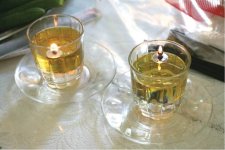
Divo (small oil filled glass with a wick on a cork float) in all rooms, with a small Afarganyu (silver urn) with an home atash, usually in the kitchen.

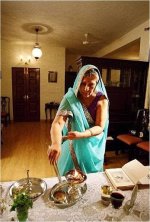
The lady of the house does loban (feeds it sukhad - sandalwood and kathi - normal base wood, and loban, a type of fragrant wood shavings powdery mixture) and firaos it around the home with her head covered, so that the smoke spreads in every room. Usually twice, but definitely once every day.

Cheers, Doc
 
images (2).jpeg

Loban. Home ritual fire.

Cheers, Doc
 
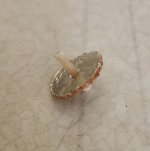
images (3).jpeg

The floating wicks. Called diva kakra's (sold in boxes).

Cheers, Doc
 
images (5).jpeg

The Parsi divo. Usually one in each room.

During rituals, these small flames are usually lit by Zoroastrians as thanks/wish/respect for the departed flames.

And priests use these as feeder flames to light the main fire with during the prayers, or keep it fed and to light new wood added.

The glass has to have oil and water mixed. Never pure oil. Usually half and half.

Cheers, Doc
 
Don't you guys use pure ghee and cotton wool hand rolled wicks?

Cheers, Doc
Yes.
That is for the ritual fire at home, for Diwali, for zillions of lamps all over, anything goes.
Even today, my sister does this ritual, but the first pass is in front of portraits of my parents. The lamp returns to rest in front of those portraits, and burns the night long.
 

Users who are viewing this thread

Latest Posts

Back
Top