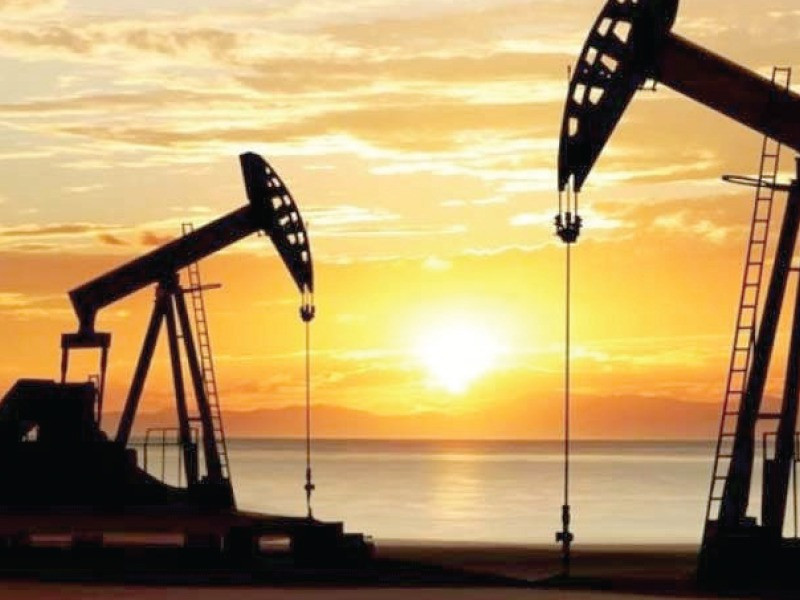
Oil, Gas and Refinery Sectors - updates

‘Draft policy to be made on production of Liquid Gas from Thar coal’

APP

KARACHI: Sindh Minister of Energy, Development and Planning Syed Nasir Hussain Shah decided that a provincial level and draft policy will be made in relation to the production of Liquid (GAS) and (REA) fertilizers from Thar coal.

He was speaking in a high-level meeting of Sindh Coal Authority held in the office of the Energy Department, said a statement on Friday.

Consultant Dr Farid A Malik, Deputy Director Asif Mangi and Umeer Ali Qaimkhani were also present.

A detailed briefing was given in the meeting regarding producing gas from coal.

According to the test results, the consultant submitted a new report according to which Thar coal was declared subject for gasification in the international laboratory of South Africa.

The meeting was also informed that as a result of gas production from coal. The country can save about 500 million dollars in foreign exchange annually.

In terms of gas import, if we build an energy system from Thar's 175 billion tons of coal reserves and we can reduce the energy import bill by 50 percent, while green Pollution can also be avoided with coal technology.
 
ISLAMABAD: The Petroleum Division has requested the Cabinet Committee on Energy (CCoE) to extend the deadline for signing upgrade agreements with five domestic refineries for six months until October this year, but most refiners smell a rat for the delay.

“The government seems to be more focused on attracting foreign investment, which is no doubt important, but it needs to realise that foreign investment flows in only when existing foreign and local investors are listened to,” said Adil Khattak, who is chairman of Oil Companies Advisory Council (OCAC) and chief executive officer of Attock Refinery Ltd.

He said the deadline for signing upgrade agreements with the Oil and Gas Regulatory Authority (Ogra) was April 22, 2024. Three refineries — Attock Refinery Ltd, National Refinery Ltd and Pakistan Refinery Ltd — gave consent to sign the agreements before the deadline, while two other refineries — Parco and Cnergyico — needed more time.

However, the “Petroleum Division didn’t arrange signing with the willing refineries, nor extended the deadline date in time to accommodate Parco’s request”, he said, adding that ARL, NRL and PRL plan to invest $3bn on their upgradation projects. The total investment will increase to $6bn when Parco and Cnergyico join in.

Excessive delays cause about $4bn loss in last four years

It may be noted that the refining policy had already taken more than four years to develop, causing the country to lose about $4bn due to these delays.

Interestingly, the Petroleum Division has now moved a summary to the CCoE days after the deadline expires, seeking a six-month extension even for those ready to start working immediately on upgradation to Euro-5 fuels.
 

Chinese companies keen in expansion project, says PRL

  • In notice to PSX, refinery says senior management from PRL visited China and had 'productive' discussions
BR Web Desk
May 22, 2024

Chinese firms have expressed keen interest in collaborating with Pakistan Refinery Limited (PRL) on its Refinery Expansion & Upgrade Project (REUP).

The refinery, a subsidiary of Pakistan State Oil Company Limited (PSO), shared the development in its notice to the Pakistan Stock Exchange (PSX) on Wednesday.

“In a significant step towards enhancing Pakistan’s refining capabilities, senior management from PRL recently visited China to engage with Engineering, Procurement, and Construction (EPC) contractors and financial institutions.

“These discussions were highly productive, laying the groundwork for the forthcoming phases of PRL’s REUP,” read the notice.

The company shared keen interest from Chinese companies to collaborate with PRL on this mega opportunity.

The REUP project, which represents a substantial investment in Pakistan’s energy infrastructure, is a major initiative for PRL, and aimed at doubling the refinery’s crude processing capacity from 50,000 barrels per day (bpd) to 100,000 bpd.

PRL said the expansion will be complemented by the adoption of a state-of-the-art deep conversion refinery configuration.

PRL posts PAT of over Rs2bn in 2QFY24

“The upgraded refinery will utilize advanced technology to meet stringent environmental standards, including the production of EURO V standard fuels, thereby significantly enhancing PRL’s operational efficiency and environmental footprint,” read the statement.

“The meetings with EPC contractors in China yielded very positive results,” Zahid Mir, Managing Director and CEO of PRL, was quoted as saying in the PSX notice.

Mir said that the company’s management has developed a comprehensive plan to award the EPC contract by the end of this year and aims to achieve the financial close of the project by mid-next year.

In addition to these meetings, PRL also engaged with the Oil and Gas Regulatory Authority (OGRA) to sign a supplementary agreement, said Mir.

He informed that PRL has requested amendments to the existing agreements to align with the updated brownfield policy, which is crucial for securing the regulatory support needed for the project’s successful implementation and long-term sustainability.

“PRL aims to strengthen its position in the global energy market and contribute significantly to the country’s economic growth,” he said.
 

Refinery plans $1.3b investment in new unit​

Express Tribune
Jun 11, 2024

A large oil refiner – Pak Arab Refinery Limited (Parco) – has planned long-term investment of up to $1.3 billion for setting up a hydrocracker unit to convert furnace oil into petrol and diesel.

The project is aimed at sustainable oil supply in the country to ensure energy security. It comes in the wake of approval of incentives by the government in the new refinery policy to pave the way for upgrading plants for the production of clean and environmentally friendly Euro-5 fuels.

Parco requires a capital injection of $500 million for upgrading its plant. However, sources said that its shareholders wanted to make investment over the long term rather than only producing Euro-5 petroleum products.

After the start of liquefied natural gas (LNG) imports, the power sector has abandoned the use of furnace oil and switched over to LNG, which has created problems for refineries in disposing of stocks of furnace oil.

In this situation, Parco has started exporting furnace oil. Now, it plans to invest over $1 billion in a new hydrocracker unit, which will convert furnace oil into other petroleum byproducts, ie, petrol and diesel.

This initiative will help in reducing the import of petrol and diesel as well as save millions of dollars in foreign exchange.

According to the initial plan, the cost of a hydrocracker (bottom of the barrel) unit is estimated at $1.75 billion and clean fuel production around $500 million.
 
The White Oil Pipeline Project ..

Stakeholders for Pakistan’s energy infrastructure, have reached an agreement to begin construction on the White Oil Pipeline Project, with the support of the Special Investment Facilitation Council (SIFC).

The project, spanning 477 kilometres, will link key locations in Pakistan, including Machike, Thalian, and TaruJabba, and is set to enhance the country’s oil distribution system.

The White Oil Pipeline Project is a flagship initiative led by the Pakistan State Oil (PSO), PARCO, and the Inter-State Gas System, with Frontier Works Organisation FWO overseeing the construction.

Running parallel to the Motorway, this two-part pipeline will connect the Attock Refinery with key sites like Chak Pirana and Faqirabad, ensuring smoother and more efficient oil transport across the region.
 
“Pakistan Refinery Limited (PRL) has signed pivotal license agreements with renowned industry leaders Honeywell UOP and Axens, for its ambitious REUP,” read the notice.

“Our partnership with Honeywell UOP and Axens marks a significant milestone in our journey towards refinery modernization,” said Zahid Mir, Managing Director and CEO of PRL.

“We believe that these collaborations will play a crucial role in shaping the future of Pakistan’s energy landscape,” he added.

Doubling capacity

The company shared that the REUP project aims to double PRL’s refining capacity from the current 50kbpd (thousand barrels per day) to 100kbpd and upgrade the existing configuration from hydro skimming to a deep conversion refinery.

PRL said that the conversion would enable it to produce value-added products and Euro V-compliant (European emission standards) fuels that are environmentally preferable to legacy automotive fuels.

“PRL has selected state-of-the-art process technologies from these global technology providers,” it said.

Honeywell UOP has been selected for bottom-of-the-barrel conversion technology and naphtha processing.

This includes the Residue Fluidized Catalytic Cracking Process, the LPG Merox process, and a naphtha complex, featuring a naphtha hydrotreater and a CCR (continuous catalyst regeneration) platforming unit.

Meanwhile, Axens has been chosen to supply Prime G+®, Prime D™, and Polynaphtha™ to achieve Euro V gasoline and diesel specifications, added the statement.

Last week, PRL executed an upgrade agreement with the Oil & Gas Regulatory Authority (OGRA).

This was done in accordance with the mandatory provisions outlined in the Pakistan Oil Refining Policy for the Upgradation of Existing/Brownfield Refineries, 2023.
 

About Cnergyico​

Cnergyico is one of the Pakistan’s leading petroleum company engaged in the businesses of oil refining, petroleum marketing, and petroleum logistics, headquartered in Karachi.

Cnergyico Pk Limited is Pakistan’s largest refinery by capacity, having the nation’s highest refining capacity of 156,000 barrels per day. Cnergyico produces a wide range of refined petroleum products, including LPG, Motor Gasoline, Kerosene, Jet Fuel, High-speed Diesel, and Furnace Oil. The company’s vision is to achieve sustainable productivity and deliver shareholder return while upholding high environmental, health, and safety standards.

We take pride in having the largest capacity crude oil storage tanks in the country. Our petroleum distribution network facilitates the movement of petroleum products around the country, providing greater economies of scale. Today Cnergyico has more than 473 retail outlets nationwide and is growing by 35-40 outlets annually.

Cnergyico is Pakistan’s largest vertically integrated oil refining company, that fulfils the nation’s energy requirements and propels the country’s progress. We are using state-of-the-art equipment, advanced technology, and an innovative approach to produce energy products in a sustainable and environmentally friendly way.

We own and operate high-quality energy assets that hold strategic importance in the country’s energy landscape, including Pakistan’s largest oil refinery in terms of nameplate capacity (i.e. 156,000 barrels of oil per day), a vast and rapidly growing network of retail outlets, Pakistan’s first and only Single Point Mooring facility, and the largest crude oil storage tanks in Pakistan.

Through our transformation plan, we are enhancing and expanding our core oil refining and marketing assets, solidifying our petrochemical capabilities, and looking for diversification opportunities. We seek to play a bigger role in meeting Pakistan’s future energy needs in a sustainable manner.

Our diverse and highly skilled workforce consists of approximately 800 dedicated employees shared among our companies.

Bosicor as Public Limited Company

Bosicor is incorporated in Pakistan as a public limited company on 9 January 1995
Bosicor starts its commercial production on 1 July 2004, refining crude oil into various saleable components

BPPL launches of its first retail outlet in July 2007 near Sukkur

BPPL commences the construction of its second refinery, ORC-2, with a capacity of 120,000 bpd

BPPL builds the largest capacity storage tanks in Pakistan at the Mouza Kund facility with a storage capacity of 44,000 metric tons

Byco Petroleum Pakistan Limited is renamed Cnergyico Pk Limited (CPL)
 
To view this content we will need your consent to set third party cookies.
For more detailed information, see our cookies page.
 
To view this content we will need your consent to set third party cookies.
For more detailed information, see our cookies page.
 
Striking oil — a crude endeavour https://www.dawn.com/news/1861990
Why do you think the insurgency in balauchistan has intensified ? ........ western oil companies are not welcomed ....oil exploration and development will be done by Pakistani oil companies , Mari and ogdcl , in collaboration with Chinese companies.......5 billion dollars of investment is peanuts , no problem in arranging that when you have such huge reserves .......no , you won't have have to wait for 5 years .... production will start within 3 years if everything went as planned .
 
Why do you think the insurgency in balauchistan has intensified ? ........ western oil companies are not welcomed ....oil exploration and development will be done by Pakistani oil companies , Mari and ogdcl , in collaboration with Chinese companies.......5 billion dollars of investment is peanuts , no problem in arranging that when you have such huge reserves .......no , you won't have have to wait for 5 years .... production will start within 3 years if everything went as planned .
What is your source of your optimism
 

Chinese firm to invest $1b in PRL​

Seeks independence from govt control; refinery to double output with upgrade

Zafar Bhutta
October 17, 2024

exploration and production companies are hesitant to commit further investment citing the uncertainty surrounding the recent petroleum policy changes photo file


Exploration and production companies are hesitant to commit further investment, citing the uncertainty surrounding the recent petroleum policy changes. photo: file

ISLAMABAD: A Chinese investment corporation has agreed to provide $1 billion to Pakistan Refinery Limited (PRL) for its upgradation project, a move aimed at transforming the refinery's production capacity.

However, the Chinese firm has made it clear that it does not want any government role involved in the deal and expects PRL to repay the amount in dollars without any government control or intervention.

At present, the State Bank of Pakistan (SBP) permits the private sector, including refineries, to retain dollars for investment purposes.

However, the Chinese company has stated that such controls should be eliminated to ensure smooth repayment of the loan. The firm stressed that there should be no obstacles in remitting dollars back to China.

Sources within the Petroleum Division revealed that PRL has assured the Chinese Investment Corporation that it will generate the required dollars through the export of petroleum products, which will then be used to repay the Chinese firm.

Additionally, China Export & Credit Insurance Corporation (SINOSURE), which is a state-funded insurance company established to promote China's foreign trade and economic cooperation, has also insisted on no government interference regarding the provision of dollars.

PRL is currently engaged in an upgradation project aimed at doubling its production capacity from the current 50,000 barrels per day to 100,000 barrels per day.

The refinery has already signed an agreement with China's United Energy Group (UEG) to embark on this significant expansion and modernisation endeavour.

The primary objectives of this project are to meet domestic consumer demand, transition from a basic hydro-skimming process to a deep-conversion process, and produce Euro 5 compliant high-speed diesel (HSD) and motor spirit (petrol). In doing so, the refinery will phase out the production of furnace oil, which has been incurring losses.

This strategic move aligns with PRL's commitment to producing cleaner, environmentally friendly fuels that cater to the growing market demand.


Currently, PRL produces 250,000 tonnes of motor spirit annually. Following the expansion, this output is expected to increase to 1.5 million tonnes.

Similarly, HSD production is projected to rise from 600,000 tonnes per year to around 2 million tonnes.

PRL and UEG formalised their collaboration by signing a memorandum of understanding (MoU) on October 18, 2023, in China.

Under this MoU, both companies expressed their intent to establish a strategic cooperation relationship based on mutual interests in Pakistan's energy sector.

This collaboration is expected to have a profound positive impact on the growth and development of the energy industry in Pakistan, contributing to a sustainable and environmentally responsible energy landscape.

In a recent development, PRL has signed licensing agreements with global industry leaders Honeywell UOP and Axens to produce gasoline and diesel that meet Euro 5 specifications.

Additionally, PRL, along with other refineries, was set to sign a supplemental agreement with the Oil and Gas Regulatory Authority (Ogra) under the new refinery policy.

However, the Cabinet Committee on Energy (CCOE) granted an extension for refineries to sign the implementation agreements required for their upgrades.

Previously, the deadline for signing these agreements was set for April 22, 2024. Three refineriesAttock Refinery Limited (ARL), National Refinery Limited (NRL), and PRLhad agreed to sign the agreements by the deadline, while two other refineries, Pak Arab Refinery (Parco) and Cnergyico PK, requested additional time.

ARL, NRL, and PRL plan to invest a total of $3 billion in upgrading their plants, with the combined investment reaching $6 billion once Parco and Cnergyico join the project.

The amended "Pakistan Oil Refining Policy for Up-gradation of Existing/Brownfield Refineries 2023" has already been notified for implementation. This policy aims to upgrade existing refineries to produce Euro-V fuels while reducing furnace oil output.

To achieve these goals, the policy offers a 2.5% incremental incentive on HSD in addition to the current 7.5% and a 10% incentive on petrol in the form of deemed duty for a period of seven years.

The deemed duty will be deposited in an escrow account maintained by Ogra, from which refineries can withdraw funds to cover up to 27.5% of the cost of plant upgrades after achieving financial close and meeting expenditure milestones.
 

Users who are viewing this thread

Country Watch Latest

Back
Top